
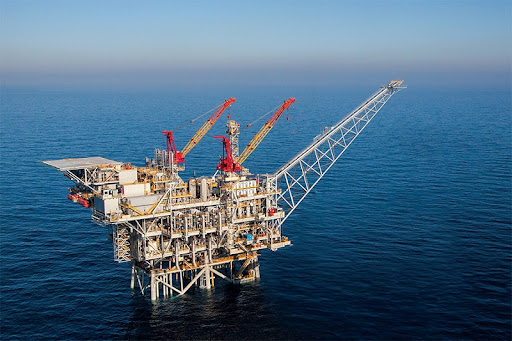
In an interview with the website of the Strategic Council on Foreign Relations, Mohammad Karoui stated: “Essentially, this issue involves three parties: Lebanon, Cyprus, and the Israeli regime; this dispute is related to determining maritime borders or, in other words, to determining the exclusive economic zone of each of these three parties in the Mediterranean Sea.”
According to this expert, the importance of determining these zones has increased since 2018, when large gas reserves were discovered in the Eastern Mediterranean region, and the sensitivity of the relevant actors to maximize their own interests in the waters of the Mediterranean Sea has also increased.
Khajouei referred to the 2007 agreement between Lebanon and Cyprus and said: “In 2007, Lebanon and Cyprus agreed on a deal known as ‘Point 1,’ which was intended to determine the maritime borders between the two countries.”
The expert on Lebanese affairs explained: “Lebanon and Cyprus bilaterally determined their exclusive economic zone, but this agreement was not approved when it went to the Lebanese parliament, because critics believed that Lebanon would effectively lose between 2,500 and 5,000 kilometers of its waters.”
Khajouei added that the situation became more sensitive when Cyprus, later, based on the line it had drawn with Lebanon, signed an agreement and a border treaty with the Israeli regime, which itself later caused the Israeli regime to claim parts of Lebanon’s waters, and a specific dispute with Lebanon emerged this time.
He elaborated: “In 2022, with US mediation, Lebanon and the Israeli regime finalized their maritime borders based on the so-called ‘Point 23.’ But in practice, the bilateral agreements of the parties in the Mediterranean Sea caused them to influence each other and create contradictions between them.”
The expert on Lebanese affairs emphasized: “When Lebanon and the Israeli regime signed the agreement, Lebanon demanded that its 2007 treaty with Cyprus be reviewed, because the border lines had changed and the previous agreement between the Israeli regime and Lebanon was mediated by the US, so naturally, the US should this time somehow conduct another kind of mediation between Lebanon and Cyprus to resolve the issue.”
According to Khajouei, a joint technical committee was formed about a month ago, following a meeting between the presidents of Lebanon and Cyprus, to amend the 2007 agreement. But the point is that naturally, Cyprus, because it considers the 2007 agreement to be in its favor, seeks minimal changes to it, and in this regard, the US is also more inclined towards Cyprus, and the Americans have officially stated that the reforms to be made based on the 2007 version should be minimal; a model that is very much in favor of Cyprus.
This expert explained: “Given that the US is seeking an interim solution, in this specific issue, it can very much be in favor of Cyprus and cannot somehow compensate for the loss that Lebanon suffered in the 2007 agreement. Moreover, the US does not want the final agreement between Lebanon and the Israeli regime to be such that the treaty between Cyprus and the Israeli regime is called into question, and this means that such an interim solution will ultimately yield little benefit for Lebanon.” He finally said that Cyprus and the Israeli regime are both US partners on one hand, and on the other hand, they are actually part of the plan to export gas from the Eastern Mediterranean to Europe, and from this perspective, their position is more important to the West than Lebanon’s.









0 Comments