
Hamid Khoshayand – Expert on regional affairs
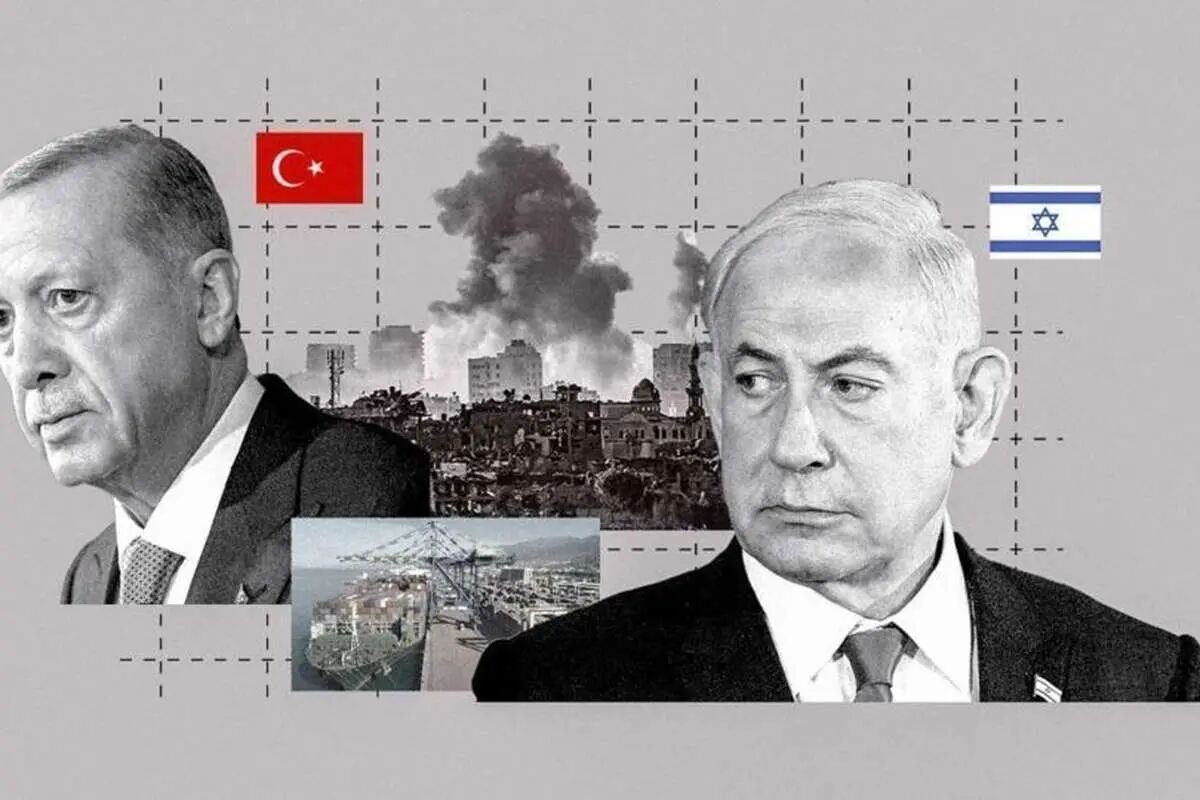
In recent weeks, relations between Turkey and the Israeli regime have entered their most tense period since the relative normalization of ties in 2022. The exchange of harsh statements between Recep Tayyip Erdoğan and Benjamin Netanyahu, diplomatic labeling including mutual accusations of “genocide,” and the Israeli regime’s lobbying in Washington for arms sanctions against Ankara, have raised the fundamental question of whether the level of tension between the two actors will transcend political rhetoric and whether West Asia is on the brink of a new security fault line.
Erdoğan, in sharp language, has repeatedly called for the “destruction of the Israeli regime,” and Netanyahu, in response, has described these statements as “very serious” and has asked the United States to halt the sale of F-35 fighter jets to Turkey. Simultaneously, the Turkish Ministry of Foreign Affairs has called Netanyahu the “Hitler of our time,” and the Israeli regime, in a reciprocal move, has recognized the Armenian genocide, which has been perceived as a direct response to Erdoğan.
Public Pressure and the Shift in Ankara’s Calculations
The first and most decisive variable in understanding Ankara’s positional shifts is the growing and unprecedented pressure from domestic and regional public opinion on the government. Domestically, reputable international polls, including the Pew Research Center in June 2026, indicate that over 97 percent of Turkish society holds a negative view of the Israeli regime, with an overwhelming majority considering Tel Aviv a direct threat to their security. This level of public animosity has severely constrained the government’s diplomatic maneuvering room, making any retreat from anti-Israeli positions politically costly.
At the level of the Islamic world as well, the Palestinian issue remains the most important driver of identity solidarity. Public opinion in Islamic countries and Turkish society no longer acquiesce to Ankara’s symbolic statements and diplomatic declarations; rather, they expect the Turkish government, as a major regional power and NATO member, to take practical, tangible, and deterrent actions against the expansionist and criminal policies of the Israeli regime in Gaza, Lebanon, and the region. Elites and public opinion in the Islamic world also demand that Ankara activate its real instruments, including the complete severance of economic, energy, and logistical arteries toward the occupied territories. This public demand has seriously challenged Turkey’s traditional strategy of separating “declaratory anti-Israeli policy” from “operational economic interests.”
Despite the escalation of verbal tensions, the prospect of direct war between the two sides still appears unlikely. On one hand, Turkey’s Minister of Foreign Affairs has explicitly stated that “there is no reason for direct conflict,” and the country’s Defense Minister has assessed the likelihood of military confrontation as “very low.” On the other hand, the Israeli regime, despite strategic preparations, is fundamentally not seeking war with Turkey. Therefore, what seems more probable in the medium term is the continuation of a “regional cold war,” intensified competition over Eastern Mediterranean energy resources, and the expansion of confrontation in the public opinion arena.
Turkey and the Israeli regime, once close strategic partners in intelligence, technology, and military fields, are now competing with each other from their respective perspectives in the region. The Israeli regime is concerned that Turkey is on the path to becoming the new dominant power in the region. The rapid modernization of the Turkish armed forces and the narrowing of the qualitative military gap with the Israeli regime have intensified this concern. Netanyahu’s strong opposition to the sale of F-35 fighter jets to Ankara, which he has described as “disrupting the balance of power in West Asia,” stems from this strategic concern over the loss of “qualitative military superiority.”
Proxy Rivalries
It appears that the escalation of tensions between the two sides could fuel proxy conflicts in Syria, Libya, and the Eastern Mediterranean. Turkey, through its military deployment in northern Syria and support for the new Damascus government, is seeking to extend its influence to the borders of the Israeli regime. In contrast, Tel Aviv has strengthened its security cooperation with Greece and Cyprus in the Eastern Mediterranean and is concerned that Turkey, by supporting Hamas and other Palestinian groups, could create a new “ring of fire” around the regime.
Despite the deepening disagreements and harsh rhetoric, direct war between the two sides is considered highly unlikely for structural reasons. First, Turkey, as the eastern pillar of the North Atlantic Treaty Organization (NATO), has strong institutional ties with the Western security structure. Despite Congressional opposition to arming Turkey, the Trump administration’s engagement with Erdoğan and the nature of NATO alliances prevent Washington from allowing tensions to escalate into an overt military conflict.
Second, calculations based on military rationality dictate the same. Defense and diplomatic officials on both sides have emphasized the lack of desire for military confrontation, and security assessments in Ankara indicate that maintaining tension at a controlled level is preferred over entering a war of attrition.
The Outlook for Ankara-Tel Aviv Relations
In light of these developments, the horizon for Turkey-Israeli regime relations is neither a return to the honeymoon period of normalization nor the onset of direct war; rather, the most likely scenario is the continuation and deepening of a “regional cold war.”
Under this scenario, the confrontation between the two actors will be reproduced at three levels: first, intense competition over energy transmission lines and Eastern Mediterranean resources; second, proxy and diplomatic warfare in peripheral areas, including the Levant and North Africa; and third, an attritional campaign in the arena of public diplomacy and cognitive warfare.
In this context, Turkey’s Achilles’ heel will be how it responds to the accumulated expectations of public opinion in the Islamic world and its own domestic society. If Ankara fails to shift its approach from political rhetoric to real and deterrent actions against Zionist expansionism, it will face a serious erosion of social capital and a decline in its moral influence within the geography of resistance and the Islamic world.








0 Comments