Realities of the Tripartite Makkah Pact

2026/08/18 | interview, Politics, Top News

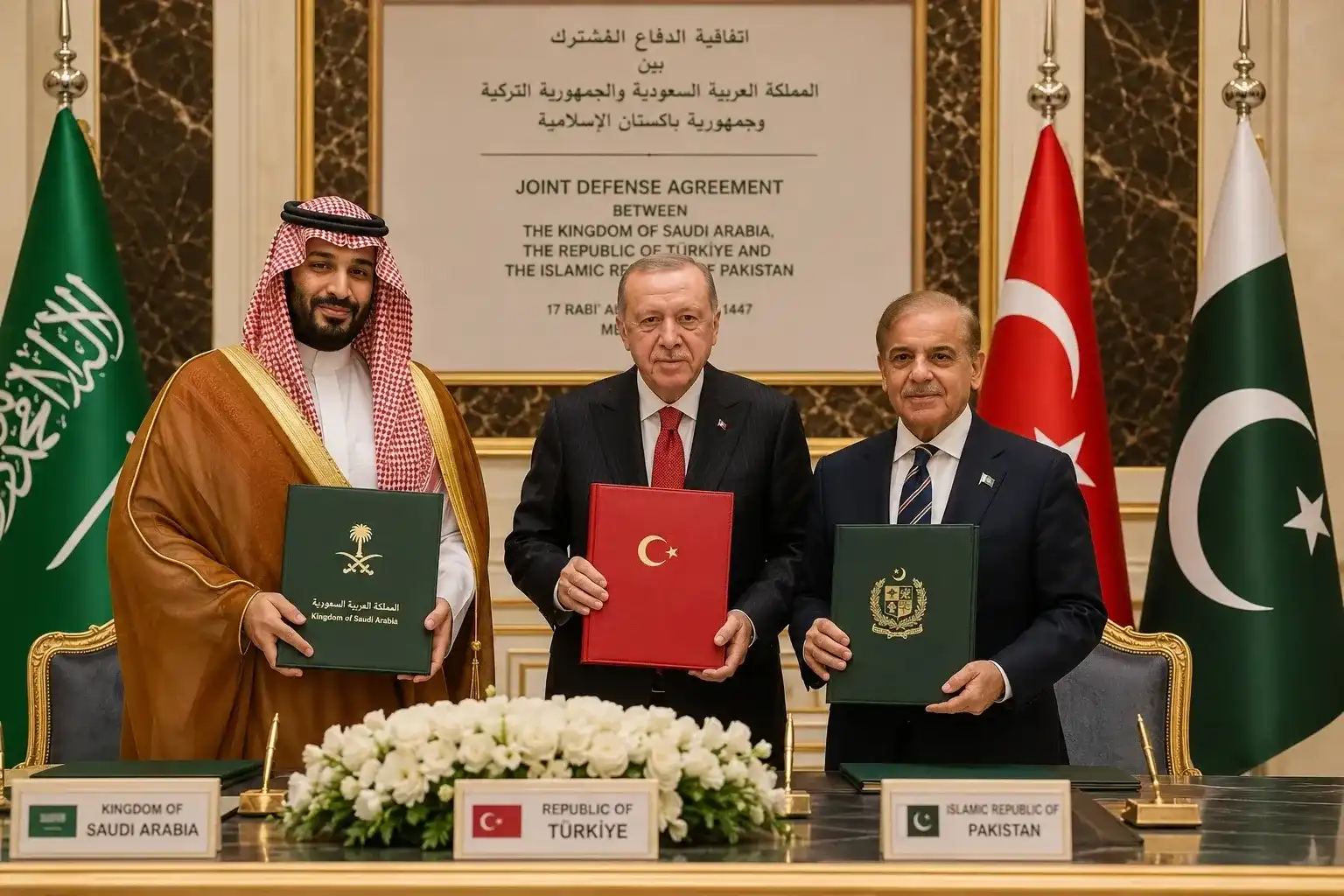
SCFR Online – Interview: The signing of the Makkah agreement between Saudi Arabia, Pakistan, and Turkey has raised questions about the future of the region's security structure and the position of these countries in West Asian equations. Can this agreement become a genuine collective defense mechanism, or does it have more of a political and deterrent function than creating new military capacity?

Hossein Royvaran, an expert on West Asian affairs, stated in an interview with the Strategic Council on Foreign Relations website, in analyzing this agreement, that to evaluate any joint defense pact, one must first answer several fundamental questions: “Why was it formed, who needs it, what are the agreed mechanisms, and how feasible is it?”

From his perspective, the answers to these questions indicate that the primary need in the formation of these arrangements pertains to Saudi Arabia, rather than Pakistan and Turkey.

Royvaran believes that Saudi Arabia, in the current circumstances, is trying to project an image of having broader security and military backing. In his view, these agreements hold political and media significance for Riyadh; because Saudi Arabia wants to demonstrate that it is not alone in the region’s security equations and has partners that can stand by it in times of crisis.

Pakistan; Between Commitment to Saudi Arabia and National Security Imperatives

One of the main axes of Royvaran’s analysis is Pakistan’s situation. Referring to the history of defense cooperation between Pakistan and Saudi Arabia, he recalls that during the Yemen war, when Saudi Arabia expected military participation from Pakistan, the Pakistani parliament opposed the direct involvement of its forces in the war.

Royvaran accordingly asks whether Pakistan, faced with numerous security challenges on its borders with India and Afghanistan, would be willing to jeopardize its national security for the sake of Saudi Arabia? His answer is negative. From his perspective, Pakistan will ultimately balance its own interests against the demands of its foreign partners, and it is unlikely to enter a war on behalf of Saudi Arabia that is not directly related to Islamabad’s vital interests.

Meanwhile, the main issue today is not the possibility or impossibility of Pakistani military support for Saudi Arabia, but rather the scope of this support and the conditions under which Islamabad would be willing to fulfill its commitments. It is here that the principle cited by Royvaran continues to demonstrate its importance: Pakistan has its own independent security calculations, and its membership or defense cooperation with Saudi Arabia cannot be equated with the acceptance of all of Riyadh’s regional policies.

Turkey; Independent Interests in Cooperation with Riyadh

Royvaran also emphasizes the same independence of calculations regarding Turkey. In his view, Ankara will not put its national security at risk solely because of its relationship with Saudi Arabia. To explain this point, he refers to the history of political differences between the two countries, including during the Qatar-Saudi Arabia crisis and the Jamal Khashoggi case, which at one point severely affected bilateral relations.

At the same time, from Royvaran’s perspective, Turkey also has specific economic and defense interests in this agreement. He believes that one of Ankara’s important motivations is to develop military cooperation and sell defense equipment to Saudi Arabia.

Various analyses indicate that Turkey-Saudi Arabia relations in recent years have moved away from a phase of intense political rivalry and toward economic and defense cooperation. Therefore, Turkey’s motivation cannot be summed up solely in terms of past historical or political disagreements. Ankara believes it can use the new agreement to expand its defense industry market, increase military exports, and consolidate its position as one of the region’s important security actors. Consequently, Turkey’s cooperation with Saudi Arabia is more a convergence of interests in specific areas than an intertwining of Ankara’s and Riyadh’s security.

The Real Capability of the Naval Coalition

Another part of Royvaran’s analysis concerns the naval coalition supported by Saudi Arabia. He believes that the mere accession of several countries to a maritime security initiative does not mean the creation of an effective military force. In his view, if even the United States, with the world’s most powerful navy, has not been able to eliminate all regional maritime threats, one cannot expect a coalition of several regional countries to rapidly achieve such capacity.

Royvaran refers in this context to Bab el-Mandeb and the Strait of Hormuz, and believes that the experience of recent developments has shown that controlling and securing the region’s maritime routes is a highly complex issue, and the mere formation of a coalition or countries’ declarations of readiness for cooperation does not necessarily translate into the ability to control these areas.

From his perspective, the same applies to the new defense pact. He emphasizes that in the text of the agreement, what is prominent is its defensive nature, and these countries are not necessarily willing to enter an offensive war against a third party on behalf of Saudi Arabia. In his words, “Islamabad and Ankara may defend Riyadh,” but this situation differs from entering a war to achieve Saudi Arabia’s regional objectives.

This distinction between “supporting and defending a member of a pact” and “entering a war on behalf of that member” is fundamental to the realistic assessment of the pact. Even if the mutual defense commitment is politically serious, its implementation will depend on the decisions of member states, the circumstances of the crisis, and the details of operational mechanisms.

In Royvaran’s overall view, Saudi Arabia is above all seeking to create a political and security backup for itself. He believes that Riyadh, after experiencing regional attacks and observing the limitations of foreign support, needs to show that it has other options at its disposal.

From this same perspective, Royvaran believes these agreements have a political and propaganda aspect, while each party also has its own specific motivation: Saudi Arabia to show it is not alone, Pakistan due to its economic and political interests, and Turkey due to its defense and industrial interests.

Royvaran also expresses doubt about the rapid realization of Saudi Arabia’s very large investments in Pakistan, and emphasizes the difference between the level of China-Pakistan economic relations and those of Saudi Arabia-Pakistan. In his view, not every economic promise or agreement should be interpreted as the definitive realization of massive investments.

Implications of the Agreement for Iran

Finally, Royvaran believes that these developments do not, by themselves, alter the region’s macro-equations. He emphasizes Iran’s extensive relations with both Pakistan and Turkey, and believes that neither of these two countries is willing to overshadow all their interests and relations with Iran for the sake of Saudi Arabia.

In his view, Pakistan, due to its shared border and numerous economic and security interests with Iran, and Turkey, due to the extensive volume of its political, economic, and regional relations with Tehran, have no incentive to become part of an anti-Iranian front.

The significance of the tripartite agreement should be sought precisely at this point. This agreement does not yet signify the formation of a military alliance on par with established collective defense structures, but it indicates that Saudi Arabia is diversifying its security partners and attempting to create greater strategic depth. In contrast, Pakistan and Turkey, while maintaining their relations with Riyadh, continue to have independent interests vis-à-vis Iran, the West, and other regional powers. Therefore, in the current circumstances, this agreement should be assessed less as a sign of the formation of a new front against Iran and more as a sign of Saudi Arabia’s effort to rebuild deterrence, increase security options, and demonstrate the possession of a network of regional partners.

The real test of this pact will be determined not at the signing ceremony and political propaganda, but at the time of a crisis; when it must become clear to what extent the members’ defense commitments will translate into military action, operational coordination, and the acceptance of its actual cost.


0 Comments

LATEST CONTENT

Realities of the Tripartite Makkah Pact

SCFR Online – Interview: The signing of the Makkah agreement between Saudi Arabia, Pakistan, and Turkey has raised questions about the future of the region’s security structure and the position of these countries in West Asian equations. Can this agreement become a genuine collective defense mechanism, or does it have more of a political and deterrent function than creating new military capacity?

Strategic Implications of the Reduction of US Weapons Stockpiles

SCFR Online – Opinion: The continuation of the US war against Iran, in addition to increasing operational costs, has called into question the actual capacity of the American arsenal to simultaneously fulfill security commitments on multiple fronts; an issue that affects deterrence, defense production capacity, and Washington’s resource prioritization.

The Formation of a New Order in Relations Between Powers

SCFR Online – Opinion: The Russia-Ukraine war and the war of the United States and the Israeli regime against Iran have been formed with different objectives and actors, but field and political developments indicate that they are not entirely separate from one another.

An Analysis of the Makkah Defense Pact

SCFR Online – Opinion: On Friday, August 7, the heads of state of three countries – Saudi Arabia, Turkey, and Pakistan – signed a text under the title “Makkah Joint Defense Agreement.”

Dimensions and challenges of the initiative to revive the Hejaz Railway

Strategic Council Online – Note: The initiative to revive the Hejaz Railway, beyond being a transportation project, constitutes an attempt to redefine geopolitics, the economy, and Turkey’s regional position; however, its realization appears to face significant financial, security, and institutional challenges.

Loading

Últimas publicaciones

Realities of the Tripartite Makkah Pact

SCFR Online – Interview: The signing of the Makkah agreement between Saudi Arabia, Pakistan, and Turkey has raised questions about the future of the region’s security structure and the position of these countries in West Asian equations. Can this agreement become a genuine collective defense mechanism, or does it have more of a political and deterrent function than creating new military capacity?

Strategic Implications of the Reduction of US Weapons Stockpiles

SCFR Online – Opinion: The continuation of the US war against Iran, in addition to increasing operational costs, has called into question the actual capacity of the American arsenal to simultaneously fulfill security commitments on multiple fronts; an issue that affects deterrence, defense production capacity, and Washington’s resource prioritization.

The Formation of a New Order in Relations Between Powers

SCFR Online – Opinion: The Russia-Ukraine war and the war of the United States and the Israeli regime against Iran have been formed with different objectives and actors, but field and political developments indicate that they are not entirely separate from one another.

An Analysis of the Makkah Defense Pact

SCFR Online – Opinion: On Friday, August 7, the heads of state of three countries – Saudi Arabia, Turkey, and Pakistan – signed a text under the title “Makkah Joint Defense Agreement.”

Dimensions and challenges of the initiative to revive the Hejaz Railway

Strategic Council Online – Note: The initiative to revive the Hejaz Railway, beyond being a transportation project, constitutes an attempt to redefine geopolitics, the economy, and Turkey’s regional position; however, its realization appears to face significant financial, security, and institutional challenges.

Loading

DERNIER CONTENU

Realities of the Tripartite Makkah Pact

SCFR Online – Interview: The signing of the Makkah agreement between Saudi Arabia, Pakistan, and Turkey has raised questions about the future of the region’s security structure and the position of these countries in West Asian equations. Can this agreement become a genuine collective defense mechanism, or does it have more of a political and deterrent function than creating new military capacity?

Strategic Implications of the Reduction of US Weapons Stockpiles

SCFR Online – Opinion: The continuation of the US war against Iran, in addition to increasing operational costs, has called into question the actual capacity of the American arsenal to simultaneously fulfill security commitments on multiple fronts; an issue that affects deterrence, defense production capacity, and Washington’s resource prioritization.

The Formation of a New Order in Relations Between Powers

SCFR Online – Opinion: The Russia-Ukraine war and the war of the United States and the Israeli regime against Iran have been formed with different objectives and actors, but field and political developments indicate that they are not entirely separate from one another.

An Analysis of the Makkah Defense Pact

SCFR Online – Opinion: On Friday, August 7, the heads of state of three countries – Saudi Arabia, Turkey, and Pakistan – signed a text under the title “Makkah Joint Defense Agreement.”

Dimensions and challenges of the initiative to revive the Hejaz Railway

Strategic Council Online – Note: The initiative to revive the Hejaz Railway, beyond being a transportation project, constitutes an attempt to redefine geopolitics, the economy, and Turkey’s regional position; however, its realization appears to face significant financial, security, and institutional challenges.

Loading

DERNIER CONTENU

Realities of the Tripartite Makkah Pact

SCFR Online – Interview: The signing of the Makkah agreement between Saudi Arabia, Pakistan, and Turkey has raised questions about the future of the region’s security structure and the position of these countries in West Asian equations. Can this agreement become a genuine collective defense mechanism, or does it have more of a political and deterrent function than creating new military capacity?

Strategic Implications of the Reduction of US Weapons Stockpiles

SCFR Online – Opinion: The continuation of the US war against Iran, in addition to increasing operational costs, has called into question the actual capacity of the American arsenal to simultaneously fulfill security commitments on multiple fronts; an issue that affects deterrence, defense production capacity, and Washington’s resource prioritization.

The Formation of a New Order in Relations Between Powers

SCFR Online – Opinion: The Russia-Ukraine war and the war of the United States and the Israeli regime against Iran have been formed with different objectives and actors, but field and political developments indicate that they are not entirely separate from one another.

An Analysis of the Makkah Defense Pact

SCFR Online – Opinion: On Friday, August 7, the heads of state of three countries – Saudi Arabia, Turkey, and Pakistan – signed a text under the title “Makkah Joint Defense Agreement.”

Dimensions and challenges of the initiative to revive the Hejaz Railway

Strategic Council Online – Note: The initiative to revive the Hejaz Railway, beyond being a transportation project, constitutes an attempt to redefine geopolitics, the economy, and Turkey’s regional position; however, its realization appears to face significant financial, security, and institutional challenges.

Loading

DERNIER CONTENU

Realities of the Tripartite Makkah Pact

SCFR Online – Interview: The signing of the Makkah agreement between Saudi Arabia, Pakistan, and Turkey has raised questions about the future of the region’s security structure and the position of these countries in West Asian equations. Can this agreement become a genuine collective defense mechanism, or does it have more of a political and deterrent function than creating new military capacity?

Strategic Implications of the Reduction of US Weapons Stockpiles

SCFR Online – Opinion: The continuation of the US war against Iran, in addition to increasing operational costs, has called into question the actual capacity of the American arsenal to simultaneously fulfill security commitments on multiple fronts; an issue that affects deterrence, defense production capacity, and Washington’s resource prioritization.

The Formation of a New Order in Relations Between Powers

SCFR Online – Opinion: The Russia-Ukraine war and the war of the United States and the Israeli regime against Iran have been formed with different objectives and actors, but field and political developments indicate that they are not entirely separate from one another.

An Analysis of the Makkah Defense Pact

SCFR Online – Opinion: On Friday, August 7, the heads of state of three countries – Saudi Arabia, Turkey, and Pakistan – signed a text under the title “Makkah Joint Defense Agreement.”

Dimensions and challenges of the initiative to revive the Hejaz Railway

Strategic Council Online – Note: The initiative to revive the Hejaz Railway, beyond being a transportation project, constitutes an attempt to redefine geopolitics, the economy, and Turkey’s regional position; however, its realization appears to face significant financial, security, and institutional challenges.

Loading



