The Formation of a New Order in Relations Between Powers

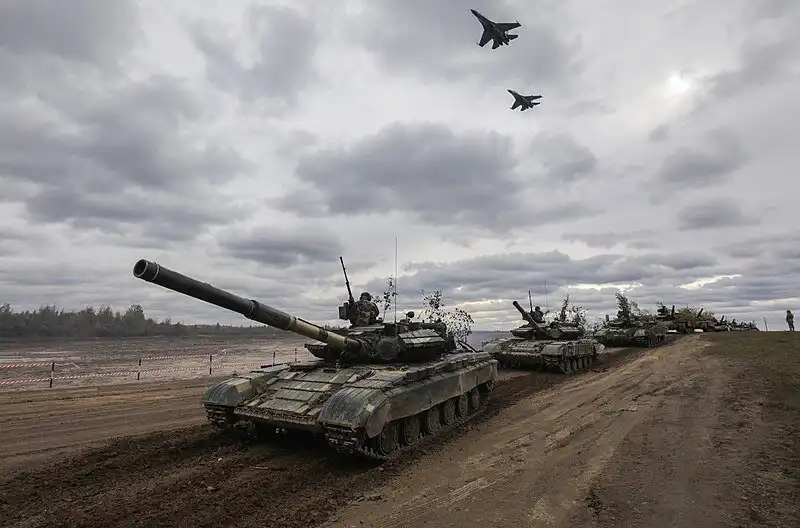
SCFR Online - Opinion: The Russia-Ukraine war and the war of the United States and the Israeli regime against Iran have been formed with different objectives and actors, but field and political developments indicate that they are not entirely separate from one another.

Bardia Azadpour – International affairs expert

The Linkage of Two Wars; Field Reality or Geopolitical Narrative?

Based on available evidence, the escalation of each of these crises can affect the resources, political attention, and military capacity of the parties.

The Atlantic Council, in an analysis, has described Ukraine’s attack on an Iranian ship in the Caspian Sea as an example of a more direct linkage between the two wars, and believes that this event has increased the connection between the two wars. This think tank acknowledges the existence of certain operational and technological links between the two wars, but specifies that this reality differs from turning them into a single war.

In contrast, the Australian Strategic Policy Institute (ASPI), in an analysis, has claimed cooperation between China, Russia, Iran, and North Korea. This analysis has considered the reported sale of Chinese man-portable air defense systems to Iran and Russia’s support for Tehran as signs of deepening cooperation among these countries. From the perspective of this think tank, such cooperation cannot be regarded as a military alliance without considering the differences in the countries’ interests.

This very issue clarifies the distinction between the “linkage of wars” and the “formation of a bloc.” The Ukraine war has allowed Iran and Russia to draw closer in areas such as drone technology, sanctions circumvention, and some military cooperation, but China, Russia, and Iran do not have identical objectives on all issues. China has extensive economic relations with the West, Russia pursues its own specific considerations regarding Europe and Asia, and Iran also has independent security and regional interests. Therefore, a more accurate interpretation is not the formation of a cohesive and commanded alliance, but rather the convergence of interests and increased cooperation.

The Increase of New Non-Western Convergence

The Lowy Institute, in a study on cooperation among Iran, Russia, North Korea, and China, has described this cooperation as increasing but “influenced by differing interests.” This assessment indicates that cooperation among China, Russia, Iran, and North Korea in the face of Western pressure can be real and expanding, but does not necessarily mean the adoption of a common strategy in all areas.

For Iran, the importance of these cooperations increases under conditions where Western political, economic, and security pressures have intensified. Developing cooperation with Russia and China can create capacities in the areas of technology, trade, financing, and mitigating the effects of sanctions, but this trend should not be interpreted as a guarantee of extensive support from these countries for Tehran. The interests of Moscow and Beijing overlap with Iran’s in some cases and may differ in others; therefore, Iran’s foreign policy still requires maintaining decision-making independence and diversifying foreign relations.

Russia is also pursuing developments within the framework of efforts to reduce dependence on Western-dominated mechanisms. The Russian International Affairs Council, in examining the financial security of the Shanghai Cooperation Organization, has emphasized the creation of multilateral financial settlement infrastructures and reducing members’ vulnerability to Western financial pressures. From this perspective, the Ukraine war and the resulting sanctions have increased Moscow’s motivation to develop more independent financial mechanisms.

An article on the Russia in Global Affairs website regarding the BRICS payment space has also examined the proposal to create a joint payment space. However, a distinction must be made between proposing a mechanism, creating settlement infrastructures with national currencies, and implementing a common payment system. Available sources speak more of the design and proposal of joint mechanisms, which are insufficient to claim the formation of an alternative financial system independent of the Western system; therefore, BRICS at present is not a ready-made alternative to the existing financial system, but rather an arena for the gradual reduction of financial dependence.

Wars and the Formation of a New Power Order

Meanwhile, from the perspective of Washington and Kyiv, linking the two wars serves a political and strategic function. From this perspective, such a narrative can present the Iran war as part of a broader competition with Russia, China, and other rival powers, and justify the need for continued support for allies.

On the other hand, for the Islamic Republic of Iran, the simultaneity of the Ukraine war and the war of the United States and the Israeli regime against Iran has increased the importance of non-Western cooperations. These cooperations can, in the military, technological, economic, and financial domains, alleviate some of the sanction and political pressures, but they do not replace Iran’s internal capacities and independent foreign policy. At the same time, Tehran deems it necessary not to become fully dependent on an anti-Western bloc and potentially find itself in a vulnerable position.

Overall, available evidence supports the scenario of “strategic convergence without the declaration of a formal alliance” more than any other. The existing links between the Ukraine war and the war against Iran have become more real than a mere propagandistic narrative, but they are insufficient to speak of the formation of a cohesive and sustainable alliance. The more important consequence of this trend is the gradual formation of networks of military, technological, financial, and political cooperation that could reduce some countries’ dependence on Western mechanisms.

For Iran, the main opportunity in this trend is to utilize the capacity for cooperation with Russia, China, and other non-Western actors to increase economic and security resilience, while simultaneously maintaining decision-making independence. The future of the international order will depend on the extent to which differences among these countries are resolved, their economic capacity, and the West’s ability to maintain its financial, technological, and military superiority. Therefore, current developments should not be seen as a sign of the definitive formation of a new order or a united anti-Western bloc, but rather as a sign of gradual movement toward a more diversified distribution of power.

0 Comments

LATEST CONTENT

Increasing criticism of the extensive Zionist lobby network

SCFR Online – Opinion: An examination of the mechanisms of the Israeli regime’s influence in the United States depicts a complex picture of shared interests, strategic dependencies, and the limitations of this relationship.

Realities of the Tripartite Makkah Pact

SCFR Online – Interview: The signing of the Makkah agreement between Saudi Arabia, Pakistan, and Turkey has raised questions about the future of the region’s security structure and the position of these countries in West Asian equations. Can this agreement become a genuine collective defense mechanism, or does it have more of a political and deterrent function than creating new military capacity?

Strategic Implications of the Reduction of US Weapons Stockpiles

SCFR Online – Opinion: The continuation of the US war against Iran, in addition to increasing operational costs, has called into question the actual capacity of the American arsenal to simultaneously fulfill security commitments on multiple fronts; an issue that affects deterrence, defense production capacity, and Washington’s resource prioritization.

The Formation of a New Order in Relations Between Powers

SCFR Online – Opinion: The Russia-Ukraine war and the war of the United States and the Israeli regime against Iran have been formed with different objectives and actors, but field and political developments indicate that they are not entirely separate from one another.

An Analysis of the Makkah Defense Pact

SCFR Online – Opinion: On Friday, August 7, the heads of state of three countries – Saudi Arabia, Turkey, and Pakistan – signed a text under the title “Makkah Joint Defense Agreement.”

Dimensions and challenges of the initiative to revive the Hejaz Railway

Strategic Council Online – Note: The initiative to revive the Hejaz Railway, beyond being a transportation project, constitutes an attempt to redefine geopolitics, the economy, and Turkey’s regional position; however, its realization appears to face significant financial, security, and institutional challenges.

Loading

Últimas publicaciones

Increasing criticism of the extensive Zionist lobby network

SCFR Online – Opinion: An examination of the mechanisms of the Israeli regime’s influence in the United States depicts a complex picture of shared interests, strategic dependencies, and the limitations of this relationship.

Realities of the Tripartite Makkah Pact

SCFR Online – Interview: The signing of the Makkah agreement between Saudi Arabia, Pakistan, and Turkey has raised questions about the future of the region’s security structure and the position of these countries in West Asian equations. Can this agreement become a genuine collective defense mechanism, or does it have more of a political and deterrent function than creating new military capacity?

Strategic Implications of the Reduction of US Weapons Stockpiles

SCFR Online – Opinion: The continuation of the US war against Iran, in addition to increasing operational costs, has called into question the actual capacity of the American arsenal to simultaneously fulfill security commitments on multiple fronts; an issue that affects deterrence, defense production capacity, and Washington’s resource prioritization.

The Formation of a New Order in Relations Between Powers

SCFR Online – Opinion: The Russia-Ukraine war and the war of the United States and the Israeli regime against Iran have been formed with different objectives and actors, but field and political developments indicate that they are not entirely separate from one another.

An Analysis of the Makkah Defense Pact

SCFR Online – Opinion: On Friday, August 7, the heads of state of three countries – Saudi Arabia, Turkey, and Pakistan – signed a text under the title “Makkah Joint Defense Agreement.”

Dimensions and challenges of the initiative to revive the Hejaz Railway

Strategic Council Online – Note: The initiative to revive the Hejaz Railway, beyond being a transportation project, constitutes an attempt to redefine geopolitics, the economy, and Turkey’s regional position; however, its realization appears to face significant financial, security, and institutional challenges.

Loading

DERNIER CONTENU

Increasing criticism of the extensive Zionist lobby network

SCFR Online – Opinion: An examination of the mechanisms of the Israeli regime’s influence in the United States depicts a complex picture of shared interests, strategic dependencies, and the limitations of this relationship.

Realities of the Tripartite Makkah Pact

SCFR Online – Interview: The signing of the Makkah agreement between Saudi Arabia, Pakistan, and Turkey has raised questions about the future of the region’s security structure and the position of these countries in West Asian equations. Can this agreement become a genuine collective defense mechanism, or does it have more of a political and deterrent function than creating new military capacity?

Strategic Implications of the Reduction of US Weapons Stockpiles

SCFR Online – Opinion: The continuation of the US war against Iran, in addition to increasing operational costs, has called into question the actual capacity of the American arsenal to simultaneously fulfill security commitments on multiple fronts; an issue that affects deterrence, defense production capacity, and Washington’s resource prioritization.

The Formation of a New Order in Relations Between Powers

SCFR Online – Opinion: The Russia-Ukraine war and the war of the United States and the Israeli regime against Iran have been formed with different objectives and actors, but field and political developments indicate that they are not entirely separate from one another.

An Analysis of the Makkah Defense Pact

SCFR Online – Opinion: On Friday, August 7, the heads of state of three countries – Saudi Arabia, Turkey, and Pakistan – signed a text under the title “Makkah Joint Defense Agreement.”

Dimensions and challenges of the initiative to revive the Hejaz Railway

Strategic Council Online – Note: The initiative to revive the Hejaz Railway, beyond being a transportation project, constitutes an attempt to redefine geopolitics, the economy, and Turkey’s regional position; however, its realization appears to face significant financial, security, and institutional challenges.

Loading

DERNIER CONTENU

Increasing criticism of the extensive Zionist lobby network

SCFR Online – Opinion: An examination of the mechanisms of the Israeli regime’s influence in the United States depicts a complex picture of shared interests, strategic dependencies, and the limitations of this relationship.

Realities of the Tripartite Makkah Pact

SCFR Online – Interview: The signing of the Makkah agreement between Saudi Arabia, Pakistan, and Turkey has raised questions about the future of the region’s security structure and the position of these countries in West Asian equations. Can this agreement become a genuine collective defense mechanism, or does it have more of a political and deterrent function than creating new military capacity?

Strategic Implications of the Reduction of US Weapons Stockpiles

SCFR Online – Opinion: The continuation of the US war against Iran, in addition to increasing operational costs, has called into question the actual capacity of the American arsenal to simultaneously fulfill security commitments on multiple fronts; an issue that affects deterrence, defense production capacity, and Washington’s resource prioritization.

The Formation of a New Order in Relations Between Powers

SCFR Online – Opinion: The Russia-Ukraine war and the war of the United States and the Israeli regime against Iran have been formed with different objectives and actors, but field and political developments indicate that they are not entirely separate from one another.

An Analysis of the Makkah Defense Pact

SCFR Online – Opinion: On Friday, August 7, the heads of state of three countries – Saudi Arabia, Turkey, and Pakistan – signed a text under the title “Makkah Joint Defense Agreement.”

Dimensions and challenges of the initiative to revive the Hejaz Railway

Strategic Council Online – Note: The initiative to revive the Hejaz Railway, beyond being a transportation project, constitutes an attempt to redefine geopolitics, the economy, and Turkey’s regional position; however, its realization appears to face significant financial, security, and institutional challenges.

Loading

DERNIER CONTENU

Increasing criticism of the extensive Zionist lobby network

SCFR Online – Opinion: An examination of the mechanisms of the Israeli regime’s influence in the United States depicts a complex picture of shared interests, strategic dependencies, and the limitations of this relationship.

Realities of the Tripartite Makkah Pact

SCFR Online – Interview: The signing of the Makkah agreement between Saudi Arabia, Pakistan, and Turkey has raised questions about the future of the region’s security structure and the position of these countries in West Asian equations. Can this agreement become a genuine collective defense mechanism, or does it have more of a political and deterrent function than creating new military capacity?

Strategic Implications of the Reduction of US Weapons Stockpiles

SCFR Online – Opinion: The continuation of the US war against Iran, in addition to increasing operational costs, has called into question the actual capacity of the American arsenal to simultaneously fulfill security commitments on multiple fronts; an issue that affects deterrence, defense production capacity, and Washington’s resource prioritization.

The Formation of a New Order in Relations Between Powers

SCFR Online – Opinion: The Russia-Ukraine war and the war of the United States and the Israeli regime against Iran have been formed with different objectives and actors, but field and political developments indicate that they are not entirely separate from one another.

An Analysis of the Makkah Defense Pact

SCFR Online – Opinion: On Friday, August 7, the heads of state of three countries – Saudi Arabia, Turkey, and Pakistan – signed a text under the title “Makkah Joint Defense Agreement.”

Dimensions and challenges of the initiative to revive the Hejaz Railway

Strategic Council Online – Note: The initiative to revive the Hejaz Railway, beyond being a transportation project, constitutes an attempt to redefine geopolitics, the economy, and Turkey’s regional position; however, its realization appears to face significant financial, security, and institutional challenges.

Loading





