جدیدترین مطالب

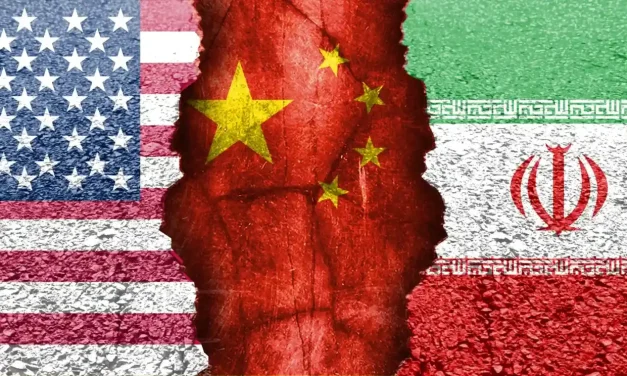
China’s Rejection of US Sanctions; Strengthening Iran’s Geopolitical Leverage

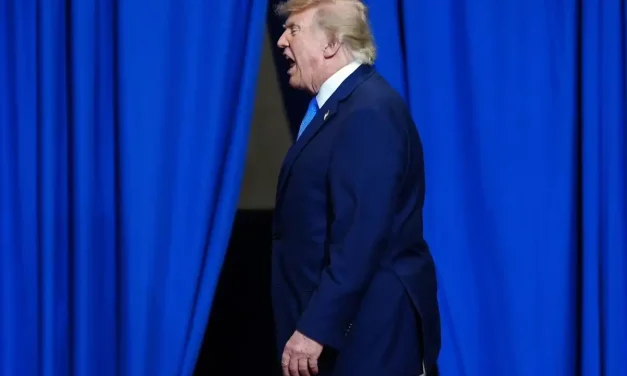
SCFR Online – Opinion: Concurrent with the official commencement of the United States’ economic war against our country, focusing on sanctions instruments, isolation, and economic pressure, what has now become increasingly important is the lack of alignment of other major global powers, especially China, with this policy.

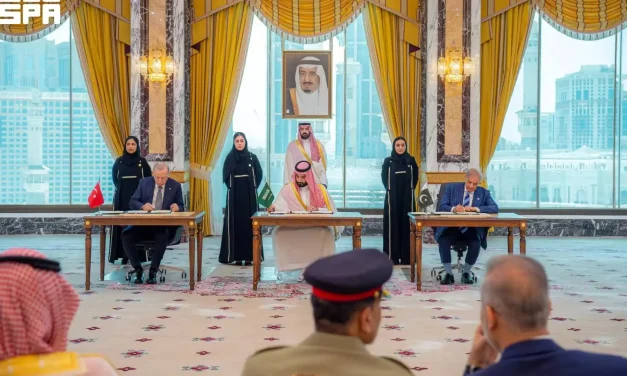
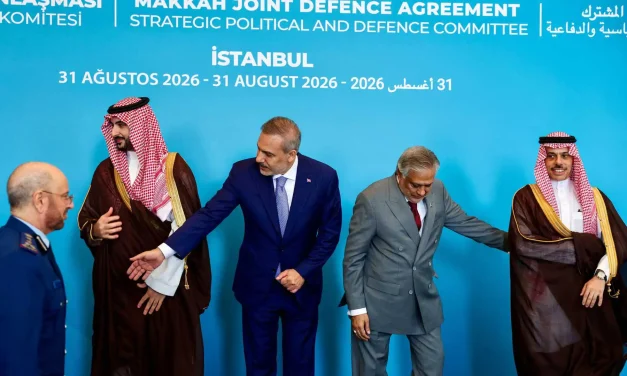
The Makkah Pact; Reasons for its Formation and Challenges Ahead

SCFR Online – Opinion: The Makkah Pact, signed between Saudi Arabia, Pakistan, and Turkey under the motto “an attack on one is an attack on all,” is viewed by some analysts less as a full-fledged military coalition and more as an attempt to reduce security dependence on an external power and to establish a regional security mechanism.

Loading

Note

Dimensions of Joe Biden’s Middle East Policy

Dimensions of Joe Biden’s Middle East Policy

Strategic Council Online – Joe Biden, despite repeatedly emphasizing his support for Israel, opposes some of Trump’s unilateral actions on the issue of peace, the annexation of more territories in the West Bank, and calls for the US to return to the two-state solution.
Dr. Tahmoures Gholami – Expert on American Issues

Corona Vaccine & World Powers Monopolistic & Discriminatory Strategy

Corona Vaccine & World Powers Monopolistic & Discriminatory Strategy

Strategic Council Online – Although the sources of vaccine production came from people who saw their aid as a donation to save humanity, but with Western governments taking control of these resources, they have been given the tools of power to determine “who should live and who should not.”
Abed Akbari – International Affairs Analyst

Strategic partnership of Moscow and Beijing, the outcome of the joint hostility of the US

Strategic partnership of Moscow and Beijing, the outcome of the joint hostility of the US

Strategic Council Online: Editorial—In spite of Washington’s view that considers China and Russia as permanent threats that should be contained and insolated through the instrument of sanctions, Moscow and Beijing, on the other hand, have been pursuing a pragmatic approach based on realism to maximize their cooperation and relations with the West with the aim of neutralizing Washington’s isolation efforts.
Dr. Ahmad Vakhshiteh—Associate Professor, Eurasia National University

Developments in Current Order in Global Financial System

Developments in Current Order in Global Financial System

Strategic Council Online – China, by applying the strategy of making countries indebted through loans or commodity financing, seeks to play a role similar to US domination over the global financial system during the reconstruction of the post-World War II Europe.
Reza Majidzadeh – Researcher of Political Economy of Development

The consequences of the US sanctions on Turkey

The consequences of the US sanctions on Turkey

Strategic Council Online—Editorial: Due to consciously cooperation with Russian arms company Rosoboronexport and the purchase of the S-400 missile defense systems, Turkey has gone under US sanctions of CAATSA as Washington does not tolerate interaction with Russia in military domains by other countries. The purchase of S-400 missile defense systems by Turkey has endangered the safety of the US military personnel and technology and would provide access for Russia to the armed forces and defense industries of Turkey. The main goal of US sanctions on Turkey is to prevent Russia from reaping huge financial gains and accessing and impacting the NATO defense systems. US Foreign Secretary Mike Pompeo has asked Turkey to resolve the issue of S-400 with long-term cooperation in the defense sector and adapt once again itself with the rules of NATO and the purchase of arms compatible with this military alliance treaty.
Mahmoud Fazeli, expert of international issues

Mutual Turkey-EU Feeling; Too Close, Too Far

Mutual Turkey-EU Feeling; Too Close, Too Far

Strategic Council Online – Europe is pursuing a kind of “tilt but don’t spill” attitude towards Turkey, based on which it is neither indifferent nor reacts harshly.
Afshin Zargar – PhD in International Relations, Faculty Member

Turkey’s Presence in Libya, Motives and Dimensions

Turkey’s Presence in Libya, Motives and Dimensions

Strategic Council Online – Turkey is trying to use the leverage of its military presence in Libya to pave the way for political negotiations on political and economic interests, particularly on the sharing of Eastern Mediterranean energy resources.
Hassan Ashrafi – Researcher on Turkey’s affairs

Impediments to the official normalization of the relations between the Zionist regime and Saudi Arabia

Impediments to the official normalization of the relations between the Zionist regime and Saudi Arabia

Strategic Council Online—Editorial: Official normalization of relations between some Arab governments and the Zionist regime is an act of treason in the Muslim world; the United Arab Emirates, Bahrain, Sudan and Morocco are the pioneers of this hated policy and should shoulder the responsibilities of such normalization. The process of normalization and publicization of relations with the Zionist regime was not a stab from the back but a blade from the front on the body of Palestine—something that will not definitely remain unanswered by the public opinion of the Arab countries and Muslim world as well as the Palestinian resistance groups. According to a public opinion poll conducted by the Arabic Center of Political Research and Studies, based in Doha, 92 percent of the surveyed public opinion in the Arab world consider the Zionist regime as a threat to the security and peace of the region.
Hamid Khoshayand—International issues analyst

Turkey’s Pendulum Foreign Policy

Turkey’s Pendulum Foreign Policy

Strategic Council Online – The pendulum feature of Turkey’s foreign policy has a high risk and will impose heavy costs on the Turkish structure in the event of an impasse in the enforcement of policies.
Ali Saadat Azar – Expert on Turkey’s affairs

أحدث الوظائف

China’s Rejection of US Sanctions; Strengthening Iran’s Geopolitical Leverage

SCFR Online – Opinion: Concurrent with the official commencement of the United States’ economic war against our country, focusing on sanctions instruments, isolation, and economic pressure, what has now become increasingly important is the lack of alignment of other major global powers, especially China, with this policy.

The Makkah Pact; Reasons for its Formation and Challenges Ahead

SCFR Online – Opinion: The Makkah Pact, signed between Saudi Arabia, Pakistan, and Turkey under the motto “an attack on one is an attack on all,” is viewed by some analysts less as a full-fledged military coalition and more as an attempt to reduce security dependence on an external power and to establish a regional security mechanism.

Loading

Note

Dimensions of Joe Biden’s Middle East Policy

Dimensions of Joe Biden’s Middle East Policy

Strategic Council Online – Joe Biden, despite repeatedly emphasizing his support for Israel, opposes some of Trump’s unilateral actions on the issue of peace, the annexation of more territories in the West Bank, and calls for the US to return to the two-state solution.
Dr. Tahmoures Gholami – Expert on American Issues

Corona Vaccine & World Powers Monopolistic & Discriminatory Strategy

Corona Vaccine & World Powers Monopolistic & Discriminatory Strategy

Strategic Council Online – Although the sources of vaccine production came from people who saw their aid as a donation to save humanity, but with Western governments taking control of these resources, they have been given the tools of power to determine “who should live and who should not.”
Abed Akbari – International Affairs Analyst

Strategic partnership of Moscow and Beijing, the outcome of the joint hostility of the US

Strategic partnership of Moscow and Beijing, the outcome of the joint hostility of the US

Strategic Council Online: Editorial—In spite of Washington’s view that considers China and Russia as permanent threats that should be contained and insolated through the instrument of sanctions, Moscow and Beijing, on the other hand, have been pursuing a pragmatic approach based on realism to maximize their cooperation and relations with the West with the aim of neutralizing Washington’s isolation efforts.
Dr. Ahmad Vakhshiteh—Associate Professor, Eurasia National University

Developments in Current Order in Global Financial System

Developments in Current Order in Global Financial System

Strategic Council Online – China, by applying the strategy of making countries indebted through loans or commodity financing, seeks to play a role similar to US domination over the global financial system during the reconstruction of the post-World War II Europe.
Reza Majidzadeh – Researcher of Political Economy of Development

The consequences of the US sanctions on Turkey

The consequences of the US sanctions on Turkey

Strategic Council Online—Editorial: Due to consciously cooperation with Russian arms company Rosoboronexport and the purchase of the S-400 missile defense systems, Turkey has gone under US sanctions of CAATSA as Washington does not tolerate interaction with Russia in military domains by other countries. The purchase of S-400 missile defense systems by Turkey has endangered the safety of the US military personnel and technology and would provide access for Russia to the armed forces and defense industries of Turkey. The main goal of US sanctions on Turkey is to prevent Russia from reaping huge financial gains and accessing and impacting the NATO defense systems. US Foreign Secretary Mike Pompeo has asked Turkey to resolve the issue of S-400 with long-term cooperation in the defense sector and adapt once again itself with the rules of NATO and the purchase of arms compatible with this military alliance treaty.
Mahmoud Fazeli, expert of international issues

Mutual Turkey-EU Feeling; Too Close, Too Far

Mutual Turkey-EU Feeling; Too Close, Too Far

Strategic Council Online – Europe is pursuing a kind of “tilt but don’t spill” attitude towards Turkey, based on which it is neither indifferent nor reacts harshly.
Afshin Zargar – PhD in International Relations, Faculty Member

Turkey’s Presence in Libya, Motives and Dimensions

Turkey’s Presence in Libya, Motives and Dimensions

Strategic Council Online – Turkey is trying to use the leverage of its military presence in Libya to pave the way for political negotiations on political and economic interests, particularly on the sharing of Eastern Mediterranean energy resources.
Hassan Ashrafi – Researcher on Turkey’s affairs

Impediments to the official normalization of the relations between the Zionist regime and Saudi Arabia

Impediments to the official normalization of the relations between the Zionist regime and Saudi Arabia

Strategic Council Online—Editorial: Official normalization of relations between some Arab governments and the Zionist regime is an act of treason in the Muslim world; the United Arab Emirates, Bahrain, Sudan and Morocco are the pioneers of this hated policy and should shoulder the responsibilities of such normalization. The process of normalization and publicization of relations with the Zionist regime was not a stab from the back but a blade from the front on the body of Palestine—something that will not definitely remain unanswered by the public opinion of the Arab countries and Muslim world as well as the Palestinian resistance groups. According to a public opinion poll conducted by the Arabic Center of Political Research and Studies, based in Doha, 92 percent of the surveyed public opinion in the Arab world consider the Zionist regime as a threat to the security and peace of the region.
Hamid Khoshayand—International issues analyst

Turkey’s Pendulum Foreign Policy

Turkey’s Pendulum Foreign Policy

Strategic Council Online – The pendulum feature of Turkey’s foreign policy has a high risk and will impose heavy costs on the Turkish structure in the event of an impasse in the enforcement of policies.
Ali Saadat Azar – Expert on Turkey’s affairs

Note

Dimensions of Joe Biden’s Middle East Policy

Dimensions of Joe Biden’s Middle East Policy

Strategic Council Online – Joe Biden, despite repeatedly emphasizing his support for Israel, opposes some of Trump’s unilateral actions on the issue of peace, the annexation of more territories in the West Bank, and calls for the US to return to the two-state solution.
Dr. Tahmoures Gholami – Expert on American Issues

Corona Vaccine & World Powers Monopolistic & Discriminatory Strategy

Corona Vaccine & World Powers Monopolistic & Discriminatory Strategy

Strategic Council Online – Although the sources of vaccine production came from people who saw their aid as a donation to save humanity, but with Western governments taking control of these resources, they have been given the tools of power to determine “who should live and who should not.”
Abed Akbari – International Affairs Analyst

Strategic partnership of Moscow and Beijing, the outcome of the joint hostility of the US

Strategic partnership of Moscow and Beijing, the outcome of the joint hostility of the US

Strategic Council Online: Editorial—In spite of Washington’s view that considers China and Russia as permanent threats that should be contained and insolated through the instrument of sanctions, Moscow and Beijing, on the other hand, have been pursuing a pragmatic approach based on realism to maximize their cooperation and relations with the West with the aim of neutralizing Washington’s isolation efforts.
Dr. Ahmad Vakhshiteh—Associate Professor, Eurasia National University

Developments in Current Order in Global Financial System

Developments in Current Order in Global Financial System

Strategic Council Online – China, by applying the strategy of making countries indebted through loans or commodity financing, seeks to play a role similar to US domination over the global financial system during the reconstruction of the post-World War II Europe.
Reza Majidzadeh – Researcher of Political Economy of Development

The consequences of the US sanctions on Turkey

The consequences of the US sanctions on Turkey

Strategic Council Online—Editorial: Due to consciously cooperation with Russian arms company Rosoboronexport and the purchase of the S-400 missile defense systems, Turkey has gone under US sanctions of CAATSA as Washington does not tolerate interaction with Russia in military domains by other countries. The purchase of S-400 missile defense systems by Turkey has endangered the safety of the US military personnel and technology and would provide access for Russia to the armed forces and defense industries of Turkey. The main goal of US sanctions on Turkey is to prevent Russia from reaping huge financial gains and accessing and impacting the NATO defense systems. US Foreign Secretary Mike Pompeo has asked Turkey to resolve the issue of S-400 with long-term cooperation in the defense sector and adapt once again itself with the rules of NATO and the purchase of arms compatible with this military alliance treaty.
Mahmoud Fazeli, expert of international issues

Mutual Turkey-EU Feeling; Too Close, Too Far

Mutual Turkey-EU Feeling; Too Close, Too Far

Strategic Council Online – Europe is pursuing a kind of “tilt but don’t spill” attitude towards Turkey, based on which it is neither indifferent nor reacts harshly.
Afshin Zargar – PhD in International Relations, Faculty Member

Turkey’s Presence in Libya, Motives and Dimensions

Turkey’s Presence in Libya, Motives and Dimensions

Strategic Council Online – Turkey is trying to use the leverage of its military presence in Libya to pave the way for political negotiations on political and economic interests, particularly on the sharing of Eastern Mediterranean energy resources.
Hassan Ashrafi – Researcher on Turkey’s affairs

Impediments to the official normalization of the relations between the Zionist regime and Saudi Arabia

Impediments to the official normalization of the relations between the Zionist regime and Saudi Arabia

Strategic Council Online—Editorial: Official normalization of relations between some Arab governments and the Zionist regime is an act of treason in the Muslim world; the United Arab Emirates, Bahrain, Sudan and Morocco are the pioneers of this hated policy and should shoulder the responsibilities of such normalization. The process of normalization and publicization of relations with the Zionist regime was not a stab from the back but a blade from the front on the body of Palestine—something that will not definitely remain unanswered by the public opinion of the Arab countries and Muslim world as well as the Palestinian resistance groups. According to a public opinion poll conducted by the Arabic Center of Political Research and Studies, based in Doha, 92 percent of the surveyed public opinion in the Arab world consider the Zionist regime as a threat to the security and peace of the region.
Hamid Khoshayand—International issues analyst

Turkey’s Pendulum Foreign Policy

Turkey’s Pendulum Foreign Policy

Strategic Council Online – The pendulum feature of Turkey’s foreign policy has a high risk and will impose heavy costs on the Turkish structure in the event of an impasse in the enforcement of policies.
Ali Saadat Azar – Expert on Turkey’s affairs

LATEST CONTENT

China’s Rejection of US Sanctions; Strengthening Iran’s Geopolitical Leverage

SCFR Online – Opinion: Concurrent with the official commencement of the United States’ economic war against our country, focusing on sanctions instruments, isolation, and economic pressure, what has now become increasingly important is the lack of alignment of other major global powers, especially China, with this policy.

The Makkah Pact; Reasons for its Formation and Challenges Ahead

SCFR Online – Opinion: The Makkah Pact, signed between Saudi Arabia, Pakistan, and Turkey under the motto “an attack on one is an attack on all,” is viewed by some analysts less as a full-fledged military coalition and more as an attempt to reduce security dependence on an external power and to establish a regional security mechanism.

Loading

Note

Dimensions of Joe Biden’s Middle East Policy

Dimensions of Joe Biden’s Middle East Policy

Strategic Council Online – Joe Biden, despite repeatedly emphasizing his support for Israel, opposes some of Trump’s unilateral actions on the issue of peace, the annexation of more territories in the West Bank, and calls for the US to return to the two-state solution.
Dr. Tahmoures Gholami – Expert on American Issues

Corona Vaccine & World Powers Monopolistic & Discriminatory Strategy

Corona Vaccine & World Powers Monopolistic & Discriminatory Strategy

Strategic Council Online – Although the sources of vaccine production came from people who saw their aid as a donation to save humanity, but with Western governments taking control of these resources, they have been given the tools of power to determine “who should live and who should not.”
Abed Akbari – International Affairs Analyst

Strategic partnership of Moscow and Beijing, the outcome of the joint hostility of the US

Strategic partnership of Moscow and Beijing, the outcome of the joint hostility of the US

Strategic Council Online: Editorial—In spite of Washington’s view that considers China and Russia as permanent threats that should be contained and insolated through the instrument of sanctions, Moscow and Beijing, on the other hand, have been pursuing a pragmatic approach based on realism to maximize their cooperation and relations with the West with the aim of neutralizing Washington’s isolation efforts.
Dr. Ahmad Vakhshiteh—Associate Professor, Eurasia National University

Developments in Current Order in Global Financial System

Developments in Current Order in Global Financial System

Strategic Council Online – China, by applying the strategy of making countries indebted through loans or commodity financing, seeks to play a role similar to US domination over the global financial system during the reconstruction of the post-World War II Europe.
Reza Majidzadeh – Researcher of Political Economy of Development

The consequences of the US sanctions on Turkey

The consequences of the US sanctions on Turkey

Strategic Council Online—Editorial: Due to consciously cooperation with Russian arms company Rosoboronexport and the purchase of the S-400 missile defense systems, Turkey has gone under US sanctions of CAATSA as Washington does not tolerate interaction with Russia in military domains by other countries. The purchase of S-400 missile defense systems by Turkey has endangered the safety of the US military personnel and technology and would provide access for Russia to the armed forces and defense industries of Turkey. The main goal of US sanctions on Turkey is to prevent Russia from reaping huge financial gains and accessing and impacting the NATO defense systems. US Foreign Secretary Mike Pompeo has asked Turkey to resolve the issue of S-400 with long-term cooperation in the defense sector and adapt once again itself with the rules of NATO and the purchase of arms compatible with this military alliance treaty.
Mahmoud Fazeli, expert of international issues

Mutual Turkey-EU Feeling; Too Close, Too Far

Mutual Turkey-EU Feeling; Too Close, Too Far

Strategic Council Online – Europe is pursuing a kind of “tilt but don’t spill” attitude towards Turkey, based on which it is neither indifferent nor reacts harshly.
Afshin Zargar – PhD in International Relations, Faculty Member

Turkey’s Presence in Libya, Motives and Dimensions

Turkey’s Presence in Libya, Motives and Dimensions

Strategic Council Online – Turkey is trying to use the leverage of its military presence in Libya to pave the way for political negotiations on political and economic interests, particularly on the sharing of Eastern Mediterranean energy resources.
Hassan Ashrafi – Researcher on Turkey’s affairs

Impediments to the official normalization of the relations between the Zionist regime and Saudi Arabia

Impediments to the official normalization of the relations between the Zionist regime and Saudi Arabia

Strategic Council Online—Editorial: Official normalization of relations between some Arab governments and the Zionist regime is an act of treason in the Muslim world; the United Arab Emirates, Bahrain, Sudan and Morocco are the pioneers of this hated policy and should shoulder the responsibilities of such normalization. The process of normalization and publicization of relations with the Zionist regime was not a stab from the back but a blade from the front on the body of Palestine—something that will not definitely remain unanswered by the public opinion of the Arab countries and Muslim world as well as the Palestinian resistance groups. According to a public opinion poll conducted by the Arabic Center of Political Research and Studies, based in Doha, 92 percent of the surveyed public opinion in the Arab world consider the Zionist regime as a threat to the security and peace of the region.
Hamid Khoshayand—International issues analyst

Turkey’s Pendulum Foreign Policy

Turkey’s Pendulum Foreign Policy

Strategic Council Online – The pendulum feature of Turkey’s foreign policy has a high risk and will impose heavy costs on the Turkish structure in the event of an impasse in the enforcement of policies.
Ali Saadat Azar – Expert on Turkey’s affairs

ÚLTIMAS PUBLICACIONES

China’s Rejection of US Sanctions; Strengthening Iran’s Geopolitical Leverage

SCFR Online – Opinion: Concurrent with the official commencement of the United States’ economic war against our country, focusing on sanctions instruments, isolation, and economic pressure, what has now become increasingly important is the lack of alignment of other major global powers, especially China, with this policy.

The Makkah Pact; Reasons for its Formation and Challenges Ahead

SCFR Online – Opinion: The Makkah Pact, signed between Saudi Arabia, Pakistan, and Turkey under the motto “an attack on one is an attack on all,” is viewed by some analysts less as a full-fledged military coalition and more as an attempt to reduce security dependence on an external power and to establish a regional security mechanism.

Loading

Note

Dimensions of Joe Biden’s Middle East Policy

Dimensions of Joe Biden’s Middle East Policy

Strategic Council Online – Joe Biden, despite repeatedly emphasizing his support for Israel, opposes some of Trump’s unilateral actions on the issue of peace, the annexation of more territories in the West Bank, and calls for the US to return to the two-state solution.
Dr. Tahmoures Gholami – Expert on American Issues

Corona Vaccine & World Powers Monopolistic & Discriminatory Strategy

Corona Vaccine & World Powers Monopolistic & Discriminatory Strategy

Strategic Council Online – Although the sources of vaccine production came from people who saw their aid as a donation to save humanity, but with Western governments taking control of these resources, they have been given the tools of power to determine “who should live and who should not.”
Abed Akbari – International Affairs Analyst

Strategic partnership of Moscow and Beijing, the outcome of the joint hostility of the US

Strategic partnership of Moscow and Beijing, the outcome of the joint hostility of the US

Strategic Council Online: Editorial—In spite of Washington’s view that considers China and Russia as permanent threats that should be contained and insolated through the instrument of sanctions, Moscow and Beijing, on the other hand, have been pursuing a pragmatic approach based on realism to maximize their cooperation and relations with the West with the aim of neutralizing Washington’s isolation efforts.
Dr. Ahmad Vakhshiteh—Associate Professor, Eurasia National University

Developments in Current Order in Global Financial System

Developments in Current Order in Global Financial System

Strategic Council Online – China, by applying the strategy of making countries indebted through loans or commodity financing, seeks to play a role similar to US domination over the global financial system during the reconstruction of the post-World War II Europe.
Reza Majidzadeh – Researcher of Political Economy of Development

The consequences of the US sanctions on Turkey

The consequences of the US sanctions on Turkey

Strategic Council Online—Editorial: Due to consciously cooperation with Russian arms company Rosoboronexport and the purchase of the S-400 missile defense systems, Turkey has gone under US sanctions of CAATSA as Washington does not tolerate interaction with Russia in military domains by other countries. The purchase of S-400 missile defense systems by Turkey has endangered the safety of the US military personnel and technology and would provide access for Russia to the armed forces and defense industries of Turkey. The main goal of US sanctions on Turkey is to prevent Russia from reaping huge financial gains and accessing and impacting the NATO defense systems. US Foreign Secretary Mike Pompeo has asked Turkey to resolve the issue of S-400 with long-term cooperation in the defense sector and adapt once again itself with the rules of NATO and the purchase of arms compatible with this military alliance treaty.
Mahmoud Fazeli, expert of international issues

Mutual Turkey-EU Feeling; Too Close, Too Far

Mutual Turkey-EU Feeling; Too Close, Too Far

Strategic Council Online – Europe is pursuing a kind of “tilt but don’t spill” attitude towards Turkey, based on which it is neither indifferent nor reacts harshly.
Afshin Zargar – PhD in International Relations, Faculty Member

Turkey’s Presence in Libya, Motives and Dimensions

Turkey’s Presence in Libya, Motives and Dimensions

Strategic Council Online – Turkey is trying to use the leverage of its military presence in Libya to pave the way for political negotiations on political and economic interests, particularly on the sharing of Eastern Mediterranean energy resources.
Hassan Ashrafi – Researcher on Turkey’s affairs

Impediments to the official normalization of the relations between the Zionist regime and Saudi Arabia

Impediments to the official normalization of the relations between the Zionist regime and Saudi Arabia

Strategic Council Online—Editorial: Official normalization of relations between some Arab governments and the Zionist regime is an act of treason in the Muslim world; the United Arab Emirates, Bahrain, Sudan and Morocco are the pioneers of this hated policy and should shoulder the responsibilities of such normalization. The process of normalization and publicization of relations with the Zionist regime was not a stab from the back but a blade from the front on the body of Palestine—something that will not definitely remain unanswered by the public opinion of the Arab countries and Muslim world as well as the Palestinian resistance groups. According to a public opinion poll conducted by the Arabic Center of Political Research and Studies, based in Doha, 92 percent of the surveyed public opinion in the Arab world consider the Zionist regime as a threat to the security and peace of the region.
Hamid Khoshayand—International issues analyst

Turkey’s Pendulum Foreign Policy

Turkey’s Pendulum Foreign Policy

Strategic Council Online – The pendulum feature of Turkey’s foreign policy has a high risk and will impose heavy costs on the Turkish structure in the event of an impasse in the enforcement of policies.
Ali Saadat Azar – Expert on Turkey’s affairs

ÚLTIMAS PUBLICACIONES

China’s Rejection of US Sanctions; Strengthening Iran’s Geopolitical Leverage

SCFR Online – Opinion: Concurrent with the official commencement of the United States’ economic war against our country, focusing on sanctions instruments, isolation, and economic pressure, what has now become increasingly important is the lack of alignment of other major global powers, especially China, with this policy.

The Makkah Pact; Reasons for its Formation and Challenges Ahead

SCFR Online – Opinion: The Makkah Pact, signed between Saudi Arabia, Pakistan, and Turkey under the motto “an attack on one is an attack on all,” is viewed by some analysts less as a full-fledged military coalition and more as an attempt to reduce security dependence on an external power and to establish a regional security mechanism.

Loading

Note

Dimensions of Joe Biden’s Middle East Policy

Dimensions of Joe Biden’s Middle East Policy

Strategic Council Online – Joe Biden, despite repeatedly emphasizing his support for Israel, opposes some of Trump’s unilateral actions on the issue of peace, the annexation of more territories in the West Bank, and calls for the US to return to the two-state solution.
Dr. Tahmoures Gholami – Expert on American Issues

Corona Vaccine & World Powers Monopolistic & Discriminatory Strategy

Corona Vaccine & World Powers Monopolistic & Discriminatory Strategy

Strategic Council Online – Although the sources of vaccine production came from people who saw their aid as a donation to save humanity, but with Western governments taking control of these resources, they have been given the tools of power to determine “who should live and who should not.”
Abed Akbari – International Affairs Analyst

Strategic partnership of Moscow and Beijing, the outcome of the joint hostility of the US

Strategic partnership of Moscow and Beijing, the outcome of the joint hostility of the US

Strategic Council Online: Editorial—In spite of Washington’s view that considers China and Russia as permanent threats that should be contained and insolated through the instrument of sanctions, Moscow and Beijing, on the other hand, have been pursuing a pragmatic approach based on realism to maximize their cooperation and relations with the West with the aim of neutralizing Washington’s isolation efforts.
Dr. Ahmad Vakhshiteh—Associate Professor, Eurasia National University

Developments in Current Order in Global Financial System

Developments in Current Order in Global Financial System

Strategic Council Online – China, by applying the strategy of making countries indebted through loans or commodity financing, seeks to play a role similar to US domination over the global financial system during the reconstruction of the post-World War II Europe.
Reza Majidzadeh – Researcher of Political Economy of Development

The consequences of the US sanctions on Turkey

The consequences of the US sanctions on Turkey

Strategic Council Online—Editorial: Due to consciously cooperation with Russian arms company Rosoboronexport and the purchase of the S-400 missile defense systems, Turkey has gone under US sanctions of CAATSA as Washington does not tolerate interaction with Russia in military domains by other countries. The purchase of S-400 missile defense systems by Turkey has endangered the safety of the US military personnel and technology and would provide access for Russia to the armed forces and defense industries of Turkey. The main goal of US sanctions on Turkey is to prevent Russia from reaping huge financial gains and accessing and impacting the NATO defense systems. US Foreign Secretary Mike Pompeo has asked Turkey to resolve the issue of S-400 with long-term cooperation in the defense sector and adapt once again itself with the rules of NATO and the purchase of arms compatible with this military alliance treaty.
Mahmoud Fazeli, expert of international issues

Mutual Turkey-EU Feeling; Too Close, Too Far

Mutual Turkey-EU Feeling; Too Close, Too Far

Strategic Council Online – Europe is pursuing a kind of “tilt but don’t spill” attitude towards Turkey, based on which it is neither indifferent nor reacts harshly.
Afshin Zargar – PhD in International Relations, Faculty Member

Turkey’s Presence in Libya, Motives and Dimensions

Turkey’s Presence in Libya, Motives and Dimensions

Strategic Council Online – Turkey is trying to use the leverage of its military presence in Libya to pave the way for political negotiations on political and economic interests, particularly on the sharing of Eastern Mediterranean energy resources.
Hassan Ashrafi – Researcher on Turkey’s affairs

Impediments to the official normalization of the relations between the Zionist regime and Saudi Arabia

Impediments to the official normalization of the relations between the Zionist regime and Saudi Arabia

Strategic Council Online—Editorial: Official normalization of relations between some Arab governments and the Zionist regime is an act of treason in the Muslim world; the United Arab Emirates, Bahrain, Sudan and Morocco are the pioneers of this hated policy and should shoulder the responsibilities of such normalization. The process of normalization and publicization of relations with the Zionist regime was not a stab from the back but a blade from the front on the body of Palestine—something that will not definitely remain unanswered by the public opinion of the Arab countries and Muslim world as well as the Palestinian resistance groups. According to a public opinion poll conducted by the Arabic Center of Political Research and Studies, based in Doha, 92 percent of the surveyed public opinion in the Arab world consider the Zionist regime as a threat to the security and peace of the region.
Hamid Khoshayand—International issues analyst

Turkey’s Pendulum Foreign Policy

Turkey’s Pendulum Foreign Policy

Strategic Council Online – The pendulum feature of Turkey’s foreign policy has a high risk and will impose heavy costs on the Turkish structure in the event of an impasse in the enforcement of policies.
Ali Saadat Azar – Expert on Turkey’s affairs

ÚLTIMAS PUBLICACIONES

China’s Rejection of US Sanctions; Strengthening Iran’s Geopolitical Leverage

SCFR Online – Opinion: Concurrent with the official commencement of the United States’ economic war against our country, focusing on sanctions instruments, isolation, and economic pressure, what has now become increasingly important is the lack of alignment of other major global powers, especially China, with this policy.

The Makkah Pact; Reasons for its Formation and Challenges Ahead

SCFR Online – Opinion: The Makkah Pact, signed between Saudi Arabia, Pakistan, and Turkey under the motto “an attack on one is an attack on all,” is viewed by some analysts less as a full-fledged military coalition and more as an attempt to reduce security dependence on an external power and to establish a regional security mechanism.

Loading

Note

Dimensions of Joe Biden’s Middle East Policy

Dimensions of Joe Biden’s Middle East Policy

Strategic Council Online – Joe Biden, despite repeatedly emphasizing his support for Israel, opposes some of Trump’s unilateral actions on the issue of peace, the annexation of more territories in the West Bank, and calls for the US to return to the two-state solution.
Dr. Tahmoures Gholami – Expert on American Issues

Corona Vaccine & World Powers Monopolistic & Discriminatory Strategy

Corona Vaccine & World Powers Monopolistic & Discriminatory Strategy

Strategic Council Online – Although the sources of vaccine production came from people who saw their aid as a donation to save humanity, but with Western governments taking control of these resources, they have been given the tools of power to determine “who should live and who should not.”
Abed Akbari – International Affairs Analyst

Strategic partnership of Moscow and Beijing, the outcome of the joint hostility of the US

Strategic partnership of Moscow and Beijing, the outcome of the joint hostility of the US

Strategic Council Online: Editorial—In spite of Washington’s view that considers China and Russia as permanent threats that should be contained and insolated through the instrument of sanctions, Moscow and Beijing, on the other hand, have been pursuing a pragmatic approach based on realism to maximize their cooperation and relations with the West with the aim of neutralizing Washington’s isolation efforts.
Dr. Ahmad Vakhshiteh—Associate Professor, Eurasia National University

Developments in Current Order in Global Financial System

Developments in Current Order in Global Financial System

Strategic Council Online – China, by applying the strategy of making countries indebted through loans or commodity financing, seeks to play a role similar to US domination over the global financial system during the reconstruction of the post-World War II Europe.
Reza Majidzadeh – Researcher of Political Economy of Development

The consequences of the US sanctions on Turkey

The consequences of the US sanctions on Turkey

Strategic Council Online—Editorial: Due to consciously cooperation with Russian arms company Rosoboronexport and the purchase of the S-400 missile defense systems, Turkey has gone under US sanctions of CAATSA as Washington does not tolerate interaction with Russia in military domains by other countries. The purchase of S-400 missile defense systems by Turkey has endangered the safety of the US military personnel and technology and would provide access for Russia to the armed forces and defense industries of Turkey. The main goal of US sanctions on Turkey is to prevent Russia from reaping huge financial gains and accessing and impacting the NATO defense systems. US Foreign Secretary Mike Pompeo has asked Turkey to resolve the issue of S-400 with long-term cooperation in the defense sector and adapt once again itself with the rules of NATO and the purchase of arms compatible with this military alliance treaty.
Mahmoud Fazeli, expert of international issues

Mutual Turkey-EU Feeling; Too Close, Too Far

Mutual Turkey-EU Feeling; Too Close, Too Far

Strategic Council Online – Europe is pursuing a kind of “tilt but don’t spill” attitude towards Turkey, based on which it is neither indifferent nor reacts harshly.
Afshin Zargar – PhD in International Relations, Faculty Member

Turkey’s Presence in Libya, Motives and Dimensions

Turkey’s Presence in Libya, Motives and Dimensions

Strategic Council Online – Turkey is trying to use the leverage of its military presence in Libya to pave the way for political negotiations on political and economic interests, particularly on the sharing of Eastern Mediterranean energy resources.
Hassan Ashrafi – Researcher on Turkey’s affairs

Impediments to the official normalization of the relations between the Zionist regime and Saudi Arabia

Impediments to the official normalization of the relations between the Zionist regime and Saudi Arabia

Strategic Council Online—Editorial: Official normalization of relations between some Arab governments and the Zionist regime is an act of treason in the Muslim world; the United Arab Emirates, Bahrain, Sudan and Morocco are the pioneers of this hated policy and should shoulder the responsibilities of such normalization. The process of normalization and publicization of relations with the Zionist regime was not a stab from the back but a blade from the front on the body of Palestine—something that will not definitely remain unanswered by the public opinion of the Arab countries and Muslim world as well as the Palestinian resistance groups. According to a public opinion poll conducted by the Arabic Center of Political Research and Studies, based in Doha, 92 percent of the surveyed public opinion in the Arab world consider the Zionist regime as a threat to the security and peace of the region.
Hamid Khoshayand—International issues analyst

Turkey’s Pendulum Foreign Policy

Turkey’s Pendulum Foreign Policy

Strategic Council Online – The pendulum feature of Turkey’s foreign policy has a high risk and will impose heavy costs on the Turkish structure in the event of an impasse in the enforcement of policies.
Ali Saadat Azar – Expert on Turkey’s affairs

ÚLTIMAS PUBLICACIONES

China’s Rejection of US Sanctions; Strengthening Iran’s Geopolitical Leverage

SCFR Online – Opinion: Concurrent with the official commencement of the United States’ economic war against our country, focusing on sanctions instruments, isolation, and economic pressure, what has now become increasingly important is the lack of alignment of other major global powers, especially China, with this policy.

The Makkah Pact; Reasons for its Formation and Challenges Ahead

SCFR Online – Opinion: The Makkah Pact, signed between Saudi Arabia, Pakistan, and Turkey under the motto “an attack on one is an attack on all,” is viewed by some analysts less as a full-fledged military coalition and more as an attempt to reduce security dependence on an external power and to establish a regional security mechanism.

Loading