Challenges of Regional Cooperation in Southwest Asia

2021/02/06 | Note, Politics, Top News

Strategic Council Online - Regional cooperation is established with the participation of countries in a region with economic, political, military-security, cultural, scientific, etc. aims and for achieving the desired situation and reducing adverse consequences. There are many examples of successful experiences in different parts of the world that have been able to increase efficiency and reduce challenges among countries in a region. Ebrahim Romina - Faculty Member of Tarbiat Modarres University

There is currently no comprehensive pattern of regional cooperation in Southwest Asia and this has not been ineffective in generating lasting challenges among countries and political structures of this part of the world. What has been referred to as regional cooperation so far has not been able to play an effective role due to its lack of input, and the small-scale regional cooperation formed due to lack of internal origin has not been able to create an interactive path and sustainable action in line with intra-regional interests. This phenomenon, for not being inherent, has led to the formation of new categories, which in practice have increased tensions among countries in Southwest Asian region.

With the formation of modern governments in Southwest Asia, one of the first examples of regional cooperation was the “Treaty of Saadabad” or Non-Aggression Pact, which was signed on July 8, 1937 at the Saadabad Palace in Tehran, among the four countries of Iran, Iraq, Afghanistan and Turkey. Although an alliance within the region with a security-military nature, it was ineffective for a number of reasons, including World War II, changes in the political structure of member states, and subsequent developments.

Another example of regional cooperation in Southwest Asia dates back to 1950s and to formation of the Baghdad Pact. The pact was formed with the participation of Turkey and Iraq, followed by Iran, Pakistan and Britain, to play a role in coordinating with the anti-communist world. The theoretical support of the treaty was the theory of blocking the influence of the Soviet Union which was theorized by George Kennan and implemented by the US security-diplomatic apparatus in conjunction with “other countries interested in the Middle East peace and security” so that “in May and June 1957, US representatives became members of the treaty’s economic and military committees.” The treaty, which was also based in Baghdad and was intended for mutual military cooperation, was transformed by the 1958 coup and formation of the Republic of Iraq, and with the coming to power of Abd al-Karim Qasim, was subject to the arrival and departure of the governments. As a result, Abd al-Karim Qasim left the treaty in 1959 with a leftist view.

During this period, the liberal world worried about the fall of the Middle East countries into the hegemonic trap of communism. In a way, the growth of leftist movements in countries such as Egypt with Gamal Abdel Nasser in 1952 and then Iraq in 1958 could face the West’s efforts against the revolutionary-military leap of communism in the Middle East with sustainable challenge. Therefore, formation of a new institution called the “Central Treaty Organization” (CENTO) was pursued with its center in Ankara and with the membership of member states of the Baghdad Pact except Iraq. Because it was between NATO in Europe and CENTO in East Asia, it was called the “Central” and its function was to block the influence and restrain George Kennan, connecting NATO and SEATO alliances together with CENTO at its center, on the one hand linking to NATO through membership of Turkey and on the other hand to SEATO through membership of Pakistan. The treaty also thwarted the peace and security demanded by the members due to lack of support of the members for Pakistan in the conflicts of 1965 and also in 1971 against India. In 1974, following the Turkish invasion of Cyprus, Britain withdrew its forces from the treaty, and Pakistan withdrew in March 1979. This treaty lasted for several months with the presence of Turkey and Iran, until the outbreak of the Islamic Revolution in Iran in 1979, and this structure was also considered as terminated.

With the withdrawal of Britain from the east of the Suez Canal in 1971 and formation of independent states on the southern shores of the Persian Gulf and the subsequent Islamic Revolution, security cooperation was established between the Arab states of the region with trans-regional powers. Such collaborations were often of a security-military nature and were formulated to support countries in the region. Some of these treaties, such as the Persian Gulf Cooperation Council (PGCC), which was formed in 1981 with the target of “economic and military integration” with Saudi Arabia, Bahrain, the United Arab Emirates, Qatar, Oman and Kuwait for reasons such as internal divisions, intra-regional challenges and lack of appropriate institutional mechanisms has failed. During this period, a wave of bilateral or multilateral treaties of those countries has been formed with an aim of supporting and ensuring security by trans-regional countries, which has continued the complex and multi-layered situation of those incomplete regional structures.

Examining the nature and functioning of incomplete regional agreements so far shows the perceived impact of threats and the need to balance the threat against the offensive capabilities and intentions of competitors, in which case optimizing power and repelling the threat has had the priority. Therefore, the main concern of such alliances and treaties can be considered in the fear of threat from competitors at the domestic and neighborhood level and understanding and fear of the threat of world powers. In such a situation, security reliance has been provided on supra-regional power structures. This issue, together with the global demand for energy resources in the West Asian region, has paved the way for their sustainable presence and dynamic activism in such a way that has exacerbated regional challenges and patterns of behavior such as interfering in each other’s internal affairs, using proxy groups as a geopolitical lever, exacerbating border and territorial issues in the regional countries, etc. and has annihilated resources and wealth of the regional countries and nations.

The heterogeneous and complex structure of West Asian countries produces this situation, which has continued with the accompaniment of trans-regional powers; but what is more important than this heterogeneity and complexity is lack of efforts to reduce the areas of heterogeneity, and this situation leads the institutional structures and citizens of the countries in the region to differentiation. Thus, the regional alliances and structures that have been formed have not only failed to move in the direction of reducing differences and divisions, but have also acted as divergent and divisive institutions and structures.

Southwest Asia is currently the only region in the world that lacks a comprehensive regional union based on inherent needs, despite the multiplicity of regional unions and treaties. The principle of its need and understanding by the leaders of the countries in the region is essential. This region has internal potentials for growth and development and can take steps towards the development and prosperity of its citizens by overcoming challenges within the region. Geographical location, fossil and renewable energy resources and money flow in this region are the main variables to get out of the underdevelopment of the region whose course passes through politics. The formation of a union based on the regional needs is a necessity that politics provides its platform.
0 Comments

Submit a Comment

Your email address will not be published. Required fields are marked *

LATEST CONTENT

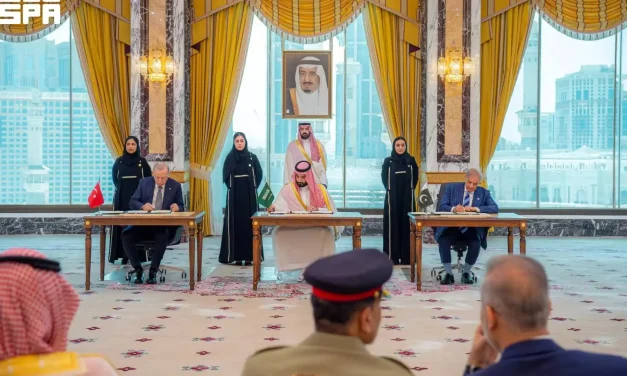
The Makkah Pact; Reasons for its Formation and Challenges Ahead

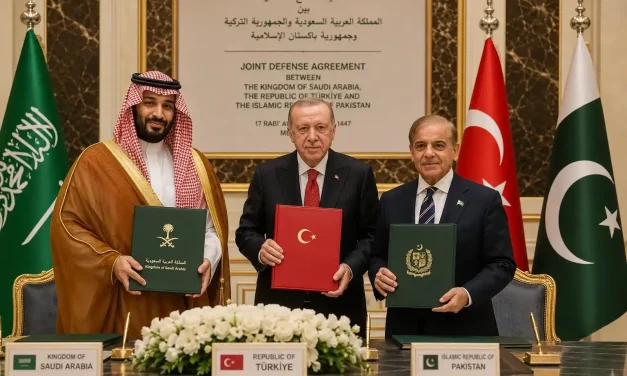
SCFR Online – Opinion: The Makkah Pact, signed between Saudi Arabia, Pakistan, and Turkey under the motto “an attack on one is an attack on all,” is viewed by some analysts less as a full-fledged military coalition and more as an attempt to reduce security dependence on an external power and to establish a regional security mechanism.

Implications of the US-Saudi Nuclear Agreement

SCFR Online – Opinion: The new US-Saudi nuclear agreement, despite legal and political ambiguities, could alter previous non-proliferation standards in West Asia and intensify nuclear competition, ushering it into a new phase.

An Analysis of Recent Turkey-Israeli Regime Tensions

SCFR Online – Opinion: Recent developments in Syria indicate an intensification of strategic rivalry between Turkey and the Israeli regime, but mutual considerations and the role of the United States have limited the likelihood of direct war.

Increasing criticism of the extensive Zionist lobby network

SCFR Online – Opinion: An examination of the mechanisms of the Israeli regime’s influence in the United States depicts a complex picture of shared interests, strategic dependencies, and the limitations of this relationship.

Realities of the Tripartite Makkah Pact

SCFR Online – Interview: The signing of the Makkah agreement between Saudi Arabia, Pakistan, and Turkey has raised questions about the future of the region’s security structure and the position of these countries in West Asian equations. Can this agreement become a genuine collective defense mechanism, or does it have more of a political and deterrent function than creating new military capacity?

Strategic Implications of the Reduction of US Weapons Stockpiles

SCFR Online – Opinion: The continuation of the US war against Iran, in addition to increasing operational costs, has called into question the actual capacity of the American arsenal to simultaneously fulfill security commitments on multiple fronts; an issue that affects deterrence, defense production capacity, and Washington’s resource prioritization.

The Formation of a New Order in Relations Between Powers

SCFR Online – Opinion: The Russia-Ukraine war and the war of the United States and the Israeli regime against Iran have been formed with different objectives and actors, but field and political developments indicate that they are not entirely separate from one another.

Loading

Últimas publicaciones

The Makkah Pact; Reasons for its Formation and Challenges Ahead

SCFR Online – Opinion: The Makkah Pact, signed between Saudi Arabia, Pakistan, and Turkey under the motto “an attack on one is an attack on all,” is viewed by some analysts less as a full-fledged military coalition and more as an attempt to reduce security dependence on an external power and to establish a regional security mechanism.

Implications of the US-Saudi Nuclear Agreement

SCFR Online – Opinion: The new US-Saudi nuclear agreement, despite legal and political ambiguities, could alter previous non-proliferation standards in West Asia and intensify nuclear competition, ushering it into a new phase.

An Analysis of Recent Turkey-Israeli Regime Tensions

SCFR Online – Opinion: Recent developments in Syria indicate an intensification of strategic rivalry between Turkey and the Israeli regime, but mutual considerations and the role of the United States have limited the likelihood of direct war.

Increasing criticism of the extensive Zionist lobby network

SCFR Online – Opinion: An examination of the mechanisms of the Israeli regime’s influence in the United States depicts a complex picture of shared interests, strategic dependencies, and the limitations of this relationship.

Realities of the Tripartite Makkah Pact

SCFR Online – Interview: The signing of the Makkah agreement between Saudi Arabia, Pakistan, and Turkey has raised questions about the future of the region’s security structure and the position of these countries in West Asian equations. Can this agreement become a genuine collective defense mechanism, or does it have more of a political and deterrent function than creating new military capacity?

Strategic Implications of the Reduction of US Weapons Stockpiles

SCFR Online – Opinion: The continuation of the US war against Iran, in addition to increasing operational costs, has called into question the actual capacity of the American arsenal to simultaneously fulfill security commitments on multiple fronts; an issue that affects deterrence, defense production capacity, and Washington’s resource prioritization.

The Formation of a New Order in Relations Between Powers

SCFR Online – Opinion: The Russia-Ukraine war and the war of the United States and the Israeli regime against Iran have been formed with different objectives and actors, but field and political developments indicate that they are not entirely separate from one another.

Loading

DERNIER CONTENU

The Makkah Pact; Reasons for its Formation and Challenges Ahead

SCFR Online – Opinion: The Makkah Pact, signed between Saudi Arabia, Pakistan, and Turkey under the motto “an attack on one is an attack on all,” is viewed by some analysts less as a full-fledged military coalition and more as an attempt to reduce security dependence on an external power and to establish a regional security mechanism.

Implications of the US-Saudi Nuclear Agreement

SCFR Online – Opinion: The new US-Saudi nuclear agreement, despite legal and political ambiguities, could alter previous non-proliferation standards in West Asia and intensify nuclear competition, ushering it into a new phase.

An Analysis of Recent Turkey-Israeli Regime Tensions

SCFR Online – Opinion: Recent developments in Syria indicate an intensification of strategic rivalry between Turkey and the Israeli regime, but mutual considerations and the role of the United States have limited the likelihood of direct war.

Increasing criticism of the extensive Zionist lobby network

SCFR Online – Opinion: An examination of the mechanisms of the Israeli regime’s influence in the United States depicts a complex picture of shared interests, strategic dependencies, and the limitations of this relationship.

Realities of the Tripartite Makkah Pact

SCFR Online – Interview: The signing of the Makkah agreement between Saudi Arabia, Pakistan, and Turkey has raised questions about the future of the region’s security structure and the position of these countries in West Asian equations. Can this agreement become a genuine collective defense mechanism, or does it have more of a political and deterrent function than creating new military capacity?

Strategic Implications of the Reduction of US Weapons Stockpiles

SCFR Online – Opinion: The continuation of the US war against Iran, in addition to increasing operational costs, has called into question the actual capacity of the American arsenal to simultaneously fulfill security commitments on multiple fronts; an issue that affects deterrence, defense production capacity, and Washington’s resource prioritization.

The Formation of a New Order in Relations Between Powers

SCFR Online – Opinion: The Russia-Ukraine war and the war of the United States and the Israeli regime against Iran have been formed with different objectives and actors, but field and political developments indicate that they are not entirely separate from one another.

Loading

DERNIER CONTENU

The Makkah Pact; Reasons for its Formation and Challenges Ahead

SCFR Online – Opinion: The Makkah Pact, signed between Saudi Arabia, Pakistan, and Turkey under the motto “an attack on one is an attack on all,” is viewed by some analysts less as a full-fledged military coalition and more as an attempt to reduce security dependence on an external power and to establish a regional security mechanism.

Implications of the US-Saudi Nuclear Agreement

SCFR Online – Opinion: The new US-Saudi nuclear agreement, despite legal and political ambiguities, could alter previous non-proliferation standards in West Asia and intensify nuclear competition, ushering it into a new phase.

An Analysis of Recent Turkey-Israeli Regime Tensions

SCFR Online – Opinion: Recent developments in Syria indicate an intensification of strategic rivalry between Turkey and the Israeli regime, but mutual considerations and the role of the United States have limited the likelihood of direct war.

Increasing criticism of the extensive Zionist lobby network

SCFR Online – Opinion: An examination of the mechanisms of the Israeli regime’s influence in the United States depicts a complex picture of shared interests, strategic dependencies, and the limitations of this relationship.

Realities of the Tripartite Makkah Pact

SCFR Online – Interview: The signing of the Makkah agreement between Saudi Arabia, Pakistan, and Turkey has raised questions about the future of the region’s security structure and the position of these countries in West Asian equations. Can this agreement become a genuine collective defense mechanism, or does it have more of a political and deterrent function than creating new military capacity?

Strategic Implications of the Reduction of US Weapons Stockpiles

SCFR Online – Opinion: The continuation of the US war against Iran, in addition to increasing operational costs, has called into question the actual capacity of the American arsenal to simultaneously fulfill security commitments on multiple fronts; an issue that affects deterrence, defense production capacity, and Washington’s resource prioritization.

The Formation of a New Order in Relations Between Powers

SCFR Online – Opinion: The Russia-Ukraine war and the war of the United States and the Israeli regime against Iran have been formed with different objectives and actors, but field and political developments indicate that they are not entirely separate from one another.

Loading

DERNIER CONTENU

The Makkah Pact; Reasons for its Formation and Challenges Ahead

SCFR Online – Opinion: The Makkah Pact, signed between Saudi Arabia, Pakistan, and Turkey under the motto “an attack on one is an attack on all,” is viewed by some analysts less as a full-fledged military coalition and more as an attempt to reduce security dependence on an external power and to establish a regional security mechanism.

Implications of the US-Saudi Nuclear Agreement

SCFR Online – Opinion: The new US-Saudi nuclear agreement, despite legal and political ambiguities, could alter previous non-proliferation standards in West Asia and intensify nuclear competition, ushering it into a new phase.

An Analysis of Recent Turkey-Israeli Regime Tensions

SCFR Online – Opinion: Recent developments in Syria indicate an intensification of strategic rivalry between Turkey and the Israeli regime, but mutual considerations and the role of the United States have limited the likelihood of direct war.

Increasing criticism of the extensive Zionist lobby network

SCFR Online – Opinion: An examination of the mechanisms of the Israeli regime’s influence in the United States depicts a complex picture of shared interests, strategic dependencies, and the limitations of this relationship.

Realities of the Tripartite Makkah Pact

SCFR Online – Interview: The signing of the Makkah agreement between Saudi Arabia, Pakistan, and Turkey has raised questions about the future of the region’s security structure and the position of these countries in West Asian equations. Can this agreement become a genuine collective defense mechanism, or does it have more of a political and deterrent function than creating new military capacity?

Strategic Implications of the Reduction of US Weapons Stockpiles

SCFR Online – Opinion: The continuation of the US war against Iran, in addition to increasing operational costs, has called into question the actual capacity of the American arsenal to simultaneously fulfill security commitments on multiple fronts; an issue that affects deterrence, defense production capacity, and Washington’s resource prioritization.

The Formation of a New Order in Relations Between Powers

SCFR Online – Opinion: The Russia-Ukraine war and the war of the United States and the Israeli regime against Iran have been formed with different objectives and actors, but field and political developments indicate that they are not entirely separate from one another.

Loading