Reasons for the Ineffectiveness of Trump’s “Economic War” against Iran
SCFR Online – Opinion: The intensification of U.S. sanctions against Iran on the eve of the U.S. midterm elections indicates Washington’s inability to achieve its war objectives.


SCFR Online – Opinion: The intensification of U.S. sanctions against Iran on the eve of the U.S. midterm elections indicates Washington’s inability to achieve its war objectives.

SCFR Online – Opinion: The competition between Washington and Beijing over chips and artificial intelligence, simultaneously with the shifting of technological balances, has taken on new economic and security dimensions.
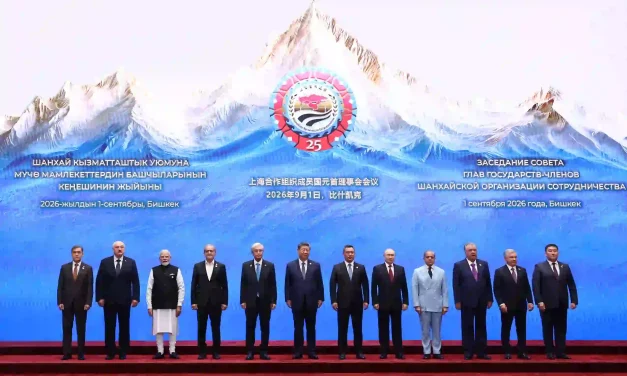
SCFR Online – Opinion: The Shanghai Cooperation Organization summit has created a new opportunity for Iran to transform its membership from a political achievement into economic and transit cooperation.
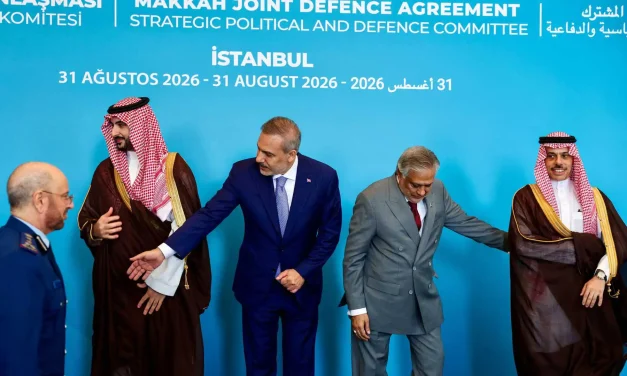
Strategic Council Online – Note: The Makkah Defense Pact can be seen as a sign of regional countries’ efforts to reduce security dependence on extra-regional powers and redefine the balance in West Asia.
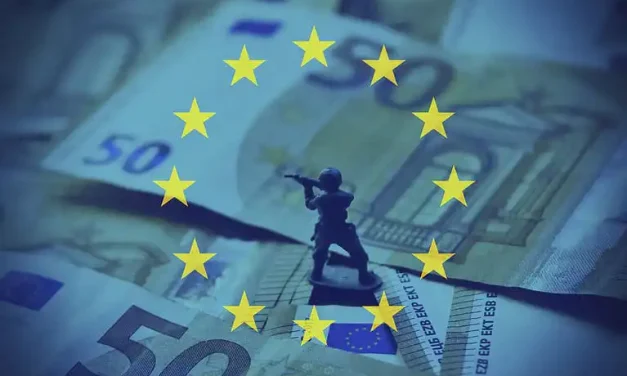
SCFR Online – Opinion: The Ukraine war, by exhausting US military capability on one hand and strengthening European defense capacity on the other, has altered the balance of power in the European continent, cast uncertainty over NATO’s future, and is driving it toward a European NATO.
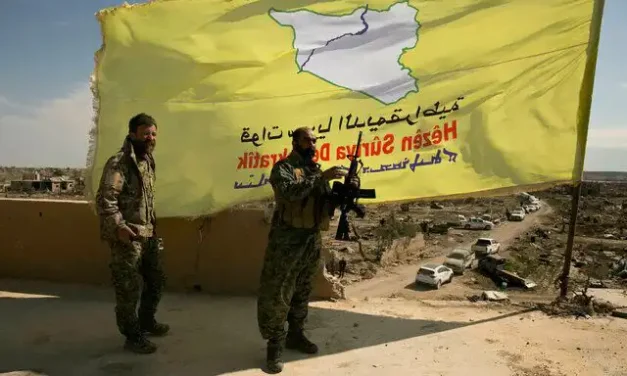
SCFR Online – Opinion: The dissolution of the SDF, although considered an achievement for Turkey’s security, does not put an end to the challenges arising from the Israeli regime’s aggression and expansionism, refugees, and Syria’s fragility.
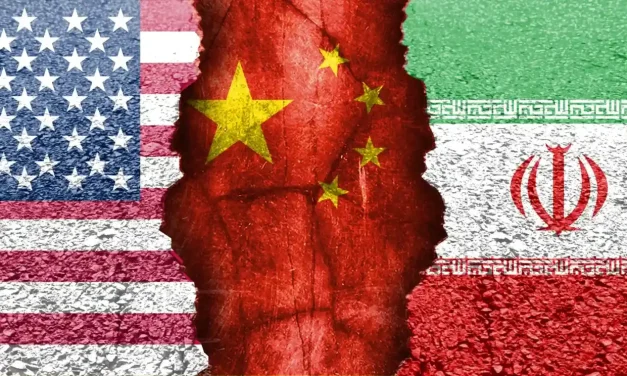
SCFR Online – Opinion: Concurrent with the official commencement of the United States’ economic war against our country, focusing on sanctions instruments, isolation, and economic pressure, what has now become increasingly important is the lack of alignment of other major global powers, especially China, with this policy.
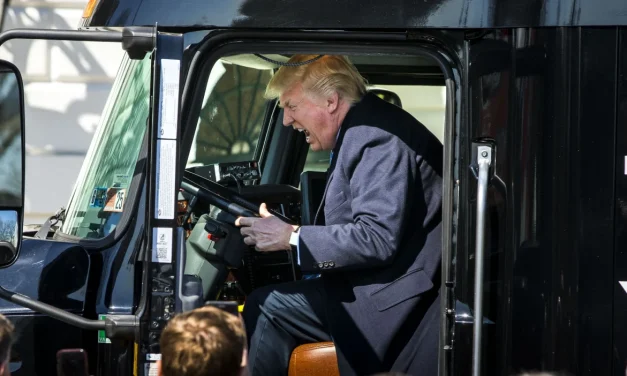
SCFR Online – Opinion: The new US sanctions against Iran, despite extensive propaganda, face serious obstacles to success due to the ineffectiveness of sanctions tools and opposition from some of Tehran’s trading partners.


Strategic Council Online: The “maximum pressure” that results in depriving the Iranian people of getting access to certain medicines and vital necessities or the assassination of the late Commander of Quds Force in clear violation of the UN Charter is just part of the crimes Donald Trump committed against Iran during his presidency. With the transition of power in the United States the best opportunity has been provided in order to make it up for the harms done and amend the wrong policies implemented by the US administration.
Dr. Ali Karbalaei Hosseini – Researcher of International Law
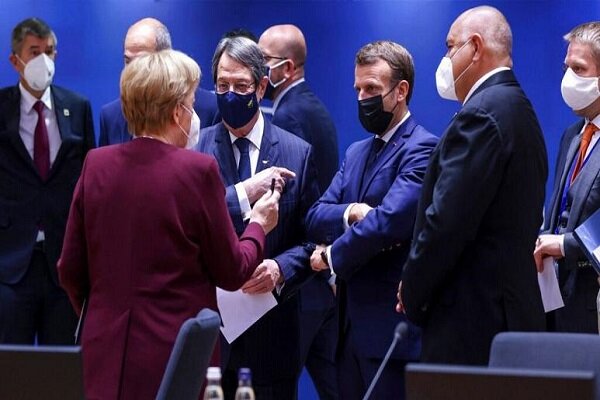
Strategic Council Online: Tensions between Greece and Turkey in the East Mediterranean Sea have entered a complicated phase over Turkey’s measures regarding drillings and exploration activities in the region.
Mahmoud Fazeli – Expert on Europe Affairs

Strategic Council Online: Turkey is like a bone in the throat of Europe, especially France, which can neither deal with it seriously nor get rid of it.
Dr Abdolreza Farajirad – Expert on Geopolitical Affairs

Strategic Council Online—Opinion: During the tenure of Shavkat Miromonovich Mirziyoyev, the new President of Uzbekistan, changes have partly taken place in relations between Uzbekistan and other countries including Iran.
Hassan Beheshtipoor—Expert of Asia affairs

Strategic Council Online—Opinion: It is highly likely to witness riots and protests after the upcoming US presidential elections and the probable emergence of clashes between the supporters of the candidates of Republicans and the Democratic Party; of course, it is not yet clear whether or not clashes would happen between the two groups as it really depends on the amount of gap between the votes of the two candidates.
Foad Izadi—Professor at the Faculty of the World Studies, University of Tehran
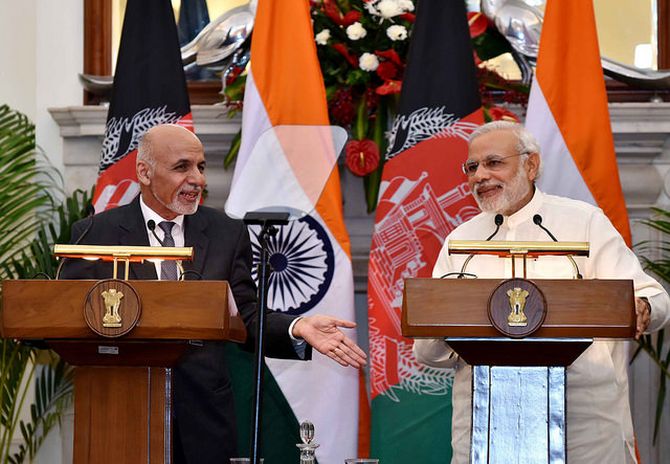
Strategic Council Online—Opinion: If for any reason, the Taliban are successful, either through political means and negotiations or military action, to possess maximum power in Afghanistan, and the two other parties—the North Front and the Liberal Democrats—are consequently placed in the weakness position, India would be definitely a loser as the Taliban’s view is ideological and therefore considers groups such as Lashkar-e-Taiba, Jaish-e-Mohammed and Hizb-ul-Mujahideen against India in Keshmir as its own allies. Therefore, if the Taliban are placed in the position of strength and power in Afghanistan, they would provide such groups with operational bases and India can no longer play a significant role in that country.
Pirmohammad Mollazehi—Expert of the subcontinent

Strategic Council Online: Three major crimes have been registered in the Saudi-UAE war record; the first is crimes against humanity, the second ethnic cleansing, and the third is genocide, each of which reflects some of the dimensions of Saudi crimes in the war against Yemen.
Jafar Qanadbashi – Expert on West Asia Issues

Strategic Council Online -Opinion: Killing START II would mean that Russia and the United States consider no limit whatsoever on developing nuclear weapons and there exists the possibility that the American side especially would make efforts to achieve new progress and development in the area of nuclear weapons or increase the number of American nuclear missiles and weapons.
Shoayb Bahman—Expert of Russia relations

Strategic Council Online—Opinion: The fifty-ninth presidential elections of the United States of American will be held on 03 November 2020 with the main competition being between two old candidates from the two main political parties of the United States. The candidate of the Democratic Party has nearly five decades of experience while the Republican candidate has only four years of political experience. They are now entering the last week of the tense campaign to enter the White House. Any political and geopolitical action of the United States is a phenomenon which has its own special repercussions for the entire world and countries.
Ebrahim Roomina—Member of the academic staff of Tarbiyat Modarres University

Strategic Council Online: To the same extent that confrontation between the US and China intensifies, the governments of East and South Asia will more clearly define the borders between themselves and China. Therefore, the US call on India to reduce the volume of trade with China should be sought within the framework of the Indo-Pacific strategy, which the two countries have already agreed over the need for its existence and its implementation.
Tahmoures Gholami – Expert on American Affairs
SCFR Online – Opinion: The intensification of U.S. sanctions against Iran on the eve of the U.S. midterm elections indicates Washington’s inability to achieve its war objectives.
SCFR Online – Opinion: The competition between Washington and Beijing over chips and artificial intelligence, simultaneously with the shifting of technological balances, has taken on new economic and security dimensions.
SCFR Online – Opinion: The Shanghai Cooperation Organization summit has created a new opportunity for Iran to transform its membership from a political achievement into economic and transit cooperation.
Strategic Council Online – Note: The Makkah Defense Pact can be seen as a sign of regional countries’ efforts to reduce security dependence on extra-regional powers and redefine the balance in West Asia.
SCFR Online – Opinion: The Ukraine war, by exhausting US military capability on one hand and strengthening European defense capacity on the other, has altered the balance of power in the European continent, cast uncertainty over NATO’s future, and is driving it toward a European NATO.
SCFR Online – Opinion: The dissolution of the SDF, although considered an achievement for Turkey’s security, does not put an end to the challenges arising from the Israeli regime’s aggression and expansionism, refugees, and Syria’s fragility.
SCFR Online – Opinion: Concurrent with the official commencement of the United States’ economic war against our country, focusing on sanctions instruments, isolation, and economic pressure, what has now become increasingly important is the lack of alignment of other major global powers, especially China, with this policy.
SCFR Online – Opinion: The new US sanctions against Iran, despite extensive propaganda, face serious obstacles to success due to the ineffectiveness of sanctions tools and opposition from some of Tehran’s trading partners.
Strategic Council Online: The “maximum pressure” that results in depriving the Iranian people of getting access to certain medicines and vital necessities or the assassination of the late Commander of Quds Force in clear violation of the UN Charter is just part of the crimes Donald Trump committed against Iran during his presidency. With the transition of power in the United States the best opportunity has been provided in order to make it up for the harms done and amend the wrong policies implemented by the US administration.
Dr. Ali Karbalaei Hosseini – Researcher of International Law
Strategic Council Online: Tensions between Greece and Turkey in the East Mediterranean Sea have entered a complicated phase over Turkey’s measures regarding drillings and exploration activities in the region.
Mahmoud Fazeli – Expert on Europe Affairs
Strategic Council Online: Turkey is like a bone in the throat of Europe, especially France, which can neither deal with it seriously nor get rid of it.
Dr Abdolreza Farajirad – Expert on Geopolitical Affairs
Strategic Council Online—Opinion: During the tenure of Shavkat Miromonovich Mirziyoyev, the new President of Uzbekistan, changes have partly taken place in relations between Uzbekistan and other countries including Iran.
Hassan Beheshtipoor—Expert of Asia affairs
Strategic Council Online—Opinion: It is highly likely to witness riots and protests after the upcoming US presidential elections and the probable emergence of clashes between the supporters of the candidates of Republicans and the Democratic Party; of course, it is not yet clear whether or not clashes would happen between the two groups as it really depends on the amount of gap between the votes of the two candidates.
Foad Izadi—Professor at the Faculty of the World Studies, University of Tehran
Strategic Council Online—Opinion: If for any reason, the Taliban are successful, either through political means and negotiations or military action, to possess maximum power in Afghanistan, and the two other parties—the North Front and the Liberal Democrats—are consequently placed in the weakness position, India would be definitely a loser as the Taliban’s view is ideological and therefore considers groups such as Lashkar-e-Taiba, Jaish-e-Mohammed and Hizb-ul-Mujahideen against India in Keshmir as its own allies. Therefore, if the Taliban are placed in the position of strength and power in Afghanistan, they would provide such groups with operational bases and India can no longer play a significant role in that country.
Pirmohammad Mollazehi—Expert of the subcontinent
Strategic Council Online: Three major crimes have been registered in the Saudi-UAE war record; the first is crimes against humanity, the second ethnic cleansing, and the third is genocide, each of which reflects some of the dimensions of Saudi crimes in the war against Yemen.
Jafar Qanadbashi – Expert on West Asia Issues
Strategic Council Online -Opinion: Killing START II would mean that Russia and the United States consider no limit whatsoever on developing nuclear weapons and there exists the possibility that the American side especially would make efforts to achieve new progress and development in the area of nuclear weapons or increase the number of American nuclear missiles and weapons.
Shoayb Bahman—Expert of Russia relations
Strategic Council Online—Opinion: The fifty-ninth presidential elections of the United States of American will be held on 03 November 2020 with the main competition being between two old candidates from the two main political parties of the United States. The candidate of the Democratic Party has nearly five decades of experience while the Republican candidate has only four years of political experience. They are now entering the last week of the tense campaign to enter the White House. Any political and geopolitical action of the United States is a phenomenon which has its own special repercussions for the entire world and countries.
Ebrahim Roomina—Member of the academic staff of Tarbiyat Modarres University
Strategic Council Online: To the same extent that confrontation between the US and China intensifies, the governments of East and South Asia will more clearly define the borders between themselves and China. Therefore, the US call on India to reduce the volume of trade with China should be sought within the framework of the Indo-Pacific strategy, which the two countries have already agreed over the need for its existence and its implementation.
Tahmoures Gholami – Expert on American Affairs
Strategic Council Online: The “maximum pressure” that results in depriving the Iranian people of getting access to certain medicines and vital necessities or the assassination of the late Commander of Quds Force in clear violation of the UN Charter is just part of the crimes Donald Trump committed against Iran during his presidency. With the transition of power in the United States the best opportunity has been provided in order to make it up for the harms done and amend the wrong policies implemented by the US administration.
Dr. Ali Karbalaei Hosseini – Researcher of International Law
Strategic Council Online: Tensions between Greece and Turkey in the East Mediterranean Sea have entered a complicated phase over Turkey’s measures regarding drillings and exploration activities in the region.
Mahmoud Fazeli – Expert on Europe Affairs
Strategic Council Online: Turkey is like a bone in the throat of Europe, especially France, which can neither deal with it seriously nor get rid of it.
Dr Abdolreza Farajirad – Expert on Geopolitical Affairs
Strategic Council Online—Opinion: During the tenure of Shavkat Miromonovich Mirziyoyev, the new President of Uzbekistan, changes have partly taken place in relations between Uzbekistan and other countries including Iran.
Hassan Beheshtipoor—Expert of Asia affairs
Strategic Council Online—Opinion: It is highly likely to witness riots and protests after the upcoming US presidential elections and the probable emergence of clashes between the supporters of the candidates of Republicans and the Democratic Party; of course, it is not yet clear whether or not clashes would happen between the two groups as it really depends on the amount of gap between the votes of the two candidates.
Foad Izadi—Professor at the Faculty of the World Studies, University of Tehran
Strategic Council Online—Opinion: If for any reason, the Taliban are successful, either through political means and negotiations or military action, to possess maximum power in Afghanistan, and the two other parties—the North Front and the Liberal Democrats—are consequently placed in the weakness position, India would be definitely a loser as the Taliban’s view is ideological and therefore considers groups such as Lashkar-e-Taiba, Jaish-e-Mohammed and Hizb-ul-Mujahideen against India in Keshmir as its own allies. Therefore, if the Taliban are placed in the position of strength and power in Afghanistan, they would provide such groups with operational bases and India can no longer play a significant role in that country.
Pirmohammad Mollazehi—Expert of the subcontinent
Strategic Council Online: Three major crimes have been registered in the Saudi-UAE war record; the first is crimes against humanity, the second ethnic cleansing, and the third is genocide, each of which reflects some of the dimensions of Saudi crimes in the war against Yemen.
Jafar Qanadbashi – Expert on West Asia Issues
Strategic Council Online -Opinion: Killing START II would mean that Russia and the United States consider no limit whatsoever on developing nuclear weapons and there exists the possibility that the American side especially would make efforts to achieve new progress and development in the area of nuclear weapons or increase the number of American nuclear missiles and weapons.
Shoayb Bahman—Expert of Russia relations
Strategic Council Online—Opinion: The fifty-ninth presidential elections of the United States of American will be held on 03 November 2020 with the main competition being between two old candidates from the two main political parties of the United States. The candidate of the Democratic Party has nearly five decades of experience while the Republican candidate has only four years of political experience. They are now entering the last week of the tense campaign to enter the White House. Any political and geopolitical action of the United States is a phenomenon which has its own special repercussions for the entire world and countries.
Ebrahim Roomina—Member of the academic staff of Tarbiyat Modarres University
Strategic Council Online: To the same extent that confrontation between the US and China intensifies, the governments of East and South Asia will more clearly define the borders between themselves and China. Therefore, the US call on India to reduce the volume of trade with China should be sought within the framework of the Indo-Pacific strategy, which the two countries have already agreed over the need for its existence and its implementation.
Tahmoures Gholami – Expert on American Affairs
SCFR Online – Opinion: The intensification of U.S. sanctions against Iran on the eve of the U.S. midterm elections indicates Washington’s inability to achieve its war objectives.
SCFR Online – Opinion: The competition between Washington and Beijing over chips and artificial intelligence, simultaneously with the shifting of technological balances, has taken on new economic and security dimensions.
SCFR Online – Opinion: The Shanghai Cooperation Organization summit has created a new opportunity for Iran to transform its membership from a political achievement into economic and transit cooperation.
Strategic Council Online – Note: The Makkah Defense Pact can be seen as a sign of regional countries’ efforts to reduce security dependence on extra-regional powers and redefine the balance in West Asia.
SCFR Online – Opinion: The Ukraine war, by exhausting US military capability on one hand and strengthening European defense capacity on the other, has altered the balance of power in the European continent, cast uncertainty over NATO’s future, and is driving it toward a European NATO.
SCFR Online – Opinion: The dissolution of the SDF, although considered an achievement for Turkey’s security, does not put an end to the challenges arising from the Israeli regime’s aggression and expansionism, refugees, and Syria’s fragility.
SCFR Online – Opinion: Concurrent with the official commencement of the United States’ economic war against our country, focusing on sanctions instruments, isolation, and economic pressure, what has now become increasingly important is the lack of alignment of other major global powers, especially China, with this policy.
SCFR Online – Opinion: The new US sanctions against Iran, despite extensive propaganda, face serious obstacles to success due to the ineffectiveness of sanctions tools and opposition from some of Tehran’s trading partners.
Strategic Council Online: The “maximum pressure” that results in depriving the Iranian people of getting access to certain medicines and vital necessities or the assassination of the late Commander of Quds Force in clear violation of the UN Charter is just part of the crimes Donald Trump committed against Iran during his presidency. With the transition of power in the United States the best opportunity has been provided in order to make it up for the harms done and amend the wrong policies implemented by the US administration.
Dr. Ali Karbalaei Hosseini – Researcher of International Law
Strategic Council Online: Tensions between Greece and Turkey in the East Mediterranean Sea have entered a complicated phase over Turkey’s measures regarding drillings and exploration activities in the region.
Mahmoud Fazeli – Expert on Europe Affairs
Strategic Council Online: Turkey is like a bone in the throat of Europe, especially France, which can neither deal with it seriously nor get rid of it.
Dr Abdolreza Farajirad – Expert on Geopolitical Affairs
Strategic Council Online—Opinion: During the tenure of Shavkat Miromonovich Mirziyoyev, the new President of Uzbekistan, changes have partly taken place in relations between Uzbekistan and other countries including Iran.
Hassan Beheshtipoor—Expert of Asia affairs
Strategic Council Online—Opinion: It is highly likely to witness riots and protests after the upcoming US presidential elections and the probable emergence of clashes between the supporters of the candidates of Republicans and the Democratic Party; of course, it is not yet clear whether or not clashes would happen between the two groups as it really depends on the amount of gap between the votes of the two candidates.
Foad Izadi—Professor at the Faculty of the World Studies, University of Tehran
Strategic Council Online—Opinion: If for any reason, the Taliban are successful, either through political means and negotiations or military action, to possess maximum power in Afghanistan, and the two other parties—the North Front and the Liberal Democrats—are consequently placed in the weakness position, India would be definitely a loser as the Taliban’s view is ideological and therefore considers groups such as Lashkar-e-Taiba, Jaish-e-Mohammed and Hizb-ul-Mujahideen against India in Keshmir as its own allies. Therefore, if the Taliban are placed in the position of strength and power in Afghanistan, they would provide such groups with operational bases and India can no longer play a significant role in that country.
Pirmohammad Mollazehi—Expert of the subcontinent
Strategic Council Online: Three major crimes have been registered in the Saudi-UAE war record; the first is crimes against humanity, the second ethnic cleansing, and the third is genocide, each of which reflects some of the dimensions of Saudi crimes in the war against Yemen.
Jafar Qanadbashi – Expert on West Asia Issues
Strategic Council Online -Opinion: Killing START II would mean that Russia and the United States consider no limit whatsoever on developing nuclear weapons and there exists the possibility that the American side especially would make efforts to achieve new progress and development in the area of nuclear weapons or increase the number of American nuclear missiles and weapons.
Shoayb Bahman—Expert of Russia relations
Strategic Council Online—Opinion: The fifty-ninth presidential elections of the United States of American will be held on 03 November 2020 with the main competition being between two old candidates from the two main political parties of the United States. The candidate of the Democratic Party has nearly five decades of experience while the Republican candidate has only four years of political experience. They are now entering the last week of the tense campaign to enter the White House. Any political and geopolitical action of the United States is a phenomenon which has its own special repercussions for the entire world and countries.
Ebrahim Roomina—Member of the academic staff of Tarbiyat Modarres University
Strategic Council Online: To the same extent that confrontation between the US and China intensifies, the governments of East and South Asia will more clearly define the borders between themselves and China. Therefore, the US call on India to reduce the volume of trade with China should be sought within the framework of the Indo-Pacific strategy, which the two countries have already agreed over the need for its existence and its implementation.
Tahmoures Gholami – Expert on American Affairs
SCFR Online – Opinion: The intensification of U.S. sanctions against Iran on the eve of the U.S. midterm elections indicates Washington’s inability to achieve its war objectives.
SCFR Online – Opinion: The competition between Washington and Beijing over chips and artificial intelligence, simultaneously with the shifting of technological balances, has taken on new economic and security dimensions.
SCFR Online – Opinion: The Shanghai Cooperation Organization summit has created a new opportunity for Iran to transform its membership from a political achievement into economic and transit cooperation.
Strategic Council Online – Note: The Makkah Defense Pact can be seen as a sign of regional countries’ efforts to reduce security dependence on extra-regional powers and redefine the balance in West Asia.
SCFR Online – Opinion: The Ukraine war, by exhausting US military capability on one hand and strengthening European defense capacity on the other, has altered the balance of power in the European continent, cast uncertainty over NATO’s future, and is driving it toward a European NATO.
SCFR Online – Opinion: The dissolution of the SDF, although considered an achievement for Turkey’s security, does not put an end to the challenges arising from the Israeli regime’s aggression and expansionism, refugees, and Syria’s fragility.
SCFR Online – Opinion: Concurrent with the official commencement of the United States’ economic war against our country, focusing on sanctions instruments, isolation, and economic pressure, what has now become increasingly important is the lack of alignment of other major global powers, especially China, with this policy.
SCFR Online – Opinion: The new US sanctions against Iran, despite extensive propaganda, face serious obstacles to success due to the ineffectiveness of sanctions tools and opposition from some of Tehran’s trading partners.
Strategic Council Online: The “maximum pressure” that results in depriving the Iranian people of getting access to certain medicines and vital necessities or the assassination of the late Commander of Quds Force in clear violation of the UN Charter is just part of the crimes Donald Trump committed against Iran during his presidency. With the transition of power in the United States the best opportunity has been provided in order to make it up for the harms done and amend the wrong policies implemented by the US administration.
Dr. Ali Karbalaei Hosseini – Researcher of International Law
Strategic Council Online: Tensions between Greece and Turkey in the East Mediterranean Sea have entered a complicated phase over Turkey’s measures regarding drillings and exploration activities in the region.
Mahmoud Fazeli – Expert on Europe Affairs
Strategic Council Online: Turkey is like a bone in the throat of Europe, especially France, which can neither deal with it seriously nor get rid of it.
Dr Abdolreza Farajirad – Expert on Geopolitical Affairs
Strategic Council Online—Opinion: During the tenure of Shavkat Miromonovich Mirziyoyev, the new President of Uzbekistan, changes have partly taken place in relations between Uzbekistan and other countries including Iran.
Hassan Beheshtipoor—Expert of Asia affairs
Strategic Council Online—Opinion: It is highly likely to witness riots and protests after the upcoming US presidential elections and the probable emergence of clashes between the supporters of the candidates of Republicans and the Democratic Party; of course, it is not yet clear whether or not clashes would happen between the two groups as it really depends on the amount of gap between the votes of the two candidates.
Foad Izadi—Professor at the Faculty of the World Studies, University of Tehran
Strategic Council Online—Opinion: If for any reason, the Taliban are successful, either through political means and negotiations or military action, to possess maximum power in Afghanistan, and the two other parties—the North Front and the Liberal Democrats—are consequently placed in the weakness position, India would be definitely a loser as the Taliban’s view is ideological and therefore considers groups such as Lashkar-e-Taiba, Jaish-e-Mohammed and Hizb-ul-Mujahideen against India in Keshmir as its own allies. Therefore, if the Taliban are placed in the position of strength and power in Afghanistan, they would provide such groups with operational bases and India can no longer play a significant role in that country.
Pirmohammad Mollazehi—Expert of the subcontinent
Strategic Council Online: Three major crimes have been registered in the Saudi-UAE war record; the first is crimes against humanity, the second ethnic cleansing, and the third is genocide, each of which reflects some of the dimensions of Saudi crimes in the war against Yemen.
Jafar Qanadbashi – Expert on West Asia Issues
Strategic Council Online -Opinion: Killing START II would mean that Russia and the United States consider no limit whatsoever on developing nuclear weapons and there exists the possibility that the American side especially would make efforts to achieve new progress and development in the area of nuclear weapons or increase the number of American nuclear missiles and weapons.
Shoayb Bahman—Expert of Russia relations
Strategic Council Online—Opinion: The fifty-ninth presidential elections of the United States of American will be held on 03 November 2020 with the main competition being between two old candidates from the two main political parties of the United States. The candidate of the Democratic Party has nearly five decades of experience while the Republican candidate has only four years of political experience. They are now entering the last week of the tense campaign to enter the White House. Any political and geopolitical action of the United States is a phenomenon which has its own special repercussions for the entire world and countries.
Ebrahim Roomina—Member of the academic staff of Tarbiyat Modarres University
Strategic Council Online: To the same extent that confrontation between the US and China intensifies, the governments of East and South Asia will more clearly define the borders between themselves and China. Therefore, the US call on India to reduce the volume of trade with China should be sought within the framework of the Indo-Pacific strategy, which the two countries have already agreed over the need for its existence and its implementation.
Tahmoures Gholami – Expert on American Affairs
SCFR Online – Opinion: The intensification of U.S. sanctions against Iran on the eve of the U.S. midterm elections indicates Washington’s inability to achieve its war objectives.
SCFR Online – Opinion: The competition between Washington and Beijing over chips and artificial intelligence, simultaneously with the shifting of technological balances, has taken on new economic and security dimensions.
SCFR Online – Opinion: The Shanghai Cooperation Organization summit has created a new opportunity for Iran to transform its membership from a political achievement into economic and transit cooperation.
Strategic Council Online – Note: The Makkah Defense Pact can be seen as a sign of regional countries’ efforts to reduce security dependence on extra-regional powers and redefine the balance in West Asia.
SCFR Online – Opinion: The Ukraine war, by exhausting US military capability on one hand and strengthening European defense capacity on the other, has altered the balance of power in the European continent, cast uncertainty over NATO’s future, and is driving it toward a European NATO.
SCFR Online – Opinion: The dissolution of the SDF, although considered an achievement for Turkey’s security, does not put an end to the challenges arising from the Israeli regime’s aggression and expansionism, refugees, and Syria’s fragility.
SCFR Online – Opinion: Concurrent with the official commencement of the United States’ economic war against our country, focusing on sanctions instruments, isolation, and economic pressure, what has now become increasingly important is the lack of alignment of other major global powers, especially China, with this policy.
SCFR Online – Opinion: The new US sanctions against Iran, despite extensive propaganda, face serious obstacles to success due to the ineffectiveness of sanctions tools and opposition from some of Tehran’s trading partners.
Strategic Council Online: The “maximum pressure” that results in depriving the Iranian people of getting access to certain medicines and vital necessities or the assassination of the late Commander of Quds Force in clear violation of the UN Charter is just part of the crimes Donald Trump committed against Iran during his presidency. With the transition of power in the United States the best opportunity has been provided in order to make it up for the harms done and amend the wrong policies implemented by the US administration.
Dr. Ali Karbalaei Hosseini – Researcher of International Law
Strategic Council Online: Tensions between Greece and Turkey in the East Mediterranean Sea have entered a complicated phase over Turkey’s measures regarding drillings and exploration activities in the region.
Mahmoud Fazeli – Expert on Europe Affairs
Strategic Council Online: Turkey is like a bone in the throat of Europe, especially France, which can neither deal with it seriously nor get rid of it.
Dr Abdolreza Farajirad – Expert on Geopolitical Affairs
Strategic Council Online—Opinion: During the tenure of Shavkat Miromonovich Mirziyoyev, the new President of Uzbekistan, changes have partly taken place in relations between Uzbekistan and other countries including Iran.
Hassan Beheshtipoor—Expert of Asia affairs
Strategic Council Online—Opinion: It is highly likely to witness riots and protests after the upcoming US presidential elections and the probable emergence of clashes between the supporters of the candidates of Republicans and the Democratic Party; of course, it is not yet clear whether or not clashes would happen between the two groups as it really depends on the amount of gap between the votes of the two candidates.
Foad Izadi—Professor at the Faculty of the World Studies, University of Tehran
Strategic Council Online—Opinion: If for any reason, the Taliban are successful, either through political means and negotiations or military action, to possess maximum power in Afghanistan, and the two other parties—the North Front and the Liberal Democrats—are consequently placed in the weakness position, India would be definitely a loser as the Taliban’s view is ideological and therefore considers groups such as Lashkar-e-Taiba, Jaish-e-Mohammed and Hizb-ul-Mujahideen against India in Keshmir as its own allies. Therefore, if the Taliban are placed in the position of strength and power in Afghanistan, they would provide such groups with operational bases and India can no longer play a significant role in that country.
Pirmohammad Mollazehi—Expert of the subcontinent
Strategic Council Online: Three major crimes have been registered in the Saudi-UAE war record; the first is crimes against humanity, the second ethnic cleansing, and the third is genocide, each of which reflects some of the dimensions of Saudi crimes in the war against Yemen.
Jafar Qanadbashi – Expert on West Asia Issues
Strategic Council Online -Opinion: Killing START II would mean that Russia and the United States consider no limit whatsoever on developing nuclear weapons and there exists the possibility that the American side especially would make efforts to achieve new progress and development in the area of nuclear weapons or increase the number of American nuclear missiles and weapons.
Shoayb Bahman—Expert of Russia relations
Strategic Council Online—Opinion: The fifty-ninth presidential elections of the United States of American will be held on 03 November 2020 with the main competition being between two old candidates from the two main political parties of the United States. The candidate of the Democratic Party has nearly five decades of experience while the Republican candidate has only four years of political experience. They are now entering the last week of the tense campaign to enter the White House. Any political and geopolitical action of the United States is a phenomenon which has its own special repercussions for the entire world and countries.
Ebrahim Roomina—Member of the academic staff of Tarbiyat Modarres University
Strategic Council Online: To the same extent that confrontation between the US and China intensifies, the governments of East and South Asia will more clearly define the borders between themselves and China. Therefore, the US call on India to reduce the volume of trade with China should be sought within the framework of the Indo-Pacific strategy, which the two countries have already agreed over the need for its existence and its implementation.
Tahmoures Gholami – Expert on American Affairs
SCFR Online – Opinion: The intensification of U.S. sanctions against Iran on the eve of the U.S. midterm elections indicates Washington’s inability to achieve its war objectives.
SCFR Online – Opinion: The competition between Washington and Beijing over chips and artificial intelligence, simultaneously with the shifting of technological balances, has taken on new economic and security dimensions.
SCFR Online – Opinion: The Shanghai Cooperation Organization summit has created a new opportunity for Iran to transform its membership from a political achievement into economic and transit cooperation.
Strategic Council Online – Note: The Makkah Defense Pact can be seen as a sign of regional countries’ efforts to reduce security dependence on extra-regional powers and redefine the balance in West Asia.
SCFR Online – Opinion: The Ukraine war, by exhausting US military capability on one hand and strengthening European defense capacity on the other, has altered the balance of power in the European continent, cast uncertainty over NATO’s future, and is driving it toward a European NATO.
SCFR Online – Opinion: The dissolution of the SDF, although considered an achievement for Turkey’s security, does not put an end to the challenges arising from the Israeli regime’s aggression and expansionism, refugees, and Syria’s fragility.
SCFR Online – Opinion: Concurrent with the official commencement of the United States’ economic war against our country, focusing on sanctions instruments, isolation, and economic pressure, what has now become increasingly important is the lack of alignment of other major global powers, especially China, with this policy.
SCFR Online – Opinion: The new US sanctions against Iran, despite extensive propaganda, face serious obstacles to success due to the ineffectiveness of sanctions tools and opposition from some of Tehran’s trading partners.
Strategic Council Online: The “maximum pressure” that results in depriving the Iranian people of getting access to certain medicines and vital necessities or the assassination of the late Commander of Quds Force in clear violation of the UN Charter is just part of the crimes Donald Trump committed against Iran during his presidency. With the transition of power in the United States the best opportunity has been provided in order to make it up for the harms done and amend the wrong policies implemented by the US administration.
Dr. Ali Karbalaei Hosseini – Researcher of International Law
Strategic Council Online: Tensions between Greece and Turkey in the East Mediterranean Sea have entered a complicated phase over Turkey’s measures regarding drillings and exploration activities in the region.
Mahmoud Fazeli – Expert on Europe Affairs
Strategic Council Online: Turkey is like a bone in the throat of Europe, especially France, which can neither deal with it seriously nor get rid of it.
Dr Abdolreza Farajirad – Expert on Geopolitical Affairs
Strategic Council Online—Opinion: During the tenure of Shavkat Miromonovich Mirziyoyev, the new President of Uzbekistan, changes have partly taken place in relations between Uzbekistan and other countries including Iran.
Hassan Beheshtipoor—Expert of Asia affairs
Strategic Council Online—Opinion: It is highly likely to witness riots and protests after the upcoming US presidential elections and the probable emergence of clashes between the supporters of the candidates of Republicans and the Democratic Party; of course, it is not yet clear whether or not clashes would happen between the two groups as it really depends on the amount of gap between the votes of the two candidates.
Foad Izadi—Professor at the Faculty of the World Studies, University of Tehran
Strategic Council Online—Opinion: If for any reason, the Taliban are successful, either through political means and negotiations or military action, to possess maximum power in Afghanistan, and the two other parties—the North Front and the Liberal Democrats—are consequently placed in the weakness position, India would be definitely a loser as the Taliban’s view is ideological and therefore considers groups such as Lashkar-e-Taiba, Jaish-e-Mohammed and Hizb-ul-Mujahideen against India in Keshmir as its own allies. Therefore, if the Taliban are placed in the position of strength and power in Afghanistan, they would provide such groups with operational bases and India can no longer play a significant role in that country.
Pirmohammad Mollazehi—Expert of the subcontinent
Strategic Council Online: Three major crimes have been registered in the Saudi-UAE war record; the first is crimes against humanity, the second ethnic cleansing, and the third is genocide, each of which reflects some of the dimensions of Saudi crimes in the war against Yemen.
Jafar Qanadbashi – Expert on West Asia Issues
Strategic Council Online -Opinion: Killing START II would mean that Russia and the United States consider no limit whatsoever on developing nuclear weapons and there exists the possibility that the American side especially would make efforts to achieve new progress and development in the area of nuclear weapons or increase the number of American nuclear missiles and weapons.
Shoayb Bahman—Expert of Russia relations
Strategic Council Online—Opinion: The fifty-ninth presidential elections of the United States of American will be held on 03 November 2020 with the main competition being between two old candidates from the two main political parties of the United States. The candidate of the Democratic Party has nearly five decades of experience while the Republican candidate has only four years of political experience. They are now entering the last week of the tense campaign to enter the White House. Any political and geopolitical action of the United States is a phenomenon which has its own special repercussions for the entire world and countries.
Ebrahim Roomina—Member of the academic staff of Tarbiyat Modarres University
Strategic Council Online: To the same extent that confrontation between the US and China intensifies, the governments of East and South Asia will more clearly define the borders between themselves and China. Therefore, the US call on India to reduce the volume of trade with China should be sought within the framework of the Indo-Pacific strategy, which the two countries have already agreed over the need for its existence and its implementation.
Tahmoures Gholami – Expert on American Affairs
SCFR Online – Opinion: The intensification of U.S. sanctions against Iran on the eve of the U.S. midterm elections indicates Washington’s inability to achieve its war objectives.
SCFR Online – Opinion: The competition between Washington and Beijing over chips and artificial intelligence, simultaneously with the shifting of technological balances, has taken on new economic and security dimensions.
SCFR Online – Opinion: The Shanghai Cooperation Organization summit has created a new opportunity for Iran to transform its membership from a political achievement into economic and transit cooperation.
Strategic Council Online – Note: The Makkah Defense Pact can be seen as a sign of regional countries’ efforts to reduce security dependence on extra-regional powers and redefine the balance in West Asia.
SCFR Online – Opinion: The Ukraine war, by exhausting US military capability on one hand and strengthening European defense capacity on the other, has altered the balance of power in the European continent, cast uncertainty over NATO’s future, and is driving it toward a European NATO.
SCFR Online – Opinion: The dissolution of the SDF, although considered an achievement for Turkey’s security, does not put an end to the challenges arising from the Israeli regime’s aggression and expansionism, refugees, and Syria’s fragility.
SCFR Online – Opinion: Concurrent with the official commencement of the United States’ economic war against our country, focusing on sanctions instruments, isolation, and economic pressure, what has now become increasingly important is the lack of alignment of other major global powers, especially China, with this policy.
SCFR Online – Opinion: The new US sanctions against Iran, despite extensive propaganda, face serious obstacles to success due to the ineffectiveness of sanctions tools and opposition from some of Tehran’s trading partners.