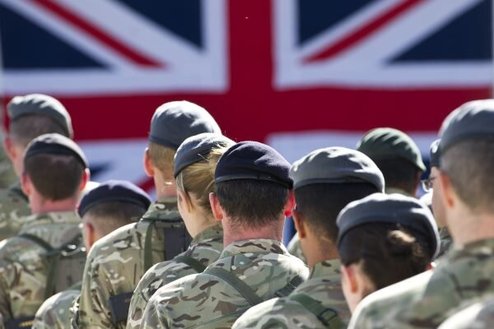
Strengthening Marine, Air Power, Britain’s Post-Brexit Strategy

Strategic Council Online - One of Britain’s responses to instability in liberal order that, in the aftermath of the World War II and together with the United States, has been its most important advocate and builder, is strategic self-reliance, by strengthening its defense capability and the noteworthy point in the new defense assessment of that country is the shift in orientation and focus on national defense and foreign security around the naval and air forces and establishment of more military bases outside Britain. Dr. Hossein Mofidi Ahmadi - Researcher on Britain and Europe affairs

The British Prime Minister has recently announced a plan to significantly increase the country’s defense spending. The plan which will add 22 billion dollars to the country’s 55.5 billion dollars annual defense budget over the next four years, and according to the prime minister, will be used for the creation of a new artificial intelligence center, the Royal Air Force space command and restoring Britain’s navy to its position as Europe’s most powerful maritime force.

The question is that, what are the main drivers of announcing and pursuing this policy? A strategy that is in stark contrast to the country’s austerity policies since 2008 and is announced within the context of Britain facing the widespread economic risk of the Coronavirus crisis; the period of withdrawing the European Union as well as the period of facing the post-Trump America. In addition, apart from the Labor Party’s concerns about the possible impact of the government’s new policy on British development aid to the world, we are also witness to the Labor Party’s relative support for that policy.

It seems that the British attempt to adapt to the new geopolitical conditions of the international system; one of the most important drivers of the sharp increase in the British military budget should be considered as the efforts of this country to rebuild the profile and role of post-Brexit Britain, as well as repair the large equipment and human deficits, especially in the Navy and Royal Air Force.

Britain’s attempt to adapt to the new geopolitical conditions of the international system, and its attempt to re-establish the profile and the role of post-Brexit Britain, is a reflection of Britain’s perception of the transitional order in the international system. A situation in which there is intense competition between the two forces and the dynamics of security considerations; political reality; geopolitics and geoeconomics resulting from the rise of powers such as China and Russia (entering into the era of competition of great powers) on the one hand and liberal internationalism on the other hand.

In this context, Britain seeks to take advantage of the changing position of the international order, by increasingly exploiting one of the most important advantages of its global influence, namely military power, and playing a role in creating alternatives for achieving its goals and interests in the post-Brexit and post-liberal internationalism. In the field of constructing post-Brexit Britain, the country is faced with two options or scenarios: ‘global Britain’ and ‘Britain outside the EU but inside Europe’.

Nevertheless, it seems that Britain will try to combine the main components of both options and scenarios, and in the context of the phenomenon that I call the highlighted “basic security and interest coalitions” over the “normative alliances”, with increasing military power, will insist upon its role and importance in the “coalition of volunteers in special cases” with some European and American powers.

Indeed, a Britain, which is in need of the United States and Europe both geopolitically and geoeconomically, is sending these messages to them that Britain is a player with grand power and influence to strengthen the “basic security and interest coalitions” of the West in the face of new geopolitics and geoeconomics risks.

Of course, it should be noted that, given its perception of the structurality of the continued levels of unwanted estrangement from the US role playing as the leader of the liberal world, Britain seeks levels of self-reliance, by increasing its defense and military capabilities. Indeed, one of Britain’s responses to instability in liberal order that, in the aftermath of the World War II and together with the United States, has been its most important advocate and builder is strategic self-reliance, by strengthening its defense capability.

Repair of large arms and personnel deficits – with an emphasis on next-generation technologies – and human resources, especially in the Navy and the Royal Air Force, should be considered as other drivers of the sharp increase in the British military budget. A driver, which, of course, is directly related to the drivers we have already mentioned. In fact, the past two decades have seen a traceable weakening of the Navy and the Royal Air Force due to an unbalanced focus on ground forces, including due to military involvement in Afghanistan and Iraq.

It seems that a noticeable point in the new British defense assessment is the shift in focus of national defense and foreign security around the Navy and the Air Force and establishment of more military bases outside Britain – albeit with more focus on the Asia-Pacific and the Middle East region. A process that is closely linked to the role that Britain considers for itself after Brexit and in the context of the evolution of the international system, regardless of how successful it has been in achieving this role-making.


0 Comments

Submit a Comment

Your email address will not be published. Required fields are marked *

LATEST CONTENT

Temporary China–U.S. Trade Truce in the Shadow of Fundamental Distrust

SCFR Online – Opinion: The recent visit of the President of the United States to China is significant from various aspects; because China is recognized as the world’s second-largest economic power and a growing economy. The Chinese are also advancing in various fields, including the space sector, artificial intelligence, and military industries; to the extent that in the military sector, whereas they previously lacked an aircraft carrier, they now possess their third aircraft carrier. On the other hand, the United States, as a superpower, has always regarded China as its rival and continues to view it as such today.

Iran’s Success in the Narrative Battle in Cyberspace

SCFR Online – Opinion: In the war between Iran and the United States, the main battlefield was not defined solely in the military domain; rather, the battle of narratives in cyberspace—particularly through memes—reached a decisive level.

The Global Energy Shock Situation and Future Scenarios

SCFR Online – Opinion: Only one month after the beginning of the Ramadan War, maritime traffic in the Strait of Hormuz decreased dramatically, with Bloomberg announcing a reduction of 103 vessels; Brent oil prices rose by more than 50 percent, and gasoline prices in the United States increased by 31.4 percent. Additionally, benchmark gas prices in Europe showed a 73.4 percent increase.

Al-Zaydi’s Selection as Prime Minister, The Beginning of a New Chapter in Iraq

SCFR Online – Note: After approximately five months of political deadlock and institutional confusion, Ali al-Zaydi has finally been selected as Iraq’s Prime Minister. Al-Zaydi’s selection as Prime Minister represents a positive sign of the completion of the government formation process and the beginning of a new phase in Iraqi politics and governance. The emergence of a young, technocratic figure from the third generation of politicians—in a context where the country has been administered by traditional figures for decades—revives hope that Iraq may perhaps distance itself from the repetitive cycle of crises and experience a new path of stability, efficiency, and regional convergence.

Loading

Últimas publicaciones

Temporary China–U.S. Trade Truce in the Shadow of Fundamental Distrust

SCFR Online – Opinion: The recent visit of the President of the United States to China is significant from various aspects; because China is recognized as the world’s second-largest economic power and a growing economy. The Chinese are also advancing in various fields, including the space sector, artificial intelligence, and military industries; to the extent that in the military sector, whereas they previously lacked an aircraft carrier, they now possess their third aircraft carrier. On the other hand, the United States, as a superpower, has always regarded China as its rival and continues to view it as such today.

Iran’s Success in the Narrative Battle in Cyberspace

SCFR Online – Opinion: In the war between Iran and the United States, the main battlefield was not defined solely in the military domain; rather, the battle of narratives in cyberspace—particularly through memes—reached a decisive level.

The Global Energy Shock Situation and Future Scenarios

SCFR Online – Opinion: Only one month after the beginning of the Ramadan War, maritime traffic in the Strait of Hormuz decreased dramatically, with Bloomberg announcing a reduction of 103 vessels; Brent oil prices rose by more than 50 percent, and gasoline prices in the United States increased by 31.4 percent. Additionally, benchmark gas prices in Europe showed a 73.4 percent increase.

Al-Zaydi’s Selection as Prime Minister, The Beginning of a New Chapter in Iraq

SCFR Online – Note: After approximately five months of political deadlock and institutional confusion, Ali al-Zaydi has finally been selected as Iraq’s Prime Minister. Al-Zaydi’s selection as Prime Minister represents a positive sign of the completion of the government formation process and the beginning of a new phase in Iraqi politics and governance. The emergence of a young, technocratic figure from the third generation of politicians—in a context where the country has been administered by traditional figures for decades—revives hope that Iraq may perhaps distance itself from the repetitive cycle of crises and experience a new path of stability, efficiency, and regional convergence.

Loading

DERNIER CONTENU

Temporary China–U.S. Trade Truce in the Shadow of Fundamental Distrust

SCFR Online – Opinion: The recent visit of the President of the United States to China is significant from various aspects; because China is recognized as the world’s second-largest economic power and a growing economy. The Chinese are also advancing in various fields, including the space sector, artificial intelligence, and military industries; to the extent that in the military sector, whereas they previously lacked an aircraft carrier, they now possess their third aircraft carrier. On the other hand, the United States, as a superpower, has always regarded China as its rival and continues to view it as such today.

Iran’s Success in the Narrative Battle in Cyberspace

SCFR Online – Opinion: In the war between Iran and the United States, the main battlefield was not defined solely in the military domain; rather, the battle of narratives in cyberspace—particularly through memes—reached a decisive level.

The Global Energy Shock Situation and Future Scenarios

SCFR Online – Opinion: Only one month after the beginning of the Ramadan War, maritime traffic in the Strait of Hormuz decreased dramatically, with Bloomberg announcing a reduction of 103 vessels; Brent oil prices rose by more than 50 percent, and gasoline prices in the United States increased by 31.4 percent. Additionally, benchmark gas prices in Europe showed a 73.4 percent increase.

Al-Zaydi’s Selection as Prime Minister, The Beginning of a New Chapter in Iraq

SCFR Online – Note: After approximately five months of political deadlock and institutional confusion, Ali al-Zaydi has finally been selected as Iraq’s Prime Minister. Al-Zaydi’s selection as Prime Minister represents a positive sign of the completion of the government formation process and the beginning of a new phase in Iraqi politics and governance. The emergence of a young, technocratic figure from the third generation of politicians—in a context where the country has been administered by traditional figures for decades—revives hope that Iraq may perhaps distance itself from the repetitive cycle of crises and experience a new path of stability, efficiency, and regional convergence.

Loading

DERNIER CONTENU

Temporary China–U.S. Trade Truce in the Shadow of Fundamental Distrust

SCFR Online – Opinion: The recent visit of the President of the United States to China is significant from various aspects; because China is recognized as the world’s second-largest economic power and a growing economy. The Chinese are also advancing in various fields, including the space sector, artificial intelligence, and military industries; to the extent that in the military sector, whereas they previously lacked an aircraft carrier, they now possess their third aircraft carrier. On the other hand, the United States, as a superpower, has always regarded China as its rival and continues to view it as such today.

Iran’s Success in the Narrative Battle in Cyberspace

SCFR Online – Opinion: In the war between Iran and the United States, the main battlefield was not defined solely in the military domain; rather, the battle of narratives in cyberspace—particularly through memes—reached a decisive level.

The Global Energy Shock Situation and Future Scenarios

SCFR Online – Opinion: Only one month after the beginning of the Ramadan War, maritime traffic in the Strait of Hormuz decreased dramatically, with Bloomberg announcing a reduction of 103 vessels; Brent oil prices rose by more than 50 percent, and gasoline prices in the United States increased by 31.4 percent. Additionally, benchmark gas prices in Europe showed a 73.4 percent increase.

Al-Zaydi’s Selection as Prime Minister, The Beginning of a New Chapter in Iraq

SCFR Online – Note: After approximately five months of political deadlock and institutional confusion, Ali al-Zaydi has finally been selected as Iraq’s Prime Minister. Al-Zaydi’s selection as Prime Minister represents a positive sign of the completion of the government formation process and the beginning of a new phase in Iraqi politics and governance. The emergence of a young, technocratic figure from the third generation of politicians—in a context where the country has been administered by traditional figures for decades—revives hope that Iraq may perhaps distance itself from the repetitive cycle of crises and experience a new path of stability, efficiency, and regional convergence.

Loading

DERNIER CONTENU

Temporary China–U.S. Trade Truce in the Shadow of Fundamental Distrust

SCFR Online – Opinion: The recent visit of the President of the United States to China is significant from various aspects; because China is recognized as the world’s second-largest economic power and a growing economy. The Chinese are also advancing in various fields, including the space sector, artificial intelligence, and military industries; to the extent that in the military sector, whereas they previously lacked an aircraft carrier, they now possess their third aircraft carrier. On the other hand, the United States, as a superpower, has always regarded China as its rival and continues to view it as such today.

Iran’s Success in the Narrative Battle in Cyberspace

SCFR Online – Opinion: In the war between Iran and the United States, the main battlefield was not defined solely in the military domain; rather, the battle of narratives in cyberspace—particularly through memes—reached a decisive level.

The Global Energy Shock Situation and Future Scenarios

SCFR Online – Opinion: Only one month after the beginning of the Ramadan War, maritime traffic in the Strait of Hormuz decreased dramatically, with Bloomberg announcing a reduction of 103 vessels; Brent oil prices rose by more than 50 percent, and gasoline prices in the United States increased by 31.4 percent. Additionally, benchmark gas prices in Europe showed a 73.4 percent increase.

Al-Zaydi’s Selection as Prime Minister, The Beginning of a New Chapter in Iraq

SCFR Online – Note: After approximately five months of political deadlock and institutional confusion, Ali al-Zaydi has finally been selected as Iraq’s Prime Minister. Al-Zaydi’s selection as Prime Minister represents a positive sign of the completion of the government formation process and the beginning of a new phase in Iraqi politics and governance. The emergence of a young, technocratic figure from the third generation of politicians—in a context where the country has been administered by traditional figures for decades—revives hope that Iraq may perhaps distance itself from the repetitive cycle of crises and experience a new path of stability, efficiency, and regional convergence.

Loading



