جدیدترین مطالب

The Makkah Pact; Reasons for its Formation and Challenges Ahead

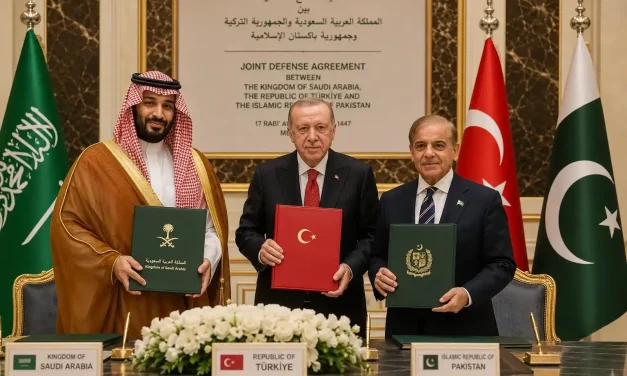
SCFR Online – Opinion: The Makkah Pact, signed between Saudi Arabia, Pakistan, and Turkey under the motto “an attack on one is an attack on all,” is viewed by some analysts less as a full-fledged military coalition and more as an attempt to reduce security dependence on an external power and to establish a regional security mechanism.
Implications of the US-Saudi Nuclear Agreement

SCFR Online – Opinion: The new US-Saudi nuclear agreement, despite legal and political ambiguities, could alter previous non-proliferation standards in West Asia and intensify nuclear competition, ushering it into a new phase.

An Analysis of Recent Turkey-Israeli Regime Tensions

SCFR Online – Opinion: Recent developments in Syria indicate an intensification of strategic rivalry between Turkey and the Israeli regime, but mutual considerations and the role of the United States have limited the likelihood of direct war.

Increasing criticism of the extensive Zionist lobby network

SCFR Online – Opinion: An examination of the mechanisms of the Israeli regime’s influence in the United States depicts a complex picture of shared interests, strategic dependencies, and the limitations of this relationship.

Realities of the Tripartite Makkah Pact

SCFR Online – Interview: The signing of the Makkah agreement between Saudi Arabia, Pakistan, and Turkey has raised questions about the future of the region’s security structure and the position of these countries in West Asian equations. Can this agreement become a genuine collective defense mechanism, or does it have more of a political and deterrent function than creating new military capacity?

Strategic Implications of the Reduction of US Weapons Stockpiles

SCFR Online – Opinion: The continuation of the US war against Iran, in addition to increasing operational costs, has called into question the actual capacity of the American arsenal to simultaneously fulfill security commitments on multiple fronts; an issue that affects deterrence, defense production capacity, and Washington’s resource prioritization.

The Formation of a New Order in Relations Between Powers

SCFR Online – Opinion: The Russia-Ukraine war and the war of the United States and the Israeli regime against Iran have been formed with different objectives and actors, but field and political developments indicate that they are not entirely separate from one another.

Loading

Strategic Perspective

Possibility of Libya’s Disintegration Due to Foreign Intervention

Possibility of Libya’s Disintegration Due to Foreign Intervention

Strategic Council Online – Regional players such as Saudi Arabia, the United Arab Emirates and Turkey are attempting to break up Libya and establish two different sovereignties in the country. Therefore, if the war continues, Libya like Sudan, may be divided into the two eastern and western parts.
Hassan Hanizadeh – Expert on Asian Affairs

Repercussions of normalization of Zionist regime relations for the southern states of the Persian Gulf

Repercussions of normalization of Zionist regime relations for the southern states of the Persian Gulf

Strategic Council Online: Editorial—Rapprochement with the Zionist regime could entail serious consequences for the Arab regimes of the region; the public opinion in these countries especially Bahrain are opposed to Manama policy of betrayal to the Palestinian cause and subordination to Washington and Tel Aviv. Therefore, any hasty move to recognize Israel would further widen the gap between the Arab compromising rulers and their peoples.
Davoud Ahmadzadeh, Middle East expert

Lebanon’s government crisis: consequences and dimensions

Lebanon’s government crisis: consequences and dimensions

Strategic Council Online: Editorial—Under the present circumstances, we may witness once again a crisis in the formation of the Lebanese cabinet. With increasing foreign interference in Lebanon, it seems this crisis would be extended and prolonged more than the previous occasions as each of the foreign players are seeking to advance their own objectives and want to set the pieces of government in their own favour. This is while Lebanon is not a country to be settled with instruction issued from abroad.
Hossein Ajorloo – Expert of Middle East affairs

American Democracy Threatened by 2020 Elections

American Democracy Threatened by 2020 Elections

Strategic Council Online – A senior analyst at the Watson Institute Brown University says why the US election would not be predictable until the last hours and the 2020 election could be unprecedented in US history. In an interview with the Strategic Council on Foreign Relations website, Charles Freeman also answered questions about the White House’s behind-the-scene goals in activating the trigger mechanism against Iran and the consequences of the normalization of relations between the Arab states and the Zionist regime in regional arrangements.

Impact of Normalization Agreement on Palestine Question

Impact of Normalization Agreement on Palestine Question

Strategic Council Online – Now that under the present situation of Palestine, the UAE and Bahrain have accepted Israel as a reality, under the US support, it is considered a clear betrayal of the Palestinian people and aspiration.
Qasem Mohebali – Expert on Middle East Affairs

Military tension in Karabakh; outcomes and dimensions

Military tension in Karabakh; outcomes and dimensions

Strategic Council Online – Editorial – The Karabakh crisis has no military solution and so these tensions should be immediately stopped. And any political solution or negotiation should be channelled through regional frameworks to be effective and productive. The internationalization of this problem would further complicate the conflict under circumstances in which international players are interested in continued crisis and escalation in this region.
Hasan Beheshtipour – International relations analyst

Scenarios before China-Russia Arms Deals with Iran

Scenarios before China-Russia Arms Deals with Iran

Strategic Council Online – If Joe Biden, Trump’s Democratic rival, wins the presidential elections, we will be witness to a different atmosphere in the arena of international relations and Chinese and Russian arms sales to Iran will be overshadowed by Biden’s return to the Joint Comprehensive Plan of Action (JCPOA). Under such circumstances, Beijing and Moscow will sell conventional and limited arms to Iran more conveniently.
Rahman Qahramanpour – Senior Expert on Geopolitical Affairs

Libya eyeing lengthy and difficult negotiations

Libya eyeing lengthy and difficult negotiations

Strategic Council Online – Interview: The two sides of the war in Libya have ceased the conflict under the present circumstances and are calling for political talks to end the deadlock, an expert of international relations said, adding that they face lengthy and difficult negotiations.

The difference between Iran and US approach towards hegemony concept

The difference between Iran and US approach towards hegemony concept

Strategic Council Online-Editorial: The Islamic Republic of Iran has tried to challenge imperialistic and hegemonic policies through establishing regional links in order to put an end to the hegemony of the US and other imperial powers in the West Asia region.
Jafar Qannadbashi-expert of Middle East issues

أحدث الوظائف

The Makkah Pact; Reasons for its Formation and Challenges Ahead

SCFR Online – Opinion: The Makkah Pact, signed between Saudi Arabia, Pakistan, and Turkey under the motto “an attack on one is an attack on all,” is viewed by some analysts less as a full-fledged military coalition and more as an attempt to reduce security dependence on an external power and to establish a regional security mechanism.
Implications of the US-Saudi Nuclear Agreement

SCFR Online – Opinion: The new US-Saudi nuclear agreement, despite legal and political ambiguities, could alter previous non-proliferation standards in West Asia and intensify nuclear competition, ushering it into a new phase.

An Analysis of Recent Turkey-Israeli Regime Tensions

SCFR Online – Opinion: Recent developments in Syria indicate an intensification of strategic rivalry between Turkey and the Israeli regime, but mutual considerations and the role of the United States have limited the likelihood of direct war.

Increasing criticism of the extensive Zionist lobby network

SCFR Online – Opinion: An examination of the mechanisms of the Israeli regime’s influence in the United States depicts a complex picture of shared interests, strategic dependencies, and the limitations of this relationship.

Realities of the Tripartite Makkah Pact

SCFR Online – Interview: The signing of the Makkah agreement between Saudi Arabia, Pakistan, and Turkey has raised questions about the future of the region’s security structure and the position of these countries in West Asian equations. Can this agreement become a genuine collective defense mechanism, or does it have more of a political and deterrent function than creating new military capacity?

Strategic Implications of the Reduction of US Weapons Stockpiles

SCFR Online – Opinion: The continuation of the US war against Iran, in addition to increasing operational costs, has called into question the actual capacity of the American arsenal to simultaneously fulfill security commitments on multiple fronts; an issue that affects deterrence, defense production capacity, and Washington’s resource prioritization.

The Formation of a New Order in Relations Between Powers

SCFR Online – Opinion: The Russia-Ukraine war and the war of the United States and the Israeli regime against Iran have been formed with different objectives and actors, but field and political developments indicate that they are not entirely separate from one another.

Loading

Strategic Perspective

Possibility of Libya’s Disintegration Due to Foreign Intervention

Possibility of Libya’s Disintegration Due to Foreign Intervention

Strategic Council Online – Regional players such as Saudi Arabia, the United Arab Emirates and Turkey are attempting to break up Libya and establish two different sovereignties in the country. Therefore, if the war continues, Libya like Sudan, may be divided into the two eastern and western parts.
Hassan Hanizadeh – Expert on Asian Affairs

Repercussions of normalization of Zionist regime relations for the southern states of the Persian Gulf

Repercussions of normalization of Zionist regime relations for the southern states of the Persian Gulf

Strategic Council Online: Editorial—Rapprochement with the Zionist regime could entail serious consequences for the Arab regimes of the region; the public opinion in these countries especially Bahrain are opposed to Manama policy of betrayal to the Palestinian cause and subordination to Washington and Tel Aviv. Therefore, any hasty move to recognize Israel would further widen the gap between the Arab compromising rulers and their peoples.
Davoud Ahmadzadeh, Middle East expert

Lebanon’s government crisis: consequences and dimensions

Lebanon’s government crisis: consequences and dimensions

Strategic Council Online: Editorial—Under the present circumstances, we may witness once again a crisis in the formation of the Lebanese cabinet. With increasing foreign interference in Lebanon, it seems this crisis would be extended and prolonged more than the previous occasions as each of the foreign players are seeking to advance their own objectives and want to set the pieces of government in their own favour. This is while Lebanon is not a country to be settled with instruction issued from abroad.
Hossein Ajorloo – Expert of Middle East affairs

American Democracy Threatened by 2020 Elections

American Democracy Threatened by 2020 Elections

Strategic Council Online – A senior analyst at the Watson Institute Brown University says why the US election would not be predictable until the last hours and the 2020 election could be unprecedented in US history. In an interview with the Strategic Council on Foreign Relations website, Charles Freeman also answered questions about the White House’s behind-the-scene goals in activating the trigger mechanism against Iran and the consequences of the normalization of relations between the Arab states and the Zionist regime in regional arrangements.

Impact of Normalization Agreement on Palestine Question

Impact of Normalization Agreement on Palestine Question

Strategic Council Online – Now that under the present situation of Palestine, the UAE and Bahrain have accepted Israel as a reality, under the US support, it is considered a clear betrayal of the Palestinian people and aspiration.
Qasem Mohebali – Expert on Middle East Affairs

Military tension in Karabakh; outcomes and dimensions

Military tension in Karabakh; outcomes and dimensions

Strategic Council Online – Editorial – The Karabakh crisis has no military solution and so these tensions should be immediately stopped. And any political solution or negotiation should be channelled through regional frameworks to be effective and productive. The internationalization of this problem would further complicate the conflict under circumstances in which international players are interested in continued crisis and escalation in this region.
Hasan Beheshtipour – International relations analyst

Scenarios before China-Russia Arms Deals with Iran

Scenarios before China-Russia Arms Deals with Iran

Strategic Council Online – If Joe Biden, Trump’s Democratic rival, wins the presidential elections, we will be witness to a different atmosphere in the arena of international relations and Chinese and Russian arms sales to Iran will be overshadowed by Biden’s return to the Joint Comprehensive Plan of Action (JCPOA). Under such circumstances, Beijing and Moscow will sell conventional and limited arms to Iran more conveniently.
Rahman Qahramanpour – Senior Expert on Geopolitical Affairs

Libya eyeing lengthy and difficult negotiations

Libya eyeing lengthy and difficult negotiations

Strategic Council Online – Interview: The two sides of the war in Libya have ceased the conflict under the present circumstances and are calling for political talks to end the deadlock, an expert of international relations said, adding that they face lengthy and difficult negotiations.

The difference between Iran and US approach towards hegemony concept

The difference between Iran and US approach towards hegemony concept

Strategic Council Online-Editorial: The Islamic Republic of Iran has tried to challenge imperialistic and hegemonic policies through establishing regional links in order to put an end to the hegemony of the US and other imperial powers in the West Asia region.
Jafar Qannadbashi-expert of Middle East issues

Strategic Perspective

Possibility of Libya’s Disintegration Due to Foreign Intervention

Possibility of Libya’s Disintegration Due to Foreign Intervention

Strategic Council Online – Regional players such as Saudi Arabia, the United Arab Emirates and Turkey are attempting to break up Libya and establish two different sovereignties in the country. Therefore, if the war continues, Libya like Sudan, may be divided into the two eastern and western parts.
Hassan Hanizadeh – Expert on Asian Affairs

Repercussions of normalization of Zionist regime relations for the southern states of the Persian Gulf

Repercussions of normalization of Zionist regime relations for the southern states of the Persian Gulf

Strategic Council Online: Editorial—Rapprochement with the Zionist regime could entail serious consequences for the Arab regimes of the region; the public opinion in these countries especially Bahrain are opposed to Manama policy of betrayal to the Palestinian cause and subordination to Washington and Tel Aviv. Therefore, any hasty move to recognize Israel would further widen the gap between the Arab compromising rulers and their peoples.
Davoud Ahmadzadeh, Middle East expert

Lebanon’s government crisis: consequences and dimensions

Lebanon’s government crisis: consequences and dimensions

Strategic Council Online: Editorial—Under the present circumstances, we may witness once again a crisis in the formation of the Lebanese cabinet. With increasing foreign interference in Lebanon, it seems this crisis would be extended and prolonged more than the previous occasions as each of the foreign players are seeking to advance their own objectives and want to set the pieces of government in their own favour. This is while Lebanon is not a country to be settled with instruction issued from abroad.
Hossein Ajorloo – Expert of Middle East affairs

American Democracy Threatened by 2020 Elections

American Democracy Threatened by 2020 Elections

Strategic Council Online – A senior analyst at the Watson Institute Brown University says why the US election would not be predictable until the last hours and the 2020 election could be unprecedented in US history. In an interview with the Strategic Council on Foreign Relations website, Charles Freeman also answered questions about the White House’s behind-the-scene goals in activating the trigger mechanism against Iran and the consequences of the normalization of relations between the Arab states and the Zionist regime in regional arrangements.

Impact of Normalization Agreement on Palestine Question

Impact of Normalization Agreement on Palestine Question

Strategic Council Online – Now that under the present situation of Palestine, the UAE and Bahrain have accepted Israel as a reality, under the US support, it is considered a clear betrayal of the Palestinian people and aspiration.
Qasem Mohebali – Expert on Middle East Affairs

Military tension in Karabakh; outcomes and dimensions

Military tension in Karabakh; outcomes and dimensions

Strategic Council Online – Editorial – The Karabakh crisis has no military solution and so these tensions should be immediately stopped. And any political solution or negotiation should be channelled through regional frameworks to be effective and productive. The internationalization of this problem would further complicate the conflict under circumstances in which international players are interested in continued crisis and escalation in this region.
Hasan Beheshtipour – International relations analyst

Scenarios before China-Russia Arms Deals with Iran

Scenarios before China-Russia Arms Deals with Iran

Strategic Council Online – If Joe Biden, Trump’s Democratic rival, wins the presidential elections, we will be witness to a different atmosphere in the arena of international relations and Chinese and Russian arms sales to Iran will be overshadowed by Biden’s return to the Joint Comprehensive Plan of Action (JCPOA). Under such circumstances, Beijing and Moscow will sell conventional and limited arms to Iran more conveniently.
Rahman Qahramanpour – Senior Expert on Geopolitical Affairs

Libya eyeing lengthy and difficult negotiations

Libya eyeing lengthy and difficult negotiations

Strategic Council Online – Interview: The two sides of the war in Libya have ceased the conflict under the present circumstances and are calling for political talks to end the deadlock, an expert of international relations said, adding that they face lengthy and difficult negotiations.

The difference between Iran and US approach towards hegemony concept

The difference between Iran and US approach towards hegemony concept

Strategic Council Online-Editorial: The Islamic Republic of Iran has tried to challenge imperialistic and hegemonic policies through establishing regional links in order to put an end to the hegemony of the US and other imperial powers in the West Asia region.
Jafar Qannadbashi-expert of Middle East issues

LATEST CONTENT

The Makkah Pact; Reasons for its Formation and Challenges Ahead

SCFR Online – Opinion: The Makkah Pact, signed between Saudi Arabia, Pakistan, and Turkey under the motto “an attack on one is an attack on all,” is viewed by some analysts less as a full-fledged military coalition and more as an attempt to reduce security dependence on an external power and to establish a regional security mechanism.

Implications of the US-Saudi Nuclear Agreement

SCFR Online – Opinion: The new US-Saudi nuclear agreement, despite legal and political ambiguities, could alter previous non-proliferation standards in West Asia and intensify nuclear competition, ushering it into a new phase.

An Analysis of Recent Turkey-Israeli Regime Tensions

SCFR Online – Opinion: Recent developments in Syria indicate an intensification of strategic rivalry between Turkey and the Israeli regime, but mutual considerations and the role of the United States have limited the likelihood of direct war.

Increasing criticism of the extensive Zionist lobby network

SCFR Online – Opinion: An examination of the mechanisms of the Israeli regime’s influence in the United States depicts a complex picture of shared interests, strategic dependencies, and the limitations of this relationship.

Realities of the Tripartite Makkah Pact

SCFR Online – Interview: The signing of the Makkah agreement between Saudi Arabia, Pakistan, and Turkey has raised questions about the future of the region’s security structure and the position of these countries in West Asian equations. Can this agreement become a genuine collective defense mechanism, or does it have more of a political and deterrent function than creating new military capacity?

Strategic Implications of the Reduction of US Weapons Stockpiles

SCFR Online – Opinion: The continuation of the US war against Iran, in addition to increasing operational costs, has called into question the actual capacity of the American arsenal to simultaneously fulfill security commitments on multiple fronts; an issue that affects deterrence, defense production capacity, and Washington’s resource prioritization.

The Formation of a New Order in Relations Between Powers

SCFR Online – Opinion: The Russia-Ukraine war and the war of the United States and the Israeli regime against Iran have been formed with different objectives and actors, but field and political developments indicate that they are not entirely separate from one another.

Loading

Strategic Perspective

Possibility of Libya’s Disintegration Due to Foreign Intervention

Possibility of Libya’s Disintegration Due to Foreign Intervention

Strategic Council Online – Regional players such as Saudi Arabia, the United Arab Emirates and Turkey are attempting to break up Libya and establish two different sovereignties in the country. Therefore, if the war continues, Libya like Sudan, may be divided into the two eastern and western parts.
Hassan Hanizadeh – Expert on Asian Affairs

Repercussions of normalization of Zionist regime relations for the southern states of the Persian Gulf

Repercussions of normalization of Zionist regime relations for the southern states of the Persian Gulf

Strategic Council Online: Editorial—Rapprochement with the Zionist regime could entail serious consequences for the Arab regimes of the region; the public opinion in these countries especially Bahrain are opposed to Manama policy of betrayal to the Palestinian cause and subordination to Washington and Tel Aviv. Therefore, any hasty move to recognize Israel would further widen the gap between the Arab compromising rulers and their peoples.
Davoud Ahmadzadeh, Middle East expert

Lebanon’s government crisis: consequences and dimensions

Lebanon’s government crisis: consequences and dimensions

Strategic Council Online: Editorial—Under the present circumstances, we may witness once again a crisis in the formation of the Lebanese cabinet. With increasing foreign interference in Lebanon, it seems this crisis would be extended and prolonged more than the previous occasions as each of the foreign players are seeking to advance their own objectives and want to set the pieces of government in their own favour. This is while Lebanon is not a country to be settled with instruction issued from abroad.
Hossein Ajorloo – Expert of Middle East affairs

American Democracy Threatened by 2020 Elections

American Democracy Threatened by 2020 Elections

Strategic Council Online – A senior analyst at the Watson Institute Brown University says why the US election would not be predictable until the last hours and the 2020 election could be unprecedented in US history. In an interview with the Strategic Council on Foreign Relations website, Charles Freeman also answered questions about the White House’s behind-the-scene goals in activating the trigger mechanism against Iran and the consequences of the normalization of relations between the Arab states and the Zionist regime in regional arrangements.

Impact of Normalization Agreement on Palestine Question

Impact of Normalization Agreement on Palestine Question

Strategic Council Online – Now that under the present situation of Palestine, the UAE and Bahrain have accepted Israel as a reality, under the US support, it is considered a clear betrayal of the Palestinian people and aspiration.
Qasem Mohebali – Expert on Middle East Affairs

Military tension in Karabakh; outcomes and dimensions

Military tension in Karabakh; outcomes and dimensions

Strategic Council Online – Editorial – The Karabakh crisis has no military solution and so these tensions should be immediately stopped. And any political solution or negotiation should be channelled through regional frameworks to be effective and productive. The internationalization of this problem would further complicate the conflict under circumstances in which international players are interested in continued crisis and escalation in this region.
Hasan Beheshtipour – International relations analyst

Scenarios before China-Russia Arms Deals with Iran

Scenarios before China-Russia Arms Deals with Iran

Strategic Council Online – If Joe Biden, Trump’s Democratic rival, wins the presidential elections, we will be witness to a different atmosphere in the arena of international relations and Chinese and Russian arms sales to Iran will be overshadowed by Biden’s return to the Joint Comprehensive Plan of Action (JCPOA). Under such circumstances, Beijing and Moscow will sell conventional and limited arms to Iran more conveniently.
Rahman Qahramanpour – Senior Expert on Geopolitical Affairs

Libya eyeing lengthy and difficult negotiations

Libya eyeing lengthy and difficult negotiations

Strategic Council Online – Interview: The two sides of the war in Libya have ceased the conflict under the present circumstances and are calling for political talks to end the deadlock, an expert of international relations said, adding that they face lengthy and difficult negotiations.

The difference between Iran and US approach towards hegemony concept

The difference between Iran and US approach towards hegemony concept

Strategic Council Online-Editorial: The Islamic Republic of Iran has tried to challenge imperialistic and hegemonic policies through establishing regional links in order to put an end to the hegemony of the US and other imperial powers in the West Asia region.
Jafar Qannadbashi-expert of Middle East issues

ÚLTIMAS PUBLICACIONES

The Makkah Pact; Reasons for its Formation and Challenges Ahead

SCFR Online – Opinion: The Makkah Pact, signed between Saudi Arabia, Pakistan, and Turkey under the motto “an attack on one is an attack on all,” is viewed by some analysts less as a full-fledged military coalition and more as an attempt to reduce security dependence on an external power and to establish a regional security mechanism.
Implications of the US-Saudi Nuclear Agreement

SCFR Online – Opinion: The new US-Saudi nuclear agreement, despite legal and political ambiguities, could alter previous non-proliferation standards in West Asia and intensify nuclear competition, ushering it into a new phase.

An Analysis of Recent Turkey-Israeli Regime Tensions

SCFR Online – Opinion: Recent developments in Syria indicate an intensification of strategic rivalry between Turkey and the Israeli regime, but mutual considerations and the role of the United States have limited the likelihood of direct war.

Increasing criticism of the extensive Zionist lobby network

SCFR Online – Opinion: An examination of the mechanisms of the Israeli regime’s influence in the United States depicts a complex picture of shared interests, strategic dependencies, and the limitations of this relationship.

Realities of the Tripartite Makkah Pact

SCFR Online – Interview: The signing of the Makkah agreement between Saudi Arabia, Pakistan, and Turkey has raised questions about the future of the region’s security structure and the position of these countries in West Asian equations. Can this agreement become a genuine collective defense mechanism, or does it have more of a political and deterrent function than creating new military capacity?

Strategic Implications of the Reduction of US Weapons Stockpiles

SCFR Online – Opinion: The continuation of the US war against Iran, in addition to increasing operational costs, has called into question the actual capacity of the American arsenal to simultaneously fulfill security commitments on multiple fronts; an issue that affects deterrence, defense production capacity, and Washington’s resource prioritization.

The Formation of a New Order in Relations Between Powers

SCFR Online – Opinion: The Russia-Ukraine war and the war of the United States and the Israeli regime against Iran have been formed with different objectives and actors, but field and political developments indicate that they are not entirely separate from one another.

Loading

Strategic Perspective

Possibility of Libya’s Disintegration Due to Foreign Intervention

Possibility of Libya’s Disintegration Due to Foreign Intervention

Strategic Council Online – Regional players such as Saudi Arabia, the United Arab Emirates and Turkey are attempting to break up Libya and establish two different sovereignties in the country. Therefore, if the war continues, Libya like Sudan, may be divided into the two eastern and western parts.
Hassan Hanizadeh – Expert on Asian Affairs

Repercussions of normalization of Zionist regime relations for the southern states of the Persian Gulf

Repercussions of normalization of Zionist regime relations for the southern states of the Persian Gulf

Strategic Council Online: Editorial—Rapprochement with the Zionist regime could entail serious consequences for the Arab regimes of the region; the public opinion in these countries especially Bahrain are opposed to Manama policy of betrayal to the Palestinian cause and subordination to Washington and Tel Aviv. Therefore, any hasty move to recognize Israel would further widen the gap between the Arab compromising rulers and their peoples.
Davoud Ahmadzadeh, Middle East expert

Lebanon’s government crisis: consequences and dimensions

Lebanon’s government crisis: consequences and dimensions

Strategic Council Online: Editorial—Under the present circumstances, we may witness once again a crisis in the formation of the Lebanese cabinet. With increasing foreign interference in Lebanon, it seems this crisis would be extended and prolonged more than the previous occasions as each of the foreign players are seeking to advance their own objectives and want to set the pieces of government in their own favour. This is while Lebanon is not a country to be settled with instruction issued from abroad.
Hossein Ajorloo – Expert of Middle East affairs

American Democracy Threatened by 2020 Elections

American Democracy Threatened by 2020 Elections

Strategic Council Online – A senior analyst at the Watson Institute Brown University says why the US election would not be predictable until the last hours and the 2020 election could be unprecedented in US history. In an interview with the Strategic Council on Foreign Relations website, Charles Freeman also answered questions about the White House’s behind-the-scene goals in activating the trigger mechanism against Iran and the consequences of the normalization of relations between the Arab states and the Zionist regime in regional arrangements.

Impact of Normalization Agreement on Palestine Question

Impact of Normalization Agreement on Palestine Question

Strategic Council Online – Now that under the present situation of Palestine, the UAE and Bahrain have accepted Israel as a reality, under the US support, it is considered a clear betrayal of the Palestinian people and aspiration.
Qasem Mohebali – Expert on Middle East Affairs

Military tension in Karabakh; outcomes and dimensions

Military tension in Karabakh; outcomes and dimensions

Strategic Council Online – Editorial – The Karabakh crisis has no military solution and so these tensions should be immediately stopped. And any political solution or negotiation should be channelled through regional frameworks to be effective and productive. The internationalization of this problem would further complicate the conflict under circumstances in which international players are interested in continued crisis and escalation in this region.
Hasan Beheshtipour – International relations analyst

Scenarios before China-Russia Arms Deals with Iran

Scenarios before China-Russia Arms Deals with Iran

Strategic Council Online – If Joe Biden, Trump’s Democratic rival, wins the presidential elections, we will be witness to a different atmosphere in the arena of international relations and Chinese and Russian arms sales to Iran will be overshadowed by Biden’s return to the Joint Comprehensive Plan of Action (JCPOA). Under such circumstances, Beijing and Moscow will sell conventional and limited arms to Iran more conveniently.
Rahman Qahramanpour – Senior Expert on Geopolitical Affairs

Libya eyeing lengthy and difficult negotiations

Libya eyeing lengthy and difficult negotiations

Strategic Council Online – Interview: The two sides of the war in Libya have ceased the conflict under the present circumstances and are calling for political talks to end the deadlock, an expert of international relations said, adding that they face lengthy and difficult negotiations.

The difference between Iran and US approach towards hegemony concept

The difference between Iran and US approach towards hegemony concept

Strategic Council Online-Editorial: The Islamic Republic of Iran has tried to challenge imperialistic and hegemonic policies through establishing regional links in order to put an end to the hegemony of the US and other imperial powers in the West Asia region.
Jafar Qannadbashi-expert of Middle East issues

ÚLTIMAS PUBLICACIONES

The Makkah Pact; Reasons for its Formation and Challenges Ahead

SCFR Online – Opinion: The Makkah Pact, signed between Saudi Arabia, Pakistan, and Turkey under the motto “an attack on one is an attack on all,” is viewed by some analysts less as a full-fledged military coalition and more as an attempt to reduce security dependence on an external power and to establish a regional security mechanism.
Implications of the US-Saudi Nuclear Agreement

SCFR Online – Opinion: The new US-Saudi nuclear agreement, despite legal and political ambiguities, could alter previous non-proliferation standards in West Asia and intensify nuclear competition, ushering it into a new phase.

An Analysis of Recent Turkey-Israeli Regime Tensions

SCFR Online – Opinion: Recent developments in Syria indicate an intensification of strategic rivalry between Turkey and the Israeli regime, but mutual considerations and the role of the United States have limited the likelihood of direct war.

Increasing criticism of the extensive Zionist lobby network

SCFR Online – Opinion: An examination of the mechanisms of the Israeli regime’s influence in the United States depicts a complex picture of shared interests, strategic dependencies, and the limitations of this relationship.

Realities of the Tripartite Makkah Pact

SCFR Online – Interview: The signing of the Makkah agreement between Saudi Arabia, Pakistan, and Turkey has raised questions about the future of the region’s security structure and the position of these countries in West Asian equations. Can this agreement become a genuine collective defense mechanism, or does it have more of a political and deterrent function than creating new military capacity?

Strategic Implications of the Reduction of US Weapons Stockpiles

SCFR Online – Opinion: The continuation of the US war against Iran, in addition to increasing operational costs, has called into question the actual capacity of the American arsenal to simultaneously fulfill security commitments on multiple fronts; an issue that affects deterrence, defense production capacity, and Washington’s resource prioritization.

The Formation of a New Order in Relations Between Powers

SCFR Online – Opinion: The Russia-Ukraine war and the war of the United States and the Israeli regime against Iran have been formed with different objectives and actors, but field and political developments indicate that they are not entirely separate from one another.

Loading

Strategic Perspective

Possibility of Libya’s Disintegration Due to Foreign Intervention

Possibility of Libya’s Disintegration Due to Foreign Intervention

Strategic Council Online – Regional players such as Saudi Arabia, the United Arab Emirates and Turkey are attempting to break up Libya and establish two different sovereignties in the country. Therefore, if the war continues, Libya like Sudan, may be divided into the two eastern and western parts.
Hassan Hanizadeh – Expert on Asian Affairs

Repercussions of normalization of Zionist regime relations for the southern states of the Persian Gulf

Repercussions of normalization of Zionist regime relations for the southern states of the Persian Gulf

Strategic Council Online: Editorial—Rapprochement with the Zionist regime could entail serious consequences for the Arab regimes of the region; the public opinion in these countries especially Bahrain are opposed to Manama policy of betrayal to the Palestinian cause and subordination to Washington and Tel Aviv. Therefore, any hasty move to recognize Israel would further widen the gap between the Arab compromising rulers and their peoples.
Davoud Ahmadzadeh, Middle East expert

Lebanon’s government crisis: consequences and dimensions

Lebanon’s government crisis: consequences and dimensions

Strategic Council Online: Editorial—Under the present circumstances, we may witness once again a crisis in the formation of the Lebanese cabinet. With increasing foreign interference in Lebanon, it seems this crisis would be extended and prolonged more than the previous occasions as each of the foreign players are seeking to advance their own objectives and want to set the pieces of government in their own favour. This is while Lebanon is not a country to be settled with instruction issued from abroad.
Hossein Ajorloo – Expert of Middle East affairs

American Democracy Threatened by 2020 Elections

American Democracy Threatened by 2020 Elections

Strategic Council Online – A senior analyst at the Watson Institute Brown University says why the US election would not be predictable until the last hours and the 2020 election could be unprecedented in US history. In an interview with the Strategic Council on Foreign Relations website, Charles Freeman also answered questions about the White House’s behind-the-scene goals in activating the trigger mechanism against Iran and the consequences of the normalization of relations between the Arab states and the Zionist regime in regional arrangements.

Impact of Normalization Agreement on Palestine Question

Impact of Normalization Agreement on Palestine Question

Strategic Council Online – Now that under the present situation of Palestine, the UAE and Bahrain have accepted Israel as a reality, under the US support, it is considered a clear betrayal of the Palestinian people and aspiration.
Qasem Mohebali – Expert on Middle East Affairs

Military tension in Karabakh; outcomes and dimensions

Military tension in Karabakh; outcomes and dimensions

Strategic Council Online – Editorial – The Karabakh crisis has no military solution and so these tensions should be immediately stopped. And any political solution or negotiation should be channelled through regional frameworks to be effective and productive. The internationalization of this problem would further complicate the conflict under circumstances in which international players are interested in continued crisis and escalation in this region.
Hasan Beheshtipour – International relations analyst

Scenarios before China-Russia Arms Deals with Iran

Scenarios before China-Russia Arms Deals with Iran

Strategic Council Online – If Joe Biden, Trump’s Democratic rival, wins the presidential elections, we will be witness to a different atmosphere in the arena of international relations and Chinese and Russian arms sales to Iran will be overshadowed by Biden’s return to the Joint Comprehensive Plan of Action (JCPOA). Under such circumstances, Beijing and Moscow will sell conventional and limited arms to Iran more conveniently.
Rahman Qahramanpour – Senior Expert on Geopolitical Affairs

Libya eyeing lengthy and difficult negotiations

Libya eyeing lengthy and difficult negotiations

Strategic Council Online – Interview: The two sides of the war in Libya have ceased the conflict under the present circumstances and are calling for political talks to end the deadlock, an expert of international relations said, adding that they face lengthy and difficult negotiations.

The difference between Iran and US approach towards hegemony concept

The difference between Iran and US approach towards hegemony concept

Strategic Council Online-Editorial: The Islamic Republic of Iran has tried to challenge imperialistic and hegemonic policies through establishing regional links in order to put an end to the hegemony of the US and other imperial powers in the West Asia region.
Jafar Qannadbashi-expert of Middle East issues

ÚLTIMAS PUBLICACIONES

The Makkah Pact; Reasons for its Formation and Challenges Ahead

SCFR Online – Opinion: The Makkah Pact, signed between Saudi Arabia, Pakistan, and Turkey under the motto “an attack on one is an attack on all,” is viewed by some analysts less as a full-fledged military coalition and more as an attempt to reduce security dependence on an external power and to establish a regional security mechanism.
Implications of the US-Saudi Nuclear Agreement

SCFR Online – Opinion: The new US-Saudi nuclear agreement, despite legal and political ambiguities, could alter previous non-proliferation standards in West Asia and intensify nuclear competition, ushering it into a new phase.

An Analysis of Recent Turkey-Israeli Regime Tensions

SCFR Online – Opinion: Recent developments in Syria indicate an intensification of strategic rivalry between Turkey and the Israeli regime, but mutual considerations and the role of the United States have limited the likelihood of direct war.

Increasing criticism of the extensive Zionist lobby network

SCFR Online – Opinion: An examination of the mechanisms of the Israeli regime’s influence in the United States depicts a complex picture of shared interests, strategic dependencies, and the limitations of this relationship.

Realities of the Tripartite Makkah Pact

SCFR Online – Interview: The signing of the Makkah agreement between Saudi Arabia, Pakistan, and Turkey has raised questions about the future of the region’s security structure and the position of these countries in West Asian equations. Can this agreement become a genuine collective defense mechanism, or does it have more of a political and deterrent function than creating new military capacity?

Strategic Implications of the Reduction of US Weapons Stockpiles

SCFR Online – Opinion: The continuation of the US war against Iran, in addition to increasing operational costs, has called into question the actual capacity of the American arsenal to simultaneously fulfill security commitments on multiple fronts; an issue that affects deterrence, defense production capacity, and Washington’s resource prioritization.

The Formation of a New Order in Relations Between Powers

SCFR Online – Opinion: The Russia-Ukraine war and the war of the United States and the Israeli regime against Iran have been formed with different objectives and actors, but field and political developments indicate that they are not entirely separate from one another.

Loading

Strategic Perspective

Possibility of Libya’s Disintegration Due to Foreign Intervention

Possibility of Libya’s Disintegration Due to Foreign Intervention

Strategic Council Online – Regional players such as Saudi Arabia, the United Arab Emirates and Turkey are attempting to break up Libya and establish two different sovereignties in the country. Therefore, if the war continues, Libya like Sudan, may be divided into the two eastern and western parts.
Hassan Hanizadeh – Expert on Asian Affairs

Repercussions of normalization of Zionist regime relations for the southern states of the Persian Gulf

Repercussions of normalization of Zionist regime relations for the southern states of the Persian Gulf

Strategic Council Online: Editorial—Rapprochement with the Zionist regime could entail serious consequences for the Arab regimes of the region; the public opinion in these countries especially Bahrain are opposed to Manama policy of betrayal to the Palestinian cause and subordination to Washington and Tel Aviv. Therefore, any hasty move to recognize Israel would further widen the gap between the Arab compromising rulers and their peoples.
Davoud Ahmadzadeh, Middle East expert

Lebanon’s government crisis: consequences and dimensions

Lebanon’s government crisis: consequences and dimensions

Strategic Council Online: Editorial—Under the present circumstances, we may witness once again a crisis in the formation of the Lebanese cabinet. With increasing foreign interference in Lebanon, it seems this crisis would be extended and prolonged more than the previous occasions as each of the foreign players are seeking to advance their own objectives and want to set the pieces of government in their own favour. This is while Lebanon is not a country to be settled with instruction issued from abroad.
Hossein Ajorloo – Expert of Middle East affairs

American Democracy Threatened by 2020 Elections

American Democracy Threatened by 2020 Elections

Strategic Council Online – A senior analyst at the Watson Institute Brown University says why the US election would not be predictable until the last hours and the 2020 election could be unprecedented in US history. In an interview with the Strategic Council on Foreign Relations website, Charles Freeman also answered questions about the White House’s behind-the-scene goals in activating the trigger mechanism against Iran and the consequences of the normalization of relations between the Arab states and the Zionist regime in regional arrangements.

Impact of Normalization Agreement on Palestine Question

Impact of Normalization Agreement on Palestine Question

Strategic Council Online – Now that under the present situation of Palestine, the UAE and Bahrain have accepted Israel as a reality, under the US support, it is considered a clear betrayal of the Palestinian people and aspiration.
Qasem Mohebali – Expert on Middle East Affairs

Military tension in Karabakh; outcomes and dimensions

Military tension in Karabakh; outcomes and dimensions

Strategic Council Online – Editorial – The Karabakh crisis has no military solution and so these tensions should be immediately stopped. And any political solution or negotiation should be channelled through regional frameworks to be effective and productive. The internationalization of this problem would further complicate the conflict under circumstances in which international players are interested in continued crisis and escalation in this region.
Hasan Beheshtipour – International relations analyst

Scenarios before China-Russia Arms Deals with Iran

Scenarios before China-Russia Arms Deals with Iran

Strategic Council Online – If Joe Biden, Trump’s Democratic rival, wins the presidential elections, we will be witness to a different atmosphere in the arena of international relations and Chinese and Russian arms sales to Iran will be overshadowed by Biden’s return to the Joint Comprehensive Plan of Action (JCPOA). Under such circumstances, Beijing and Moscow will sell conventional and limited arms to Iran more conveniently.
Rahman Qahramanpour – Senior Expert on Geopolitical Affairs

Libya eyeing lengthy and difficult negotiations

Libya eyeing lengthy and difficult negotiations

Strategic Council Online – Interview: The two sides of the war in Libya have ceased the conflict under the present circumstances and are calling for political talks to end the deadlock, an expert of international relations said, adding that they face lengthy and difficult negotiations.

The difference between Iran and US approach towards hegemony concept

The difference between Iran and US approach towards hegemony concept

Strategic Council Online-Editorial: The Islamic Republic of Iran has tried to challenge imperialistic and hegemonic policies through establishing regional links in order to put an end to the hegemony of the US and other imperial powers in the West Asia region.
Jafar Qannadbashi-expert of Middle East issues

ÚLTIMAS PUBLICACIONES

The Makkah Pact; Reasons for its Formation and Challenges Ahead

SCFR Online – Opinion: The Makkah Pact, signed between Saudi Arabia, Pakistan, and Turkey under the motto “an attack on one is an attack on all,” is viewed by some analysts less as a full-fledged military coalition and more as an attempt to reduce security dependence on an external power and to establish a regional security mechanism.

Implications of the US-Saudi Nuclear Agreement

SCFR Online – Opinion: The new US-Saudi nuclear agreement, despite legal and political ambiguities, could alter previous non-proliferation standards in West Asia and intensify nuclear competition, ushering it into a new phase.

An Analysis of Recent Turkey-Israeli Regime Tensions

SCFR Online – Opinion: Recent developments in Syria indicate an intensification of strategic rivalry between Turkey and the Israeli regime, but mutual considerations and the role of the United States have limited the likelihood of direct war.

Increasing criticism of the extensive Zionist lobby network

SCFR Online – Opinion: An examination of the mechanisms of the Israeli regime’s influence in the United States depicts a complex picture of shared interests, strategic dependencies, and the limitations of this relationship.

Realities of the Tripartite Makkah Pact

SCFR Online – Interview: The signing of the Makkah agreement between Saudi Arabia, Pakistan, and Turkey has raised questions about the future of the region’s security structure and the position of these countries in West Asian equations. Can this agreement become a genuine collective defense mechanism, or does it have more of a political and deterrent function than creating new military capacity?

Strategic Implications of the Reduction of US Weapons Stockpiles

SCFR Online – Opinion: The continuation of the US war against Iran, in addition to increasing operational costs, has called into question the actual capacity of the American arsenal to simultaneously fulfill security commitments on multiple fronts; an issue that affects deterrence, defense production capacity, and Washington’s resource prioritization.

The Formation of a New Order in Relations Between Powers

SCFR Online – Opinion: The Russia-Ukraine war and the war of the United States and the Israeli regime against Iran have been formed with different objectives and actors, but field and political developments indicate that they are not entirely separate from one another.

Loading