Martyr Soleimani was a role model and had multiple faces of personality/His personality resembles the one of the Sayad of the resistance

2023/01/04 | Council, Politics, Top News

Strategic Council online: Describing certain aspects of martyr Soleimani’s personality, the head of the Strategic Council on Foreign Relations underlined that martyr Soleimani had multiple faces of personality; he was as much a commander as he was a diplomat, a cultural and media person as well as well-versed in the economy.

Dr. Kamal Kharazi, in the conference on “Martyr Soleimani’s School of Thought and the New World Order”, held today, indicated that general Soleimani operated as a soldier on the battlefield with high morale and no feeling of fear. He added: notwithstanding, when he saw somebody being oppressed, he lost patience as he followed the example of Imam Ali (PBUH), who was peerless on the battlefield, whereas when he saw a non-Muslim woman dispossessed of her earrings, he became severely ill as a result.

Recalling a memory, he said that during the civil war in Afghanistan between the Northern Alliance and the Taliban, we supported the Northern Alliance. The late Ahmad Shah Masoud insisted that Iran helped him by dispatching troops and liberating Herat. During a hot debate in the High National Security Council on whether or not it was in our country’s interest to enter into Afghan territory and martyr Soleinani vehemently defended our entering into Afghanistan. I, as the Foreign Minister, was against this idea. In the middle of the debate, Mr. Hejazi of the Leader’s Office brought a message from the Supreme Leader, indicating that “even if you liberate Herat, they may not be able to hold on to it. And I cannot accept that the blood of the Iranian youth is shed in this way.” Having received this message, martyr Soleimani totally submitted without demur. Of course, the Supreme Leader indicated that help should be provided to the late Ahmad Shah Masoud, enabling him to liberate Herat.

Recollecting another memory to describe martyr Soleimani’s personality, Dr. Kharrazi said: “when I was Foreign Minister, martyr Soleimani was the commander of the battlefield, and I was the commander of the diplomacy. Evidently, if two commanders are not in close contact, differences may develop. I submitted to the Supreme Leader that incessant coordination between him and me was necessary, so he could operate in the field and I could support him in the field of diplomacy. The Supreme Leader conveyed to him that “he must coordinate with the Foreign Minister.” From then on, he held weekly meetings and coordinated issues with me.

Dr. Kharazi added: I don’t recall hearing any unfulfilled promise from martyr Soleimani. Some people in charge usually make promises that won’t be kept, which is albeit, a wrong manner. Because one must make a promise when he/she is absolutely certain that will be able to fulfill it in time. Martyr Soleimani made only one promise, saying that in only three months, Daesh (ISIS) would be wiped off the face of the earth, and that promise was kept on time.

Underlining that Martyr Soleimani had multiple different personality faces; he was as much a commander as he was a diplomat. He added: he played an important role in diplomacy. Nobody else could cultivate the high degree of relationship with high-ranking officials of other countries that he did. That was Soleimani who convinced President Putin to enter Syria and provide air cover for the Syrian army in its war against terrorist groups. He was in constant contact with high-ranking leaders of Syria, Iraq, and Lebanon. He achieved great success with regard to the referendum in the Kurdistan region of Iraq. He could thwart the referendum and separation of the Kurdistan region in time.

Describing Martyr Soleimani’s purity, Dr. Kharazi stressed that he had a lack of ambition. Had he run for the Presidency of the Islamic Republic, he would have certainly won; because people had trusted him. But, he never looked for positions because he considered himself a combatant who should defend the country on the battlefield.

In closing, Dr. Kharazi said: we see many resemblances between the personality of martyr Soleimani and the one of Sayad Hassan Nasrollah, the Sayad of the resistance. He added that martyr Soleimani fulfilled his duty and left us. We need first to know who he was, what he did, and why he became a role model. And second, we should follow in his footsteps and bring up our youth in a way to serve their country like him.
0 Comments

Submit a Comment

Your email address will not be published. Required fields are marked *

LATEST CONTENT

Realities of the Tripartite Makkah Pact

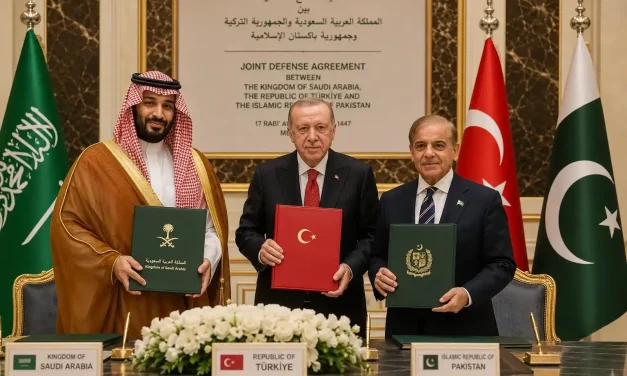
SCFR Online – Interview: The signing of the Makkah agreement between Saudi Arabia, Pakistan, and Turkey has raised questions about the future of the region’s security structure and the position of these countries in West Asian equations. Can this agreement become a genuine collective defense mechanism, or does it have more of a political and deterrent function than creating new military capacity?

Strategic Implications of the Reduction of US Weapons Stockpiles

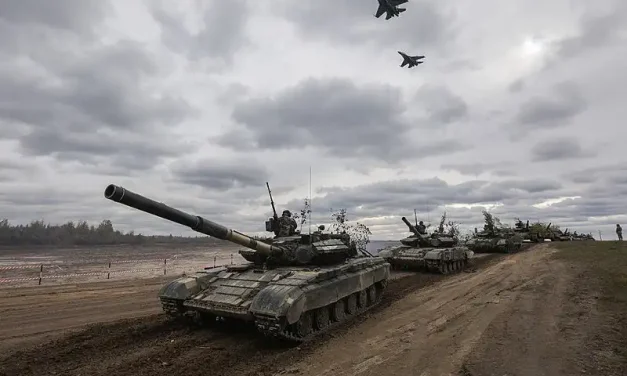
SCFR Online – Opinion: The continuation of the US war against Iran, in addition to increasing operational costs, has called into question the actual capacity of the American arsenal to simultaneously fulfill security commitments on multiple fronts; an issue that affects deterrence, defense production capacity, and Washington’s resource prioritization.

The Formation of a New Order in Relations Between Powers

SCFR Online – Opinion: The Russia-Ukraine war and the war of the United States and the Israeli regime against Iran have been formed with different objectives and actors, but field and political developments indicate that they are not entirely separate from one another.

An Analysis of the Makkah Defense Pact

SCFR Online – Opinion: On Friday, August 7, the heads of state of three countries – Saudi Arabia, Turkey, and Pakistan – signed a text under the title “Makkah Joint Defense Agreement.”

Dimensions and challenges of the initiative to revive the Hejaz Railway

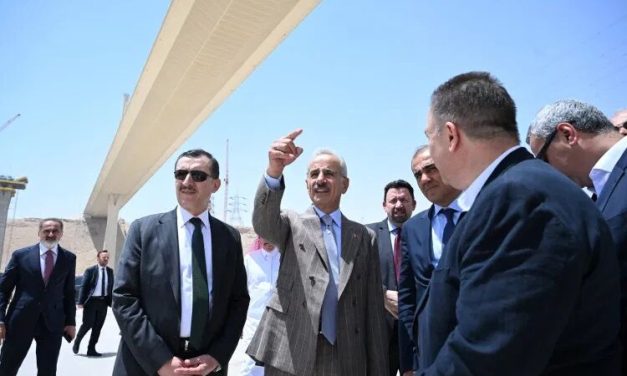
Strategic Council Online – Note: The initiative to revive the Hejaz Railway, beyond being a transportation project, constitutes an attempt to redefine geopolitics, the economy, and Turkey’s regional position; however, its realization appears to face significant financial, security, and institutional challenges.

Loading

Últimas publicaciones

Realities of the Tripartite Makkah Pact

SCFR Online – Interview: The signing of the Makkah agreement between Saudi Arabia, Pakistan, and Turkey has raised questions about the future of the region’s security structure and the position of these countries in West Asian equations. Can this agreement become a genuine collective defense mechanism, or does it have more of a political and deterrent function than creating new military capacity?

Strategic Implications of the Reduction of US Weapons Stockpiles

SCFR Online – Opinion: The continuation of the US war against Iran, in addition to increasing operational costs, has called into question the actual capacity of the American arsenal to simultaneously fulfill security commitments on multiple fronts; an issue that affects deterrence, defense production capacity, and Washington’s resource prioritization.

The Formation of a New Order in Relations Between Powers

SCFR Online – Opinion: The Russia-Ukraine war and the war of the United States and the Israeli regime against Iran have been formed with different objectives and actors, but field and political developments indicate that they are not entirely separate from one another.

An Analysis of the Makkah Defense Pact

SCFR Online – Opinion: On Friday, August 7, the heads of state of three countries – Saudi Arabia, Turkey, and Pakistan – signed a text under the title “Makkah Joint Defense Agreement.”

Dimensions and challenges of the initiative to revive the Hejaz Railway

Strategic Council Online – Note: The initiative to revive the Hejaz Railway, beyond being a transportation project, constitutes an attempt to redefine geopolitics, the economy, and Turkey’s regional position; however, its realization appears to face significant financial, security, and institutional challenges.

Loading

DERNIER CONTENU

Realities of the Tripartite Makkah Pact

SCFR Online – Interview: The signing of the Makkah agreement between Saudi Arabia, Pakistan, and Turkey has raised questions about the future of the region’s security structure and the position of these countries in West Asian equations. Can this agreement become a genuine collective defense mechanism, or does it have more of a political and deterrent function than creating new military capacity?

Strategic Implications of the Reduction of US Weapons Stockpiles

SCFR Online – Opinion: The continuation of the US war against Iran, in addition to increasing operational costs, has called into question the actual capacity of the American arsenal to simultaneously fulfill security commitments on multiple fronts; an issue that affects deterrence, defense production capacity, and Washington’s resource prioritization.

The Formation of a New Order in Relations Between Powers

SCFR Online – Opinion: The Russia-Ukraine war and the war of the United States and the Israeli regime against Iran have been formed with different objectives and actors, but field and political developments indicate that they are not entirely separate from one another.

An Analysis of the Makkah Defense Pact

SCFR Online – Opinion: On Friday, August 7, the heads of state of three countries – Saudi Arabia, Turkey, and Pakistan – signed a text under the title “Makkah Joint Defense Agreement.”

Dimensions and challenges of the initiative to revive the Hejaz Railway

Strategic Council Online – Note: The initiative to revive the Hejaz Railway, beyond being a transportation project, constitutes an attempt to redefine geopolitics, the economy, and Turkey’s regional position; however, its realization appears to face significant financial, security, and institutional challenges.

Loading

DERNIER CONTENU

Realities of the Tripartite Makkah Pact

SCFR Online – Interview: The signing of the Makkah agreement between Saudi Arabia, Pakistan, and Turkey has raised questions about the future of the region’s security structure and the position of these countries in West Asian equations. Can this agreement become a genuine collective defense mechanism, or does it have more of a political and deterrent function than creating new military capacity?

Strategic Implications of the Reduction of US Weapons Stockpiles

SCFR Online – Opinion: The continuation of the US war against Iran, in addition to increasing operational costs, has called into question the actual capacity of the American arsenal to simultaneously fulfill security commitments on multiple fronts; an issue that affects deterrence, defense production capacity, and Washington’s resource prioritization.

The Formation of a New Order in Relations Between Powers

SCFR Online – Opinion: The Russia-Ukraine war and the war of the United States and the Israeli regime against Iran have been formed with different objectives and actors, but field and political developments indicate that they are not entirely separate from one another.

An Analysis of the Makkah Defense Pact

SCFR Online – Opinion: On Friday, August 7, the heads of state of three countries – Saudi Arabia, Turkey, and Pakistan – signed a text under the title “Makkah Joint Defense Agreement.”

Dimensions and challenges of the initiative to revive the Hejaz Railway

Strategic Council Online – Note: The initiative to revive the Hejaz Railway, beyond being a transportation project, constitutes an attempt to redefine geopolitics, the economy, and Turkey’s regional position; however, its realization appears to face significant financial, security, and institutional challenges.

Loading

DERNIER CONTENU

Realities of the Tripartite Makkah Pact

SCFR Online – Interview: The signing of the Makkah agreement between Saudi Arabia, Pakistan, and Turkey has raised questions about the future of the region’s security structure and the position of these countries in West Asian equations. Can this agreement become a genuine collective defense mechanism, or does it have more of a political and deterrent function than creating new military capacity?

Strategic Implications of the Reduction of US Weapons Stockpiles

SCFR Online – Opinion: The continuation of the US war against Iran, in addition to increasing operational costs, has called into question the actual capacity of the American arsenal to simultaneously fulfill security commitments on multiple fronts; an issue that affects deterrence, defense production capacity, and Washington’s resource prioritization.

The Formation of a New Order in Relations Between Powers

SCFR Online – Opinion: The Russia-Ukraine war and the war of the United States and the Israeli regime against Iran have been formed with different objectives and actors, but field and political developments indicate that they are not entirely separate from one another.

An Analysis of the Makkah Defense Pact

SCFR Online – Opinion: On Friday, August 7, the heads of state of three countries – Saudi Arabia, Turkey, and Pakistan – signed a text under the title “Makkah Joint Defense Agreement.”

Dimensions and challenges of the initiative to revive the Hejaz Railway

Strategic Council Online – Note: The initiative to revive the Hejaz Railway, beyond being a transportation project, constitutes an attempt to redefine geopolitics, the economy, and Turkey’s regional position; however, its realization appears to face significant financial, security, and institutional challenges.

Loading