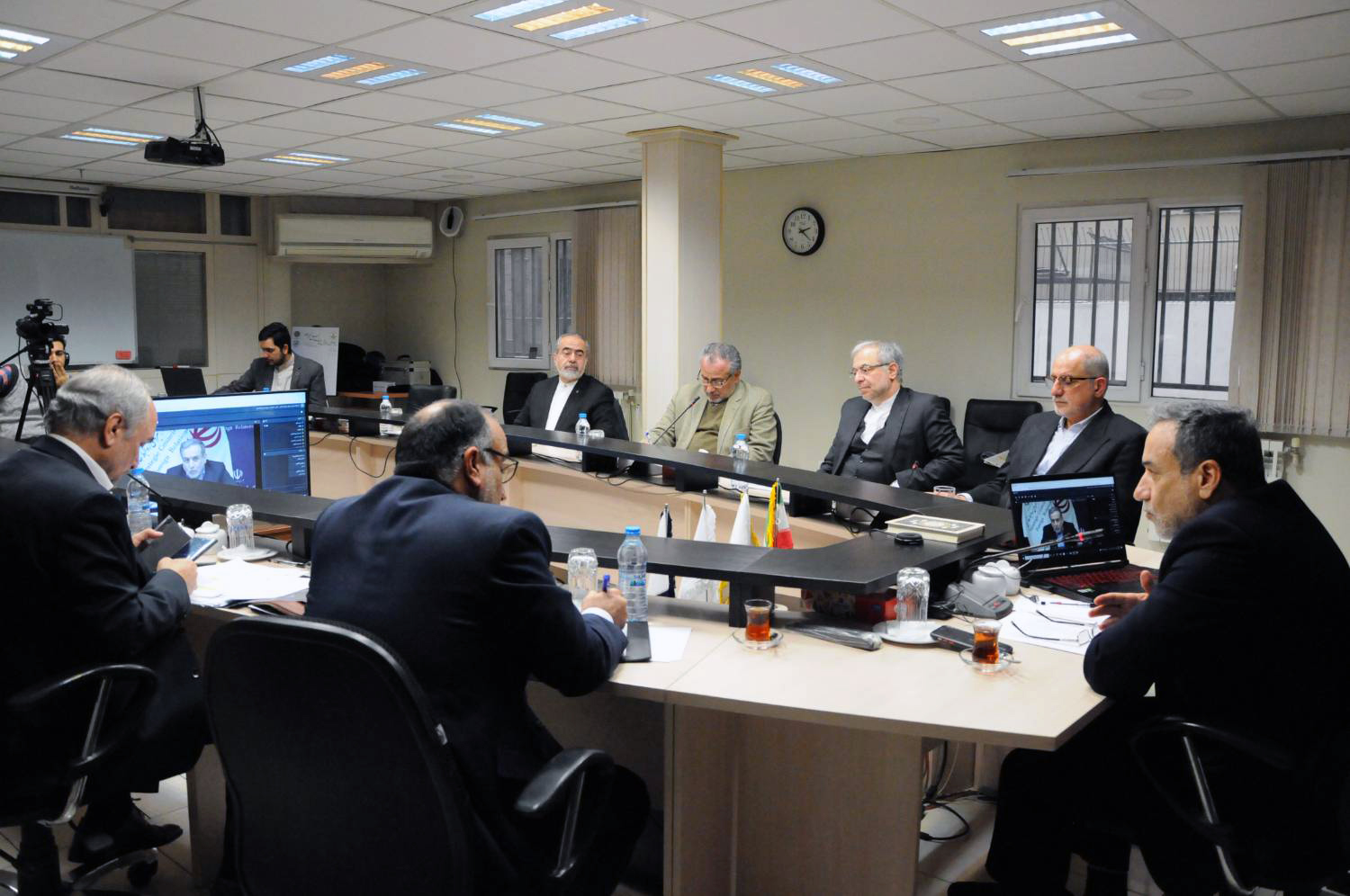
SCFR hosts: 3rd-& 4th Advance Sessions of National Conference on Makran Coastal Development

In search of answers to key questionsabout Makran development

2023/01/14 | Council, Economy, Top News

Strategic Council Online: On Wednesday, the Strategic Council on Foreign Relations hosted the third and fourth advance sessions of the National Conference on Makran Coastal Development, which was held with a focus on governance and emphasis on sea-based economic diplomacy.

According to the website of the Strategic Council on Foreign Relations, a group of scholars and political and economic officials attended the meetings and analyzed and surveyed the drivers of knowledge-based development on the coasts of Makran, regional and global partnerships and competitions.

In the third pre-session of the conference, Dr. Sorena Sattari, the head of the Science and Technology Commission of the Strategic Council on Foreign Relations, saying that Iran is weak in the maritime economy sector, continued: It is not suitable for a country with several kilometers of maritime borders not to use this capacity in the field of food security. Iran imports 10 to 12 billion dollars of animal feed per year, while it can take advantage of marine capacities to produce animal feed.

Sattari referred to fish farming in cages, development of shrimp farming and tourism among the economic advantages of Makran and reminded: We need to think in an operational way to develop the coasts of Makran and need managers who should be stationed in Conex. There is also need to support the ideas and plans of local youth.

Dr. Seyed Abbas Araghchi, the Secretary of the Strategic Council on Foreign Relations, in the fourth pre-session of the conference, pointed out that the National Conference on Coastal Development of Makran will be held in the month of Esfand (February-March) and a series of institutions and organizations are participating in it, emphasizing that clarification of general policies regarding the process of development of Makran is necessary.

He said: We believe that development of Makran, which is a giant project, will not take place in a vacuum. It is natural that the issue should be viewed from all political, legal and economic aspects.


Laws not sufficient for entry of foreign investors

The next speaker, Mohammad Khazaei, Secretary General of the Iranian Committee of International Chamber of Commerce, emphasized the importance of security issues in that region and stated: In the past fifty years, we have spent over seven thousand billion tomans (one toman is equal to 10 rials) for that region, but this figure is very low for its development. The first alarm and danger for the Makran region was conveyed to the government in the 6th Development Plan by the Supreme Leader, but what has happened positively since 2009? What is the executive, financial and administrative and technical plan for Makran development?

Khazaei stressed: It is impossible to do this with the resources included in the country’s budget. To develop that region with all the ideals that have been proposed, we need tens of billions of dollars. Where is the role of the private sector and the security of the private sector? We must pay attention and answer this serious question that do we want Makran to develop? If the foreign investor is due to come, are our laws sufficient? I would say it is not enough. Guarantees are very important and finance discussions are important in this regard and these issues should be addressed.


Makran Development with domestic resources neither possible, nor desirable

Meanwhile, Gholamreza Ansari, the former deputy of Economic Diplomacy of the Ministry of Foreign Affairs, also said in that meeting: Makran can push Iran’s economy towards industrial and commercial development with a sea-oriented perspective and save Iran’s future, especially in the water sector. Also, Makran can be very useful for Iran’s trade with the world and the region to supply and compensate Iran’s backwardness in recent years. Today, West Asia is moving rapidly on the path of economic competition, and Iran has been left behind due to cumbersome laws and regulations.

He continued: Without a regional and international perspective, with a clear comprehensive and detailed plan from the system that will be available to the public, this project cannot be carried out or the real value of Makran cannot be revealed. On the other hand, I believe that the development of Makran with domestic resources is neither possible nor desirable.

Saying that Makran has the capacity to attract millions of people for economic purposes who are moving to the north of the country due to lack of water, Ansari added: The coast of Makran is very significant due to its connection with Antarctica, and it provides Iran’s rights in Antarctica and adds to Iran’s great capacities. In addition, this region is important and sensitive for the region and the world in terms of energy transit.


Need to pay attention to north-south corridor for economic development

In the continuation of the meeting, which was hosted by the Strategic Council on Foreign Relations and in cooperation with the Economic Diplomacy Research Center of Imam Sadeq (AS) University, Seyed Rasool Mousavi, Director General of West Asia and Assistant Minister of Foreign Affairs emphasizing that development of Makran should be connected with the north-south corridor plan, said: No development is possible unless we define ourselves in one of the corridors that are being implemented in the region and around Iran.

He stated that China’s strategy, which was introduced in 2013, has taken different forms since then, explained the regional strategies around Iran for economic development, including the strategies considered by India, Japan, South Korea, Russia, Europe, Turkey and Pakistan.

Emphasizing that we should put our economic and commercial development project on the north-south corridor, Mousavi said: An American official has said that Iran’s investment in the north-south route is a big threat to the United States.


Makran must not take a security image, outcome

Meanwhile, Dr. Sirous Alidousti, Secretary of the Defense and Security Commission of the Strategic Council on Foreign Relations, said: One of the dimensions of the development of Makran is the creation of narratives towards this region, an image that exists of this region and of Iran is not that much positive and this problem hinders attraction of regional and international cooperation. The image of this area should be as such that it creates positive value. This area should not get a security image and outcome, we should be concerned about the security-building of this area, and should create a suitable narrative for this as well.


Makran coasts, an opportunity to develop market of knowledge-based companies

Dr. Mehdi Elyasi, Deputy Vice-President for Policy Making and Development of Knowledge-based Science, Technology and Economy, said that Makran coast is a good opportunity for the development of  the market of knowledge-based companies and innovative activities and continued: For this purpose, priorities and approaches must be clear, and we at the Science Deputy Office are trying to make the development programs of this region advantage-oriented so that it can be effective in solving challenges.

The strategic Navy of the Islamic Republic of Iran Army will hold the fourth National Conference on the Development of Makran Coasts in the month of Esfand (February-March) this year with the participation of a number of institutions and organizations in the port of Jask.


0 Comments

Submit a Comment

Your email address will not be published. Required fields are marked *

LATEST CONTENT

The Makkah Pact; Reasons for its Formation and Challenges Ahead

SCFR Online – Opinion: The Makkah Pact, signed between Saudi Arabia, Pakistan, and Turkey under the motto “an attack on one is an attack on all,” is viewed by some analysts less as a full-fledged military coalition and more as an attempt to reduce security dependence on an external power and to establish a regional security mechanism.

Implications of the US-Saudi Nuclear Agreement

SCFR Online – Opinion: The new US-Saudi nuclear agreement, despite legal and political ambiguities, could alter previous non-proliferation standards in West Asia and intensify nuclear competition, ushering it into a new phase.

An Analysis of Recent Turkey-Israeli Regime Tensions

SCFR Online – Opinion: Recent developments in Syria indicate an intensification of strategic rivalry between Turkey and the Israeli regime, but mutual considerations and the role of the United States have limited the likelihood of direct war.

Increasing criticism of the extensive Zionist lobby network

SCFR Online – Opinion: An examination of the mechanisms of the Israeli regime’s influence in the United States depicts a complex picture of shared interests, strategic dependencies, and the limitations of this relationship.

Realities of the Tripartite Makkah Pact

SCFR Online – Interview: The signing of the Makkah agreement between Saudi Arabia, Pakistan, and Turkey has raised questions about the future of the region’s security structure and the position of these countries in West Asian equations. Can this agreement become a genuine collective defense mechanism, or does it have more of a political and deterrent function than creating new military capacity?

Strategic Implications of the Reduction of US Weapons Stockpiles

SCFR Online – Opinion: The continuation of the US war against Iran, in addition to increasing operational costs, has called into question the actual capacity of the American arsenal to simultaneously fulfill security commitments on multiple fronts; an issue that affects deterrence, defense production capacity, and Washington’s resource prioritization.

The Formation of a New Order in Relations Between Powers

SCFR Online – Opinion: The Russia-Ukraine war and the war of the United States and the Israeli regime against Iran have been formed with different objectives and actors, but field and political developments indicate that they are not entirely separate from one another.

Loading

Últimas publicaciones

The Makkah Pact; Reasons for its Formation and Challenges Ahead

SCFR Online – Opinion: The Makkah Pact, signed between Saudi Arabia, Pakistan, and Turkey under the motto “an attack on one is an attack on all,” is viewed by some analysts less as a full-fledged military coalition and more as an attempt to reduce security dependence on an external power and to establish a regional security mechanism.

Implications of the US-Saudi Nuclear Agreement

SCFR Online – Opinion: The new US-Saudi nuclear agreement, despite legal and political ambiguities, could alter previous non-proliferation standards in West Asia and intensify nuclear competition, ushering it into a new phase.

An Analysis of Recent Turkey-Israeli Regime Tensions

SCFR Online – Opinion: Recent developments in Syria indicate an intensification of strategic rivalry between Turkey and the Israeli regime, but mutual considerations and the role of the United States have limited the likelihood of direct war.

Increasing criticism of the extensive Zionist lobby network

SCFR Online – Opinion: An examination of the mechanisms of the Israeli regime’s influence in the United States depicts a complex picture of shared interests, strategic dependencies, and the limitations of this relationship.

Realities of the Tripartite Makkah Pact

SCFR Online – Interview: The signing of the Makkah agreement between Saudi Arabia, Pakistan, and Turkey has raised questions about the future of the region’s security structure and the position of these countries in West Asian equations. Can this agreement become a genuine collective defense mechanism, or does it have more of a political and deterrent function than creating new military capacity?

Strategic Implications of the Reduction of US Weapons Stockpiles

SCFR Online – Opinion: The continuation of the US war against Iran, in addition to increasing operational costs, has called into question the actual capacity of the American arsenal to simultaneously fulfill security commitments on multiple fronts; an issue that affects deterrence, defense production capacity, and Washington’s resource prioritization.

The Formation of a New Order in Relations Between Powers

SCFR Online – Opinion: The Russia-Ukraine war and the war of the United States and the Israeli regime against Iran have been formed with different objectives and actors, but field and political developments indicate that they are not entirely separate from one another.

Loading

DERNIER CONTENU

The Makkah Pact; Reasons for its Formation and Challenges Ahead

SCFR Online – Opinion: The Makkah Pact, signed between Saudi Arabia, Pakistan, and Turkey under the motto “an attack on one is an attack on all,” is viewed by some analysts less as a full-fledged military coalition and more as an attempt to reduce security dependence on an external power and to establish a regional security mechanism.

Implications of the US-Saudi Nuclear Agreement

SCFR Online – Opinion: The new US-Saudi nuclear agreement, despite legal and political ambiguities, could alter previous non-proliferation standards in West Asia and intensify nuclear competition, ushering it into a new phase.

An Analysis of Recent Turkey-Israeli Regime Tensions

SCFR Online – Opinion: Recent developments in Syria indicate an intensification of strategic rivalry between Turkey and the Israeli regime, but mutual considerations and the role of the United States have limited the likelihood of direct war.

Increasing criticism of the extensive Zionist lobby network

SCFR Online – Opinion: An examination of the mechanisms of the Israeli regime’s influence in the United States depicts a complex picture of shared interests, strategic dependencies, and the limitations of this relationship.

Realities of the Tripartite Makkah Pact

SCFR Online – Interview: The signing of the Makkah agreement between Saudi Arabia, Pakistan, and Turkey has raised questions about the future of the region’s security structure and the position of these countries in West Asian equations. Can this agreement become a genuine collective defense mechanism, or does it have more of a political and deterrent function than creating new military capacity?

Strategic Implications of the Reduction of US Weapons Stockpiles

SCFR Online – Opinion: The continuation of the US war against Iran, in addition to increasing operational costs, has called into question the actual capacity of the American arsenal to simultaneously fulfill security commitments on multiple fronts; an issue that affects deterrence, defense production capacity, and Washington’s resource prioritization.

The Formation of a New Order in Relations Between Powers

SCFR Online – Opinion: The Russia-Ukraine war and the war of the United States and the Israeli regime against Iran have been formed with different objectives and actors, but field and political developments indicate that they are not entirely separate from one another.

Loading

DERNIER CONTENU

The Makkah Pact; Reasons for its Formation and Challenges Ahead

SCFR Online – Opinion: The Makkah Pact, signed between Saudi Arabia, Pakistan, and Turkey under the motto “an attack on one is an attack on all,” is viewed by some analysts less as a full-fledged military coalition and more as an attempt to reduce security dependence on an external power and to establish a regional security mechanism.

Implications of the US-Saudi Nuclear Agreement

SCFR Online – Opinion: The new US-Saudi nuclear agreement, despite legal and political ambiguities, could alter previous non-proliferation standards in West Asia and intensify nuclear competition, ushering it into a new phase.

An Analysis of Recent Turkey-Israeli Regime Tensions

SCFR Online – Opinion: Recent developments in Syria indicate an intensification of strategic rivalry between Turkey and the Israeli regime, but mutual considerations and the role of the United States have limited the likelihood of direct war.

Increasing criticism of the extensive Zionist lobby network

SCFR Online – Opinion: An examination of the mechanisms of the Israeli regime’s influence in the United States depicts a complex picture of shared interests, strategic dependencies, and the limitations of this relationship.

Realities of the Tripartite Makkah Pact

SCFR Online – Interview: The signing of the Makkah agreement between Saudi Arabia, Pakistan, and Turkey has raised questions about the future of the region’s security structure and the position of these countries in West Asian equations. Can this agreement become a genuine collective defense mechanism, or does it have more of a political and deterrent function than creating new military capacity?

Strategic Implications of the Reduction of US Weapons Stockpiles

SCFR Online – Opinion: The continuation of the US war against Iran, in addition to increasing operational costs, has called into question the actual capacity of the American arsenal to simultaneously fulfill security commitments on multiple fronts; an issue that affects deterrence, defense production capacity, and Washington’s resource prioritization.

The Formation of a New Order in Relations Between Powers

SCFR Online – Opinion: The Russia-Ukraine war and the war of the United States and the Israeli regime against Iran have been formed with different objectives and actors, but field and political developments indicate that they are not entirely separate from one another.

Loading

DERNIER CONTENU

The Makkah Pact; Reasons for its Formation and Challenges Ahead

SCFR Online – Opinion: The Makkah Pact, signed between Saudi Arabia, Pakistan, and Turkey under the motto “an attack on one is an attack on all,” is viewed by some analysts less as a full-fledged military coalition and more as an attempt to reduce security dependence on an external power and to establish a regional security mechanism.

Implications of the US-Saudi Nuclear Agreement

SCFR Online – Opinion: The new US-Saudi nuclear agreement, despite legal and political ambiguities, could alter previous non-proliferation standards in West Asia and intensify nuclear competition, ushering it into a new phase.

An Analysis of Recent Turkey-Israeli Regime Tensions

SCFR Online – Opinion: Recent developments in Syria indicate an intensification of strategic rivalry between Turkey and the Israeli regime, but mutual considerations and the role of the United States have limited the likelihood of direct war.

Increasing criticism of the extensive Zionist lobby network

SCFR Online – Opinion: An examination of the mechanisms of the Israeli regime’s influence in the United States depicts a complex picture of shared interests, strategic dependencies, and the limitations of this relationship.

Realities of the Tripartite Makkah Pact

SCFR Online – Interview: The signing of the Makkah agreement between Saudi Arabia, Pakistan, and Turkey has raised questions about the future of the region’s security structure and the position of these countries in West Asian equations. Can this agreement become a genuine collective defense mechanism, or does it have more of a political and deterrent function than creating new military capacity?

Strategic Implications of the Reduction of US Weapons Stockpiles

SCFR Online – Opinion: The continuation of the US war against Iran, in addition to increasing operational costs, has called into question the actual capacity of the American arsenal to simultaneously fulfill security commitments on multiple fronts; an issue that affects deterrence, defense production capacity, and Washington’s resource prioritization.

The Formation of a New Order in Relations Between Powers

SCFR Online – Opinion: The Russia-Ukraine war and the war of the United States and the Israeli regime against Iran have been formed with different objectives and actors, but field and political developments indicate that they are not entirely separate from one another.

Loading



