Dr. Araghchi emphasizes at meeting with Japanese peace activist: Number of Victims of US Sanctions in the World Far Greater Than Victims of US Atomic Bombings

2023/01/25 | Council, Politics, Top News

Strategic Council Online: Secretary of the Strategic Council on Foreign Relations said: Today, the number of victims of the US cruel sanctions in the world far exceeds the number of victims of the atomic bombings of Hiroshima and Nagasaki.

Yuri Konno, the first female entrepreneur and founder of the Dial Service Company of Japan, met Dr. Seyed Abbas Araghchi, the Secretary of the Strategic Council on Foreign Relations, at the Council’s premise Monday.

The peace activist, who has come to Tehran to participate in the first international congress of “Influential Women” has experienced the Second World War and has survived despite being seriously injured in the aerial bombing of the US forces. She said: “Considering this experience, I am trying to help spread peace in the current tense world and I believe that the US sanctions have targeted innocent people.”

In this meeting, Dr. Araghchi also referred to Iran’s experiences from eight years of the Iraqi imposed war and stated: Like Japan, Iran has been a victim of the enemy’s use of weapons of mass destruction and, therefore, there is a scope for cooperation between the two countries in order to create a world free of war and sanctions.

Recalling that today sanctions are the US’s main tool for advancing its policies, he emphasized: Today, the number of victims of the US cruel sanctions in the world is far greater than the number of victims of the atomic bombings of Hiroshima and Nagasaki.”


0 Comments

Submit a Comment

Your email address will not be published. Required fields are marked *

LATEST CONTENT

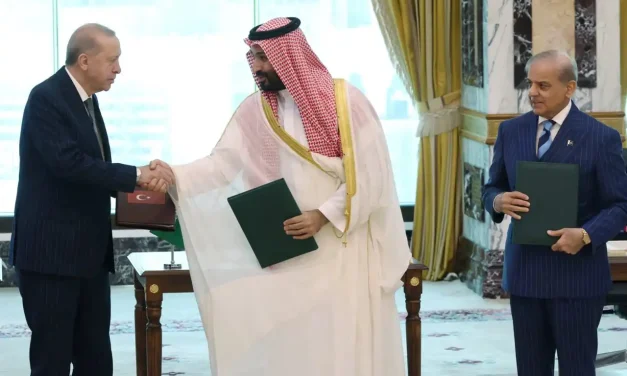
The Makkah Pact Under scrutiny; From the “Deterrence Dilemma” to the “Risk of Disrupting Security”

SCFR Online – Opinion: The Makkah Pact, signed on August 7, 2026, between Saudi Arabia, Turkey, and Pakistan, is more than an answer to geopolitical vacuums; in practice, it faces a “deterrence dilemma” and “differing threat perception.” While this pact symbolizes a transition toward regional self-reliance, its first field tests and the complexities of relations with regional actors will determine its real meaning.

Loading

Últimas publicaciones

The Makkah Pact Under scrutiny; From the “Deterrence Dilemma” to the “Risk of Disrupting Security”

SCFR Online – Opinion: The Makkah Pact, signed on August 7, 2026, between Saudi Arabia, Turkey, and Pakistan, is more than an answer to geopolitical vacuums; in practice, it faces a “deterrence dilemma” and “differing threat perception.” While this pact symbolizes a transition toward regional self-reliance, its first field tests and the complexities of relations with regional actors will determine its real meaning.

Loading

DERNIER CONTENU

The Makkah Pact Under scrutiny; From the “Deterrence Dilemma” to the “Risk of Disrupting Security”

SCFR Online – Opinion: The Makkah Pact, signed on August 7, 2026, between Saudi Arabia, Turkey, and Pakistan, is more than an answer to geopolitical vacuums; in practice, it faces a “deterrence dilemma” and “differing threat perception.” While this pact symbolizes a transition toward regional self-reliance, its first field tests and the complexities of relations with regional actors will determine its real meaning.

Loading

DERNIER CONTENU

The Makkah Pact Under scrutiny; From the “Deterrence Dilemma” to the “Risk of Disrupting Security”

SCFR Online – Opinion: The Makkah Pact, signed on August 7, 2026, between Saudi Arabia, Turkey, and Pakistan, is more than an answer to geopolitical vacuums; in practice, it faces a “deterrence dilemma” and “differing threat perception.” While this pact symbolizes a transition toward regional self-reliance, its first field tests and the complexities of relations with regional actors will determine its real meaning.

Loading

DERNIER CONTENU

The Makkah Pact Under scrutiny; From the “Deterrence Dilemma” to the “Risk of Disrupting Security”

SCFR Online – Opinion: The Makkah Pact, signed on August 7, 2026, between Saudi Arabia, Turkey, and Pakistan, is more than an answer to geopolitical vacuums; in practice, it faces a “deterrence dilemma” and “differing threat perception.” While this pact symbolizes a transition toward regional self-reliance, its first field tests and the complexities of relations with regional actors will determine its real meaning.

Loading