Chinese Military Intervention in Venezuela?!

2019/04/30 | Defense & Security, Opinion

Strategic Council Online: Given its domestic needs and possible problems ahead, Beijing, in the short term, while managing relations with the US, seeks to avoid further tensions in these relations, preferring to serve its economic interests even in the event of a change of government in Caracas. Therefore, China will continue to focus on political action and the formation of international groups supporting the Maduro government and will refrain from sending troops to America's backyard. Assadollah Kaveh - East Asian Affairs Expert

China dispatched medical supplies to Venezuela early April following which some news reports said Beijing had sent 120 military personnel from the Liberation Army to Venezuela a week earlier.

Meantime, news reports on the presence of Russian troops and armaments in Venezuela to help the legal government of Nicolas Maduro prompted the anger on US officials and led Washington to warn Moscow in a telephone conversation between foreign ministers of the two countries. The Chinese Foreign Ministry spokesperson has strongly denied the presence of Chinese troops in Venezuela. This writing attempts to examine the feasibility of this action by revising Beijing’s policies.

  • Serving its economic interests is China’s top priority in relations with other countries, and Venezuela is no exception thanks to its huge oil reserves and OPEC membership. The total investments and loans granted to Caracas since 2007 is estimated at more than $60 billion, which is why China is striving to adopt a position of support for the incumbent government, along with support for the will of the Venezuelan people. News reports on the Chinese government’s talks with Maduro’s opponents since 2017 are evaluated in the same vein. Beijing is well aware that the deployment of a Washington satellite government in Venezuela will put China’s huge investment in Venezuelan oil projects in jeopardy.
  • It should be borne in mind that, for two main reasons, China will not resort to military action in Venezuela for its own benefit: first, China, as an emerging power, has consistently criticized US unilateral measures and military buildup and has emphasized on the use of political tools in resolving international problems. This means that Beijing, as a major power, takes a different course of action, and if it decides to have a military presence to safeguard its interests the measure will be fully calculated and considered in medium and long term planning. Secondly, in spite of the progress and agility developed by the Liberation Army as a world-class strategic force under the aegis of Xi Jin Ping, Chinese officials know they still have a significant gap with American military capabilities, and therefore the Chinese military is reluctant to engage in a wide scale confrontation with the US even if it was in coalition with Russia. On the other hand, because of economic and commercial issues in its relations with the United States, China is not interested in taking military action in the backyard of Washington.
  • Since the advent of Donald Trump in the United States, the American government has been trying to challenge some of China’s red lines, such as the Taiwan issue and the South China Sea, and provide more exploitation of critical situations in the periphery of China. As a result, the continued presence of US naval vessels in the Straits of Taiwan and the South China Sea has been taken as a procedure, and even the sale of military facilities, such as the F-16s to Taiwan, has been approved by the administration and the Congress. In return, China has always sufficed to position taking on these issues and adopted strategic silence. For this reason, the idea of ​​military action to support an anti-US government in Latin America is not consistent with Beijing’s policies. US officials are well aware that China’s economic actions will have more effects in keeping the Maduro government in power; US Secretary of State Mike Pompeo accused China of hypocrisy confirms this claim: “I think there’s a lesson, a lesson to be learned for all of us: China and others are being hypocritical calling for non-intervention in Venezuela’s affairs. Their own financial interventions have helped destroy that country.”

To sum it up, given its domestic needs and possible problems ahead, Beijing, in the short term, while managing relations with the US, seeks to avoid further tensions in these relations, preferring to serve its economic interests even in the event of a change of government in Caracas. Therefore, China will continue to focus on political action and the formation of international groups supporting the Maduro government and will refrain from sending troops to America’s backyard.
0 Comments

Submit a Comment

Your email address will not be published. Required fields are marked *

LATEST CONTENT

China’s Rejection of US Sanctions; Strengthening Iran’s Geopolitical Leverage

SCFR Online – Opinion: Concurrent with the official commencement of the United States’ economic war against our country, focusing on sanctions instruments, isolation, and economic pressure, what has now become increasingly important is the lack of alignment of other major global powers, especially China, with this policy.

The Makkah Pact; Reasons for its Formation and Challenges Ahead

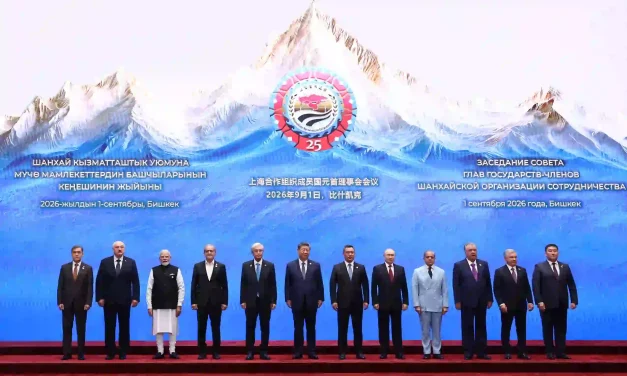
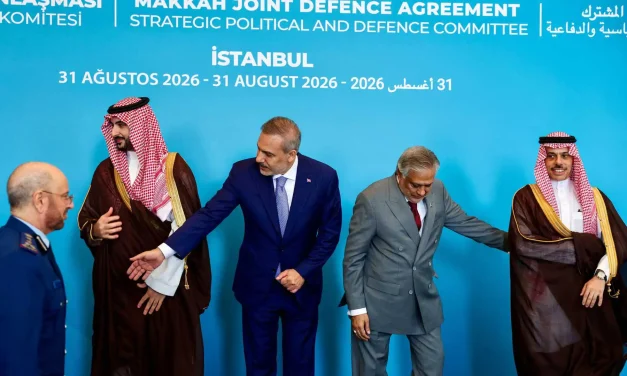
SCFR Online – Opinion: The Makkah Pact, signed between Saudi Arabia, Pakistan, and Turkey under the motto “an attack on one is an attack on all,” is viewed by some analysts less as a full-fledged military coalition and more as an attempt to reduce security dependence on an external power and to establish a regional security mechanism.

Implications of the US-Saudi Nuclear Agreement

SCFR Online – Opinion: The new US-Saudi nuclear agreement, despite legal and political ambiguities, could alter previous non-proliferation standards in West Asia and intensify nuclear competition, ushering it into a new phase.

An Analysis of Recent Turkey-Israeli Regime Tensions

SCFR Online – Opinion: Recent developments in Syria indicate an intensification of strategic rivalry between Turkey and the Israeli regime, but mutual considerations and the role of the United States have limited the likelihood of direct war.

Loading

Últimas publicaciones

China’s Rejection of US Sanctions; Strengthening Iran’s Geopolitical Leverage

SCFR Online – Opinion: Concurrent with the official commencement of the United States’ economic war against our country, focusing on sanctions instruments, isolation, and economic pressure, what has now become increasingly important is the lack of alignment of other major global powers, especially China, with this policy.

The Makkah Pact; Reasons for its Formation and Challenges Ahead

SCFR Online – Opinion: The Makkah Pact, signed between Saudi Arabia, Pakistan, and Turkey under the motto “an attack on one is an attack on all,” is viewed by some analysts less as a full-fledged military coalition and more as an attempt to reduce security dependence on an external power and to establish a regional security mechanism.

Implications of the US-Saudi Nuclear Agreement

SCFR Online – Opinion: The new US-Saudi nuclear agreement, despite legal and political ambiguities, could alter previous non-proliferation standards in West Asia and intensify nuclear competition, ushering it into a new phase.

An Analysis of Recent Turkey-Israeli Regime Tensions

SCFR Online – Opinion: Recent developments in Syria indicate an intensification of strategic rivalry between Turkey and the Israeli regime, but mutual considerations and the role of the United States have limited the likelihood of direct war.

Loading

DERNIER CONTENU

China’s Rejection of US Sanctions; Strengthening Iran’s Geopolitical Leverage

SCFR Online – Opinion: Concurrent with the official commencement of the United States’ economic war against our country, focusing on sanctions instruments, isolation, and economic pressure, what has now become increasingly important is the lack of alignment of other major global powers, especially China, with this policy.

The Makkah Pact; Reasons for its Formation and Challenges Ahead

SCFR Online – Opinion: The Makkah Pact, signed between Saudi Arabia, Pakistan, and Turkey under the motto “an attack on one is an attack on all,” is viewed by some analysts less as a full-fledged military coalition and more as an attempt to reduce security dependence on an external power and to establish a regional security mechanism.

Implications of the US-Saudi Nuclear Agreement

SCFR Online – Opinion: The new US-Saudi nuclear agreement, despite legal and political ambiguities, could alter previous non-proliferation standards in West Asia and intensify nuclear competition, ushering it into a new phase.

An Analysis of Recent Turkey-Israeli Regime Tensions

SCFR Online – Opinion: Recent developments in Syria indicate an intensification of strategic rivalry between Turkey and the Israeli regime, but mutual considerations and the role of the United States have limited the likelihood of direct war.

Loading

DERNIER CONTENU

China’s Rejection of US Sanctions; Strengthening Iran’s Geopolitical Leverage

SCFR Online – Opinion: Concurrent with the official commencement of the United States’ economic war against our country, focusing on sanctions instruments, isolation, and economic pressure, what has now become increasingly important is the lack of alignment of other major global powers, especially China, with this policy.

The Makkah Pact; Reasons for its Formation and Challenges Ahead

SCFR Online – Opinion: The Makkah Pact, signed between Saudi Arabia, Pakistan, and Turkey under the motto “an attack on one is an attack on all,” is viewed by some analysts less as a full-fledged military coalition and more as an attempt to reduce security dependence on an external power and to establish a regional security mechanism.

Implications of the US-Saudi Nuclear Agreement

SCFR Online – Opinion: The new US-Saudi nuclear agreement, despite legal and political ambiguities, could alter previous non-proliferation standards in West Asia and intensify nuclear competition, ushering it into a new phase.

An Analysis of Recent Turkey-Israeli Regime Tensions

SCFR Online – Opinion: Recent developments in Syria indicate an intensification of strategic rivalry between Turkey and the Israeli regime, but mutual considerations and the role of the United States have limited the likelihood of direct war.

Loading

DERNIER CONTENU

China’s Rejection of US Sanctions; Strengthening Iran’s Geopolitical Leverage

SCFR Online – Opinion: Concurrent with the official commencement of the United States’ economic war against our country, focusing on sanctions instruments, isolation, and economic pressure, what has now become increasingly important is the lack of alignment of other major global powers, especially China, with this policy.

The Makkah Pact; Reasons for its Formation and Challenges Ahead

SCFR Online – Opinion: The Makkah Pact, signed between Saudi Arabia, Pakistan, and Turkey under the motto “an attack on one is an attack on all,” is viewed by some analysts less as a full-fledged military coalition and more as an attempt to reduce security dependence on an external power and to establish a regional security mechanism.

Implications of the US-Saudi Nuclear Agreement

SCFR Online – Opinion: The new US-Saudi nuclear agreement, despite legal and political ambiguities, could alter previous non-proliferation standards in West Asia and intensify nuclear competition, ushering it into a new phase.

An Analysis of Recent Turkey-Israeli Regime Tensions

SCFR Online – Opinion: Recent developments in Syria indicate an intensification of strategic rivalry between Turkey and the Israeli regime, but mutual considerations and the role of the United States have limited the likelihood of direct war.

Loading