An Analysis of Recent Turkey-Israeli Regime Tensions

SCFR Online - Opinion: Recent developments in Syria indicate an intensification of strategic rivalry between Turkey and the Israeli regime, but mutual considerations and the role of the United States have limited the likelihood of direct war.

Hamid Khoshayand – Expert on regional affairs

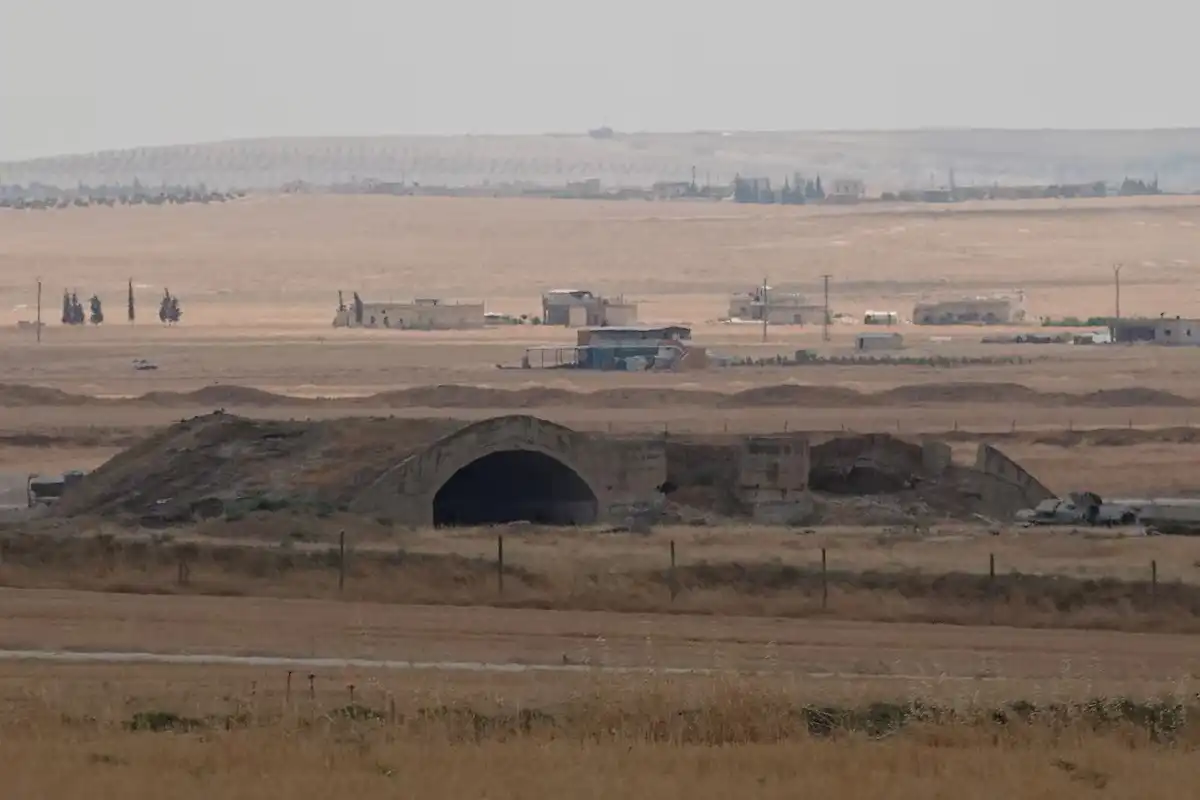
The recent Israeli regime attack on the Abu al-Zuhur air base in northern Syria, approximately 70 kilometers from the Turkish border, has once again brought the possibility of escalating tensions between Tel Aviv and Ankara into the focus of regional political and media circles. This attack, which occurred a few days after the signing of the Makkah Defense Pact between Turkey, Saudi Arabia, and Pakistan, has been assessed by some observers as a calculated move to send a message to Turkey and limit its role in Syria’s new security architecture.

However, even if this attack is considered an attempt to test sensitivities and Turkey’s response capacity, it should not be interpreted as a sign of a fundamental shift in the balance of power or as placing Ankara in a position of weakness. Turkey, although not possessing absolute and unlimited power, remains one of the important regional actors. At the same time, Iran’s role as a major regional power should not be forgotten; Tehran, with its strategic depth, missile and drone capabilities, regional networks, and operational experience, remains a determining element in West Asian security equations.

Despite increased pressures and intensified political rhetoric between Ankara and Tel Aviv, the scenario of direct war between the two sides remains unlikely. Both sides are well aware of the heavy costs and uncontrollable consequences of such a conflict and seek to manage their competition within a scope that does not lead to a full-fledged military confrontation. The Israeli regime neither has the capacity nor sufficient interest to open a new front against Turkey, and Ankara, due to domestic, economic, security, and international considerations, is not seeking to enter a direct war with Tel Aviv. Therefore, the current trend, rather than being a prelude to war, is a form of intense and increasing competition in political, intelligence, military, and geopolitical arenas.

The Reason for the Israeli Regime’s Avoidance of War with Turkey

For the Israeli regime, Turkey, unlike groups such as Hamas, is not an actor that can be weakened through a limited operation or a short-term campaign. Ankara is a member of NATO and the G20, possesses significant industrial and military capacities, and has reduced its dependence on foreign suppliers in the defense sector in recent years.

Of course, this reality does not mean Turkey enjoys absolute superiority or complete immunity from military and economic pressures. Turkey’s capabilities in drones, missiles, defense industries, and out-of-area operations exist alongside economic dependencies and constraints arising from NATO membership. Therefore, the Israeli regime’s calculation is based not on Turkey’s inability, but on the high cost of direct confrontation with it.

An attack on Turkey could escalate the crisis beyond the bilateral level and affect intra-NATO relations, Eastern Mediterranean security, and the force disposition in Syria.

On the other hand, statements by some Zionist officials about Turkey becoming a threat on par with Iran should be analyzed more within the framework of psychological warfare and threat perception shaping. In practice, Tel Aviv seeks to balance pressure on Turkey while avoiding an action that would lead to a wider war.

Turkey’s Considerations Regarding the Israeli Regime

Ankara also, for multiple reasons, does not seek to open a military front against the Israeli regime; however, this restraint should not be interpreted as passivity. Turkey seeks to increase the cost of the Israeli regime’s actions through diplomatic, economic, intelligence, and security instruments, without directly entering a war.

Turkey faces domestic economic and political challenges, including inflation, financial pressures, and upcoming political competitions, and entering a war could impose heavy costs on its economy and internal stability. Furthermore, Ankara seeks to consolidate influence, manage security arrangements, and influence governance and military structures in Syria; consequently, direct conflict with the Israeli regime could complicate this process and disperse Turkey’s resources.

Ankara is also aware of the Israeli regime’s air, missile, and intelligence capabilities and knows that direct confrontation could jeopardize its geopolitical achievements. As a result, the relationship between the two sides is based on a form of mutually unequal but real deterrence; that is, neither side enjoys absolute superiority, and starting a war could generate unpredictable costs.

The US Approach

One of the most important factors keeping the war scenario at bay is the role of the United States. To initiate a large-scale war against a country like Turkey, the Israeli regime cannot rely solely on its internal capacity and must inevitably assess the political, military, and strategic consequences in coordination with Washington.

To date, no clear and credible indication of US approval for an Israeli regime attack on Turkey has been observed. On the contrary, statements by US officials, including Tom Barrack, the US President’s special envoy for Syria, regarding the parties approaching direct conflict and the necessity of establishing communication mechanisms, indicate that Washington is more interested in containing this rivalry than in welcoming its escalation.

On one hand, the United States does not want the Israeli regime’s freedom of action in Syria to be completely constrained, and on the other hand, it has no desire for the Ankara-Tel Aviv disagreement to become a crisis that disrupts NATO cohesion and Eastern Mediterranean security arrangements. From this perspective, Washington simultaneously supports the Israeli regime while also attempting to manage the scope of tension between the two sides.

Recent developments, although having increased the level of tension in Turkey-Israeli regime relations, should not be considered a prelude to war. What is taking shape in Syria and the Eastern Mediterranean more closely resembles a “regional cold war”; a competition in the arenas of diplomacy, armaments, regional influence, and proxy pressures, in which the parties, while demonstrating power, refrain from crossing red lines.

In the short term, the continuation of controlled tensions and political and intelligence rivalry is more probable than direct war. As stated, neither does the Israeli regime have the freedom of action and will necessary to open such a war, nor is Turkey, due to domestic and foreign considerations, seeking to enter it.

0 Comments

LATEST CONTENT

Implications of the US-Saudi Nuclear Agreement

SCFR Online – Opinion: The new US-Saudi nuclear agreement, despite legal and political ambiguities, could alter previous non-proliferation standards in West Asia and intensify nuclear competition, ushering it into a new phase.

An Analysis of Recent Turkey-Israeli Regime Tensions

SCFR Online – Opinion: Recent developments in Syria indicate an intensification of strategic rivalry between Turkey and the Israeli regime, but mutual considerations and the role of the United States have limited the likelihood of direct war.

Increasing criticism of the extensive Zionist lobby network

SCFR Online – Opinion: An examination of the mechanisms of the Israeli regime’s influence in the United States depicts a complex picture of shared interests, strategic dependencies, and the limitations of this relationship.

Realities of the Tripartite Makkah Pact

SCFR Online – Interview: The signing of the Makkah agreement between Saudi Arabia, Pakistan, and Turkey has raised questions about the future of the region’s security structure and the position of these countries in West Asian equations. Can this agreement become a genuine collective defense mechanism, or does it have more of a political and deterrent function than creating new military capacity?

Strategic Implications of the Reduction of US Weapons Stockpiles

SCFR Online – Opinion: The continuation of the US war against Iran, in addition to increasing operational costs, has called into question the actual capacity of the American arsenal to simultaneously fulfill security commitments on multiple fronts; an issue that affects deterrence, defense production capacity, and Washington’s resource prioritization.

The Formation of a New Order in Relations Between Powers

SCFR Online – Opinion: The Russia-Ukraine war and the war of the United States and the Israeli regime against Iran have been formed with different objectives and actors, but field and political developments indicate that they are not entirely separate from one another.

An Analysis of the Makkah Defense Pact

SCFR Online – Opinion: On Friday, August 7, the heads of state of three countries – Saudi Arabia, Turkey, and Pakistan – signed a text under the title “Makkah Joint Defense Agreement.”

Loading

Últimas publicaciones

Implications of the US-Saudi Nuclear Agreement

SCFR Online – Opinion: The new US-Saudi nuclear agreement, despite legal and political ambiguities, could alter previous non-proliferation standards in West Asia and intensify nuclear competition, ushering it into a new phase.

An Analysis of Recent Turkey-Israeli Regime Tensions

SCFR Online – Opinion: Recent developments in Syria indicate an intensification of strategic rivalry between Turkey and the Israeli regime, but mutual considerations and the role of the United States have limited the likelihood of direct war.

Increasing criticism of the extensive Zionist lobby network

SCFR Online – Opinion: An examination of the mechanisms of the Israeli regime’s influence in the United States depicts a complex picture of shared interests, strategic dependencies, and the limitations of this relationship.

Realities of the Tripartite Makkah Pact

SCFR Online – Interview: The signing of the Makkah agreement between Saudi Arabia, Pakistan, and Turkey has raised questions about the future of the region’s security structure and the position of these countries in West Asian equations. Can this agreement become a genuine collective defense mechanism, or does it have more of a political and deterrent function than creating new military capacity?

Strategic Implications of the Reduction of US Weapons Stockpiles

SCFR Online – Opinion: The continuation of the US war against Iran, in addition to increasing operational costs, has called into question the actual capacity of the American arsenal to simultaneously fulfill security commitments on multiple fronts; an issue that affects deterrence, defense production capacity, and Washington’s resource prioritization.

The Formation of a New Order in Relations Between Powers

SCFR Online – Opinion: The Russia-Ukraine war and the war of the United States and the Israeli regime against Iran have been formed with different objectives and actors, but field and political developments indicate that they are not entirely separate from one another.

An Analysis of the Makkah Defense Pact

SCFR Online – Opinion: On Friday, August 7, the heads of state of three countries – Saudi Arabia, Turkey, and Pakistan – signed a text under the title “Makkah Joint Defense Agreement.”

Loading

DERNIER CONTENU

Implications of the US-Saudi Nuclear Agreement

SCFR Online – Opinion: The new US-Saudi nuclear agreement, despite legal and political ambiguities, could alter previous non-proliferation standards in West Asia and intensify nuclear competition, ushering it into a new phase.

An Analysis of Recent Turkey-Israeli Regime Tensions

SCFR Online – Opinion: Recent developments in Syria indicate an intensification of strategic rivalry between Turkey and the Israeli regime, but mutual considerations and the role of the United States have limited the likelihood of direct war.

Increasing criticism of the extensive Zionist lobby network

SCFR Online – Opinion: An examination of the mechanisms of the Israeli regime’s influence in the United States depicts a complex picture of shared interests, strategic dependencies, and the limitations of this relationship.

Realities of the Tripartite Makkah Pact

SCFR Online – Interview: The signing of the Makkah agreement between Saudi Arabia, Pakistan, and Turkey has raised questions about the future of the region’s security structure and the position of these countries in West Asian equations. Can this agreement become a genuine collective defense mechanism, or does it have more of a political and deterrent function than creating new military capacity?

Strategic Implications of the Reduction of US Weapons Stockpiles

SCFR Online – Opinion: The continuation of the US war against Iran, in addition to increasing operational costs, has called into question the actual capacity of the American arsenal to simultaneously fulfill security commitments on multiple fronts; an issue that affects deterrence, defense production capacity, and Washington’s resource prioritization.

The Formation of a New Order in Relations Between Powers

SCFR Online – Opinion: The Russia-Ukraine war and the war of the United States and the Israeli regime against Iran have been formed with different objectives and actors, but field and political developments indicate that they are not entirely separate from one another.

An Analysis of the Makkah Defense Pact

SCFR Online – Opinion: On Friday, August 7, the heads of state of three countries – Saudi Arabia, Turkey, and Pakistan – signed a text under the title “Makkah Joint Defense Agreement.”

Loading

DERNIER CONTENU

Implications of the US-Saudi Nuclear Agreement

SCFR Online – Opinion: The new US-Saudi nuclear agreement, despite legal and political ambiguities, could alter previous non-proliferation standards in West Asia and intensify nuclear competition, ushering it into a new phase.

An Analysis of Recent Turkey-Israeli Regime Tensions

SCFR Online – Opinion: Recent developments in Syria indicate an intensification of strategic rivalry between Turkey and the Israeli regime, but mutual considerations and the role of the United States have limited the likelihood of direct war.

Increasing criticism of the extensive Zionist lobby network

SCFR Online – Opinion: An examination of the mechanisms of the Israeli regime’s influence in the United States depicts a complex picture of shared interests, strategic dependencies, and the limitations of this relationship.

Realities of the Tripartite Makkah Pact

SCFR Online – Interview: The signing of the Makkah agreement between Saudi Arabia, Pakistan, and Turkey has raised questions about the future of the region’s security structure and the position of these countries in West Asian equations. Can this agreement become a genuine collective defense mechanism, or does it have more of a political and deterrent function than creating new military capacity?

Strategic Implications of the Reduction of US Weapons Stockpiles

SCFR Online – Opinion: The continuation of the US war against Iran, in addition to increasing operational costs, has called into question the actual capacity of the American arsenal to simultaneously fulfill security commitments on multiple fronts; an issue that affects deterrence, defense production capacity, and Washington’s resource prioritization.

The Formation of a New Order in Relations Between Powers

SCFR Online – Opinion: The Russia-Ukraine war and the war of the United States and the Israeli regime against Iran have been formed with different objectives and actors, but field and political developments indicate that they are not entirely separate from one another.

An Analysis of the Makkah Defense Pact

SCFR Online – Opinion: On Friday, August 7, the heads of state of three countries – Saudi Arabia, Turkey, and Pakistan – signed a text under the title “Makkah Joint Defense Agreement.”

Loading

DERNIER CONTENU

Implications of the US-Saudi Nuclear Agreement

SCFR Online – Opinion: The new US-Saudi nuclear agreement, despite legal and political ambiguities, could alter previous non-proliferation standards in West Asia and intensify nuclear competition, ushering it into a new phase.

An Analysis of Recent Turkey-Israeli Regime Tensions

SCFR Online – Opinion: Recent developments in Syria indicate an intensification of strategic rivalry between Turkey and the Israeli regime, but mutual considerations and the role of the United States have limited the likelihood of direct war.

Increasing criticism of the extensive Zionist lobby network

SCFR Online – Opinion: An examination of the mechanisms of the Israeli regime’s influence in the United States depicts a complex picture of shared interests, strategic dependencies, and the limitations of this relationship.

Realities of the Tripartite Makkah Pact

SCFR Online – Interview: The signing of the Makkah agreement between Saudi Arabia, Pakistan, and Turkey has raised questions about the future of the region’s security structure and the position of these countries in West Asian equations. Can this agreement become a genuine collective defense mechanism, or does it have more of a political and deterrent function than creating new military capacity?

Strategic Implications of the Reduction of US Weapons Stockpiles

SCFR Online – Opinion: The continuation of the US war against Iran, in addition to increasing operational costs, has called into question the actual capacity of the American arsenal to simultaneously fulfill security commitments on multiple fronts; an issue that affects deterrence, defense production capacity, and Washington’s resource prioritization.

The Formation of a New Order in Relations Between Powers

SCFR Online – Opinion: The Russia-Ukraine war and the war of the United States and the Israeli regime against Iran have been formed with different objectives and actors, but field and political developments indicate that they are not entirely separate from one another.

An Analysis of the Makkah Defense Pact

SCFR Online – Opinion: On Friday, August 7, the heads of state of three countries – Saudi Arabia, Turkey, and Pakistan – signed a text under the title “Makkah Joint Defense Agreement.”

Loading





