
Nader Mobini – Expert on non-proliferation affairs
The Blow to Nuclear Oversight
The current crisis of the non-proliferation regime cannot be analyzed without attention to the security and political events surrounding Iran’s nuclear program. The military attacks by the Israeli regime and then the United States on Iran’s nuclear facilities, in addition to targeting part of the nuclear infrastructure, also disrupted the normal conditions of inspection and verification.
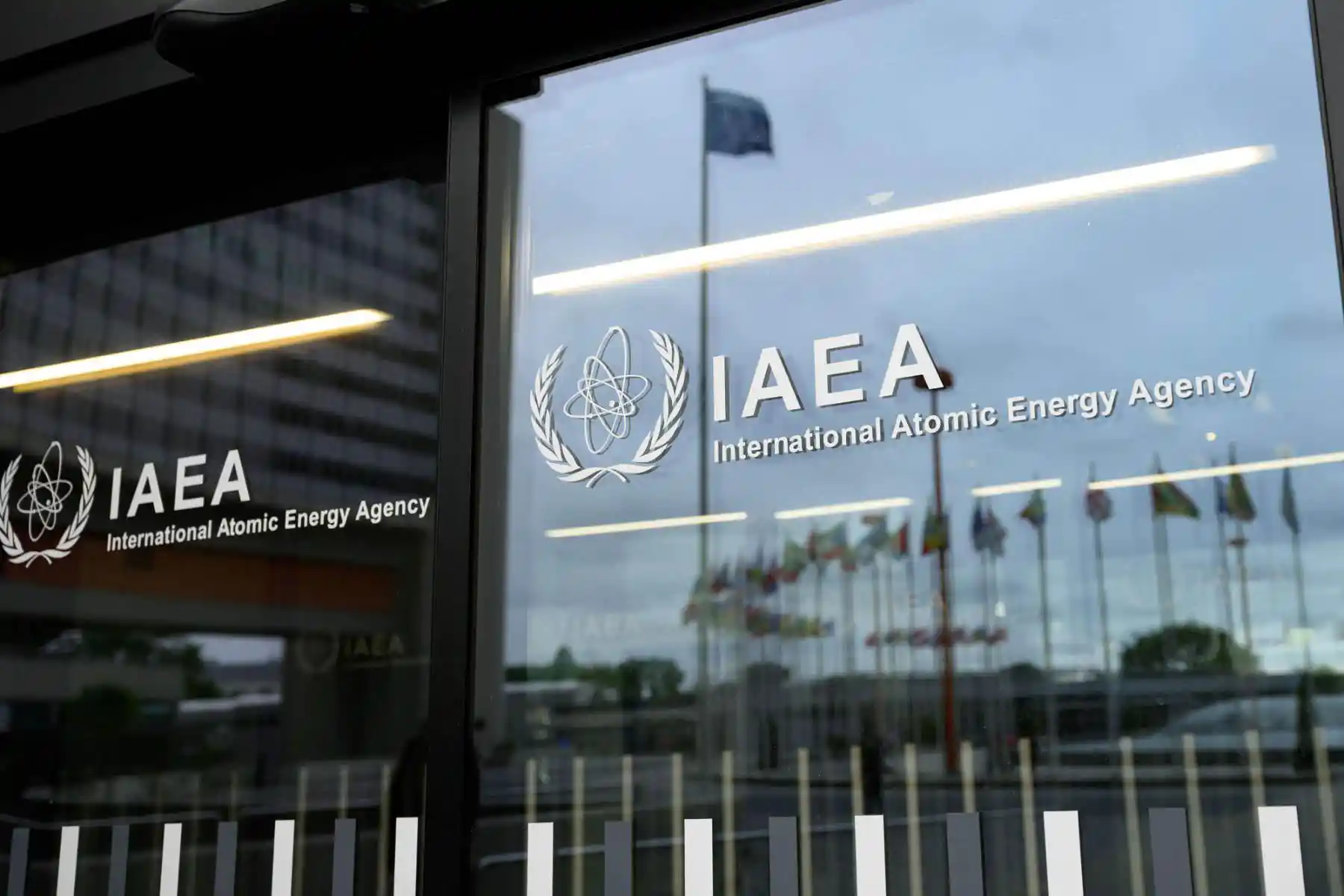
Following the 2025 attacks, the Agency halted its field verification activities, withdrew its inspectors from Iran for safety reasons, and stated in its reports that attacking peaceful nuclear facilities conflicts with the principles of the UN Charter, international law, and the Agency’s Statute.
In 2026 as well, the UN Secretariat announced that after the US and Israeli regime attacks of February 28, the Agency had lost a significant portion of its continuing knowledge about Iran’s declared facilities and, apart from the Bushehr power plant, had no field access to other declared facilities.
From Tehran’s perspective, the restriction of inspectors’ access cannot be considered merely a decision independent of security conditions. When facilities under Agency supervision are targeted by military attack, the safety of inspectors, the protection of nuclear materials, and the prevention of the transfer or dissemination of sensitive information are directly linked to national security. Iran has also emphasized in its correspondence with the United Nations that US and Israeli regime attacks against safeguarded facilities have damaged the verification system and the possibility of reaching a negotiated solution.
This situation is important for understanding Tehran’s policy; because one cannot expect “maximum transparency” from Iran while simultaneously ignoring the environment in which internationally supervised facilities have been subjected to attack. On the other hand, the long-term restriction of access has also made the continuation of verification difficult, and this vicious cycle has fueled the erosion of trust between Iran and the Agency.
Referral to the Security Council; a Futile Effort without Resolving the Issue
In September 2026, the Agency’s Board of Governors, with 23 votes in favor, 3 against, and 8 abstentions, reported the claim of Iran’s non-compliance to the Security Council; an action that, for the first time in about two decades, brought such a level of diplomatic escalation against Tehran. This resolution was advanced with pressure from the United States, Britain, France, and Germany, and Russia, China, and Niger opposed it.
From a legal perspective, reporting to the Security Council does not necessarily mean the immediate imposition of sanctions or military action, but from a political standpoint, it shifts the scope of the dispute from the level of a technical dispute between Iran and the Agency to the level of international security. This change has occurred in circumstances where diplomatic channels have also been affected by war and mistrust; therefore, although referring the case increases political pressure on Tehran, it does not necessarily guarantee the creation of a reliable verification and dispute resolution mechanism.
Iran’s reaction also indicates that Tehran views this action not merely as a technical decision, but as part of the process of politicizing the case. Major General Mohsen Rezaei, Secretary of the Supreme National Security Council, has warned that such actions could reduce the credibility of non-proliferation mechanisms and even increase the incentive of some countries to withdraw from the NPT.
Technical Crisis or Trust Crisis?
While the Agency has questions about the explanation of certain uranium traces, material inventory, and access to declared centers, and emphasizes the necessity of Iran’s cooperation, it must maintain its independence, impartiality, and technical nature from the political pressure of powerful states. This position has been explicitly raised in Iran’s official documents in the NPT review process as well.
The problem becomes deeper when a country that is an NPT member and under safeguards faces pressure, sanctions, and military attack, while the Israeli regime is not an NPT member and no similar framework of mandatory inspection exists regarding its nuclear capabilities. From Iran’s perspective, this difference between “obligations,” “oversight,” and “political consequences” is an instance of double standards and discriminatory treatment and negatively affects the legitimacy of the non-proliferation regime. In official UN documents as well, Iran’s position on this inequality and the necessity of non-discriminatory treatment by the Agency has been recorded; therefore, the main issue is not merely “Iran’s mistrust of the Agency,” but rather conditions in which mutual trust among Iran, the Agency, and Western governments has reached a minimum, and every technical action is immediately subject to security and political interpretation.
Domino Effect; from West to East Asia
The erosion of trust in the NPT is not the only consequence of the Iran nuclear issue. The US-Saudi nuclear agreement, signed in July 2026 and sent to the US Congress for review in late August, has brought the possibility of developing enrichment in Saudi Arabia into formal discussion. The Stimson Center report warns that possible concessions in the field of enrichment and safeguards arrangements for Saudi Arabia could affect previous non-proliferation standards, while supporters of the agreement argue that US presence and oversight can manage the risks of the Saudi program.
The importance of this issue for Iran lies in the fact that the more different standards are defined for regional countries, the greater the incentive of other governments to possess a complete independent fuel cycle or greater nuclear capacity. East Asia is also facing North Korea’s nuclear weapons and the renewed expansion of the nuclear deterrence debate. The Atlantic Council speaks of the increased risk of a limited nuclear attack by North Korea and simultaneously emphasizes that the end of New START in February 2026 has eliminated one of the most important formal restrictions among the world’s largest nuclear arsenals.
The Return of Great Power Competition
In such circumstances, arms control has also faced problems. Recent analyses about the new nuclear order indicate that competition among the United States, Russia, and China is increasing, and with the reduction of formal restrictions, the role of nuclear deterrence is again becoming more prominent in security calculations. The Russian International Affairs Council has also warned that the world is losing part of its “rational fear” of nuclear war; a fear that for decades has been one of the foundations of strategic stability among great powers.
Europe has also not been immune to this trend. The RUSI Institute speaks of increased cooperation between Britain and Germany in the field of deterrence and considers it part of efforts to strengthen Europe’s defense architecture under conditions of declining certainty about the US security umbrella. This trend indicates that even non-nuclear countries are redefining the place of the nuclear factor in their security.
Simultaneously, the weakening of the Comprehensive Nuclear-Test-Ban Treaty also demonstrates this same problem. The Valdai Discussion Club’s review of the treaty’s thirtieth anniversary states that the CTBT has not yet entered into full legal force, but has created a powerful normative political norm against nuclear testing. This very gap between political effect and legal obligation is considered one of the signs of the fragility of the arms control regime.
Erosion of Trust, Beyond the Erosion of the NPT
In these circumstances, the Iran issue cannot be considered merely a test of the extent of Tehran’s cooperation with the Agency; this case has become a test for the overall credibility of the non-proliferation regime. If a country is an NPT member, is under Agency supervision, but its nuclear facilities are targeted by military attack and afterward inspections are also disrupted due to that same security situation, the non-proliferation regime will face a serious contradiction.
From the perspective of Iran’s strategic interests, the sustainable path is neither a hasty withdrawal from the non-proliferation regime nor acceptance of any kind of political pressure, but rather returning the nuclear issue to a legal, technical, and negotiating framework; a framework in which the security of peaceful facilities is guaranteed, the Agency remains immune from political pressures, and Iran’s nuclear rights under the NPT are seen in balance alongside its obligations.
Otherwise, the consequences of the Iran issue will not merely be the intensification of the dispute between Tehran and the West. The increased demand for deterrent capabilities in West Asia, the strengthening of nuclear competition among great powers, and the gradual reduction of governments’ reliance on rules that were supposed to make nuclear security more predictable will be other consequences of this trend. In such a situation, the NPT may still remain in place, but its credibility and effectiveness will be eroded from within.








0 Comments