Impact of ‘Heart of Asia – Istanbul Process’ on Afghan Peace Talks

2019/07/17 | Opinion, Politics

Strategic Council Online: Heart of Asia - Istanbul Process Meeting is expected to help build peace and stability in Afghanistan so that the interests of the neighbouring countries of Afghanistan are also served. Pir Mohammad Mollazehi - Subcontinent Affairs Expert

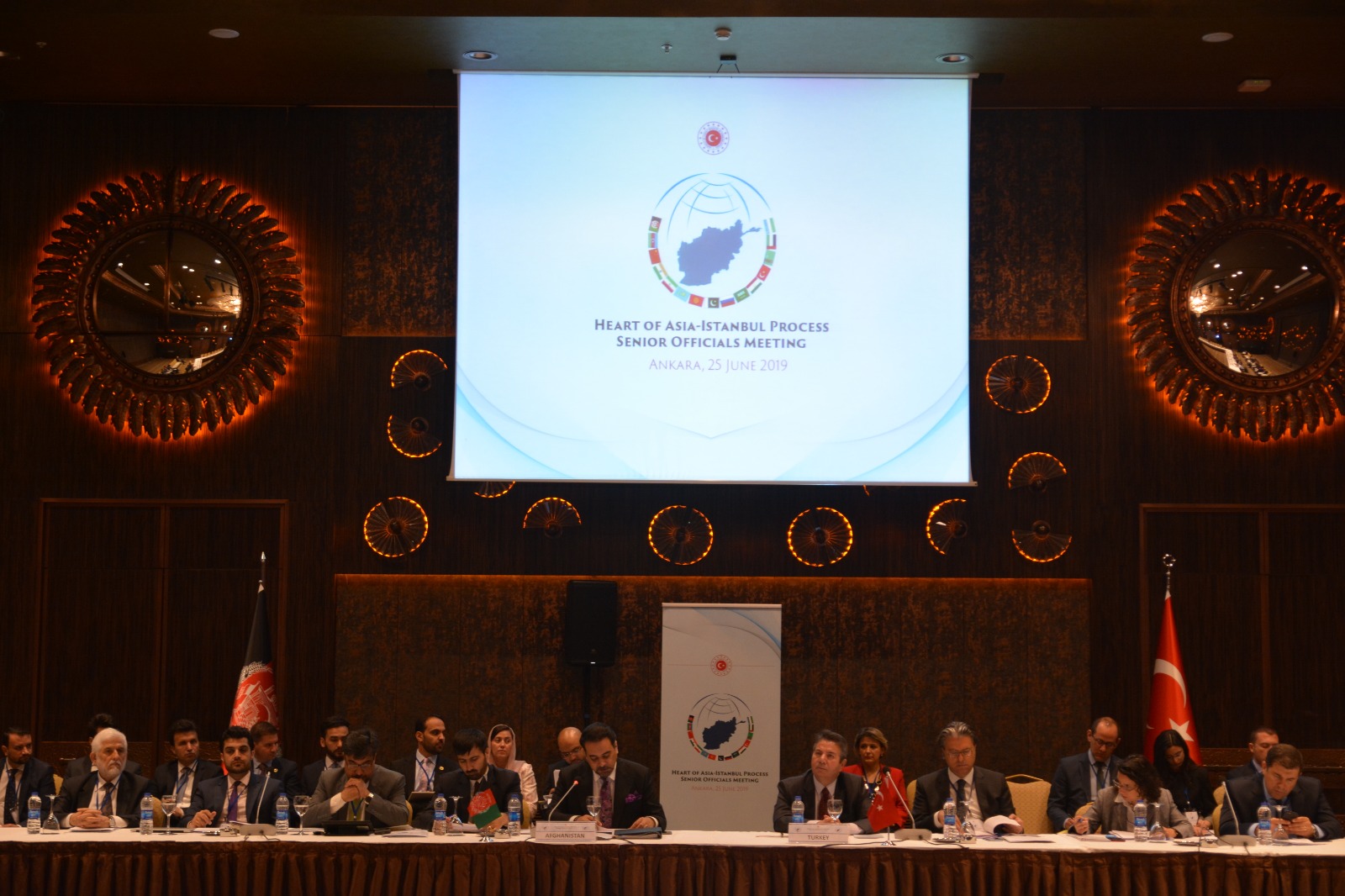
“Heart of Asia – Istanbul Process” Preliminary Meeting was held in Ankara with the participation of senior officials from Turkey, Afghanistan and representatives of member states and their sponsor organizations (June 25).

The first meeting of “Heart of Asia – Istanbul Process 2011” was held with the participation of foreign ministers from 14 countries including Afghanistan, Azerbaijan, China, India, Iran, Kazakhstan, Kyrgyzstan, Pakistan, Russia, Saudi Arabia, Tajikistan, Turkey, Turkmenistan and the United Arab Emirates.

The second meeting of the “Heart of Asia – Istanbul Process 2012” was hosted by Afghanistan, the third round (2013) was held in Kyrgyzstan, the fourth (2014) in China, the fifth (2015) in Pakistan, the sixth (2016) in India with participation of delegates from 40 countries, the seventh (2017) in Azerbaijan under the theme “security and economic connectivity to improve the situation in the Heart of Asia”.

Australia, Canada, Denmark, Egypt, France, Finland, Germany, Iraq, Italy, Japan, Norway, the Netherlands, Spain, Sweden, the United Kingdom and the United States are also countries that support this trend. Several regional and international organizations have also supported it.

As noted above, the conference began in Istanbul in 2011, and in the first place neighbouring countries of Afghanistan, such as Iran and China, which share borders with this country, and in the second place neighbouring countries that do not have a common border but have influence, such as Turkey, Qatar, Russia, Saudi Arabia and India attended the conference.

These countries have proposed a plan to somehow help Afghanistan achieve peace by adopting a regional outlook about the country’s problem. Because the trend followed by the Americans is one that will let the Western powers take the initiative. As a result, the Istanbul Process was launched to enable Afghanistan’s neighbouring countries to pursue another trend to attain Afghan peace.

Because there is a perception that every issue in Afghanistan will somehow affect its neighbouring countries: countries that share borders with Afghanistan or countries that have some kind of interests there. Therefore countries that are covered by each of these groups attended the Heart of Asia – Istanbul Process meeting to help track the peace process in Afghanistan. It should also be noted that this initiative was originally proposed by Iran, but later it was more followed by Russia.

With these points in mind, the overall agenda of this meeting is how to help Afghanistan establish peace in the country and how the Taliban will reach understanding with Afghan government forces. Another goal of the meeting is the diminution of the role of the United States and NATO in Afghanistan, as Doha talks have so far advanced to some extent, and the Taliban and Americans are said to have agreed on two main demands of the parties.

The US wanted the Taliban to negotiate with the central government and accept the peace process, and the Taliban demand complete US troop withdrawal from Afghanistan. In the Doha talks apparently they have reached some conclusions and the ground has been prepared to make the talks somewhat intra-Afghan. However, the situation is now more favourable than the past, and for this reason, it is expected that the Heart of Asia – Istanbul Process meeting will contribute to the establishment of peace and stability in Afghanistan, in the interests of the countries neighbouring Afghanistan more than before.

Finally, it should be noted that such meetings are in some way aimed at countering the unilateralism of the United States of America in the world, and in this regard, in particular, the American initiative on Afghan peace is largely questioned.

It is very important for the countries of the region to play a role in the complex issue of Afghanistan, and the presence of China and Russia in this summit has further affected the trend of US unilateralism.

When other influential sources of power are involved in important global developments linked to peace and stability, these powers can also play a role, and so we will witness the strengthening of multilateralism globally. It should be borne in mind that the Europeans are also aligned with this process, and even their interests demand that the United States will not be the lone rider and advance its own policies. Meanwhile, the United States, too, has supported this process because Washington will support any move that will help build peace and stability in Afghanistan. In fact, there is a common goal between all the countries, namely establishing peace in Afghanistan, but the difference is in the question as to who holds the initiative.


0 Comments

Submit a Comment

Your email address will not be published. Required fields are marked *

LATEST CONTENT

The Inseparability of the Lebanese Front from the Axis of Resistance

SCFR Online–Opinion: By providing an extensive network of social, healthcare, educational, and post-war reconstruction services, Hezbollah has established a strong social base for itself among Lebanon’s Shiites and Sunnis, and even beyond that, among other segments of Lebanese society, including Christians. Hezbollah has never been an external actor imposed upon Lebanon; rather, it is a phenomenon fundamentally born out of the occupation and crimes of the Zionist regime and itself influenced by popular resistance.

The Increasing Efforts of the Zionist Regime to Redefine Borders and the Regional Order and Its Consequences

SCFR Online– Opinion: Security and military developments in the region over recent months indicate that the ongoing crises and wars in Gaza, southern Lebanon, and parts of Syrian territory encompass broader dimensions of geopolitical and geostrategic transformations. In this context, the increased military presence and control of the Zionist regime over parts of the territories of these areas, along with proposals regarding the creation of buffer zones or even the expansion of security borders, have raised serious questions about the future of the regional order and its consequences for the countries of West Asia.

The Components of Iran’s Deterrence Power

SCFR Online – Opinion: At a time when regional security equations have reached a sensitive stage under the influence of Iran’s strategic confrontation with the United States and the Zionist regime, the question of the nature of Tehran’s defensive power has gained greater significance than ever before. While Washington and Tel Aviv rely on their technological superiority, the Islamic Republic of Iran has presented a model of deterrence that extends beyond the material calculations of the world’s classical militaries. This power, rooted in the connection between “the field” and “the people,” has not only altered the balance of power in recent conflicts but has also disrupted adversaries’ calculations when confronting Iran’s strategic depth.

Loading

Últimas publicaciones

The Inseparability of the Lebanese Front from the Axis of Resistance

SCFR Online–Opinion: By providing an extensive network of social, healthcare, educational, and post-war reconstruction services, Hezbollah has established a strong social base for itself among Lebanon’s Shiites and Sunnis, and even beyond that, among other segments of Lebanese society, including Christians. Hezbollah has never been an external actor imposed upon Lebanon; rather, it is a phenomenon fundamentally born out of the occupation and crimes of the Zionist regime and itself influenced by popular resistance.

The Increasing Efforts of the Zionist Regime to Redefine Borders and the Regional Order and Its Consequences

SCFR Online– Opinion: Security and military developments in the region over recent months indicate that the ongoing crises and wars in Gaza, southern Lebanon, and parts of Syrian territory encompass broader dimensions of geopolitical and geostrategic transformations. In this context, the increased military presence and control of the Zionist regime over parts of the territories of these areas, along with proposals regarding the creation of buffer zones or even the expansion of security borders, have raised serious questions about the future of the regional order and its consequences for the countries of West Asia.

The Components of Iran’s Deterrence Power

SCFR Online – Opinion: At a time when regional security equations have reached a sensitive stage under the influence of Iran’s strategic confrontation with the United States and the Zionist regime, the question of the nature of Tehran’s defensive power has gained greater significance than ever before. While Washington and Tel Aviv rely on their technological superiority, the Islamic Republic of Iran has presented a model of deterrence that extends beyond the material calculations of the world’s classical militaries. This power, rooted in the connection between “the field” and “the people,” has not only altered the balance of power in recent conflicts but has also disrupted adversaries’ calculations when confronting Iran’s strategic depth.

Loading

DERNIER CONTENU

The Inseparability of the Lebanese Front from the Axis of Resistance

SCFR Online–Opinion: By providing an extensive network of social, healthcare, educational, and post-war reconstruction services, Hezbollah has established a strong social base for itself among Lebanon’s Shiites and Sunnis, and even beyond that, among other segments of Lebanese society, including Christians. Hezbollah has never been an external actor imposed upon Lebanon; rather, it is a phenomenon fundamentally born out of the occupation and crimes of the Zionist regime and itself influenced by popular resistance.

The Increasing Efforts of the Zionist Regime to Redefine Borders and the Regional Order and Its Consequences

SCFR Online– Opinion: Security and military developments in the region over recent months indicate that the ongoing crises and wars in Gaza, southern Lebanon, and parts of Syrian territory encompass broader dimensions of geopolitical and geostrategic transformations. In this context, the increased military presence and control of the Zionist regime over parts of the territories of these areas, along with proposals regarding the creation of buffer zones or even the expansion of security borders, have raised serious questions about the future of the regional order and its consequences for the countries of West Asia.

The Components of Iran’s Deterrence Power

SCFR Online – Opinion: At a time when regional security equations have reached a sensitive stage under the influence of Iran’s strategic confrontation with the United States and the Zionist regime, the question of the nature of Tehran’s defensive power has gained greater significance than ever before. While Washington and Tel Aviv rely on their technological superiority, the Islamic Republic of Iran has presented a model of deterrence that extends beyond the material calculations of the world’s classical militaries. This power, rooted in the connection between “the field” and “the people,” has not only altered the balance of power in recent conflicts but has also disrupted adversaries’ calculations when confronting Iran’s strategic depth.

Loading

DERNIER CONTENU

The Inseparability of the Lebanese Front from the Axis of Resistance

SCFR Online–Opinion: By providing an extensive network of social, healthcare, educational, and post-war reconstruction services, Hezbollah has established a strong social base for itself among Lebanon’s Shiites and Sunnis, and even beyond that, among other segments of Lebanese society, including Christians. Hezbollah has never been an external actor imposed upon Lebanon; rather, it is a phenomenon fundamentally born out of the occupation and crimes of the Zionist regime and itself influenced by popular resistance.

The Increasing Efforts of the Zionist Regime to Redefine Borders and the Regional Order and Its Consequences

SCFR Online– Opinion: Security and military developments in the region over recent months indicate that the ongoing crises and wars in Gaza, southern Lebanon, and parts of Syrian territory encompass broader dimensions of geopolitical and geostrategic transformations. In this context, the increased military presence and control of the Zionist regime over parts of the territories of these areas, along with proposals regarding the creation of buffer zones or even the expansion of security borders, have raised serious questions about the future of the regional order and its consequences for the countries of West Asia.

The Components of Iran’s Deterrence Power

SCFR Online – Opinion: At a time when regional security equations have reached a sensitive stage under the influence of Iran’s strategic confrontation with the United States and the Zionist regime, the question of the nature of Tehran’s defensive power has gained greater significance than ever before. While Washington and Tel Aviv rely on their technological superiority, the Islamic Republic of Iran has presented a model of deterrence that extends beyond the material calculations of the world’s classical militaries. This power, rooted in the connection between “the field” and “the people,” has not only altered the balance of power in recent conflicts but has also disrupted adversaries’ calculations when confronting Iran’s strategic depth.

Loading

DERNIER CONTENU

The Inseparability of the Lebanese Front from the Axis of Resistance

SCFR Online–Opinion: By providing an extensive network of social, healthcare, educational, and post-war reconstruction services, Hezbollah has established a strong social base for itself among Lebanon’s Shiites and Sunnis, and even beyond that, among other segments of Lebanese society, including Christians. Hezbollah has never been an external actor imposed upon Lebanon; rather, it is a phenomenon fundamentally born out of the occupation and crimes of the Zionist regime and itself influenced by popular resistance.

The Increasing Efforts of the Zionist Regime to Redefine Borders and the Regional Order and Its Consequences

SCFR Online– Opinion: Security and military developments in the region over recent months indicate that the ongoing crises and wars in Gaza, southern Lebanon, and parts of Syrian territory encompass broader dimensions of geopolitical and geostrategic transformations. In this context, the increased military presence and control of the Zionist regime over parts of the territories of these areas, along with proposals regarding the creation of buffer zones or even the expansion of security borders, have raised serious questions about the future of the regional order and its consequences for the countries of West Asia.

The Components of Iran’s Deterrence Power

SCFR Online – Opinion: At a time when regional security equations have reached a sensitive stage under the influence of Iran’s strategic confrontation with the United States and the Zionist regime, the question of the nature of Tehran’s defensive power has gained greater significance than ever before. While Washington and Tel Aviv rely on their technological superiority, the Islamic Republic of Iran has presented a model of deterrence that extends beyond the material calculations of the world’s classical militaries. This power, rooted in the connection between “the field” and “the people,” has not only altered the balance of power in recent conflicts but has also disrupted adversaries’ calculations when confronting Iran’s strategic depth.

Loading



