Sudanese Mercenaries Pullout from Yemen Paves the Way for Collapse of Saudi Coalition

2020/10/20 | Note, Politics, Top News

Strategic Council Online - The decision of Sudan’s military leaders to withdraw Sudanese mercenaries from the Yemeni territory shows that the Saudi coalition is on the verge of collapse after five years. Hassan Hanizadeh – Expert on Middle East Affairs

The Sudanese forces, numbering up to 3,000, entered into war against the Yemeni people during the rule of ousted Sudanese dictator Omar al-Bashir within the framework of the Saudi coalition. The forces entered Yemen within the framework of an agreement reached between Saudi Arabia and Omar al-Bashir in response to Saudi Arabia’s commitment to paying 1 billion dollars a year to Sudan.

The ousted Sudanese dictator dispatched 3,000 Sudanese volunteer forces, mostly non-professionals, to Yemen by receiving 1 billion dollars a year from Saudi Arabia. He also pledged to reduce his diplomatic ties with Iran to the lowest possible level in return for receiving the money. Also, in the final years of his rule, Omar al-Bashir became strongly inclined to Saudi Arabia but refused to accept the plan for normalization of relations with the Zionist regime.

This issue eventually angered Saudi Arabia and the UAE, because these two regimes were commissioned by the US to encourage poor Arab countries to establish relations with the Israeli regime in return for receiving financial aid. Since the former dictator of Sudan refused to establish diplomatic relations with the Zionist regime, the US, Saudi Arabia and the UAE plotted a coup d’état against Omar al-Bashir.

Later, some Islamic parties in Sudan revolted against the rule of Omar al-Bashir in protest to the alliance of the ousted dictator of that country with Saudi Arabia and dispatch of mercenary forces to fight with the oppressed people of Yemen. The uprising of the Sudanese people against the regime and the street unrests that resulted in the murder of hundreds of people led the army to use the prevailing conditions for a coup against Omar al-Bashir. The coup took place while Sudanese army generals were secretly meeting and holding talks with the authorities of the Zionist regime.

After the coup of the Sudanese army officers, Saudi Arabia did not fulfil its promises to the Sudanese coup plotters and cut off its financial aid to the impoverished North African country. We are witnessing the result of the attitude of Saudi Arabia towards Sudan today manifested in the withdrawal of Sudanese forces from the anti-Yemen coalition.

Saudi Arabia took the same attitude towards countries such as Egypt, Morocco, Jordan and Pakistan; as the prolongation of the Saudi war against the Yemeni people led to the annual Saudi budget deficit. Saudi Arabia spent more than 350 billion dollars in its five-year war against Yemen, which faced Saudi Arabia with a budget deficit of 150 billion dollars in the year 2020 for the first time in its history.

As a result, Egypt, Morocco, Jordan and Pakistan withdrew their mercenaries from the Saudi coalition against Yemen due to the prolongation of the war and the Saudi inability to pay its financial obligations to those countries. The withdrawal of these forces from the Saudi coalition, which had no motive to fight, caused Saudi Arabia to limit its attacks on the Yemeni people only to the air force because soldiers of the Saudi ground forces were severely exhausted. Many high-ranking commanders and officers of the Saudi Army who showed their inability to fight Yemen on the ground were ousted by Saudi Crown Prince Mohammed bin Salman.

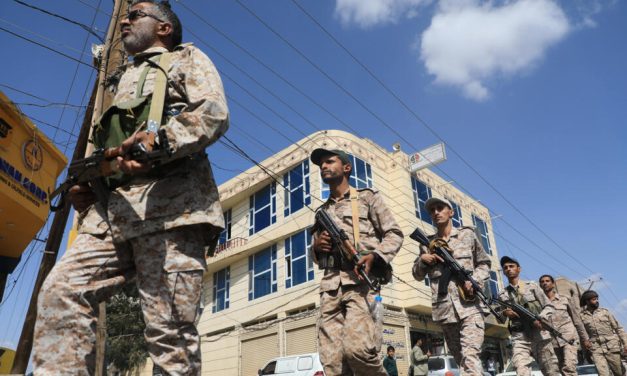
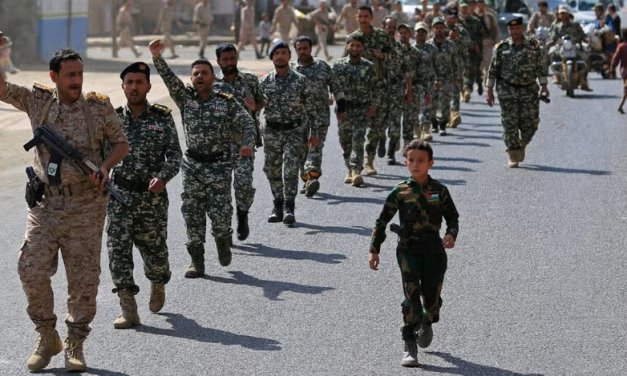
Now the Saudi regime has entered into an atmosphere of erosive war with the army and popular forces and the Yemeni Ansarullah and cannot get out of this quagmire easily without paying any cost. On the other hand, Ansarullah, along with the army and revolutionary committees, by relying on local facilities and manufacture of advanced weapons and localizing ballistic missiles and making anti-radar drones managed to change the equation of war in their favour. Under the status quo, the field areas and the initiative are at the disposal of the Ansarullah forces, and Saudi Arabia has taken on a defensive and non-offensive position, except in the field of the air force.

The outlook for Saudi Arabia’s five-year war against the oppressed nation of Yemen shows that the popular forces have adapted their conditions to the realities on the ground to prevent the Saudi conspiracies from becoming operational. Meanwhile, Saudi Arabia tried to oust the Yemeni Shiite Houthis from power by imposing a devastating war and by forming a puppet government in Yemen but the alliance of the majority of Yemeni people with the Houthis thwarted the plan. Now, Ansarullah, as a military and field reality, along with other revolutionary forces, is determined to fight up to the final victory with the Saudi regime and revive the famous historical saying of Yemen. There is an old and historical saying in Yemen that says any foreign army that enters into war against the Yemeni people will eventually leave the country with a white flag, and this saying will also apply to Saudi Arabia.


0 Comments

Submit a Comment

Your email address will not be published. Required fields are marked *

LATEST CONTENT

Consequences of Declining Trust in the Judiciary in Europe

SCFRonline – Opinion: The increase in public distrust of the French judicial system, which in recent surveys has reached approximately two-thirds of citizens, should be analyzed within a framework broader than temporary dissatisfaction or an emotional reaction to a particular criminal case.

Iran’s Potential Levers of Power

SCFRonline– Opinion: Iran’s geopolitical power is not limited solely to oil and the Strait of Hormuz; the unintended emergence of disruptions in the future global food and energy security chains can also demonstrate Iran’s strategic importance.

The Inseparability of the Lebanese Front from the Axis of Resistance

SCFR Online–Opinion: By providing an extensive network of social, healthcare, educational, and post-war reconstruction services, Hezbollah has established a strong social base for itself among Lebanon’s Shiites and Sunnis, and even beyond that, among other segments of Lebanese society, including Christians. Hezbollah has never been an external actor imposed upon Lebanon; rather, it is a phenomenon fundamentally born out of the occupation and crimes of the Zionist regime and itself influenced by popular resistance.

The Increasing Efforts of the Zionist Regime to Redefine Borders and the Regional Order and Its Consequences

SCFR Online– Opinion: Security and military developments in the region over recent months indicate that the ongoing crises and wars in Gaza, southern Lebanon, and parts of Syrian territory encompass broader dimensions of geopolitical and geostrategic transformations. In this context, the increased military presence and control of the Zionist regime over parts of the territories of these areas, along with proposals regarding the creation of buffer zones or even the expansion of security borders, have raised serious questions about the future of the regional order and its consequences for the countries of West Asia.

Loading

Últimas publicaciones

Consequences of Declining Trust in the Judiciary in Europe

SCFRonline – Opinion: The increase in public distrust of the French judicial system, which in recent surveys has reached approximately two-thirds of citizens, should be analyzed within a framework broader than temporary dissatisfaction or an emotional reaction to a particular criminal case.

Iran’s Potential Levers of Power

SCFRonline– Opinion: Iran’s geopolitical power is not limited solely to oil and the Strait of Hormuz; the unintended emergence of disruptions in the future global food and energy security chains can also demonstrate Iran’s strategic importance.

The Inseparability of the Lebanese Front from the Axis of Resistance

SCFR Online–Opinion: By providing an extensive network of social, healthcare, educational, and post-war reconstruction services, Hezbollah has established a strong social base for itself among Lebanon’s Shiites and Sunnis, and even beyond that, among other segments of Lebanese society, including Christians. Hezbollah has never been an external actor imposed upon Lebanon; rather, it is a phenomenon fundamentally born out of the occupation and crimes of the Zionist regime and itself influenced by popular resistance.

The Increasing Efforts of the Zionist Regime to Redefine Borders and the Regional Order and Its Consequences

SCFR Online– Opinion: Security and military developments in the region over recent months indicate that the ongoing crises and wars in Gaza, southern Lebanon, and parts of Syrian territory encompass broader dimensions of geopolitical and geostrategic transformations. In this context, the increased military presence and control of the Zionist regime over parts of the territories of these areas, along with proposals regarding the creation of buffer zones or even the expansion of security borders, have raised serious questions about the future of the regional order and its consequences for the countries of West Asia.

Loading

DERNIER CONTENU

Consequences of Declining Trust in the Judiciary in Europe

SCFRonline – Opinion: The increase in public distrust of the French judicial system, which in recent surveys has reached approximately two-thirds of citizens, should be analyzed within a framework broader than temporary dissatisfaction or an emotional reaction to a particular criminal case.

Iran’s Potential Levers of Power

SCFRonline– Opinion: Iran’s geopolitical power is not limited solely to oil and the Strait of Hormuz; the unintended emergence of disruptions in the future global food and energy security chains can also demonstrate Iran’s strategic importance.

The Inseparability of the Lebanese Front from the Axis of Resistance

SCFR Online–Opinion: By providing an extensive network of social, healthcare, educational, and post-war reconstruction services, Hezbollah has established a strong social base for itself among Lebanon’s Shiites and Sunnis, and even beyond that, among other segments of Lebanese society, including Christians. Hezbollah has never been an external actor imposed upon Lebanon; rather, it is a phenomenon fundamentally born out of the occupation and crimes of the Zionist regime and itself influenced by popular resistance.

The Increasing Efforts of the Zionist Regime to Redefine Borders and the Regional Order and Its Consequences

SCFR Online– Opinion: Security and military developments in the region over recent months indicate that the ongoing crises and wars in Gaza, southern Lebanon, and parts of Syrian territory encompass broader dimensions of geopolitical and geostrategic transformations. In this context, the increased military presence and control of the Zionist regime over parts of the territories of these areas, along with proposals regarding the creation of buffer zones or even the expansion of security borders, have raised serious questions about the future of the regional order and its consequences for the countries of West Asia.

Loading

DERNIER CONTENU

Consequences of Declining Trust in the Judiciary in Europe

SCFRonline – Opinion: The increase in public distrust of the French judicial system, which in recent surveys has reached approximately two-thirds of citizens, should be analyzed within a framework broader than temporary dissatisfaction or an emotional reaction to a particular criminal case.

Iran’s Potential Levers of Power

SCFRonline– Opinion: Iran’s geopolitical power is not limited solely to oil and the Strait of Hormuz; the unintended emergence of disruptions in the future global food and energy security chains can also demonstrate Iran’s strategic importance.

The Inseparability of the Lebanese Front from the Axis of Resistance

SCFR Online–Opinion: By providing an extensive network of social, healthcare, educational, and post-war reconstruction services, Hezbollah has established a strong social base for itself among Lebanon’s Shiites and Sunnis, and even beyond that, among other segments of Lebanese society, including Christians. Hezbollah has never been an external actor imposed upon Lebanon; rather, it is a phenomenon fundamentally born out of the occupation and crimes of the Zionist regime and itself influenced by popular resistance.

The Increasing Efforts of the Zionist Regime to Redefine Borders and the Regional Order and Its Consequences

SCFR Online– Opinion: Security and military developments in the region over recent months indicate that the ongoing crises and wars in Gaza, southern Lebanon, and parts of Syrian territory encompass broader dimensions of geopolitical and geostrategic transformations. In this context, the increased military presence and control of the Zionist regime over parts of the territories of these areas, along with proposals regarding the creation of buffer zones or even the expansion of security borders, have raised serious questions about the future of the regional order and its consequences for the countries of West Asia.

Loading

DERNIER CONTENU

Consequences of Declining Trust in the Judiciary in Europe

SCFRonline – Opinion: The increase in public distrust of the French judicial system, which in recent surveys has reached approximately two-thirds of citizens, should be analyzed within a framework broader than temporary dissatisfaction or an emotional reaction to a particular criminal case.

Iran’s Potential Levers of Power

SCFRonline– Opinion: Iran’s geopolitical power is not limited solely to oil and the Strait of Hormuz; the unintended emergence of disruptions in the future global food and energy security chains can also demonstrate Iran’s strategic importance.

The Inseparability of the Lebanese Front from the Axis of Resistance

SCFR Online–Opinion: By providing an extensive network of social, healthcare, educational, and post-war reconstruction services, Hezbollah has established a strong social base for itself among Lebanon’s Shiites and Sunnis, and even beyond that, among other segments of Lebanese society, including Christians. Hezbollah has never been an external actor imposed upon Lebanon; rather, it is a phenomenon fundamentally born out of the occupation and crimes of the Zionist regime and itself influenced by popular resistance.

The Increasing Efforts of the Zionist Regime to Redefine Borders and the Regional Order and Its Consequences

SCFR Online– Opinion: Security and military developments in the region over recent months indicate that the ongoing crises and wars in Gaza, southern Lebanon, and parts of Syrian territory encompass broader dimensions of geopolitical and geostrategic transformations. In this context, the increased military presence and control of the Zionist regime over parts of the territories of these areas, along with proposals regarding the creation of buffer zones or even the expansion of security borders, have raised serious questions about the future of the regional order and its consequences for the countries of West Asia.

Loading