Intensification of Political Fragility of the Zionist Regime

2021/01/13 | interview, Politics, Top News

Strategic Council Online - An analyst of West Asia affairs stressed that Benjamin Netanyahu will not be able to win an absolute majority in the Knesset in the fourth elections, saying: Recent experience has shown that every year and in every election in Israel coalitions will become more fragile and the distance between allies will increase.

In an interview with the website of the Strategic Council on Foreign Relations, Majid Safataj referred to the dissolution of the 23rd Zionist regime parliament and holding of early elections in the occupied Palestinian territories and said: Zionist regime’s internal political challenges are deepening day by day in addition to social and economic crisis which has faced the regime with internal crisis, especially since two years ago when the elections were repeated continuously due to Netanyahu’s failure to win a majority and this process was accelerated.

Referring to some analysis that Netanyahu ignored the agreement on a rotating premiership by refusing to approve a two-year budget plan and insisted on approving a one-year budget to somehow prevent Benny Gantz from becoming the prime minister in November 2021, he said: Following deep-rooted differences in the coalition cabinet, the Israeli parliament rejected the deadline for approving the 2020 budget plan, leading the regime to hold its fourth elections in two years.

He explained: Although it is said that Netanyahu deliberately disrupted the coalition or created the conditions for the loss of the position of the ‘Blue and White’ Party and ‘ Benny Gantz’, so that in the new elections the ‘Likud’ Party could win the absolute majority, but I do not think that will happen, and past experiences have shown that every year and in every election in Israel, coalitions become more fragile and the distance between allies will be widened.

The researcher and the writer of the developments of Palestine and the Zionist regime, saying that moving towards segregation has become a big domestic policy challenge for the Zionist regime, added: In the future, it will be clear that Netanyahu will not be able to win a majority in the Knesset, although in a psychological operation and by creating fear and concern, he is trying to convince the people that if the Likud Party relinquishes power, war will be imposed on the regime by the countries of the region, or more precisely by the currents of Axis of Resistance, and insecurity will be severer for the Zionist society.

Safataj, referring to some published news about the efforts of the US and the Zionist regime to take action against Iran on the final days of the Trump administration, continued: Such psychological operation would be carried out to stabilize Netanyahu who is trying to persuade the Americans that Trump, before leaving the White House, should make a military move against Iran and be able to take advantage of the situation resulting from this measure in order to improve his position in the Zionist regime.

Emphasizing that from the beginning of the formation of the cabinet with the presence of those two parties, it was predicted that this cabinet would not last long, he said: The next government in the Zionist regime will also be formed through coalition; therefore, we will still not be witness to the formation of a strong, united, cohesive and integrated coalition government. Even if Netanyahu or the Likud Party wins a fragile majority in the next elections, the situation will certainly not change and they have to form a coalition. Due to the impossibility of reaching an agreement with other major parties, as well as the greed we have witnessed, Netanyahu will not accept power-sharing.

The expert on West Asia Affairs also referred to Netanyahu’s corruption case, as well as the weekly protests against such corruption and inadequacy in managing the consequences of the Coronavirus epidemic, added: It seems that the situation in the Zionist regime will become more complicated and this is a process that seems to accelerate the speed of the Zionist regime on the downhill of collapse in political terms.

Referring to the internal differences in the Zionist regime, Safataj called the psychological operations carried out with the support of the propaganda office of the world domination system in the direction of survival of the regime in the Middle East, he added: But this regime is facing many challenges in economic, social, moral and political fields. In addition, in the military and security spheres and in the field of foreign policy, it has not been able to maintain its position of the past few decades; for example, the Zionist regime in the current situation in the European Union is not like the Zionist regime of the last two or three decades.

He assessed the efforts for normalization of relations with Arab countries in order to resolve and cover up the current precarious situation of the regime and said: Despite all the propaganda and psychological operations, they revealed their relations with tiny countries such as Bahrain and the UAE; these are reasons for the failure of the Zionist regime. An action that was carried out either with the support and force of the US bayonet on the littoral states of the southern shores of the Persian Gulf or with economic and political promises to a country like Sudan; therefore, these events do not mean that this regime has been successful.

Saying that experts and political and military theorists of the Zionist regime have admitted that any war with the Axis of Resistance is a final defeat and collapse of the regime, Safataj continued: Considering the political developments we are witnessing in the United States with the departure of Trump as Netanyahu’s main supporter, the ambiguities about his future and the fate of the Zionist regime are evident in the remarks of some religious and political officials of the Zionist regime.


0 Comments

Submit a Comment

Your email address will not be published. Required fields are marked *

LATEST CONTENT

The Makkah Pact; Reasons for its Formation and Challenges Ahead

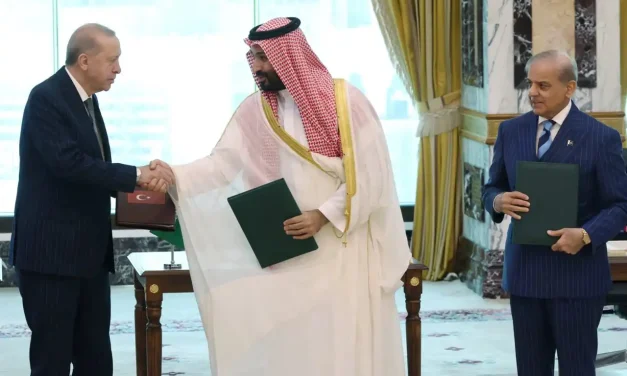
SCFR Online – Opinion: The Makkah Pact, signed between Saudi Arabia, Pakistan, and Turkey under the motto “an attack on one is an attack on all,” is viewed by some analysts less as a full-fledged military coalition and more as an attempt to reduce security dependence on an external power and to establish a regional security mechanism.

Implications of the US-Saudi Nuclear Agreement

SCFR Online – Opinion: The new US-Saudi nuclear agreement, despite legal and political ambiguities, could alter previous non-proliferation standards in West Asia and intensify nuclear competition, ushering it into a new phase.

An Analysis of Recent Turkey-Israeli Regime Tensions

SCFR Online – Opinion: Recent developments in Syria indicate an intensification of strategic rivalry between Turkey and the Israeli regime, but mutual considerations and the role of the United States have limited the likelihood of direct war.

Increasing criticism of the extensive Zionist lobby network

SCFR Online – Opinion: An examination of the mechanisms of the Israeli regime’s influence in the United States depicts a complex picture of shared interests, strategic dependencies, and the limitations of this relationship.

Realities of the Tripartite Makkah Pact

SCFR Online – Interview: The signing of the Makkah agreement between Saudi Arabia, Pakistan, and Turkey has raised questions about the future of the region’s security structure and the position of these countries in West Asian equations. Can this agreement become a genuine collective defense mechanism, or does it have more of a political and deterrent function than creating new military capacity?

Loading

Últimas publicaciones

The Makkah Pact; Reasons for its Formation and Challenges Ahead

SCFR Online – Opinion: The Makkah Pact, signed between Saudi Arabia, Pakistan, and Turkey under the motto “an attack on one is an attack on all,” is viewed by some analysts less as a full-fledged military coalition and more as an attempt to reduce security dependence on an external power and to establish a regional security mechanism.

Implications of the US-Saudi Nuclear Agreement

SCFR Online – Opinion: The new US-Saudi nuclear agreement, despite legal and political ambiguities, could alter previous non-proliferation standards in West Asia and intensify nuclear competition, ushering it into a new phase.

An Analysis of Recent Turkey-Israeli Regime Tensions

SCFR Online – Opinion: Recent developments in Syria indicate an intensification of strategic rivalry between Turkey and the Israeli regime, but mutual considerations and the role of the United States have limited the likelihood of direct war.

Increasing criticism of the extensive Zionist lobby network

SCFR Online – Opinion: An examination of the mechanisms of the Israeli regime’s influence in the United States depicts a complex picture of shared interests, strategic dependencies, and the limitations of this relationship.

Realities of the Tripartite Makkah Pact

SCFR Online – Interview: The signing of the Makkah agreement between Saudi Arabia, Pakistan, and Turkey has raised questions about the future of the region’s security structure and the position of these countries in West Asian equations. Can this agreement become a genuine collective defense mechanism, or does it have more of a political and deterrent function than creating new military capacity?

Loading

DERNIER CONTENU

The Makkah Pact; Reasons for its Formation and Challenges Ahead

SCFR Online – Opinion: The Makkah Pact, signed between Saudi Arabia, Pakistan, and Turkey under the motto “an attack on one is an attack on all,” is viewed by some analysts less as a full-fledged military coalition and more as an attempt to reduce security dependence on an external power and to establish a regional security mechanism.

Implications of the US-Saudi Nuclear Agreement

SCFR Online – Opinion: The new US-Saudi nuclear agreement, despite legal and political ambiguities, could alter previous non-proliferation standards in West Asia and intensify nuclear competition, ushering it into a new phase.

An Analysis of Recent Turkey-Israeli Regime Tensions

SCFR Online – Opinion: Recent developments in Syria indicate an intensification of strategic rivalry between Turkey and the Israeli regime, but mutual considerations and the role of the United States have limited the likelihood of direct war.

Increasing criticism of the extensive Zionist lobby network

SCFR Online – Opinion: An examination of the mechanisms of the Israeli regime’s influence in the United States depicts a complex picture of shared interests, strategic dependencies, and the limitations of this relationship.

Realities of the Tripartite Makkah Pact

SCFR Online – Interview: The signing of the Makkah agreement between Saudi Arabia, Pakistan, and Turkey has raised questions about the future of the region’s security structure and the position of these countries in West Asian equations. Can this agreement become a genuine collective defense mechanism, or does it have more of a political and deterrent function than creating new military capacity?

Loading

DERNIER CONTENU

The Makkah Pact; Reasons for its Formation and Challenges Ahead

SCFR Online – Opinion: The Makkah Pact, signed between Saudi Arabia, Pakistan, and Turkey under the motto “an attack on one is an attack on all,” is viewed by some analysts less as a full-fledged military coalition and more as an attempt to reduce security dependence on an external power and to establish a regional security mechanism.

Implications of the US-Saudi Nuclear Agreement

SCFR Online – Opinion: The new US-Saudi nuclear agreement, despite legal and political ambiguities, could alter previous non-proliferation standards in West Asia and intensify nuclear competition, ushering it into a new phase.

An Analysis of Recent Turkey-Israeli Regime Tensions

SCFR Online – Opinion: Recent developments in Syria indicate an intensification of strategic rivalry between Turkey and the Israeli regime, but mutual considerations and the role of the United States have limited the likelihood of direct war.

Increasing criticism of the extensive Zionist lobby network

SCFR Online – Opinion: An examination of the mechanisms of the Israeli regime’s influence in the United States depicts a complex picture of shared interests, strategic dependencies, and the limitations of this relationship.

Realities of the Tripartite Makkah Pact

SCFR Online – Interview: The signing of the Makkah agreement between Saudi Arabia, Pakistan, and Turkey has raised questions about the future of the region’s security structure and the position of these countries in West Asian equations. Can this agreement become a genuine collective defense mechanism, or does it have more of a political and deterrent function than creating new military capacity?

Loading

DERNIER CONTENU

The Makkah Pact; Reasons for its Formation and Challenges Ahead

SCFR Online – Opinion: The Makkah Pact, signed between Saudi Arabia, Pakistan, and Turkey under the motto “an attack on one is an attack on all,” is viewed by some analysts less as a full-fledged military coalition and more as an attempt to reduce security dependence on an external power and to establish a regional security mechanism.

Implications of the US-Saudi Nuclear Agreement

SCFR Online – Opinion: The new US-Saudi nuclear agreement, despite legal and political ambiguities, could alter previous non-proliferation standards in West Asia and intensify nuclear competition, ushering it into a new phase.

An Analysis of Recent Turkey-Israeli Regime Tensions

SCFR Online – Opinion: Recent developments in Syria indicate an intensification of strategic rivalry between Turkey and the Israeli regime, but mutual considerations and the role of the United States have limited the likelihood of direct war.

Increasing criticism of the extensive Zionist lobby network

SCFR Online – Opinion: An examination of the mechanisms of the Israeli regime’s influence in the United States depicts a complex picture of shared interests, strategic dependencies, and the limitations of this relationship.

Realities of the Tripartite Makkah Pact

SCFR Online – Interview: The signing of the Makkah agreement between Saudi Arabia, Pakistan, and Turkey has raised questions about the future of the region’s security structure and the position of these countries in West Asian equations. Can this agreement become a genuine collective defense mechanism, or does it have more of a political and deterrent function than creating new military capacity?

Loading