Inefficiency Causes of Forces & Popular Mobilization to Fight against Taliban

2021/08/16 | interview, Politics, Top News

Strategic Council Online- Interview An Afghanistan analyst believes that dissatisfaction present among the main body of Afghanistan military forces has caused boosting of self-confidence among Taliban.

Farzad Ramezaani Boonesh in an interview with the site of Strategic Council of Foreign Relations told:” unlike earlier expectations based on which it seemed that popular established mainstreams would be able to free more areas from Taliban’s predominance, this has not happened because the lack of sufficient support from government and in-coordination.

Having stated that at present, Afghanistan government is strongly suffering from in-coordination and mismanagement at political-military developments’ scene, and said that the differences of opinion such as selecting local military commanders continue to be there among personalities and political / military officials. Having exploited such a situation, Taliban has managed to capture many areas because of complete withdrawal of state forces.

Dissatisfaction among the main body of Afghanistan military forces  

He added that dissatisfaction among the main body of Afghanistan military forces boosted Taliban’s self-confidence and they planned to be present in larger areas of the country. Defense Committee of Afghanistan parliament has identified the weak performance of the Ministry of Defense within the last year as the (main) factor of regaining power by Taliban.

The expert on Afghanistan said the chaos among the security forces of Afghanistan indicates that the Ministry of Defense and the Army of the country had no plan for the period when the foreign forces leave the country. He added that for the past two months during which Taliban captured different areas in West and North with greater progress, they managed to gain areas with counter-attacks and more coordination. Now, they cast their tactical look at more populated regions that have greater strategic importance that caused them to almost waive from some areas.


Greater coordination by the government is required

Ramezaani pointed out at President Ashraf Ghani’s call for public mobilization in order to stand against Taliban and said:” Moreover, we witness the presence of popular forces and former Mujahedin dignitaries and ethnical groups who endeavored to form popular-military groups and to stand against Taliban especially in West and North, but all this requires more coordination by the government and provision of arms and further assistance on exchange of information. Unfortunately, we witness in-coordination with the government in these fields, to such an extent that local commanders have called for transfer of responsibilities to decent individuals in the country.

He pointed out to remarks made by Amir Mohammad Ismael Khan, one of the famous and seasoned Mujahedin of Afghanistan and his critics about the shortage of arms and equipment as well as the necessity of paying attention of the central government to the issue, and added that circulation of photos of Ismael Khan’s presence in the frontline of battle with Taliban during the recent days were extensively welcomed by the people of Afghanistan. But it seems that there is not enough assistance extended by the government and unlike the earlier expectations  based on which it seemed that popular established mainstreams would be able to liberate more regions from Taliban’s predominance, so far the maximum success has not be achieved.

The Afghanistan researcher said within the coming two months, with colder temperature we will witness some changes in geographical situation of battles. He explained that Taliban will make effort to capture more regions in Afghanistan within the coming one to two months and to play with this card with their more extensive presence in the field or to use it as a strong leverage for any negotiation with the government of Afghanistan and other foreign players to get maximum concessions. In such a situation, the government should make further coordination within itself in order to stop the falling of different towns and regions.

Targeted assassination of state personalities

Ramezaani pointed out to efforts for assassination of state personalities by Taliban within the past several days and said:” targeted assassination approach was considered by Taliban from the past but as they do not have the capability to launch classic war in cities and they lack extensive presence in the fields at present situation, they have put targeted assassinations of state personalities and authorities in their agenda in order to proceed with a kind of intimidation and psychological warfare strategy and to try to scare other authorities to become influential and saber rattling.

Having pointed out the recent progresses of Taliban in cities and also circulation of news about the more active role of Mujahedin in Afghanistan battle field, he spelled out:” for sure, any change in field situation and Taliban’s willingness to have more effective presence in negotiation, depend on internal, regional and international variables. If Afghanistan Air Force could target Taliban’s positons and leave effects on military field, then Taliban may have withdrawals.

The Afghanistan analyst referred to the remarks made by Afghan military officials who had said that Taliban forces and equipment have already been entered into Afghanistan from Pakistan borders and the government should create new security belts in addition to exerting pressure on Pakistan to safeguard her borders. He said:” within the recent days, the news circulated about the arrival of Taliban militia from Pakistan borders into Afghanistan was accompanied by tough expressions of Afghan officials and reaction from public opinion. For sure, Afghanistan government should pay attention to battle fields as they pay special attention to their negotiations with Pakistan.

In the meantime, Ramezaani said:” Having ruled out Pakistan’s extensive influence on Taliban, the Pakistani National Security Advisor criticized Afghanistan government and said Kabul should stop her effort for military victory and involve a wider range of Afghans in the country’s peace negotiations.
0 Comments

Submit a Comment

Your email address will not be published. Required fields are marked *

LATEST CONTENT

Implications of the US-Saudi Nuclear Agreement

SCFR Online – Opinion: The new US-Saudi nuclear agreement, despite legal and political ambiguities, could alter previous non-proliferation standards in West Asia and intensify nuclear competition, ushering it into a new phase.

An Analysis of Recent Turkey-Israeli Regime Tensions

SCFR Online – Opinion: Recent developments in Syria indicate an intensification of strategic rivalry between Turkey and the Israeli regime, but mutual considerations and the role of the United States have limited the likelihood of direct war.

Increasing criticism of the extensive Zionist lobby network

SCFR Online – Opinion: An examination of the mechanisms of the Israeli regime’s influence in the United States depicts a complex picture of shared interests, strategic dependencies, and the limitations of this relationship.

Realities of the Tripartite Makkah Pact

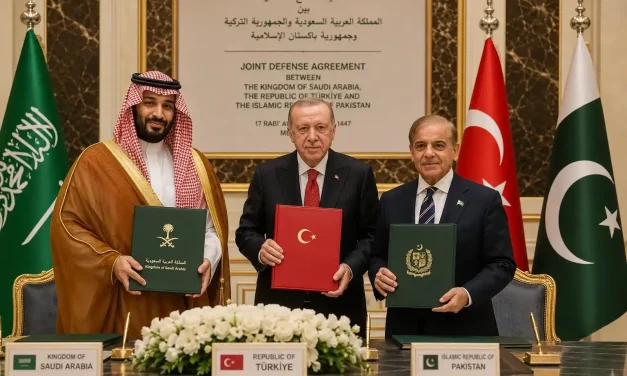
SCFR Online – Interview: The signing of the Makkah agreement between Saudi Arabia, Pakistan, and Turkey has raised questions about the future of the region’s security structure and the position of these countries in West Asian equations. Can this agreement become a genuine collective defense mechanism, or does it have more of a political and deterrent function than creating new military capacity?

Strategic Implications of the Reduction of US Weapons Stockpiles

SCFR Online – Opinion: The continuation of the US war against Iran, in addition to increasing operational costs, has called into question the actual capacity of the American arsenal to simultaneously fulfill security commitments on multiple fronts; an issue that affects deterrence, defense production capacity, and Washington’s resource prioritization.

The Formation of a New Order in Relations Between Powers

SCFR Online – Opinion: The Russia-Ukraine war and the war of the United States and the Israeli regime against Iran have been formed with different objectives and actors, but field and political developments indicate that they are not entirely separate from one another.

An Analysis of the Makkah Defense Pact

SCFR Online – Opinion: On Friday, August 7, the heads of state of three countries – Saudi Arabia, Turkey, and Pakistan – signed a text under the title “Makkah Joint Defense Agreement.”

Loading

Últimas publicaciones

Implications of the US-Saudi Nuclear Agreement

SCFR Online – Opinion: The new US-Saudi nuclear agreement, despite legal and political ambiguities, could alter previous non-proliferation standards in West Asia and intensify nuclear competition, ushering it into a new phase.

An Analysis of Recent Turkey-Israeli Regime Tensions

SCFR Online – Opinion: Recent developments in Syria indicate an intensification of strategic rivalry between Turkey and the Israeli regime, but mutual considerations and the role of the United States have limited the likelihood of direct war.

Increasing criticism of the extensive Zionist lobby network

SCFR Online – Opinion: An examination of the mechanisms of the Israeli regime’s influence in the United States depicts a complex picture of shared interests, strategic dependencies, and the limitations of this relationship.

Realities of the Tripartite Makkah Pact

SCFR Online – Interview: The signing of the Makkah agreement between Saudi Arabia, Pakistan, and Turkey has raised questions about the future of the region’s security structure and the position of these countries in West Asian equations. Can this agreement become a genuine collective defense mechanism, or does it have more of a political and deterrent function than creating new military capacity?

Strategic Implications of the Reduction of US Weapons Stockpiles

SCFR Online – Opinion: The continuation of the US war against Iran, in addition to increasing operational costs, has called into question the actual capacity of the American arsenal to simultaneously fulfill security commitments on multiple fronts; an issue that affects deterrence, defense production capacity, and Washington’s resource prioritization.

The Formation of a New Order in Relations Between Powers

SCFR Online – Opinion: The Russia-Ukraine war and the war of the United States and the Israeli regime against Iran have been formed with different objectives and actors, but field and political developments indicate that they are not entirely separate from one another.

An Analysis of the Makkah Defense Pact

SCFR Online – Opinion: On Friday, August 7, the heads of state of three countries – Saudi Arabia, Turkey, and Pakistan – signed a text under the title “Makkah Joint Defense Agreement.”

Loading

DERNIER CONTENU

Implications of the US-Saudi Nuclear Agreement

SCFR Online – Opinion: The new US-Saudi nuclear agreement, despite legal and political ambiguities, could alter previous non-proliferation standards in West Asia and intensify nuclear competition, ushering it into a new phase.

An Analysis of Recent Turkey-Israeli Regime Tensions

SCFR Online – Opinion: Recent developments in Syria indicate an intensification of strategic rivalry between Turkey and the Israeli regime, but mutual considerations and the role of the United States have limited the likelihood of direct war.

Increasing criticism of the extensive Zionist lobby network

SCFR Online – Opinion: An examination of the mechanisms of the Israeli regime’s influence in the United States depicts a complex picture of shared interests, strategic dependencies, and the limitations of this relationship.

Realities of the Tripartite Makkah Pact

SCFR Online – Interview: The signing of the Makkah agreement between Saudi Arabia, Pakistan, and Turkey has raised questions about the future of the region’s security structure and the position of these countries in West Asian equations. Can this agreement become a genuine collective defense mechanism, or does it have more of a political and deterrent function than creating new military capacity?

Strategic Implications of the Reduction of US Weapons Stockpiles

SCFR Online – Opinion: The continuation of the US war against Iran, in addition to increasing operational costs, has called into question the actual capacity of the American arsenal to simultaneously fulfill security commitments on multiple fronts; an issue that affects deterrence, defense production capacity, and Washington’s resource prioritization.

The Formation of a New Order in Relations Between Powers

SCFR Online – Opinion: The Russia-Ukraine war and the war of the United States and the Israeli regime against Iran have been formed with different objectives and actors, but field and political developments indicate that they are not entirely separate from one another.

An Analysis of the Makkah Defense Pact

SCFR Online – Opinion: On Friday, August 7, the heads of state of three countries – Saudi Arabia, Turkey, and Pakistan – signed a text under the title “Makkah Joint Defense Agreement.”

Loading

DERNIER CONTENU

Implications of the US-Saudi Nuclear Agreement

SCFR Online – Opinion: The new US-Saudi nuclear agreement, despite legal and political ambiguities, could alter previous non-proliferation standards in West Asia and intensify nuclear competition, ushering it into a new phase.

An Analysis of Recent Turkey-Israeli Regime Tensions

SCFR Online – Opinion: Recent developments in Syria indicate an intensification of strategic rivalry between Turkey and the Israeli regime, but mutual considerations and the role of the United States have limited the likelihood of direct war.

Increasing criticism of the extensive Zionist lobby network

SCFR Online – Opinion: An examination of the mechanisms of the Israeli regime’s influence in the United States depicts a complex picture of shared interests, strategic dependencies, and the limitations of this relationship.

Realities of the Tripartite Makkah Pact

SCFR Online – Interview: The signing of the Makkah agreement between Saudi Arabia, Pakistan, and Turkey has raised questions about the future of the region’s security structure and the position of these countries in West Asian equations. Can this agreement become a genuine collective defense mechanism, or does it have more of a political and deterrent function than creating new military capacity?

Strategic Implications of the Reduction of US Weapons Stockpiles

SCFR Online – Opinion: The continuation of the US war against Iran, in addition to increasing operational costs, has called into question the actual capacity of the American arsenal to simultaneously fulfill security commitments on multiple fronts; an issue that affects deterrence, defense production capacity, and Washington’s resource prioritization.

The Formation of a New Order in Relations Between Powers

SCFR Online – Opinion: The Russia-Ukraine war and the war of the United States and the Israeli regime against Iran have been formed with different objectives and actors, but field and political developments indicate that they are not entirely separate from one another.

An Analysis of the Makkah Defense Pact

SCFR Online – Opinion: On Friday, August 7, the heads of state of three countries – Saudi Arabia, Turkey, and Pakistan – signed a text under the title “Makkah Joint Defense Agreement.”

Loading

DERNIER CONTENU

Implications of the US-Saudi Nuclear Agreement

SCFR Online – Opinion: The new US-Saudi nuclear agreement, despite legal and political ambiguities, could alter previous non-proliferation standards in West Asia and intensify nuclear competition, ushering it into a new phase.

An Analysis of Recent Turkey-Israeli Regime Tensions

SCFR Online – Opinion: Recent developments in Syria indicate an intensification of strategic rivalry between Turkey and the Israeli regime, but mutual considerations and the role of the United States have limited the likelihood of direct war.

Increasing criticism of the extensive Zionist lobby network

SCFR Online – Opinion: An examination of the mechanisms of the Israeli regime’s influence in the United States depicts a complex picture of shared interests, strategic dependencies, and the limitations of this relationship.

Realities of the Tripartite Makkah Pact

SCFR Online – Interview: The signing of the Makkah agreement between Saudi Arabia, Pakistan, and Turkey has raised questions about the future of the region’s security structure and the position of these countries in West Asian equations. Can this agreement become a genuine collective defense mechanism, or does it have more of a political and deterrent function than creating new military capacity?

Strategic Implications of the Reduction of US Weapons Stockpiles

SCFR Online – Opinion: The continuation of the US war against Iran, in addition to increasing operational costs, has called into question the actual capacity of the American arsenal to simultaneously fulfill security commitments on multiple fronts; an issue that affects deterrence, defense production capacity, and Washington’s resource prioritization.

The Formation of a New Order in Relations Between Powers

SCFR Online – Opinion: The Russia-Ukraine war and the war of the United States and the Israeli regime against Iran have been formed with different objectives and actors, but field and political developments indicate that they are not entirely separate from one another.

An Analysis of the Makkah Defense Pact

SCFR Online – Opinion: On Friday, August 7, the heads of state of three countries – Saudi Arabia, Turkey, and Pakistan – signed a text under the title “Makkah Joint Defense Agreement.”

Loading