Necessity of the formation of a multi-plural government in the plural society of Afghanistan

2021/08/31 | interview, Politics, Top News

Strategic Council Online- Interview: An expert of Afghanistan issues says the multi-cultural society as Afghanistan cannot be governed with a closed approach and a totalitarian structure, adding that a plural government should be formed in Afghanistan and its neighbors should help in this respect and prevent, through diplomacy, the occurrence of extremist measures by the Taliban.

Reza Abedi Gonabad told the Strategic Council on Foreign Relations that the process of state building in the plural society of Afghanistan is very complex considering the multiplicity of tribes and ethnicities in Afghanistan.

“Unfortunately, since the past in this country, the structure of power has been mostly unified and the Pashtuns had had grip on power and monopoly which have resulted in dissatisfaction among other ethnicities especially the Tajiks, Uzbeks and Hazaras.”

He said some of the regional and international structures of power have helped the Pashtuns to move towards monopoly of power.

Referring to the role and performance of Pakistan, Saudi Arabia, Qatar and Turkey in Afghanistan, he said “it is true that the Pashtuns in terms of population constitute between 30 to 50 percent of the 40-million society of Afghanistan; however, the structure of the Afghan society is based on pluralism”.

Necessity of attention to various minority groups

He said the isolation of other ethnicities and tribes in the structure of Afghanistan and moving towards Pashtunism have always created problems in Afghanistan.

“This is while in a society as Afghanistan, minorities cannot be considered a small group. A great number of people have been divided into smaller tribes which are ignored in decision making on many occasions.”

This university professor referred to tribalism in obtaining government positions and entry into power in Afghanistan and said in addition to Pakistan and countries such as Saudi Arabia, the US and Europe are also heightening this monopoly of power in the political structure of Afghanistan.

“Although they give slogans about democracy, in practice they are promoting a type of inefficient monopolism in Afghanistan because the policy of these countries in Afghanistan aims at the formation of a weak government so that their economic and security interests are more secured”.

Formation of a weak government would secure the interests of foreign players

Referring to the strategic position of Afghanistan, Abedi Gonabad said the United States and the West are heightening ethnic monopolism in this country and are seeking to create a quagmire in Afghanistan in order to attain their strategic interests.

“They want Afghanistan to remain a crisis point through the monopoly of power and opposition with the formation of a plural structure so that they advance their policies especially to pressure China, Russia, Iran and the region through Afghanistan and disrupt the security of China’s One Blet One Road initiative.”


He said the United States want to engage Russia as the military wing of the future Oriental order and China as the economic wing of this order in the problems emanating from the virus of insecurity.

He added that the totalitarian structure of Pashtun with a weak and inefficient government is the result of the imposition of monopolism on Afghanistan.

Hardship of the establishment of a plural government

Abedi Gonabadi referred to the challenges faced by the formation of democracy in Afghanistan and the reflection of these challenges and tribal-centered approaches in issues such as election and said “under such circumstances, the establishment of a plural government and its realization in Afghanistan is very hard. Anyway, democracy requires exercise and some regional countries such as Afghanistan are from such spaces and need trial and error. Afghanistan does not have much experience in nation building and nation-state has not been formed in Afghanistan.”

This analyst of Afghanistan issues emphasized the necessity of Afghanistan’s move towards the creation of a plural and inclusive government.

“Until we are witness to monopolism in Afghanistan, the crises would continue in that country and the wave of dissatisfaction and public outcry, the range of outcomes emanating from civil war, chaos, insecurity and economic problems would expand. A space should be created in which no tribe and ethnicity are permitted to dominate over the whole political system in Afghanistan.”

Referring to some analyses regarding the Taliban’s slogans of security and welfare with the goal of total monopoly of power, he said one of the most serious reasons behind the failure of the government of Afghanistan to confront domestic and even foreign crises is tribalism and prioritizing ethnicity over nationality in admitting responsibilities and government posts and we witnessed in the governments after Taliban that a proper structure of power was not formed and in the same flawed structure, the war of power existed!

Abedi Gonabadi said in fact the power was divided into two pieces due to the tribal-centered and Pashtun-centered approaches and other tribes were not taken into the game!

“Therefore, we saw change in the national anthem of Afghanistan and omission of the Persian language and similar measures which in practice impacted the power of the central government.”

Necessity of consultation and assistance of neighbors to Afghanistan

He said “definitely a plural government should be formed in Afghanistan and the neighbors of Afghanistan should help in this respect. Through diplomacy, they should be to prevent radicalism by the Taliban. Some neighboring countries such as Iran, Russia, Pakistan and China can held form plural structures in Afghanistan. They should talk with the Taliban and hold common consultations and remind them that conditions today are different from conditions of 20 or 50 years ago. The Taliban should be convinced that they cannot govern a monopolized and unified structure in Afghanistan!”

This university professor added that “they should be forced to set aside a centralized structure and recognize the rights of other tribes and ethnicities. They should use all the groups, the elite and women because a multi-cultural society as Afghanistan cannot be governed by a closed approach and totalitarian structure.”
0 Comments

Submit a Comment

Your email address will not be published. Required fields are marked *

LATEST CONTENT

Implications of the US-Saudi Nuclear Agreement

SCFR Online – Opinion: The new US-Saudi nuclear agreement, despite legal and political ambiguities, could alter previous non-proliferation standards in West Asia and intensify nuclear competition, ushering it into a new phase.

An Analysis of Recent Turkey-Israeli Regime Tensions

SCFR Online – Opinion: Recent developments in Syria indicate an intensification of strategic rivalry between Turkey and the Israeli regime, but mutual considerations and the role of the United States have limited the likelihood of direct war.

Increasing criticism of the extensive Zionist lobby network

SCFR Online – Opinion: An examination of the mechanisms of the Israeli regime’s influence in the United States depicts a complex picture of shared interests, strategic dependencies, and the limitations of this relationship.

Realities of the Tripartite Makkah Pact

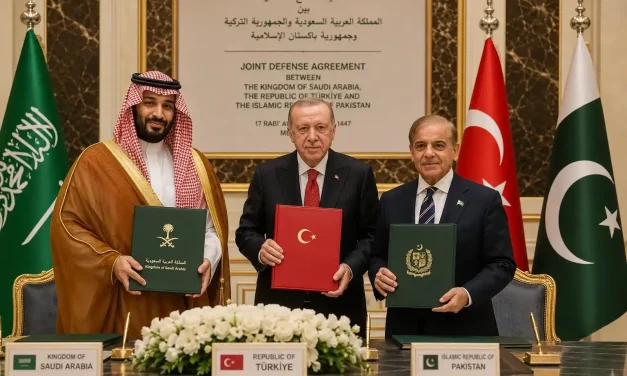
SCFR Online – Interview: The signing of the Makkah agreement between Saudi Arabia, Pakistan, and Turkey has raised questions about the future of the region’s security structure and the position of these countries in West Asian equations. Can this agreement become a genuine collective defense mechanism, or does it have more of a political and deterrent function than creating new military capacity?

Strategic Implications of the Reduction of US Weapons Stockpiles

SCFR Online – Opinion: The continuation of the US war against Iran, in addition to increasing operational costs, has called into question the actual capacity of the American arsenal to simultaneously fulfill security commitments on multiple fronts; an issue that affects deterrence, defense production capacity, and Washington’s resource prioritization.

The Formation of a New Order in Relations Between Powers

SCFR Online – Opinion: The Russia-Ukraine war and the war of the United States and the Israeli regime against Iran have been formed with different objectives and actors, but field and political developments indicate that they are not entirely separate from one another.

An Analysis of the Makkah Defense Pact

SCFR Online – Opinion: On Friday, August 7, the heads of state of three countries – Saudi Arabia, Turkey, and Pakistan – signed a text under the title “Makkah Joint Defense Agreement.”

Loading

Últimas publicaciones

Implications of the US-Saudi Nuclear Agreement

SCFR Online – Opinion: The new US-Saudi nuclear agreement, despite legal and political ambiguities, could alter previous non-proliferation standards in West Asia and intensify nuclear competition, ushering it into a new phase.

An Analysis of Recent Turkey-Israeli Regime Tensions

SCFR Online – Opinion: Recent developments in Syria indicate an intensification of strategic rivalry between Turkey and the Israeli regime, but mutual considerations and the role of the United States have limited the likelihood of direct war.

Increasing criticism of the extensive Zionist lobby network

SCFR Online – Opinion: An examination of the mechanisms of the Israeli regime’s influence in the United States depicts a complex picture of shared interests, strategic dependencies, and the limitations of this relationship.

Realities of the Tripartite Makkah Pact

SCFR Online – Interview: The signing of the Makkah agreement between Saudi Arabia, Pakistan, and Turkey has raised questions about the future of the region’s security structure and the position of these countries in West Asian equations. Can this agreement become a genuine collective defense mechanism, or does it have more of a political and deterrent function than creating new military capacity?

Strategic Implications of the Reduction of US Weapons Stockpiles

SCFR Online – Opinion: The continuation of the US war against Iran, in addition to increasing operational costs, has called into question the actual capacity of the American arsenal to simultaneously fulfill security commitments on multiple fronts; an issue that affects deterrence, defense production capacity, and Washington’s resource prioritization.

The Formation of a New Order in Relations Between Powers

SCFR Online – Opinion: The Russia-Ukraine war and the war of the United States and the Israeli regime against Iran have been formed with different objectives and actors, but field and political developments indicate that they are not entirely separate from one another.

An Analysis of the Makkah Defense Pact

SCFR Online – Opinion: On Friday, August 7, the heads of state of three countries – Saudi Arabia, Turkey, and Pakistan – signed a text under the title “Makkah Joint Defense Agreement.”

Loading

DERNIER CONTENU

Implications of the US-Saudi Nuclear Agreement

SCFR Online – Opinion: The new US-Saudi nuclear agreement, despite legal and political ambiguities, could alter previous non-proliferation standards in West Asia and intensify nuclear competition, ushering it into a new phase.

An Analysis of Recent Turkey-Israeli Regime Tensions

SCFR Online – Opinion: Recent developments in Syria indicate an intensification of strategic rivalry between Turkey and the Israeli regime, but mutual considerations and the role of the United States have limited the likelihood of direct war.

Increasing criticism of the extensive Zionist lobby network

SCFR Online – Opinion: An examination of the mechanisms of the Israeli regime’s influence in the United States depicts a complex picture of shared interests, strategic dependencies, and the limitations of this relationship.

Realities of the Tripartite Makkah Pact

SCFR Online – Interview: The signing of the Makkah agreement between Saudi Arabia, Pakistan, and Turkey has raised questions about the future of the region’s security structure and the position of these countries in West Asian equations. Can this agreement become a genuine collective defense mechanism, or does it have more of a political and deterrent function than creating new military capacity?

Strategic Implications of the Reduction of US Weapons Stockpiles

SCFR Online – Opinion: The continuation of the US war against Iran, in addition to increasing operational costs, has called into question the actual capacity of the American arsenal to simultaneously fulfill security commitments on multiple fronts; an issue that affects deterrence, defense production capacity, and Washington’s resource prioritization.

The Formation of a New Order in Relations Between Powers

SCFR Online – Opinion: The Russia-Ukraine war and the war of the United States and the Israeli regime against Iran have been formed with different objectives and actors, but field and political developments indicate that they are not entirely separate from one another.

An Analysis of the Makkah Defense Pact

SCFR Online – Opinion: On Friday, August 7, the heads of state of three countries – Saudi Arabia, Turkey, and Pakistan – signed a text under the title “Makkah Joint Defense Agreement.”

Loading

DERNIER CONTENU

Implications of the US-Saudi Nuclear Agreement

SCFR Online – Opinion: The new US-Saudi nuclear agreement, despite legal and political ambiguities, could alter previous non-proliferation standards in West Asia and intensify nuclear competition, ushering it into a new phase.

An Analysis of Recent Turkey-Israeli Regime Tensions

SCFR Online – Opinion: Recent developments in Syria indicate an intensification of strategic rivalry between Turkey and the Israeli regime, but mutual considerations and the role of the United States have limited the likelihood of direct war.

Increasing criticism of the extensive Zionist lobby network

SCFR Online – Opinion: An examination of the mechanisms of the Israeli regime’s influence in the United States depicts a complex picture of shared interests, strategic dependencies, and the limitations of this relationship.

Realities of the Tripartite Makkah Pact

SCFR Online – Interview: The signing of the Makkah agreement between Saudi Arabia, Pakistan, and Turkey has raised questions about the future of the region’s security structure and the position of these countries in West Asian equations. Can this agreement become a genuine collective defense mechanism, or does it have more of a political and deterrent function than creating new military capacity?

Strategic Implications of the Reduction of US Weapons Stockpiles

SCFR Online – Opinion: The continuation of the US war against Iran, in addition to increasing operational costs, has called into question the actual capacity of the American arsenal to simultaneously fulfill security commitments on multiple fronts; an issue that affects deterrence, defense production capacity, and Washington’s resource prioritization.

The Formation of a New Order in Relations Between Powers

SCFR Online – Opinion: The Russia-Ukraine war and the war of the United States and the Israeli regime against Iran have been formed with different objectives and actors, but field and political developments indicate that they are not entirely separate from one another.

An Analysis of the Makkah Defense Pact

SCFR Online – Opinion: On Friday, August 7, the heads of state of three countries – Saudi Arabia, Turkey, and Pakistan – signed a text under the title “Makkah Joint Defense Agreement.”

Loading

DERNIER CONTENU

Implications of the US-Saudi Nuclear Agreement

SCFR Online – Opinion: The new US-Saudi nuclear agreement, despite legal and political ambiguities, could alter previous non-proliferation standards in West Asia and intensify nuclear competition, ushering it into a new phase.

An Analysis of Recent Turkey-Israeli Regime Tensions

SCFR Online – Opinion: Recent developments in Syria indicate an intensification of strategic rivalry between Turkey and the Israeli regime, but mutual considerations and the role of the United States have limited the likelihood of direct war.

Increasing criticism of the extensive Zionist lobby network

SCFR Online – Opinion: An examination of the mechanisms of the Israeli regime’s influence in the United States depicts a complex picture of shared interests, strategic dependencies, and the limitations of this relationship.

Realities of the Tripartite Makkah Pact

SCFR Online – Interview: The signing of the Makkah agreement between Saudi Arabia, Pakistan, and Turkey has raised questions about the future of the region’s security structure and the position of these countries in West Asian equations. Can this agreement become a genuine collective defense mechanism, or does it have more of a political and deterrent function than creating new military capacity?

Strategic Implications of the Reduction of US Weapons Stockpiles

SCFR Online – Opinion: The continuation of the US war against Iran, in addition to increasing operational costs, has called into question the actual capacity of the American arsenal to simultaneously fulfill security commitments on multiple fronts; an issue that affects deterrence, defense production capacity, and Washington’s resource prioritization.

The Formation of a New Order in Relations Between Powers

SCFR Online – Opinion: The Russia-Ukraine war and the war of the United States and the Israeli regime against Iran have been formed with different objectives and actors, but field and political developments indicate that they are not entirely separate from one another.

An Analysis of the Makkah Defense Pact

SCFR Online – Opinion: On Friday, August 7, the heads of state of three countries – Saudi Arabia, Turkey, and Pakistan – signed a text under the title “Makkah Joint Defense Agreement.”

Loading