Challenges the Taliban Face in Afghanistan

2021/12/06 | interview, Politics, Top News

Strategic Council Online - Interview: An expert on the subcontinent affairs commenting on the latest developments in Afghanistan after the Taliban came to power said: Since the Taliban became the main power in Afghanistan the group has faced numerous challenges in governance. The international community’s reluctance to recognize the Taliban as the new government in Afghanistan is the biggest and most important challenge of the group in the area of governance.

Mohammad Reza Asgari Moroodi in an interview with the website of Strategic Council on Foreign Relations stated: The United States and Europe have conditioned recognition of the Taliban in Afghanistan on the change in the group’s approaches, practices, policies and measures in Afghanistan. Respect for the rights of women and the rights of the media, non-restriction of individual and social freedoms and establishment of democracy through formation of an inclusive government are among the most central demands of the West for the recognition of the Taliban rule in Afghanistan.

As for the Taliban’s performance over the past three months, he said: Despite the Taliban’s promise to form a government with the participation of all ethnic groups in Afghanistan, over the recent 100 days that the group has been in power in Afghanistan no sign has been witnessed of a platform for other groups to participate in power, and the Taliban’s emphasis on governing Afghanistan which is based on a particular ideology, has met with opposition and negative reactions, both domestically, regionally and internationally.

Asgari Moroodi also pointed to the implications of such approach for the Taliban and said: Under such circumstances when Western countries, and at a wider level the international community, are reluctant to recognize the Taliban in Afghanistan, crises which are facing the group in the area of governance have caused the Taliban to reach out to the international community. Taliban’s encounter with the crisis of hunger, poverty and economic affairs, one of the most important part of which is the collapse of the banking system and reduction of revenues and financial resources of the Taliban government to run Afghanistan, have caused the group to call repeatedly for recognition by the international community.

Explaining that how long the international community will follow such an approach, Asgari Moroodi said: It seems that the international community will not be willing to formally recognize and cooperate with the Taliban, at least until an inclusive government is formed in Afghanistan with the participation of all ethnic groups and this could exacerbate the Taliban government’s challenges in the way ahead of it.

Commenting on the next session of Doha meeting between the Taliban and the US envoy and the reasons for the resumption of such meeting, the expert on the subcontinent affairs said: The blockade of Afghanistan’s assets by the United States, which has placed extensive restrictions on the Taliban government in supplying basic and imported goods, is another major challenge for the Taliban government and this issue has prompted the Taliban government to resume talks with Washington in a bid to free the assets. In fact, the Taliban hope to persuade the US administration in the Doha talks to liberalize Afghanistan’s assets.

Asked about other challenges facing the Taliban, Asgari Moroodi said: Regarding economic crises, including poverty and hunger as well as collapse of the banking system in Afghanistan warnings of international institutions to the people and the Taliban government could be extremely worrying. Encountering of more than 23 million Afghan people with the risk of starvation is a major challenge that could turn into a humanitarian crisis in the country.

He said under such circumstances, the third meeting of Afghanistan’s neighbors is to be hosted by Pakistan, which will be held by inviting representatives of the Taliban government, adding: The difference between the third meeting of Afghanistan’s neighbors with the previous two meetings will be e presence of the Taliban in this meeting in Islamabad.

Explaining Pakistan’s view towards developments in Afghanistan, the expert on subcontinent affairs said: Given that Pakistan is said to be the winner of the current developments in Afghanistan, including the coming to power of the Taliban in that country, there are other signs, such as repeated requests from Pakistani officials for the release of Afghan assets by the United States as well as emphasizing the need to recognize Taliban rule in Afghanistan more than before, confirms the theory of Pakistan’s support for the rise to power and continuation of Taliban rule in Afghanistan. Given that Afghanistan has been a competitive environment for various countries for at least the past two decades, including Pakistan’s permanent rival, India, in the current situation Islamabad considers itself the winner of Afghanistan’s developments and therefore uses all the means at its disposal to maintain Taliban rule in Afghanistan.

0 Comments

Submit a Comment

Your email address will not be published. Required fields are marked *

LATEST CONTENT

Realities of the Tripartite Makkah Pact

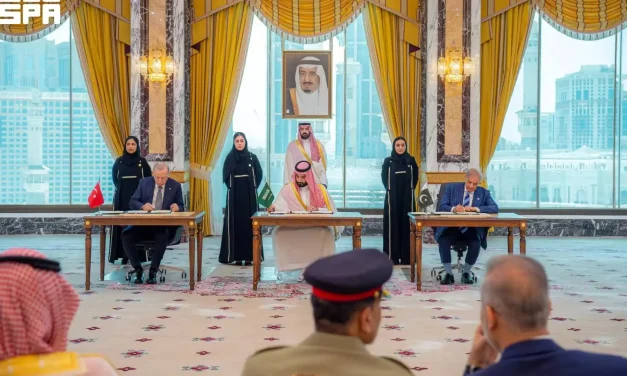
SCFR Online – Interview: The signing of the Makkah agreement between Saudi Arabia, Pakistan, and Turkey has raised questions about the future of the region’s security structure and the position of these countries in West Asian equations. Can this agreement become a genuine collective defense mechanism, or does it have more of a political and deterrent function than creating new military capacity?

Strategic Implications of the Reduction of US Weapons Stockpiles

SCFR Online – Opinion: The continuation of the US war against Iran, in addition to increasing operational costs, has called into question the actual capacity of the American arsenal to simultaneously fulfill security commitments on multiple fronts; an issue that affects deterrence, defense production capacity, and Washington’s resource prioritization.

The Formation of a New Order in Relations Between Powers

SCFR Online – Opinion: The Russia-Ukraine war and the war of the United States and the Israeli regime against Iran have been formed with different objectives and actors, but field and political developments indicate that they are not entirely separate from one another.

An Analysis of the Makkah Defense Pact

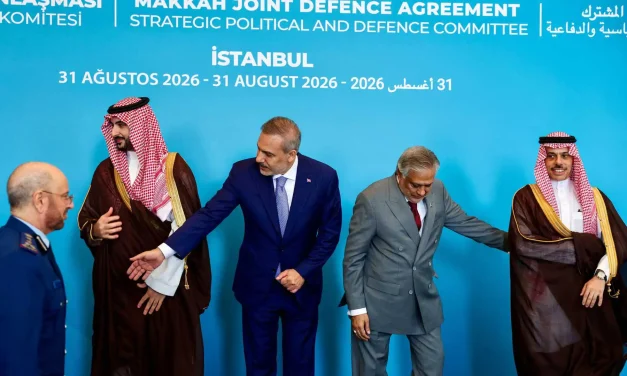
SCFR Online – Opinion: On Friday, August 7, the heads of state of three countries – Saudi Arabia, Turkey, and Pakistan – signed a text under the title “Makkah Joint Defense Agreement.”

Dimensions and challenges of the initiative to revive the Hejaz Railway

Strategic Council Online – Note: The initiative to revive the Hejaz Railway, beyond being a transportation project, constitutes an attempt to redefine geopolitics, the economy, and Turkey’s regional position; however, its realization appears to face significant financial, security, and institutional challenges.

Loading

Últimas publicaciones

Realities of the Tripartite Makkah Pact

SCFR Online – Interview: The signing of the Makkah agreement between Saudi Arabia, Pakistan, and Turkey has raised questions about the future of the region’s security structure and the position of these countries in West Asian equations. Can this agreement become a genuine collective defense mechanism, or does it have more of a political and deterrent function than creating new military capacity?

Strategic Implications of the Reduction of US Weapons Stockpiles

SCFR Online – Opinion: The continuation of the US war against Iran, in addition to increasing operational costs, has called into question the actual capacity of the American arsenal to simultaneously fulfill security commitments on multiple fronts; an issue that affects deterrence, defense production capacity, and Washington’s resource prioritization.

The Formation of a New Order in Relations Between Powers

SCFR Online – Opinion: The Russia-Ukraine war and the war of the United States and the Israeli regime against Iran have been formed with different objectives and actors, but field and political developments indicate that they are not entirely separate from one another.

An Analysis of the Makkah Defense Pact

SCFR Online – Opinion: On Friday, August 7, the heads of state of three countries – Saudi Arabia, Turkey, and Pakistan – signed a text under the title “Makkah Joint Defense Agreement.”

Dimensions and challenges of the initiative to revive the Hejaz Railway

Strategic Council Online – Note: The initiative to revive the Hejaz Railway, beyond being a transportation project, constitutes an attempt to redefine geopolitics, the economy, and Turkey’s regional position; however, its realization appears to face significant financial, security, and institutional challenges.

Loading

DERNIER CONTENU

Realities of the Tripartite Makkah Pact

SCFR Online – Interview: The signing of the Makkah agreement between Saudi Arabia, Pakistan, and Turkey has raised questions about the future of the region’s security structure and the position of these countries in West Asian equations. Can this agreement become a genuine collective defense mechanism, or does it have more of a political and deterrent function than creating new military capacity?

Strategic Implications of the Reduction of US Weapons Stockpiles

SCFR Online – Opinion: The continuation of the US war against Iran, in addition to increasing operational costs, has called into question the actual capacity of the American arsenal to simultaneously fulfill security commitments on multiple fronts; an issue that affects deterrence, defense production capacity, and Washington’s resource prioritization.

The Formation of a New Order in Relations Between Powers

SCFR Online – Opinion: The Russia-Ukraine war and the war of the United States and the Israeli regime against Iran have been formed with different objectives and actors, but field and political developments indicate that they are not entirely separate from one another.

An Analysis of the Makkah Defense Pact

SCFR Online – Opinion: On Friday, August 7, the heads of state of three countries – Saudi Arabia, Turkey, and Pakistan – signed a text under the title “Makkah Joint Defense Agreement.”

Dimensions and challenges of the initiative to revive the Hejaz Railway

Strategic Council Online – Note: The initiative to revive the Hejaz Railway, beyond being a transportation project, constitutes an attempt to redefine geopolitics, the economy, and Turkey’s regional position; however, its realization appears to face significant financial, security, and institutional challenges.

Loading

DERNIER CONTENU

Realities of the Tripartite Makkah Pact

SCFR Online – Interview: The signing of the Makkah agreement between Saudi Arabia, Pakistan, and Turkey has raised questions about the future of the region’s security structure and the position of these countries in West Asian equations. Can this agreement become a genuine collective defense mechanism, or does it have more of a political and deterrent function than creating new military capacity?

Strategic Implications of the Reduction of US Weapons Stockpiles

SCFR Online – Opinion: The continuation of the US war against Iran, in addition to increasing operational costs, has called into question the actual capacity of the American arsenal to simultaneously fulfill security commitments on multiple fronts; an issue that affects deterrence, defense production capacity, and Washington’s resource prioritization.

The Formation of a New Order in Relations Between Powers

SCFR Online – Opinion: The Russia-Ukraine war and the war of the United States and the Israeli regime against Iran have been formed with different objectives and actors, but field and political developments indicate that they are not entirely separate from one another.

An Analysis of the Makkah Defense Pact

SCFR Online – Opinion: On Friday, August 7, the heads of state of three countries – Saudi Arabia, Turkey, and Pakistan – signed a text under the title “Makkah Joint Defense Agreement.”

Dimensions and challenges of the initiative to revive the Hejaz Railway

Strategic Council Online – Note: The initiative to revive the Hejaz Railway, beyond being a transportation project, constitutes an attempt to redefine geopolitics, the economy, and Turkey’s regional position; however, its realization appears to face significant financial, security, and institutional challenges.

Loading

DERNIER CONTENU

Realities of the Tripartite Makkah Pact

SCFR Online – Interview: The signing of the Makkah agreement between Saudi Arabia, Pakistan, and Turkey has raised questions about the future of the region’s security structure and the position of these countries in West Asian equations. Can this agreement become a genuine collective defense mechanism, or does it have more of a political and deterrent function than creating new military capacity?

Strategic Implications of the Reduction of US Weapons Stockpiles

SCFR Online – Opinion: The continuation of the US war against Iran, in addition to increasing operational costs, has called into question the actual capacity of the American arsenal to simultaneously fulfill security commitments on multiple fronts; an issue that affects deterrence, defense production capacity, and Washington’s resource prioritization.

The Formation of a New Order in Relations Between Powers

SCFR Online – Opinion: The Russia-Ukraine war and the war of the United States and the Israeli regime against Iran have been formed with different objectives and actors, but field and political developments indicate that they are not entirely separate from one another.

An Analysis of the Makkah Defense Pact

SCFR Online – Opinion: On Friday, August 7, the heads of state of three countries – Saudi Arabia, Turkey, and Pakistan – signed a text under the title “Makkah Joint Defense Agreement.”

Dimensions and challenges of the initiative to revive the Hejaz Railway

Strategic Council Online – Note: The initiative to revive the Hejaz Railway, beyond being a transportation project, constitutes an attempt to redefine geopolitics, the economy, and Turkey’s regional position; however, its realization appears to face significant financial, security, and institutional challenges.

Loading