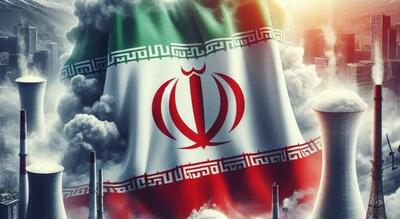
Enhancing National Power and Cohesion Paves the Way for Securing Peaceful Nuclear Rights

2025/07/18 | interview, Politics, Top News

Strategic Council Online – Interview: A former Iranian diplomat remarked that upholding and steadfastly standing to benefit from the right to peaceful nuclear technology reflects the continued will of the Iranian nation for national development.

Seyed Rasoul Mousavi, in an interview with the website of the Strategic Council on Foreign Relations regarding the achievements and challenges of Iran’s resistance against Western pressure to dismantle the country’s nuclear program, said: “Perhaps it would be better to use the term ‘standing firm to secure peaceful nuclear rights’ instead of ‘nuclear resistance.’”

This former Iranian diplomat emphasized that the issue of nuclear rights and Iran’s use of peaceful nuclear technology is part of the historical campaign of the Iranian people to pursue their national development rights. He added: “Perhaps the current generation is unaware that there was a time when Iran was not even allowed to have a railway or an iron smelting plant. We must not forget that when Dr. Mosaddegh nationalized Iran’s oil industry, Britain brought the case of Iran’s oil nationalization to the UN Security Council under the pretext of an act against international peace and security and imposed severe sanctions against our country. Ultimately, with the help of the U.S., they orchestrated a coup against Dr. Mosaddegh’s national government and, through the formation of a consortium, resumed the plunder of Iran’s oil.”

He continued: “Standing firm to benefit from the right to peaceful nuclear technology aligns with the same will of the Iranian nation for national development, which was previously demonstrated in efforts to establish a railway, an iron smelting industry, and a national oil industry. Iran’s stance on the nuclear issue pertains to the country’s national development, and what the enemies of the Iranian people target is precisely this national development and progress. Raising the issue of atomic bomb-making is just an excuse, just as they labeled the nationalization of Iran’s oil industry as a threat to international peace and security.”

This former Iranian diplomat stressed: “The Iranian people do not know the path of retreat from national growth and development and will undoubtedly continue this path despite all difficulties, just as today the entire world acknowledges that Iran’s nuclear issue has no military solution, that Iran is an advanced country, and that its nuclear industry cannot be destroyed by bombing. Our country has paid heavy costs to realize its peaceful nuclear program and has reached a point of no return. The world will ultimately recognize Iran’s right to peaceful nuclear technology.”

In response to the question of what position the development of Iran’s nuclear program holds in the eyes of the world and the international community despite sanctions and pressures, he stated: “It is still unclear what exactly happened in the recent bombings by the U.S. and the Zionist regime against Iran nuclear facilities, but according to official statements, significant damage has been inflicted on the facilities. However, the point everyone emphasizes is that nuclear knowledge cannot be destroyed by bombing, and Iran has indigenized its nuclear knowledge. Thus, despite the heavy damage to Iran’s nuclear facilities, the two elements of knowledge and will remain intact, sending a clear message to the world.”

Regarding the role of Iran’s active diplomacy during the 12-day war in proving and defending its nuclear legitimacy in international forums and consultations with various countries, Mousavi said: “Unfortunately, in the current international system, there is no such thing as logic or persuasion. If anyone thinks they can secure their rights through logic and reasoning, they are mistaken. In the existing international system, where the law of the jungle prevails, one must first secure one’s rights and then consolidate them through logic and reasoning. Saying this does not mean ignoring the importance of diplomacy and persuading the international community, but rather understanding the reality that, in addition to articulating the philosophy of one’s rights, power on the ground is also necessary.”

He added, “Wars fundamentally arise to destroy the rights of others. If everyone were aware of and content with their own rights, there would be no conflict or war. Thus, if a war exists, it is because someone seeks to negate a right, and certainly, the one who draws the sword to destroy a right will not sheathe it based on reasoning or logic. Therefore, the sword must be met with a sword, but at the same time, the power of reasoning and defending rights must be strengthened to establish just conditions.”

Regarding ways to enhance and strengthen the country’s nuclear security, including cooperation with other nuclear states, he stated: “Iran’s nuclear security is consolidated by national power, and when we speak of national power, we mean the combined strength of military, intelligence, security, technological, and economic capabilities, as well as national cohesion, all of which must be addressed and enhanced simultaneously. The recent move by the Islamic Consultative Assembly (Iran’s Parliament) in passing a law mandating the government to suspend cooperation with the International Atomic Energy Agency (IAEA) is in line with this approach.”

This former Iranian diplomat emphasized: “This law was passed in response to the violation of the national sovereignty and territorial integrity of the Islamic Republic of Iran by the Zionist regime and the United States against the country’s peaceful nuclear facilities. It obligates the government to suspend cooperation with the IAEA until full respect for national sovereignty and territorial integrity, as well as the security of nuclear centers and scientists, is ensured. This law mobilizes all national forces to defend nuclear rights and considers the protection of nuclear rights in line with national sovereignty and territorial integrity. Thus, it can be said that the strict implementation of this law is the best way to enhance the country’s nuclear security.”

He continued: “Regarding cooperation with other countries, it must be said that no country will transfer cutting-edge technologies to Iran, and progress in certain fields requires investment in research and development. This does not mean rejecting cooperation with other countries in advanced sciences and technologies, including nuclear technology, but rather acknowledging the reality that knowledge must first be indigenized, then developed through research, and only then can cooperation with other countries be considered.”

0 Comments

LATEST CONTENT

Consequences of Declining Trust in the Judiciary in Europe

SCFRonline – Opinion: The increase in public distrust of the French judicial system, which in recent surveys has reached approximately two-thirds of citizens, should be analyzed within a framework broader than temporary dissatisfaction or an emotional reaction to a particular criminal case.

Iran’s Potential Levers of Power

SCFRonline– Opinion: Iran’s geopolitical power is not limited solely to oil and the Strait of Hormuz; the unintended emergence of disruptions in the future global food and energy security chains can also demonstrate Iran’s strategic importance.

The Inseparability of the Lebanese Front from the Axis of Resistance

SCFR Online–Opinion: By providing an extensive network of social, healthcare, educational, and post-war reconstruction services, Hezbollah has established a strong social base for itself among Lebanon’s Shiites and Sunnis, and even beyond that, among other segments of Lebanese society, including Christians. Hezbollah has never been an external actor imposed upon Lebanon; rather, it is a phenomenon fundamentally born out of the occupation and crimes of the Zionist regime and itself influenced by popular resistance.

The Increasing Efforts of the Zionist Regime to Redefine Borders and the Regional Order and Its Consequences

SCFR Online– Opinion: Security and military developments in the region over recent months indicate that the ongoing crises and wars in Gaza, southern Lebanon, and parts of Syrian territory encompass broader dimensions of geopolitical and geostrategic transformations. In this context, the increased military presence and control of the Zionist regime over parts of the territories of these areas, along with proposals regarding the creation of buffer zones or even the expansion of security borders, have raised serious questions about the future of the regional order and its consequences for the countries of West Asia.

Loading

Últimas publicaciones

Consequences of Declining Trust in the Judiciary in Europe

SCFRonline – Opinion: The increase in public distrust of the French judicial system, which in recent surveys has reached approximately two-thirds of citizens, should be analyzed within a framework broader than temporary dissatisfaction or an emotional reaction to a particular criminal case.

Iran’s Potential Levers of Power

SCFRonline– Opinion: Iran’s geopolitical power is not limited solely to oil and the Strait of Hormuz; the unintended emergence of disruptions in the future global food and energy security chains can also demonstrate Iran’s strategic importance.

The Inseparability of the Lebanese Front from the Axis of Resistance

SCFR Online–Opinion: By providing an extensive network of social, healthcare, educational, and post-war reconstruction services, Hezbollah has established a strong social base for itself among Lebanon’s Shiites and Sunnis, and even beyond that, among other segments of Lebanese society, including Christians. Hezbollah has never been an external actor imposed upon Lebanon; rather, it is a phenomenon fundamentally born out of the occupation and crimes of the Zionist regime and itself influenced by popular resistance.

The Increasing Efforts of the Zionist Regime to Redefine Borders and the Regional Order and Its Consequences

SCFR Online– Opinion: Security and military developments in the region over recent months indicate that the ongoing crises and wars in Gaza, southern Lebanon, and parts of Syrian territory encompass broader dimensions of geopolitical and geostrategic transformations. In this context, the increased military presence and control of the Zionist regime over parts of the territories of these areas, along with proposals regarding the creation of buffer zones or even the expansion of security borders, have raised serious questions about the future of the regional order and its consequences for the countries of West Asia.

Loading

DERNIER CONTENU

Consequences of Declining Trust in the Judiciary in Europe

SCFRonline – Opinion: The increase in public distrust of the French judicial system, which in recent surveys has reached approximately two-thirds of citizens, should be analyzed within a framework broader than temporary dissatisfaction or an emotional reaction to a particular criminal case.

Iran’s Potential Levers of Power

SCFRonline– Opinion: Iran’s geopolitical power is not limited solely to oil and the Strait of Hormuz; the unintended emergence of disruptions in the future global food and energy security chains can also demonstrate Iran’s strategic importance.

The Inseparability of the Lebanese Front from the Axis of Resistance

SCFR Online–Opinion: By providing an extensive network of social, healthcare, educational, and post-war reconstruction services, Hezbollah has established a strong social base for itself among Lebanon’s Shiites and Sunnis, and even beyond that, among other segments of Lebanese society, including Christians. Hezbollah has never been an external actor imposed upon Lebanon; rather, it is a phenomenon fundamentally born out of the occupation and crimes of the Zionist regime and itself influenced by popular resistance.

The Increasing Efforts of the Zionist Regime to Redefine Borders and the Regional Order and Its Consequences

SCFR Online– Opinion: Security and military developments in the region over recent months indicate that the ongoing crises and wars in Gaza, southern Lebanon, and parts of Syrian territory encompass broader dimensions of geopolitical and geostrategic transformations. In this context, the increased military presence and control of the Zionist regime over parts of the territories of these areas, along with proposals regarding the creation of buffer zones or even the expansion of security borders, have raised serious questions about the future of the regional order and its consequences for the countries of West Asia.

Loading

DERNIER CONTENU

Consequences of Declining Trust in the Judiciary in Europe

SCFRonline – Opinion: The increase in public distrust of the French judicial system, which in recent surveys has reached approximately two-thirds of citizens, should be analyzed within a framework broader than temporary dissatisfaction or an emotional reaction to a particular criminal case.

Iran’s Potential Levers of Power

SCFRonline– Opinion: Iran’s geopolitical power is not limited solely to oil and the Strait of Hormuz; the unintended emergence of disruptions in the future global food and energy security chains can also demonstrate Iran’s strategic importance.

The Inseparability of the Lebanese Front from the Axis of Resistance

SCFR Online–Opinion: By providing an extensive network of social, healthcare, educational, and post-war reconstruction services, Hezbollah has established a strong social base for itself among Lebanon’s Shiites and Sunnis, and even beyond that, among other segments of Lebanese society, including Christians. Hezbollah has never been an external actor imposed upon Lebanon; rather, it is a phenomenon fundamentally born out of the occupation and crimes of the Zionist regime and itself influenced by popular resistance.

The Increasing Efforts of the Zionist Regime to Redefine Borders and the Regional Order and Its Consequences

SCFR Online– Opinion: Security and military developments in the region over recent months indicate that the ongoing crises and wars in Gaza, southern Lebanon, and parts of Syrian territory encompass broader dimensions of geopolitical and geostrategic transformations. In this context, the increased military presence and control of the Zionist regime over parts of the territories of these areas, along with proposals regarding the creation of buffer zones or even the expansion of security borders, have raised serious questions about the future of the regional order and its consequences for the countries of West Asia.

Loading

DERNIER CONTENU

Consequences of Declining Trust in the Judiciary in Europe

SCFRonline – Opinion: The increase in public distrust of the French judicial system, which in recent surveys has reached approximately two-thirds of citizens, should be analyzed within a framework broader than temporary dissatisfaction or an emotional reaction to a particular criminal case.

Iran’s Potential Levers of Power

SCFRonline– Opinion: Iran’s geopolitical power is not limited solely to oil and the Strait of Hormuz; the unintended emergence of disruptions in the future global food and energy security chains can also demonstrate Iran’s strategic importance.

The Inseparability of the Lebanese Front from the Axis of Resistance

SCFR Online–Opinion: By providing an extensive network of social, healthcare, educational, and post-war reconstruction services, Hezbollah has established a strong social base for itself among Lebanon’s Shiites and Sunnis, and even beyond that, among other segments of Lebanese society, including Christians. Hezbollah has never been an external actor imposed upon Lebanon; rather, it is a phenomenon fundamentally born out of the occupation and crimes of the Zionist regime and itself influenced by popular resistance.

The Increasing Efforts of the Zionist Regime to Redefine Borders and the Regional Order and Its Consequences

SCFR Online– Opinion: Security and military developments in the region over recent months indicate that the ongoing crises and wars in Gaza, southern Lebanon, and parts of Syrian territory encompass broader dimensions of geopolitical and geostrategic transformations. In this context, the increased military presence and control of the Zionist regime over parts of the territories of these areas, along with proposals regarding the creation of buffer zones or even the expansion of security borders, have raised serious questions about the future of the regional order and its consequences for the countries of West Asia.

Loading





