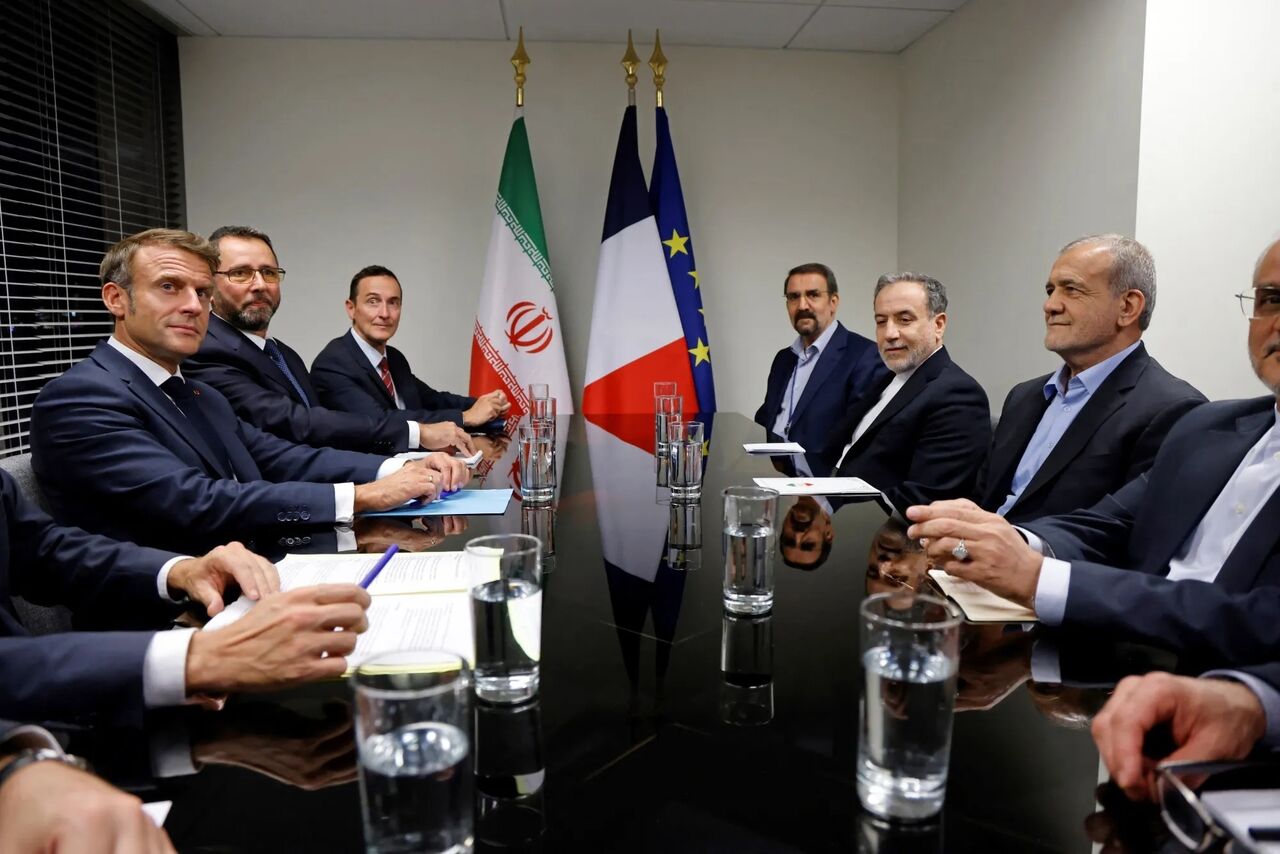
A Look at Iran-Europe Relations and Cooperation Capacities

2025/10/19 | interview, Politics, Top News

Online Strategic Council - Interview: A senior European affairs analyst, referring to recent developments, stated: Europe's role in the new international order is complex, affected by the Ukraine war, and simultaneously possesses capacities for economic and political interaction with Iran.

Europe’s Place in the International Order and the Impact of Security Dependence on America
Dr. Ali Baman Eqbali Zarcheh, in an interview with the website of the Strategic Council on Foreign Relations, stated: “To understand Europe’s place in the current international system, it is essential to pay attention to the political, economic, security, and defense indicators of this continent. Although Europe is still considered one of the main poles of the global economy and its internal consensus-building capacity is significant, towards the Islamic Republic of Iran, it has often had a destructive aspect.” He added: “Europe’s security and defense structure is largely dependent on NATO and especially on the United States, and this very fact also caused European countries to feel a severe threat from Russia during the Ukraine war and move towards greater dependence on America.”
Eqbali Zarcheh emphasized: “The United States, especially during the Trump era, has exploited this weakness of Europe to the maximum and imposed its policies on European governments.”
Emphasizing that Europe still has the capacity for constructive interaction, he reminded that “throughout the history of Iran’s foreign relations, interaction with Europe has always been one of the determining factors in the success of the country’s foreign policy.” In his view, rereading the different dimensions of this historical relationship has shown that “Europe, despite its political and security dependence on Washington, can still be one of the important actors in the balance of Iran’s foreign policy”. This expert added: “In the new international conditions, an accurate understanding of the European Union’s position between American hegemony and the competition of emerging powers has become vitally important for regulating Iran-Europe relations.”

The Capacity for Non-Oil Economic Cooperation and the Role of the Iranian Community in Europe
Eqbali Zarcheh, referring to the background of Iran-Europe economic cooperation, said: “Although sanctions have long cast a shadow over the economic relations of the two sides, there has always been a level of interaction, especially in industrial and technological fields”. He explained that “a significant part of Iran’s light industries have roots in European technology, and owners of capital and industry in Iran have always tended to use European industrial machinery.”
The senior European affairs expert added: “In the field of renewable energies, green technologies, and regional transit, there have been and still are multiple capacities for continuing cooperation with Europe, which must be prepared and pursued through coordination and synergy of domestic sectors.”
Eqbali Zarcheh noted: “Although Iran-Europe political relations have been in a fragile state after the return of sanctions, necessary measures must be taken to prevent further damage to it”. In another part of his analysis, he “described the community of Iranians residing in Europe as an important capacity” and reminded that “Iranians in many European countries are considered among the elites and influential figures in medical, technical, scientific, and even political fields.” He emphasized that “this community can play a role in explaining the policies of the Islamic Republic of Iran to European public opinion and institutions.”
This European affairs analyst reminded that “Iran’s parliamentary diplomacy has so far been unable to utilize the capacity of the European Parliament properly.” He said that “continuous and purposeful communication with representatives of the European Parliament and the national parliaments of member states can be effective in the political and economic orientations of the Union.” He emphasized that “without such consultations, Europeans’ understanding of Iran’s policies remains incomplete and the opportunity for influence is lost.”
Eqbali Zarcheh said: “To maintain an effective balance with Europe after the return of the resolutions, a two-dimensional approach must be adopted; meaning that consultations should be conducted both with European supranational institutions such as the European Parliament, European Commission, Council, and European Court, and bilateral relations with member states should be pursued separately”.
He emphasized that “decisions in the European Union are collective, and each country, even the smallest members like Slovenia or the Baltic states, plays a role in the decision-making process.” He added that “at this stage, it is necessary for Iran’s diplomatic apparatus to interact continuously and consistently with European countries at various political and diplomatic levels”. Eqbali Zarcheh noted that “in past years, political relations between the foreign ministries of Iran and some European countries were maintained annually or semi-annually, and their continuity had a direct impact on mutual understanding.”
He emphasized that “the principle of continuity in consultations is essential, and alongside political interactions, there must be an effective presence in media fields to prevent incorrect insinuations by Western and Zionist media about Iran’s role in defense and drone domains”.
He added that “Europe is currently heavily involved in its own security priorities, especially the Ukraine war, and this very issue has caused it to adopt a more sensitive approach towards Iran.” According to him, “correctly explaining Iran’s positions and policies in this space through direct and continuous communication can prevent the imposition of unilateral and unrealistic views on European public opinion.”

The Necessity of a Balanced Approach in Foreign Policy
Eqbali Zarcheh emphasized “the principle of balance in Iran’s foreign policy” and said: “For the success of the country’s diplomacy, maintaining balance in relations with the three sides of China, Russia, and Europe is essential.” He noted that “in neighborhood policy, the principle of balance is also one of the keys to success, and just as in the South Caucasus or Central Asia, there is a need to balance relations among different countries, at the international level, this balance must also be observed vis-à-vis the great powers.”
The senior European affairs analyst added: “Iran also needs this balanced policy to expand its influence and interactions in Africa and Latin America, and it is not possible to achieve sustainable results merely by declaring political intent.” He reminded that “the experience of decades of Iran’s interaction with Africa has shown that without planning and continuous management, potential capacities will not be actualized.”
He emphasized that “diversifying the tools of diplomacy, including public, cultural, sports, academic diplomacy, and friendship associations, can pave the way for new cooperation between the two sides.” This expert finally noted that “the Iranian community in Europe, with precise management and organization, can become one of the effective arms in improving relations between Iran and the European Union.” In his belief, “maintaining a spirit of balance and realism in relations with Europe will be a necessary condition for Iran’s effective presence in the future multipolar system.”

0 Comments

LATEST CONTENT

Iran’s Potential Levers of Power

SCFRonline– Opinion: Iran’s geopolitical power is not limited solely to oil and the Strait of Hormuz; the unintended emergence of disruptions in the future global food and energy security chains can also demonstrate Iran’s strategic importance.

The Inseparability of the Lebanese Front from the Axis of Resistance

SCFR Online–Opinion: By providing an extensive network of social, healthcare, educational, and post-war reconstruction services, Hezbollah has established a strong social base for itself among Lebanon’s Shiites and Sunnis, and even beyond that, among other segments of Lebanese society, including Christians. Hezbollah has never been an external actor imposed upon Lebanon; rather, it is a phenomenon fundamentally born out of the occupation and crimes of the Zionist regime and itself influenced by popular resistance.

The Increasing Efforts of the Zionist Regime to Redefine Borders and the Regional Order and Its Consequences

SCFR Online– Opinion: Security and military developments in the region over recent months indicate that the ongoing crises and wars in Gaza, southern Lebanon, and parts of Syrian territory encompass broader dimensions of geopolitical and geostrategic transformations. In this context, the increased military presence and control of the Zionist regime over parts of the territories of these areas, along with proposals regarding the creation of buffer zones or even the expansion of security borders, have raised serious questions about the future of the regional order and its consequences for the countries of West Asia.

The Components of Iran’s Deterrence Power

SCFR Online – Opinion: At a time when regional security equations have reached a sensitive stage under the influence of Iran’s strategic confrontation with the United States and the Zionist regime, the question of the nature of Tehran’s defensive power has gained greater significance than ever before. While Washington and Tel Aviv rely on their technological superiority, the Islamic Republic of Iran has presented a model of deterrence that extends beyond the material calculations of the world’s classical militaries. This power, rooted in the connection between “the field” and “the people,” has not only altered the balance of power in recent conflicts but has also disrupted adversaries’ calculations when confronting Iran’s strategic depth.

Loading

Últimas publicaciones

Iran’s Potential Levers of Power

SCFRonline– Opinion: Iran’s geopolitical power is not limited solely to oil and the Strait of Hormuz; the unintended emergence of disruptions in the future global food and energy security chains can also demonstrate Iran’s strategic importance.

The Inseparability of the Lebanese Front from the Axis of Resistance

SCFR Online–Opinion: By providing an extensive network of social, healthcare, educational, and post-war reconstruction services, Hezbollah has established a strong social base for itself among Lebanon’s Shiites and Sunnis, and even beyond that, among other segments of Lebanese society, including Christians. Hezbollah has never been an external actor imposed upon Lebanon; rather, it is a phenomenon fundamentally born out of the occupation and crimes of the Zionist regime and itself influenced by popular resistance.

The Increasing Efforts of the Zionist Regime to Redefine Borders and the Regional Order and Its Consequences

SCFR Online– Opinion: Security and military developments in the region over recent months indicate that the ongoing crises and wars in Gaza, southern Lebanon, and parts of Syrian territory encompass broader dimensions of geopolitical and geostrategic transformations. In this context, the increased military presence and control of the Zionist regime over parts of the territories of these areas, along with proposals regarding the creation of buffer zones or even the expansion of security borders, have raised serious questions about the future of the regional order and its consequences for the countries of West Asia.

The Components of Iran’s Deterrence Power

SCFR Online – Opinion: At a time when regional security equations have reached a sensitive stage under the influence of Iran’s strategic confrontation with the United States and the Zionist regime, the question of the nature of Tehran’s defensive power has gained greater significance than ever before. While Washington and Tel Aviv rely on their technological superiority, the Islamic Republic of Iran has presented a model of deterrence that extends beyond the material calculations of the world’s classical militaries. This power, rooted in the connection between “the field” and “the people,” has not only altered the balance of power in recent conflicts but has also disrupted adversaries’ calculations when confronting Iran’s strategic depth.

Loading

DERNIER CONTENU

Iran’s Potential Levers of Power

SCFRonline– Opinion: Iran’s geopolitical power is not limited solely to oil and the Strait of Hormuz; the unintended emergence of disruptions in the future global food and energy security chains can also demonstrate Iran’s strategic importance.

The Inseparability of the Lebanese Front from the Axis of Resistance

SCFR Online–Opinion: By providing an extensive network of social, healthcare, educational, and post-war reconstruction services, Hezbollah has established a strong social base for itself among Lebanon’s Shiites and Sunnis, and even beyond that, among other segments of Lebanese society, including Christians. Hezbollah has never been an external actor imposed upon Lebanon; rather, it is a phenomenon fundamentally born out of the occupation and crimes of the Zionist regime and itself influenced by popular resistance.

The Increasing Efforts of the Zionist Regime to Redefine Borders and the Regional Order and Its Consequences

SCFR Online– Opinion: Security and military developments in the region over recent months indicate that the ongoing crises and wars in Gaza, southern Lebanon, and parts of Syrian territory encompass broader dimensions of geopolitical and geostrategic transformations. In this context, the increased military presence and control of the Zionist regime over parts of the territories of these areas, along with proposals regarding the creation of buffer zones or even the expansion of security borders, have raised serious questions about the future of the regional order and its consequences for the countries of West Asia.

The Components of Iran’s Deterrence Power

SCFR Online – Opinion: At a time when regional security equations have reached a sensitive stage under the influence of Iran’s strategic confrontation with the United States and the Zionist regime, the question of the nature of Tehran’s defensive power has gained greater significance than ever before. While Washington and Tel Aviv rely on their technological superiority, the Islamic Republic of Iran has presented a model of deterrence that extends beyond the material calculations of the world’s classical militaries. This power, rooted in the connection between “the field” and “the people,” has not only altered the balance of power in recent conflicts but has also disrupted adversaries’ calculations when confronting Iran’s strategic depth.

Loading

DERNIER CONTENU

Iran’s Potential Levers of Power

SCFRonline– Opinion: Iran’s geopolitical power is not limited solely to oil and the Strait of Hormuz; the unintended emergence of disruptions in the future global food and energy security chains can also demonstrate Iran’s strategic importance.

The Inseparability of the Lebanese Front from the Axis of Resistance

SCFR Online–Opinion: By providing an extensive network of social, healthcare, educational, and post-war reconstruction services, Hezbollah has established a strong social base for itself among Lebanon’s Shiites and Sunnis, and even beyond that, among other segments of Lebanese society, including Christians. Hezbollah has never been an external actor imposed upon Lebanon; rather, it is a phenomenon fundamentally born out of the occupation and crimes of the Zionist regime and itself influenced by popular resistance.

The Increasing Efforts of the Zionist Regime to Redefine Borders and the Regional Order and Its Consequences

SCFR Online– Opinion: Security and military developments in the region over recent months indicate that the ongoing crises and wars in Gaza, southern Lebanon, and parts of Syrian territory encompass broader dimensions of geopolitical and geostrategic transformations. In this context, the increased military presence and control of the Zionist regime over parts of the territories of these areas, along with proposals regarding the creation of buffer zones or even the expansion of security borders, have raised serious questions about the future of the regional order and its consequences for the countries of West Asia.

The Components of Iran’s Deterrence Power

SCFR Online – Opinion: At a time when regional security equations have reached a sensitive stage under the influence of Iran’s strategic confrontation with the United States and the Zionist regime, the question of the nature of Tehran’s defensive power has gained greater significance than ever before. While Washington and Tel Aviv rely on their technological superiority, the Islamic Republic of Iran has presented a model of deterrence that extends beyond the material calculations of the world’s classical militaries. This power, rooted in the connection between “the field” and “the people,” has not only altered the balance of power in recent conflicts but has also disrupted adversaries’ calculations when confronting Iran’s strategic depth.

Loading

DERNIER CONTENU

Iran’s Potential Levers of Power

SCFRonline– Opinion: Iran’s geopolitical power is not limited solely to oil and the Strait of Hormuz; the unintended emergence of disruptions in the future global food and energy security chains can also demonstrate Iran’s strategic importance.

The Inseparability of the Lebanese Front from the Axis of Resistance

SCFR Online–Opinion: By providing an extensive network of social, healthcare, educational, and post-war reconstruction services, Hezbollah has established a strong social base for itself among Lebanon’s Shiites and Sunnis, and even beyond that, among other segments of Lebanese society, including Christians. Hezbollah has never been an external actor imposed upon Lebanon; rather, it is a phenomenon fundamentally born out of the occupation and crimes of the Zionist regime and itself influenced by popular resistance.

The Increasing Efforts of the Zionist Regime to Redefine Borders and the Regional Order and Its Consequences

SCFR Online– Opinion: Security and military developments in the region over recent months indicate that the ongoing crises and wars in Gaza, southern Lebanon, and parts of Syrian territory encompass broader dimensions of geopolitical and geostrategic transformations. In this context, the increased military presence and control of the Zionist regime over parts of the territories of these areas, along with proposals regarding the creation of buffer zones or even the expansion of security borders, have raised serious questions about the future of the regional order and its consequences for the countries of West Asia.

The Components of Iran’s Deterrence Power

SCFR Online – Opinion: At a time when regional security equations have reached a sensitive stage under the influence of Iran’s strategic confrontation with the United States and the Zionist regime, the question of the nature of Tehran’s defensive power has gained greater significance than ever before. While Washington and Tel Aviv rely on their technological superiority, the Islamic Republic of Iran has presented a model of deterrence that extends beyond the material calculations of the world’s classical militaries. This power, rooted in the connection between “the field” and “the people,” has not only altered the balance of power in recent conflicts but has also disrupted adversaries’ calculations when confronting Iran’s strategic depth.

Loading





