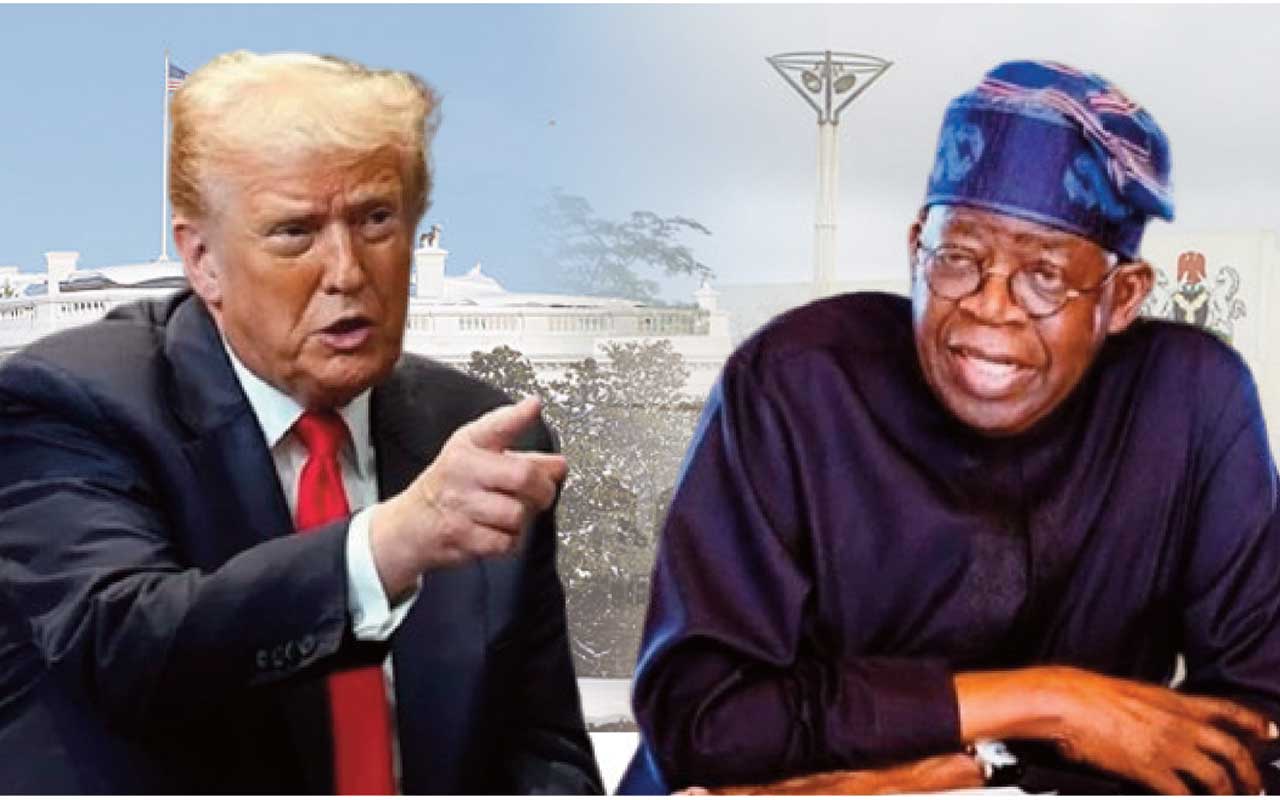
Trump’s Approach Towards Nigeria: An Attempt to Redefine American Influence in Africa

2025/11/12 | interview, Politics, Top News

Strategic Council Online – Interview: An African affairs analyst stated: The West and Sahel region of Africa has today become one of the main axes of geopolitical competition among major powers, and the United States is worried that if China and Russia's presence becomes solidified, it will be effectively eliminated from the economic and security spheres of this region.

Trump’s Military Threat in Nigeria: A Cover for Competition with Russia and China

Hamidreza Akbari, in an interview with the Foreign Relations Strategic Council website, emphasized: “The recent claim by Donald Trump, the American president, regarding the killing of Christians in Nigeria and the possibility of military action against this African country under this pretext, is not due to human rights concerns, but is a clear attempt to redefine American influence in Africa and contain rival powers, especially Russia and China.”

Referring to the background of Washington-Nigeria relations, the analyst emphasized: “Trump’s claim of defending Christians in Nigeria is, more than anything, an excuse for renewed intervention in a region that the West has lost control of in recent years.”

He added: “The West and Sahel region of Africa has today become one of the main axes of geopolitical competition among major powers, and the United States is worried that if China and Russia’s presence becomes solidified, it will be effectively eliminated from the economic and security spheres of this domain.”

Akbari noted: “Trump’s remarks about deploying ground forces and the possibility of airstrikes bear great resemblance to the behavioral pattern of previous American administrations, which have always used ‘human security’ as a pretext to secure their economic objectives.”

He explained: “The experiences of Iraq, Libya, and Afghanistan showed that Washington’s seemingly humanitarian slogans in practice led to military intervention, instability, and the spread of extremism. Now, Trump is applying the same policy with new packaging for Africa.”

Akbari recalled: “Nigeria, with its rich energy resources, mineral reserves, and strategic position in West Africa, has long been a focus of American attention. Trump and his foreign policy team, including Secretary of State Marco Rubio, have an instrumental view of the African continent; a view formed based on competition with China and Russia and guaranteeing access to natural resources.”

The African affairs expert, in the continuation of his analysis, referring to recent developments in Washington’s relations with countries of the “Sahel” region, stated: “With the gradual withdrawal of French forces from Niger, Mali, and Burkina Faso, America is seeking to fill the void left by its old ally. By raising issues such as religious freedom and defending Christian minorities, Trump is trying to prepare public opinion for a new military presence in Africa, while his main goal is to revive American influence in the region and guarantee its economic interests.”

He emphasized: “Simultaneously with Trump’s military threats, Washington has expressed its interest in investing in the Nigeria-Morocco gas pipeline project; a project that transfers Nigerian gas to North Africa and from there to Europe.”

Akbari added, “This plan is doubly important for America from an energy perspective, because under the conditions of sanctions against Russia, Europe is seeking alternative gas sources, and Nigeria can fill part of this gap. Consequently, the security of Christians is merely a cover for the security of American investments.”

According to him, “Despite these efforts, the on-the-ground reality in Africa shows that public opinion in many countries of the region is tired of Western interventions and desires independence in decision-making.”

The African affairs analyst elaborated: “In recent years, we have witnessed a new wave of decolonization in Africa; countries such as Mali, Niger, and Burkina Faso have not only expelled French forces but have also tended towards strategic cooperation with Russia and China. These developments indicate a change in the power structure in the Black Continent, and America is trying to reverse this trend through pressure and threats.”

Akbari continued, stating, “Contrary to his loud appearance, Trump has a completely pragmatic view from an economic perspective. He well knows that America’s presence in Africa is impossible without economic and security backing; therefore, he tries to pave the way for the presence of American companies in Africa’s energy and mining sectors by proposing military threats and signing economic contracts.”

Washington’s Costly Gamble in Africa

Akbari, in the continuation of his remarks, emphasized: “Africa is no longer the silent continent of the past. The new governments in West Africa and the Sahel are seeking an independent role in the international system and consider any foreign interventionism a violation of their sovereignty. If Trump’s actions continue, they could, similar to America’s past experiences in the Middle East, lead to the spread of instability, the intensification of extremism, and increased influence of terrorist groups.”

The expert explained: “The new American policy in Africa is a kind of forced return, meaning that in a situation where the countries of the West and Sahel region have shown America and France the door, Trump is trying to return to the region through another path using humanitarian pretexts.”

He noted: “This policy is ostensibly based on providing security, but in reality, it is an attempt to rebuild Western influence and dominance, which could have dangerous consequences for the region’s stability.”

Akbari, referring to internal reactions in Nigeria, said: “Figures such as Asari Dokubo and Nelson Ochechukwu, Nigerian commanders and activists, have warned that any American military entry will face popular resistance. This shows that Nigerian public opinion, contrary to the portrayal by Western media, does not have a positive view of foreign presence, and the people have not forgotten the experience of past colonialism.”

He emphasized: “Trump’s threatening policy not only does not cause deterrence but will drive African countries towards greater convergence with non-Western powers. Today, China and Russia have gained the trust of African governments and nations through long-term investments. If America wants to enter with a militaristic logic, it will effectively eliminate itself from the competition field.”

In conclusion, Akbari emphasized: “The real solution for fighting extremism in Africa lies not in bombing and threats, but in development, justice, and equal cooperation. African countries need sincere partnership, not intervention. Any unilateral American military action in Nigeria or the Sahel region will not only fail to guarantee the security of Christians. but, it will become a spark for the emergence of new crises across the continent.”

0 Comments

LATEST CONTENT

The Inseparability of the Lebanese Front from the Axis of Resistance

SCFR Online–Opinion: By providing an extensive network of social, healthcare, educational, and post-war reconstruction services, Hezbollah has established a strong social base for itself among Lebanon’s Shiites and Sunnis, and even beyond that, among other segments of Lebanese society, including Christians. Hezbollah has never been an external actor imposed upon Lebanon; rather, it is a phenomenon fundamentally born out of the occupation and crimes of the Zionist regime and itself influenced by popular resistance.

The Increasing Efforts of the Zionist Regime to Redefine Borders and the Regional Order and Its Consequences

SCFR Online– Opinion: Security and military developments in the region over recent months indicate that the ongoing crises and wars in Gaza, southern Lebanon, and parts of Syrian territory encompass broader dimensions of geopolitical and geostrategic transformations. In this context, the increased military presence and control of the Zionist regime over parts of the territories of these areas, along with proposals regarding the creation of buffer zones or even the expansion of security borders, have raised serious questions about the future of the regional order and its consequences for the countries of West Asia.

The Components of Iran’s Deterrence Power

SCFR Online – Opinion: At a time when regional security equations have reached a sensitive stage under the influence of Iran’s strategic confrontation with the United States and the Zionist regime, the question of the nature of Tehran’s defensive power has gained greater significance than ever before. While Washington and Tel Aviv rely on their technological superiority, the Islamic Republic of Iran has presented a model of deterrence that extends beyond the material calculations of the world’s classical militaries. This power, rooted in the connection between “the field” and “the people,” has not only altered the balance of power in recent conflicts but has also disrupted adversaries’ calculations when confronting Iran’s strategic depth.

Loading

Últimas publicaciones

The Inseparability of the Lebanese Front from the Axis of Resistance

SCFR Online–Opinion: By providing an extensive network of social, healthcare, educational, and post-war reconstruction services, Hezbollah has established a strong social base for itself among Lebanon’s Shiites and Sunnis, and even beyond that, among other segments of Lebanese society, including Christians. Hezbollah has never been an external actor imposed upon Lebanon; rather, it is a phenomenon fundamentally born out of the occupation and crimes of the Zionist regime and itself influenced by popular resistance.

The Increasing Efforts of the Zionist Regime to Redefine Borders and the Regional Order and Its Consequences

SCFR Online– Opinion: Security and military developments in the region over recent months indicate that the ongoing crises and wars in Gaza, southern Lebanon, and parts of Syrian territory encompass broader dimensions of geopolitical and geostrategic transformations. In this context, the increased military presence and control of the Zionist regime over parts of the territories of these areas, along with proposals regarding the creation of buffer zones or even the expansion of security borders, have raised serious questions about the future of the regional order and its consequences for the countries of West Asia.

The Components of Iran’s Deterrence Power

SCFR Online – Opinion: At a time when regional security equations have reached a sensitive stage under the influence of Iran’s strategic confrontation with the United States and the Zionist regime, the question of the nature of Tehran’s defensive power has gained greater significance than ever before. While Washington and Tel Aviv rely on their technological superiority, the Islamic Republic of Iran has presented a model of deterrence that extends beyond the material calculations of the world’s classical militaries. This power, rooted in the connection between “the field” and “the people,” has not only altered the balance of power in recent conflicts but has also disrupted adversaries’ calculations when confronting Iran’s strategic depth.

Loading

DERNIER CONTENU

The Inseparability of the Lebanese Front from the Axis of Resistance

SCFR Online–Opinion: By providing an extensive network of social, healthcare, educational, and post-war reconstruction services, Hezbollah has established a strong social base for itself among Lebanon’s Shiites and Sunnis, and even beyond that, among other segments of Lebanese society, including Christians. Hezbollah has never been an external actor imposed upon Lebanon; rather, it is a phenomenon fundamentally born out of the occupation and crimes of the Zionist regime and itself influenced by popular resistance.

The Increasing Efforts of the Zionist Regime to Redefine Borders and the Regional Order and Its Consequences

SCFR Online– Opinion: Security and military developments in the region over recent months indicate that the ongoing crises and wars in Gaza, southern Lebanon, and parts of Syrian territory encompass broader dimensions of geopolitical and geostrategic transformations. In this context, the increased military presence and control of the Zionist regime over parts of the territories of these areas, along with proposals regarding the creation of buffer zones or even the expansion of security borders, have raised serious questions about the future of the regional order and its consequences for the countries of West Asia.

The Components of Iran’s Deterrence Power

SCFR Online – Opinion: At a time when regional security equations have reached a sensitive stage under the influence of Iran’s strategic confrontation with the United States and the Zionist regime, the question of the nature of Tehran’s defensive power has gained greater significance than ever before. While Washington and Tel Aviv rely on their technological superiority, the Islamic Republic of Iran has presented a model of deterrence that extends beyond the material calculations of the world’s classical militaries. This power, rooted in the connection between “the field” and “the people,” has not only altered the balance of power in recent conflicts but has also disrupted adversaries’ calculations when confronting Iran’s strategic depth.

Loading

DERNIER CONTENU

The Inseparability of the Lebanese Front from the Axis of Resistance

SCFR Online–Opinion: By providing an extensive network of social, healthcare, educational, and post-war reconstruction services, Hezbollah has established a strong social base for itself among Lebanon’s Shiites and Sunnis, and even beyond that, among other segments of Lebanese society, including Christians. Hezbollah has never been an external actor imposed upon Lebanon; rather, it is a phenomenon fundamentally born out of the occupation and crimes of the Zionist regime and itself influenced by popular resistance.

The Increasing Efforts of the Zionist Regime to Redefine Borders and the Regional Order and Its Consequences

SCFR Online– Opinion: Security and military developments in the region over recent months indicate that the ongoing crises and wars in Gaza, southern Lebanon, and parts of Syrian territory encompass broader dimensions of geopolitical and geostrategic transformations. In this context, the increased military presence and control of the Zionist regime over parts of the territories of these areas, along with proposals regarding the creation of buffer zones or even the expansion of security borders, have raised serious questions about the future of the regional order and its consequences for the countries of West Asia.

The Components of Iran’s Deterrence Power

SCFR Online – Opinion: At a time when regional security equations have reached a sensitive stage under the influence of Iran’s strategic confrontation with the United States and the Zionist regime, the question of the nature of Tehran’s defensive power has gained greater significance than ever before. While Washington and Tel Aviv rely on their technological superiority, the Islamic Republic of Iran has presented a model of deterrence that extends beyond the material calculations of the world’s classical militaries. This power, rooted in the connection between “the field” and “the people,” has not only altered the balance of power in recent conflicts but has also disrupted adversaries’ calculations when confronting Iran’s strategic depth.

Loading

DERNIER CONTENU

The Inseparability of the Lebanese Front from the Axis of Resistance

SCFR Online–Opinion: By providing an extensive network of social, healthcare, educational, and post-war reconstruction services, Hezbollah has established a strong social base for itself among Lebanon’s Shiites and Sunnis, and even beyond that, among other segments of Lebanese society, including Christians. Hezbollah has never been an external actor imposed upon Lebanon; rather, it is a phenomenon fundamentally born out of the occupation and crimes of the Zionist regime and itself influenced by popular resistance.

The Increasing Efforts of the Zionist Regime to Redefine Borders and the Regional Order and Its Consequences

SCFR Online– Opinion: Security and military developments in the region over recent months indicate that the ongoing crises and wars in Gaza, southern Lebanon, and parts of Syrian territory encompass broader dimensions of geopolitical and geostrategic transformations. In this context, the increased military presence and control of the Zionist regime over parts of the territories of these areas, along with proposals regarding the creation of buffer zones or even the expansion of security borders, have raised serious questions about the future of the regional order and its consequences for the countries of West Asia.

The Components of Iran’s Deterrence Power

SCFR Online – Opinion: At a time when regional security equations have reached a sensitive stage under the influence of Iran’s strategic confrontation with the United States and the Zionist regime, the question of the nature of Tehran’s defensive power has gained greater significance than ever before. While Washington and Tel Aviv rely on their technological superiority, the Islamic Republic of Iran has presented a model of deterrence that extends beyond the material calculations of the world’s classical militaries. This power, rooted in the connection between “the field” and “the people,” has not only altered the balance of power in recent conflicts but has also disrupted adversaries’ calculations when confronting Iran’s strategic depth.

Loading





