Examining Political Developments Related to the Ukraine War

2025/12/17 | interview, Politics, Top News

Strategic Council Online - Interview: An international affairs analyst stated: Today, Ukraine is facing a set of structural corruption, intra-European divisions, a shift in America's approach, and a legitimacy crisis for Zelenskyy, which has propelled the course of the war and the future of the European Union and NATO into an entirely new phase.

Deep Rift in Europe; From Hungary’s Opposition to Shifts in War Equations

Ruhollah Modabber, in an interview with the Foreign Relations Strategic Council website, stated: “The serious opposition of Viktor Orban, the Prime Minister of Hungary, to the European Commission’s 135 billion euro support package for Ukraine is not merely a simple budgetary opposition, but a sign of a foundational rift within the structure of the European Union.” He said: “Orban has very clearly declared that none of the three options proposed by the European Commission—utilizing frozen Russian assets, drawing from member states’ budgets, or a joint loan—are acceptable, and he has warned that seizing Russian assets could damage the entire global economic system.” Modabber added: “These oppositions are part of a broader process that began long ago and is now manifesting itself more openly than ever before.”
This international affairs analyst added: “The Anglo-Saxon axis led by Britain, France, and Germany had attempted to create a rift in the secret Washington-Moscow agreements following the Alaska summit between the Russian and American presidents.” He clarified: “The Europeans thought they had succeeded in postponing the second summit, which was supposed to be held in Budapest, but the announcement of a new peace plan by Trump and the provision of oil purchase exemptions from Russia for Hungary changed everything.”
The analyst stated: “This American action surprised the Europeans and showed that Washington is advancing direct and secret agreements with the Kremlin without informing Brussels.” He explained: “This very process has caused countries like Hungary and Slovakia, which hold more moderate positions towards Russia, to distance themselves from the Anglo-Saxon axis and practically become the standard-bearers of the rift within NATO and the European Union.” Modabber said: “Today, the deepest division in decades has emerged within the structure of the North Atlantic Treaty; a division whose roots lie not only in budgetary disagreements but in strategic differences regarding the future of Ukraine.”

America’s Strategic Shift Regarding Ukraine and Its Consequences
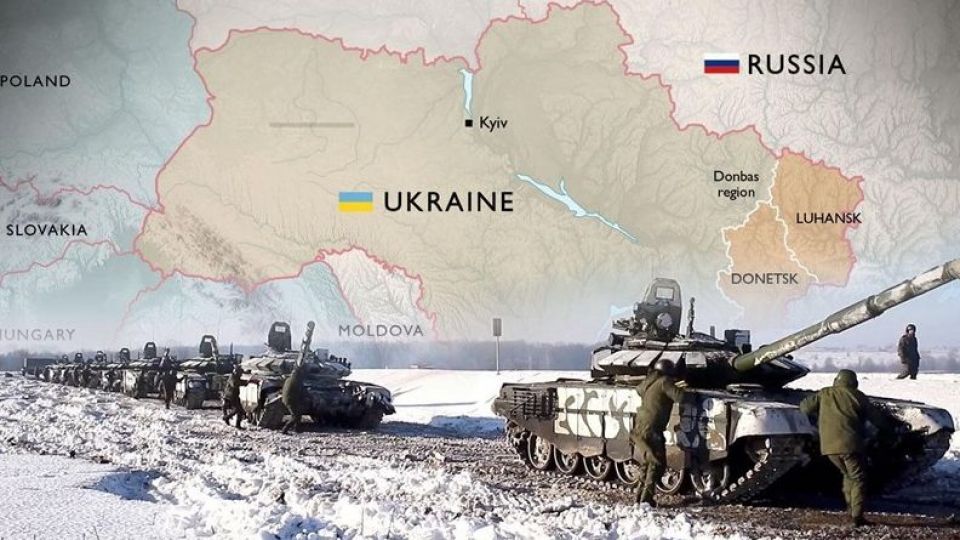
Modabber further stated: “The most important recent development is the explicit change in America’s approach towards Ukraine.” He said: “Washington now publicly recognizes eastern regions of Ukraine, including Donbas and Crimea, as basic conditions for peace.” He added: “This is the same keyword that Vladimir Putin has emphasized over the past years regarding a fundamental resolution of the Ukraine crisis.” Modabber noted: “This change is not a tactical one, but a strategic shift.”
He added: “The root of the current Ukraine crisis dates back to the 1991 decision at the Viskuli Villa in Belarus, where Yeltsin, Kravchuk, and Shushkevich, by separating eastern Ukraine from Russia, laid the groundwork for a structural crisis that later manifested in 2014.” This international affairs analyst continued: “When America retreats and presents the acceptance of these regions as part of peace, it actually marks a significant strategic victory for Russia.” He said: “Even if the Anglo-Saxon axis uses all its might to prevent Zelenskyy from accepting this plan, this very American action will intensify the rift within NATO, as the more moderate countries are unwilling to enter the path of continuous tension-creation by London, Berlin, and Paris with Russia.”
Modabber explained: “Washington has indirectly declared that if Ukraine does not accept the American peace plan, it must manage the continuation of the war on its own.” He added: “This message is obvious and conveys to Hungary, Slovakia, and even countries like Italy that Europe should not bear the new costs of the war.” He said: “Alongside this process, some very radical governments in NATO, like the current governments of the Baltic states, are moving even ahead of Britain towards escalating confrontation with Russia, while the more moderate segments have clearly distanced themselves from this path.”

Structural Corruption, Legitimacy Crisis, and Reduced Western Support for Zelenskyy
Modabber explained the crisis of structural corruption in Ukraine: “New reports about widespread corruption at high levels of the Ukrainian government have intensified the rift within the European Union and NATO.” He recalled: “About a decade ago, the European Union established an anti-corruption committee in Ukraine because, after the 2014 Color Revolution and the overthrow of the legitimate Yanukovych government, an extensive network of corruption took power in Kyiv.” He said: “In subsequent governments, especially with the rise of the circle close to Zelenskyy, this corruption expanded severely.”
Modabber explained: “The recent FBI report regarding the golden toilet case and the role of individuals close to Rustem Umerov, the Ukrainian Defense Minister, and Timur Mindich, Zelenskyy’s former and longtime business partner, shows that even America is formally distancing itself from the Zelenskyy government.” He added: “These disclosures have created widespread protests in Europe and changed Brussels’ view of Kyiv.”
Modabber explained: “The Ukraine crisis is not just a war crisis, but a political legitimacy crisis.” He recalled: “According to the Ukrainian constitution, Zelenskyy’s presidential term ended on May 20, 2024, and he has prevented free elections without legal legitimacy, relying on the state of war.” According to the international affairs analyst, “This issue, alongside structural disagreements within NATO and Poland’s view towards western regions of Ukraine, has widened the rifts and destroyed the past coordination of the Western front.”
He concluded by emphasizing: “Today, Ukraine is facing a set of structural corruption, intra-European divisions, a shift in America’s approach, and a legitimacy crisis for Zelenskyy, which has propelled the course of the war and the future of the European Union and NATO into an entirely new phase.”


0 Comments

LATEST CONTENT

Consequences of Declining Trust in the Judiciary in Europe

SCFRonline – Opinion: The increase in public distrust of the French judicial system, which in recent surveys has reached approximately two-thirds of citizens, should be analyzed within a framework broader than temporary dissatisfaction or an emotional reaction to a particular criminal case.

Iran’s Potential Levers of Power

SCFRonline– Opinion: Iran’s geopolitical power is not limited solely to oil and the Strait of Hormuz; the unintended emergence of disruptions in the future global food and energy security chains can also demonstrate Iran’s strategic importance.

The Inseparability of the Lebanese Front from the Axis of Resistance

SCFR Online–Opinion: By providing an extensive network of social, healthcare, educational, and post-war reconstruction services, Hezbollah has established a strong social base for itself among Lebanon’s Shiites and Sunnis, and even beyond that, among other segments of Lebanese society, including Christians. Hezbollah has never been an external actor imposed upon Lebanon; rather, it is a phenomenon fundamentally born out of the occupation and crimes of the Zionist regime and itself influenced by popular resistance.

The Increasing Efforts of the Zionist Regime to Redefine Borders and the Regional Order and Its Consequences

SCFR Online– Opinion: Security and military developments in the region over recent months indicate that the ongoing crises and wars in Gaza, southern Lebanon, and parts of Syrian territory encompass broader dimensions of geopolitical and geostrategic transformations. In this context, the increased military presence and control of the Zionist regime over parts of the territories of these areas, along with proposals regarding the creation of buffer zones or even the expansion of security borders, have raised serious questions about the future of the regional order and its consequences for the countries of West Asia.

Loading

Últimas publicaciones

Consequences of Declining Trust in the Judiciary in Europe

SCFRonline – Opinion: The increase in public distrust of the French judicial system, which in recent surveys has reached approximately two-thirds of citizens, should be analyzed within a framework broader than temporary dissatisfaction or an emotional reaction to a particular criminal case.

Iran’s Potential Levers of Power

SCFRonline– Opinion: Iran’s geopolitical power is not limited solely to oil and the Strait of Hormuz; the unintended emergence of disruptions in the future global food and energy security chains can also demonstrate Iran’s strategic importance.

The Inseparability of the Lebanese Front from the Axis of Resistance

SCFR Online–Opinion: By providing an extensive network of social, healthcare, educational, and post-war reconstruction services, Hezbollah has established a strong social base for itself among Lebanon’s Shiites and Sunnis, and even beyond that, among other segments of Lebanese society, including Christians. Hezbollah has never been an external actor imposed upon Lebanon; rather, it is a phenomenon fundamentally born out of the occupation and crimes of the Zionist regime and itself influenced by popular resistance.

The Increasing Efforts of the Zionist Regime to Redefine Borders and the Regional Order and Its Consequences

SCFR Online– Opinion: Security and military developments in the region over recent months indicate that the ongoing crises and wars in Gaza, southern Lebanon, and parts of Syrian territory encompass broader dimensions of geopolitical and geostrategic transformations. In this context, the increased military presence and control of the Zionist regime over parts of the territories of these areas, along with proposals regarding the creation of buffer zones or even the expansion of security borders, have raised serious questions about the future of the regional order and its consequences for the countries of West Asia.

Loading

DERNIER CONTENU

Consequences of Declining Trust in the Judiciary in Europe

SCFRonline – Opinion: The increase in public distrust of the French judicial system, which in recent surveys has reached approximately two-thirds of citizens, should be analyzed within a framework broader than temporary dissatisfaction or an emotional reaction to a particular criminal case.

Iran’s Potential Levers of Power

SCFRonline– Opinion: Iran’s geopolitical power is not limited solely to oil and the Strait of Hormuz; the unintended emergence of disruptions in the future global food and energy security chains can also demonstrate Iran’s strategic importance.

The Inseparability of the Lebanese Front from the Axis of Resistance

SCFR Online–Opinion: By providing an extensive network of social, healthcare, educational, and post-war reconstruction services, Hezbollah has established a strong social base for itself among Lebanon’s Shiites and Sunnis, and even beyond that, among other segments of Lebanese society, including Christians. Hezbollah has never been an external actor imposed upon Lebanon; rather, it is a phenomenon fundamentally born out of the occupation and crimes of the Zionist regime and itself influenced by popular resistance.

The Increasing Efforts of the Zionist Regime to Redefine Borders and the Regional Order and Its Consequences

SCFR Online– Opinion: Security and military developments in the region over recent months indicate that the ongoing crises and wars in Gaza, southern Lebanon, and parts of Syrian territory encompass broader dimensions of geopolitical and geostrategic transformations. In this context, the increased military presence and control of the Zionist regime over parts of the territories of these areas, along with proposals regarding the creation of buffer zones or even the expansion of security borders, have raised serious questions about the future of the regional order and its consequences for the countries of West Asia.

Loading

DERNIER CONTENU

Consequences of Declining Trust in the Judiciary in Europe

SCFRonline – Opinion: The increase in public distrust of the French judicial system, which in recent surveys has reached approximately two-thirds of citizens, should be analyzed within a framework broader than temporary dissatisfaction or an emotional reaction to a particular criminal case.

Iran’s Potential Levers of Power

SCFRonline– Opinion: Iran’s geopolitical power is not limited solely to oil and the Strait of Hormuz; the unintended emergence of disruptions in the future global food and energy security chains can also demonstrate Iran’s strategic importance.

The Inseparability of the Lebanese Front from the Axis of Resistance

SCFR Online–Opinion: By providing an extensive network of social, healthcare, educational, and post-war reconstruction services, Hezbollah has established a strong social base for itself among Lebanon’s Shiites and Sunnis, and even beyond that, among other segments of Lebanese society, including Christians. Hezbollah has never been an external actor imposed upon Lebanon; rather, it is a phenomenon fundamentally born out of the occupation and crimes of the Zionist regime and itself influenced by popular resistance.

The Increasing Efforts of the Zionist Regime to Redefine Borders and the Regional Order and Its Consequences

SCFR Online– Opinion: Security and military developments in the region over recent months indicate that the ongoing crises and wars in Gaza, southern Lebanon, and parts of Syrian territory encompass broader dimensions of geopolitical and geostrategic transformations. In this context, the increased military presence and control of the Zionist regime over parts of the territories of these areas, along with proposals regarding the creation of buffer zones or even the expansion of security borders, have raised serious questions about the future of the regional order and its consequences for the countries of West Asia.

Loading

DERNIER CONTENU

Consequences of Declining Trust in the Judiciary in Europe

SCFRonline – Opinion: The increase in public distrust of the French judicial system, which in recent surveys has reached approximately two-thirds of citizens, should be analyzed within a framework broader than temporary dissatisfaction or an emotional reaction to a particular criminal case.

Iran’s Potential Levers of Power

SCFRonline– Opinion: Iran’s geopolitical power is not limited solely to oil and the Strait of Hormuz; the unintended emergence of disruptions in the future global food and energy security chains can also demonstrate Iran’s strategic importance.

The Inseparability of the Lebanese Front from the Axis of Resistance

SCFR Online–Opinion: By providing an extensive network of social, healthcare, educational, and post-war reconstruction services, Hezbollah has established a strong social base for itself among Lebanon’s Shiites and Sunnis, and even beyond that, among other segments of Lebanese society, including Christians. Hezbollah has never been an external actor imposed upon Lebanon; rather, it is a phenomenon fundamentally born out of the occupation and crimes of the Zionist regime and itself influenced by popular resistance.

The Increasing Efforts of the Zionist Regime to Redefine Borders and the Regional Order and Its Consequences

SCFR Online– Opinion: Security and military developments in the region over recent months indicate that the ongoing crises and wars in Gaza, southern Lebanon, and parts of Syrian territory encompass broader dimensions of geopolitical and geostrategic transformations. In this context, the increased military presence and control of the Zionist regime over parts of the territories of these areas, along with proposals regarding the creation of buffer zones or even the expansion of security borders, have raised serious questions about the future of the regional order and its consequences for the countries of West Asia.

Loading





