
Barsam Mohammadi – Expert on regional affairs
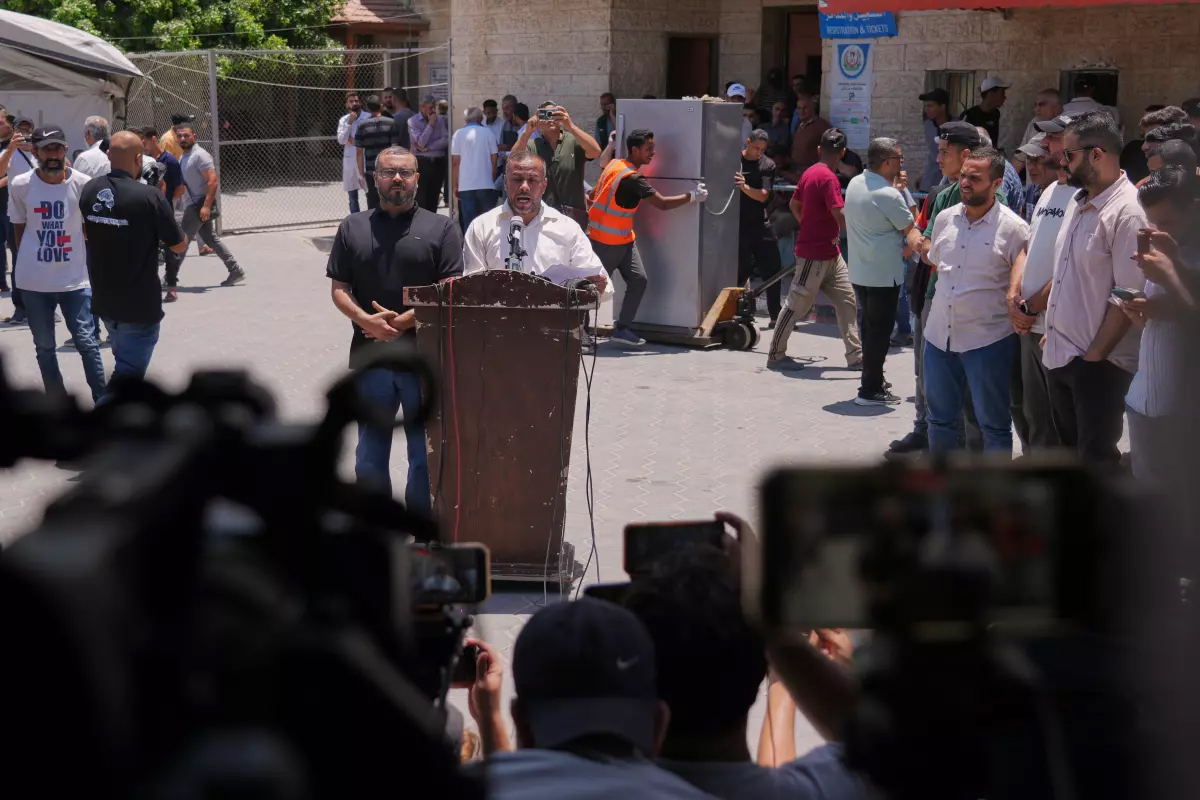
In a significant development, the Hamas movement officially dissolved the governmental emergency committee that had been administering the Gaza Strip for about two decades. This step, which coincided with the resignation of Muhammad Abd al-Khaliq al-Farra, the interim head of the Government Follow-up Committee, took place within the framework of extensive efforts to implement the next phase of the ceasefire and transfer civilian governance to the “National Committee for the Administration of Gaza” headed by Ali Shaath.
Ali Shaath is a Palestinian politician who, on January 14, 2026, was appointed as the head of the national committee for the administration of Gaza in a joint statement by Qatari, Egyptian, and Turkish mediators for the Gaza peace plan. He has experience working in the Palestinian Authority in various positions, including in the fields of transportation and planning. Shaath is originally from Khan Yunis but resides in the West Bank and holds a Ph.D. in civil engineering from Queen’s University Belfast.
What distinguishes this decision from other regional developments is the intelligent combination of political flexibility with the preservation of the strategic principles of resistance; an approach that, while transferring day-to-day management, insists on the continuity of the Palestinian cause and the safeguarding of the achievements of the resistance.
Administrative transfer while preserving the identity of resistance
The dissolution of Hamas’s governmental body in Gaza signifies the end of this movement’s role in executive management; however, it will never mean the weakening or elimination of the Palestinian resistance. What distinguishes this decision from a strategic retreat is the differentiation between “transferring civil responsibilities” and “adherence to the discourse of resistance.” According to Hamas’s official announcement, all employees of the existing administrative structure will remain in their positions to ensure the uninterrupted continuation of public services, and Hamas will continue to oversee security and supervision in parts of Gaza that remain under its control.
Furthermore, the legal and administrative preparations for handing over the state apparatus have been completed and have been presented to political factions, tribal leaders, civil society organizations, and the UN observer. These details indicate that Hamas, through precise foresight, seeks to intelligently manage the political transition. A Hamas spokesman, noting that this step was taken “to eliminate any pretext for the occupation,” once again emphasized that transferring the administration of Gaza to the technocratic committee never means disarmament or abandoning the Palestinian cause.
Strategic objectives of Hamas’s decision
Hamas’s decision to dissolve the governmental body takes meaning within the complex context of the second-phase ceasefire negotiations; negotiations that have faced a stalemate for months due to fundamental disagreements over security arrangements and the Zionist regime’s opposition to the establishment of the National Committee for the Administration of Gaza within the region. Experts consider this move a smart maneuver to change the field and reduce diplomatic pressure.
By transferring administrative authority to the technocratic committee, Hamas effectively places Tel Aviv in a position where it must either agree to the entry of this committee and operationalize the subsequent steps of the peace plan, or its obstructionism on the path to the civilian administration of Gaza will be exposed to the world. This step, which was welcomed by Palestinian groups during recent Cairo consultations as an important confidence-building measure, shifts the political puzzle in Hamas’s favor; such that the ball is now in the court of the Zionist regime, and international public pressure on Tel Aviv to implement its commitments increases.
At the same time, this decision paves the way for the commencement of the Gaza reconstruction process; a region that, more than two and a half years after the war, still remains as war-ravaged ruins, and the humanitarian provisions of the first phase of the ceasefire have yet to be fully implemented.
Security challenges and the political future of Gaza
Despite the positive dimensions of this decision, the challenges ahead should not be overlooked. The most significant obstacle is the issue of disarmament and security arrangements, which continues to be the main problem in the negotiations. The Zionist regime insists that reconstruction must take place after the dismantling of Palestinian armed groups, while Hamas argues that political and administrative arrangements must precede any discussion regarding its military capabilities.
This disagreement, coupled with the continuation of the Zionist regime’s military operations in parts of Gaza, has delayed the implementation of the second phase of the ceasefire. Also, the hesitant reaction of the Zionist regime, which described this move as “an attempt to feign compliance with the ceasefire,” indicates the challenges ahead on the path to the full realization of this decision.
Nevertheless, what is certain is that with this strategic step, Hamas has demonstrated its political flexibility and proven that it is prepared to make difficult decisions for the benefit of the people of Gaza and the advancement of the Palestinian cause. Diplomats believe that governance remains one of the most difficult issues facing efforts to transform a fragile ceasefire into a sustainable political agreement; however, this move could open new avenues for the negotiations.
The dissolution of Hamas’s governmental body in Gaza marks the end of an era and the beginning of a new phase in the administration of the Strip. This decision, taken with the aim of facilitating reconstruction, alleviating the suffering of the people, and pressuring the Zionist regime to fulfill its commitments, demonstrates Hamas’s political and strategic maturity; a movement that, while preserving the principles of resistance, has proven its flexibility in facing the complex equations of the region.
What should not be forgotten in the meantime is the continuity of the discourse of resistance and adherence to the Palestinian cause; a cause that, in the shadow of these administrative changes, has never lost and will never lose its color. With this step, Hamas has proven once again that on the intricate path of political equations, while upholding its principles and values, it seeks to open windows to improve the lives of the oppressed people of Gaza and to achieve the national goals of Palestine. The outlook ahead, although accompanied by challenges, this intelligent step can be considered a turning point in the future developments of Gaza.









0 Comments