
Dr. Mohammad Mehdi Mazaheri – University Professor
Although this interconnectedness has enhanced the deterrence capability of the Axis of Resistance, it has simultaneously created a context for new calculations and complex strategic challenges for Iran. This emerging reality can be analyzed from various dimensions, and attention to both its positive aspects and associated risks is essential for foreign policy decision-makers.
The dimensions of the geopolitical linkage of Hormuz and Bab el-Mandeb
- Transformation of strait passages into a chain of reciprocal pressure instruments
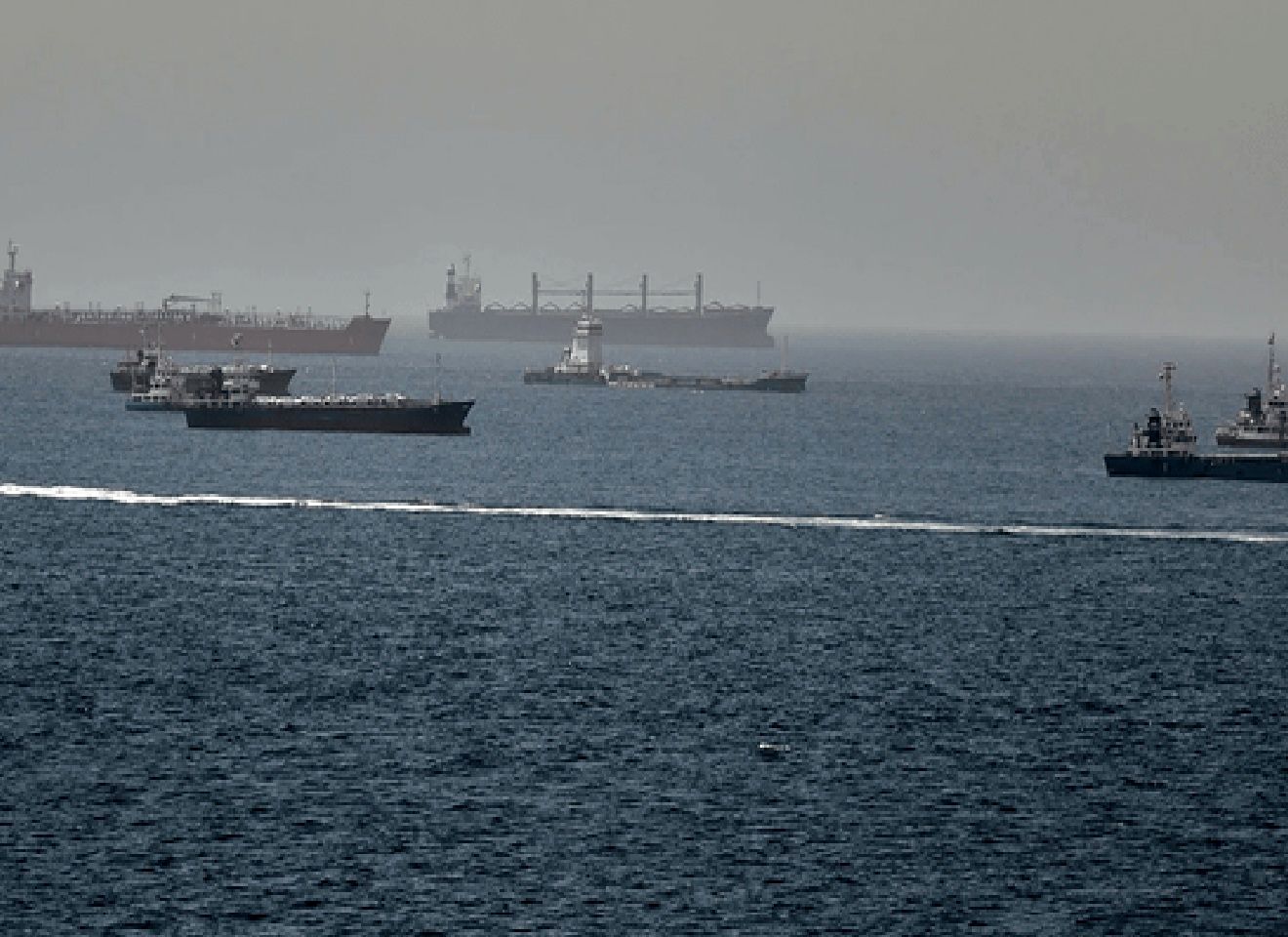
On the positive and deterrent side, the linkage of the security of the Strait of Hormuz and Bab el-Mandeb has created a “cross-pressure network.” Iran’s authoritative monitoring of navigation in the Strait of Hormuz, alongside the operational capability of Yemen’s Ansarullah in Bab el-Mandeb, has placed international communication lines from the Persian Gulf to the Indian Ocean and the Suez Canal within a single deterrence chain. This has raised the cost of any direct military action or sanctions against Iran by Western powers, because insecurity at one point immediately spreads to other energy and trade chokepoints. - Disruption of extra-regional powers’ calculations of “low-cost and short-term warfare”
One of the greatest advantages of Iran’s authoritative monitoring in the Strait of Hormuz and its simultaneity with the spillover of tensions into the Bab el-Mandeb area is the neutralization of the US and its allies’ doctrine of “limited and lightning wars.” In the past, Western think tanks assumed that pinpoint strikes against Iran’s infrastructure could be carried out while keeping the crisis confined to limited dimensions. However, linking the security of these two straits has proven that any military move against Iran immediately transforms into a “long-term crisis in the global energy and trade chain.” This has raised the risk rate for economies grappling with inflation and energy volatility, and has turned the military option against Iran from a low-cost action into a high-risk and unpredictable scenario; that is, a serious form of deterrence that effectively prevents the US and the Israeli regime from repeatedly and arbitrarily attacking Iran. - Risk of reduced strategic value of the straits and alternative routes
Conversely, the greatest challenge ahead is the reaction arising from the structure of the global economy to persistent insecurity. The more the global market’s dependence on a waterway is tied to risk and insecurity, the greater the incentive for regional and extra-regional powers to invest in “shortcut and alternative routes.” The crisis in the Strait of Hormuz caused oil producers in the Persian Gulf to halt up to 12 million barrels per day of their production, leading to a sharp price surge. The oil flow partially resumed after the preliminary US-Iran agreement last month, but with the resumption of hostilities, the widening of tensions, and their spillover into the Bab el-Mandeb Strait, oil-producing and consuming countries have once again found themselves in a critical situation.
These conditions have driven energy-producing and -consuming countries to explore alternative routes and increase the capacity of overland crude oil pipelines; a move that could enable them to transport more oil without passing through the Strait of Hormuz or even Bab el-Mandeb. The development of oil pipelines from eastern Saudi Arabia to Red Sea ports, the revival of the oil pipeline from Iraq’s Kirkuk to Syria’s Banias port – which was initiated during Iraqi Prime Minister Ali al-Zaydi’s recent visit to the United States – the strengthening of land corridors such as the India-Middle East-Europe Corridor (IMEC) to connect India via maritime and rail routes to the UAE, Saudi Arabia, Jordan, Israel, and ultimately Europe as an alternative to traditional routes, and the activation of rail and road lines among Persian Gulf littoral states, are trends that, if consolidated, will reduce the superior geopolitical value of the Strait of Hormuz and Bab el-Mandeb in the long term.
- Risk of formation of international consensus-building coalitions
Another critical challenge is the increased likelihood of reaction from stakeholders in maritime trade. As the warnings of European officials indicate, insecurity in Bab el-Mandeb directly disrupts the commercial supply chains of the West, China, India, and East Asia. Although European and Asian powers did not seriously and openly join the second US aggressive war against Iran, the reality is that these countries will inevitably react to protect their economic interests. The persistence of shipping disruptions paves the way for the US and its Western allies to form coalitions under the pretext of “ensuring freedom of navigation.” This could place Iran and Ansarullah in the position of being accused of “disrupting global trade security” and even provoke an international consensus among emerging powers like China and India against the sustainability of security in the region. - Spillover of insecurity into the northern backyard (Caspian Sea)
Ukraine’s recent attack on an Iranian commercial vessel in the Caspian Sea, allegedly for carrying military cargo – which was certainly conducted with the green light of the US and Western powers – is a serious warning for the security of Iran’s alternative corridors. This incident proved that if the logic of war is consolidated and sustained, even the northern routes in the Caspian will not be immune from the shrapnel of securitization polarization, and the pressure front against Iran’s transit lines could expand from the south to the north as well.
But the question is: how can Iran use the deterrence instrument of the straits while avoiding falling into the trap of its challenges?
To prevent the deterrence instrument from turning into a geopolitical trap and international isolation, the Islamic Republic of Iran must pursue an intelligent roadmap based on the following principles:
Transition from “negative deterrence” to “positive responsibility”: Iran should, by utilizing active diplomacy, register the initiative for managing the security of the Strait of Hormuz. Emphasizing the principle that Iran is the “primary guarantor of safe and legal navigation” in the region would neutralize the Western narrative that Iran is a threat to global trade.
Calculated decoupling of files and regional diplomacy: Avoiding escalation of tensions with friendly countries in the Persian Gulf such as Oman and Qatar, and leveraging their capacity to design an indigenous maritime security regime, would prevent the formation of extra-regional military coalitions. Iran should maintain its red lines but simultaneously welcome and seriously consider proposed political initiatives and peace plans to deny the West a pretext for consensus-building.
Leveraging management of traffic control and clandestine diplomacy: In circumstances where relations with Arab countries hosting US bases and Western powers are strained by military tensions, a logical and pragmatic solution could be to “transform maritime deterrence power into a tangible bargaining chip” with Eastern stakeholders. Iran should, as during the Ramadan War, through clandestine diplomacy and informal security channels, guarantee a regime of “selective and safe passage” for vessels belonging to non-belligerent powers (such as the commercial fleets of China, India, and even European countries that have not so far sided with the US), while keeping insurance costs and transit risks high for Western parties and their allies. This approach has two advantages: first, it prevents the formation of a unified global consensus (especially the inclusion of Beijing in Western security coalitions); and second, it compels the excluded countries to, in order to preserve and sustain their commercial interests, play the role of a defensive shield and moderating force against pressures on Iran in international diplomatic disputes.
Framing regional interests and intelligently demanding costs from Moscow: The return of military tensions between Iran and the US and the consequent blockage or tension in the Strait of Hormuz has brought the greatest windfall economic and strategic gain to Moscow. Iran should not allow Russia to be the sole recipient of free benefits from the Persian Gulf war, rising global energy prices, and the diversion of Western focus from the Ukrainian front. Since the sustainability of Iran’s deterrence has provided these benefits to Moscow, Tehran should demand this political favor in a tangible form. This approach could include requests for accelerating the delivery of advanced air defense and electronic warfare systems, providing credit lines and barter arrangements, and active use of Russia’s veto power in the Security Council to neutralize Western legal resolutions. Iran should also obligate Moscow, in return for these benefits, to ensure the physical and logistical security of Iran’s commercial fleet in the Caspian Sea so that the costs of northern conflict are not written against Iran’s transit.
Ultimately, a re-reading of the complex developments from the Persian Gulf and the Red Sea to the depths of the Caspian Sea shows that transforming the “Strait of Hormuz and Bab el-Mandeb” into a chain of reciprocal deterrence instruments has succeeded in raising the costs of encroachment and unilateral pressure on Iran for the US and the Israeli regime to a very high level. This field achievement has been a valuable instrument for consolidating the country’s geopolitical weight and deterring the opposing parties from hasty military calculations.
However, the logic of realism in foreign policy warns that a “deterrence instrument” is not an end in itself, but a “bargaining chip” for achieving security, stability, and national interests. Sole reliance on blocking or rendering waterways insecure, without the backing of a “pluralistic and active diplomacy,” could transform Iran’s leverage into a security trap; a trap that carries the risk of international consensus formation, the reduction of the strategic importance of the Strait of Hormuz, capital flight from national corridors, and the spillover of insecurity into transit backyards such as the Caspian Sea.
The intelligent strategy for Iran is to cash in on field capabilities at the negotiating table. Iran should, while maintaining its sea-based authority, move the diplomatic game beyond a one-dimensional approach and engage in tangible bargaining with a diverse spectrum of Eastern, regional, and even independent Western actors. Only through the linkage of military deterrence with multifaceted and responsible diplomacy can the existential, political, and economic security of the country be guaranteed and prevent the costs of major global conflicts from weighing upon Iran’s national interests.









0 Comments