Dimensions and Objectives of Artificial Intelligence Law of European Parliament

Strategic Council Online – Opinion: Recently, the European Parliament passed the Artificial Intelligence Act. The provisions of this law were agreed upon during the negotiations of the EU member states in December 2023, and the European Parliament approved its final text. The purpose of this law is to protect fundamental rights, democracy, the rule of law, and the sustainability of the environment against dangerous artificial intelligence. It has set obligations to eliminate its possible risks, although it also emphasizes innovation and strengthening.

Reza Majidzadeh- Political economy & development


Artificial intelligence, cloud computing, analytical tools, and interactive platforms fundamentally transform how people live, work, and interact; the transformation towards what has become known as the fourth industrial revolution, and some call it “digitalization.” According to estimates by the World Economic Forum, the value of digitization in five critical global industries over the next decade will amount to USD 10 trillion, which directly depends on the transformation of the telecommunications industry’s basic infrastructure, applications, and productivity improvements. Technology has the characteristic of empowerment, and in every historical period, it has helped humankind to overcome the limitations of the natural world, human life, and even its physical restraints. Still, the possibility of inappropriate use of technology by some criminal groups, including for theft… and to prevent possible opportunism, makes the regulations inevitable.

The European AI Law has been adopted to prevent violations of fundamental rights, safety, and ethical principles.

The EU Office of Artificial Intelligence will oversee the implementation of this law. Depending on the amount and severity of the violation, fines of up to 35 million euros may be imposed for violating it.

Protecting citizens’ rights (instead of restricting their access) is one of the most essential features of the regulations considered in the European Parliament’s resolution.

The European Artificial Intelligence Law prohibits software that threatens citizens’ rights, including biometric classification systems based on sensitive features or targeted facial image cropping technologies from the Internet or CCTV footage to create facial recognition databases.

Also, emotion recognition technology in the workplace and schools, social scoring, predictive policing (only based on the evaluation of individual characteristics), and artificial intelligence that manipulates human behavior or exploits people’s vulnerabilities are prohibited.

The scope of the European AI Law includes suppliers and developers of artificial intelligence systems that are marketed or used in the EU. Whether these deliverers and developers are residents of the EU or not, they will be subject to this law. Therefore, similar to the General Data Protection Regulation in the European Union, American companies that supply artificial intelligence technology in Europe are also subject to possible penalties for violating this law.

This law also specifies that the existing EU law on personal data protection, privacy, and confidentiality regarding the collection and use of data also applies to artificial intelligence technology.

The Artificial Intelligence Law is based on a risk-oriented approach for classifying artificial intelligence systems. These levels correspond to the sensitivity of the data involved and the application of artificial intelligence:

  1. Using deceptive and manipulative techniques to influence a person and affect his decision-making so that he would not otherwise have made a decision that would seriously harm himself or another person.
  2. Exploiting a person’s vulnerabilities due to old age, disability, or particular social/economic status to influence that person’s behavior to cause severe harm to that person or another.
  3. Biometric data categorizes individuals based on race, political opinions, trade union membership, religious or philosophical beliefs, sex life, or sexual orientation.
  4. Creating or expanding facial recognition databases by cutting facial images from the Internet or CCTV footage.

Of course, the exact boundaries of high-risk artificial intelligence technology have not yet been precisely defined. This law emphasizes the absence of risk to real people’s health, safety, or fundamental rights. The European Commission and the Office of Artificial Intelligence have 18 months to develop practical guidelines for implementers to implement.


0 Comments

LATEST CONTENT

The Makkah Pact; Reasons for its Formation and Challenges Ahead

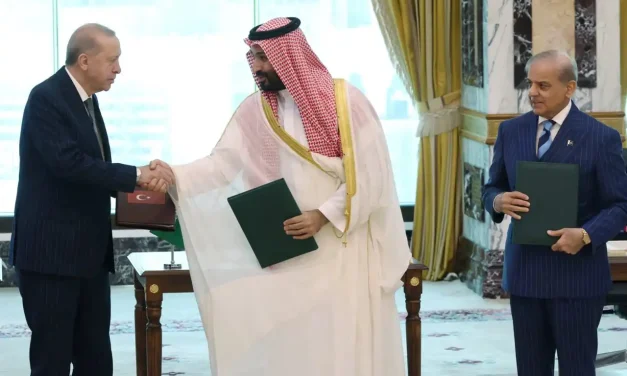
SCFR Online – Opinion: The Makkah Pact, signed between Saudi Arabia, Pakistan, and Turkey under the motto “an attack on one is an attack on all,” is viewed by some analysts less as a full-fledged military coalition and more as an attempt to reduce security dependence on an external power and to establish a regional security mechanism.

Implications of the US-Saudi Nuclear Agreement

SCFR Online – Opinion: The new US-Saudi nuclear agreement, despite legal and political ambiguities, could alter previous non-proliferation standards in West Asia and intensify nuclear competition, ushering it into a new phase.

An Analysis of Recent Turkey-Israeli Regime Tensions

SCFR Online – Opinion: Recent developments in Syria indicate an intensification of strategic rivalry between Turkey and the Israeli regime, but mutual considerations and the role of the United States have limited the likelihood of direct war.

Increasing criticism of the extensive Zionist lobby network

SCFR Online – Opinion: An examination of the mechanisms of the Israeli regime’s influence in the United States depicts a complex picture of shared interests, strategic dependencies, and the limitations of this relationship.

Realities of the Tripartite Makkah Pact

SCFR Online – Interview: The signing of the Makkah agreement between Saudi Arabia, Pakistan, and Turkey has raised questions about the future of the region’s security structure and the position of these countries in West Asian equations. Can this agreement become a genuine collective defense mechanism, or does it have more of a political and deterrent function than creating new military capacity?

Loading

Últimas publicaciones

The Makkah Pact; Reasons for its Formation and Challenges Ahead

SCFR Online – Opinion: The Makkah Pact, signed between Saudi Arabia, Pakistan, and Turkey under the motto “an attack on one is an attack on all,” is viewed by some analysts less as a full-fledged military coalition and more as an attempt to reduce security dependence on an external power and to establish a regional security mechanism.

Implications of the US-Saudi Nuclear Agreement

SCFR Online – Opinion: The new US-Saudi nuclear agreement, despite legal and political ambiguities, could alter previous non-proliferation standards in West Asia and intensify nuclear competition, ushering it into a new phase.

An Analysis of Recent Turkey-Israeli Regime Tensions

SCFR Online – Opinion: Recent developments in Syria indicate an intensification of strategic rivalry between Turkey and the Israeli regime, but mutual considerations and the role of the United States have limited the likelihood of direct war.

Increasing criticism of the extensive Zionist lobby network

SCFR Online – Opinion: An examination of the mechanisms of the Israeli regime’s influence in the United States depicts a complex picture of shared interests, strategic dependencies, and the limitations of this relationship.

Realities of the Tripartite Makkah Pact

SCFR Online – Interview: The signing of the Makkah agreement between Saudi Arabia, Pakistan, and Turkey has raised questions about the future of the region’s security structure and the position of these countries in West Asian equations. Can this agreement become a genuine collective defense mechanism, or does it have more of a political and deterrent function than creating new military capacity?

Loading

DERNIER CONTENU

The Makkah Pact; Reasons for its Formation and Challenges Ahead

SCFR Online – Opinion: The Makkah Pact, signed between Saudi Arabia, Pakistan, and Turkey under the motto “an attack on one is an attack on all,” is viewed by some analysts less as a full-fledged military coalition and more as an attempt to reduce security dependence on an external power and to establish a regional security mechanism.

Implications of the US-Saudi Nuclear Agreement

SCFR Online – Opinion: The new US-Saudi nuclear agreement, despite legal and political ambiguities, could alter previous non-proliferation standards in West Asia and intensify nuclear competition, ushering it into a new phase.

An Analysis of Recent Turkey-Israeli Regime Tensions

SCFR Online – Opinion: Recent developments in Syria indicate an intensification of strategic rivalry between Turkey and the Israeli regime, but mutual considerations and the role of the United States have limited the likelihood of direct war.

Increasing criticism of the extensive Zionist lobby network

SCFR Online – Opinion: An examination of the mechanisms of the Israeli regime’s influence in the United States depicts a complex picture of shared interests, strategic dependencies, and the limitations of this relationship.

Realities of the Tripartite Makkah Pact

SCFR Online – Interview: The signing of the Makkah agreement between Saudi Arabia, Pakistan, and Turkey has raised questions about the future of the region’s security structure and the position of these countries in West Asian equations. Can this agreement become a genuine collective defense mechanism, or does it have more of a political and deterrent function than creating new military capacity?

Loading

DERNIER CONTENU

The Makkah Pact; Reasons for its Formation and Challenges Ahead

SCFR Online – Opinion: The Makkah Pact, signed between Saudi Arabia, Pakistan, and Turkey under the motto “an attack on one is an attack on all,” is viewed by some analysts less as a full-fledged military coalition and more as an attempt to reduce security dependence on an external power and to establish a regional security mechanism.

Implications of the US-Saudi Nuclear Agreement

SCFR Online – Opinion: The new US-Saudi nuclear agreement, despite legal and political ambiguities, could alter previous non-proliferation standards in West Asia and intensify nuclear competition, ushering it into a new phase.

An Analysis of Recent Turkey-Israeli Regime Tensions

SCFR Online – Opinion: Recent developments in Syria indicate an intensification of strategic rivalry between Turkey and the Israeli regime, but mutual considerations and the role of the United States have limited the likelihood of direct war.

Increasing criticism of the extensive Zionist lobby network

SCFR Online – Opinion: An examination of the mechanisms of the Israeli regime’s influence in the United States depicts a complex picture of shared interests, strategic dependencies, and the limitations of this relationship.

Realities of the Tripartite Makkah Pact

SCFR Online – Interview: The signing of the Makkah agreement between Saudi Arabia, Pakistan, and Turkey has raised questions about the future of the region’s security structure and the position of these countries in West Asian equations. Can this agreement become a genuine collective defense mechanism, or does it have more of a political and deterrent function than creating new military capacity?

Loading

DERNIER CONTENU

The Makkah Pact; Reasons for its Formation and Challenges Ahead

SCFR Online – Opinion: The Makkah Pact, signed between Saudi Arabia, Pakistan, and Turkey under the motto “an attack on one is an attack on all,” is viewed by some analysts less as a full-fledged military coalition and more as an attempt to reduce security dependence on an external power and to establish a regional security mechanism.

Implications of the US-Saudi Nuclear Agreement

SCFR Online – Opinion: The new US-Saudi nuclear agreement, despite legal and political ambiguities, could alter previous non-proliferation standards in West Asia and intensify nuclear competition, ushering it into a new phase.

An Analysis of Recent Turkey-Israeli Regime Tensions

SCFR Online – Opinion: Recent developments in Syria indicate an intensification of strategic rivalry between Turkey and the Israeli regime, but mutual considerations and the role of the United States have limited the likelihood of direct war.

Increasing criticism of the extensive Zionist lobby network

SCFR Online – Opinion: An examination of the mechanisms of the Israeli regime’s influence in the United States depicts a complex picture of shared interests, strategic dependencies, and the limitations of this relationship.

Realities of the Tripartite Makkah Pact

SCFR Online – Interview: The signing of the Makkah agreement between Saudi Arabia, Pakistan, and Turkey has raised questions about the future of the region’s security structure and the position of these countries in West Asian equations. Can this agreement become a genuine collective defense mechanism, or does it have more of a political and deterrent function than creating new military capacity?

Loading