China’s Effort to Recreate a New Global Order

SCFRonline – Opinion: Unlike classical powers, Beijing pursues its preferred order not through territorial occupation, but through technology, capital, standard-setting, and digital governance.

Laleh Bahari – International Affairs Analyst

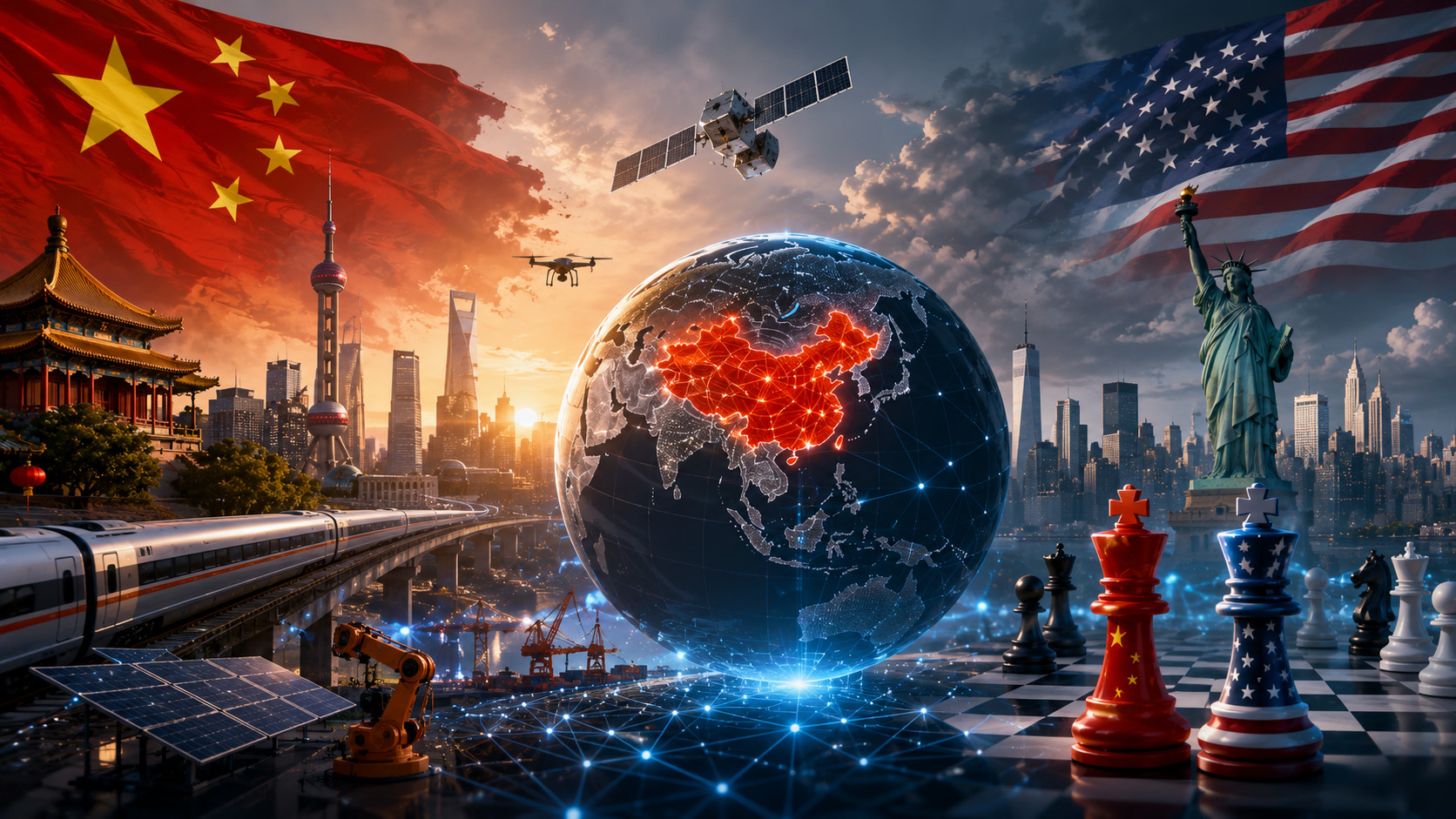
If the nineteenth century was the era of colonial empires and the twentieth century the era of United States military hegemony, the twenty-first century is likely to be defined by a different type of competition. This competition will be based less on territorial conquest or the expansion of military bases and more on dominance over technology, data, global standards, supply chains, and international governance institutions. At the center of this transformation stands China; a country that, rather than directly replacing the United States, seeks to rewrite the rules upon which the global order is governed.

Many analyses still interpret the Washington–Beijing rivalry as a new Cold War; however, this interpretation overlooks part of the reality. China is less interested in destroying the existing order than in gradually transforming it from within. Beijing seeks to create a network of economic, technological, and institutional dependencies in which political influence is exercised not through hard power, but through control of global infrastructure. Therefore, China’s desired order should be understood less as a military project and more as a project of reconfiguring global governance.

Technology, the Core Pillar of China’s Power

The most important distinction between China’s strategy and that of traditional powers lies in the role of technology in its foreign policy. While classical powers placed military industries at the center of their superiority, China has turned artificial intelligence, semiconductors, cloud computing, next-generation communications, big data, and biotechnology into fundamental elements of national power.

Today, strategic competition over technology is no longer merely economic competition; it is a competition over defining the future rules of the world. A country that can set technical standards for artificial intelligence, digital infrastructure, or communication networks will in practice also shape part of global governance rules.

Within this framework, Beijing has made massive investments in artificial intelligence development, data centers, quantum computing, and scientific research. The extensive role of the Chinese Academy of Sciences in linking research, industry, and policymaking also demonstrates that the state views science not as an academic domain, but as an instrument of geopolitical competition.

From the Silk Road to Digital Governance

Over the past decade, the Belt and Road Initiative has been the most important symbol of China’s foreign policy; however, this project has now entered a new phase. Whereas in the past the focus was on building ports, railways, and physical infrastructure, the new version of this strategy is centered on digital infrastructure, data-driven economies, communication networks, and smart services.

China has clearly recognized that controlling the future of the global economy cannot be achieved solely through ownership of ports or shipping routes. What matters more is control over technical standards, payment systems, AI platforms, cloud services, and data transmission networks.

For this reason, many developing countries today are not primarily purchasing Chinese military equipment but are increasingly using its digital systems, communication technologies, and smart services. This technological dependency gradually creates a form of strategic dependence whose long-term effects are more enduring than many military alliances.

Global Governance with Chinese Characteristics

Unlike some major powers, China speaks less about regime change or direct intervention in the internal affairs of states. Instead, it emphasizes concepts such as national sovereignty, non-interference, shared development, and multilateralism. Western critics, however, argue that these concepts serve in practice as a cover for expanding China’s geopolitical influence.

Nevertheless, the reality is that many countries in the Global South find this narrative more attractive than Western interventionist models. Beijing, understanding this environment, has introduced initiatives such as the Global Development Initiative, Global Security Initiative, and Global Civilization Initiative to present an alternative vision of the future international order.

In this model, international legitimacy is defined not on the basis of leadership by a single power, but through a network of economic, technological, and institutional cooperation. Although there remains a significant gap between China’s declared ambitions and the resources allocated to them, the overall trend indicates that Beijing is making long-term investments in building new institutions and rules.

The Future Battle Will Be Over the Rules

The main competition between China and the United States is no longer merely about GDP or the number of aircraft carriers. The central arena of competition is the drafting of future global rules. Any country that defines standards in artificial intelligence, cybersecurity, digital economy, emerging technologies, and data governance will effectively gain influence beyond military power.

Accordingly, Beijing seeks simultaneously to develop indigenous technologies and encourage more countries to adopt Chinese infrastructure. In response, the United States is attempting to contain this trend through export restrictions, technological alliances, and heavy investment in advanced industries.

This competition is pushing the world toward a form of technological bipolarity, in which states will be forced to choose between different standards, infrastructures, and ecosystems. For this reason, technology has become the most important arena of power politics in the twenty-first century.

China is pursuing a different path from classical powers in constructing a new global order. Instead of consolidating hegemony through warships or military campaigns, Beijing seeks to gradually align technological infrastructures, digital economic rules, international standards, and global governance institutions with its own interests. Therefore, the future of great power competition will be determined less on battlefields and more in artificial intelligence laboratories, data centers, standards organizations, universities, and digital networks. The world is entering an era in which real power lies not in the number of soldiers, but in the ability to write the rules of the game. China has understood this reality earlier than many of its competitors, and precisely for this reason, it has begun constructing the new order from the field of technology.


0 Comments

LATEST CONTENT

China’s Effort to Recreate a New Global Order

SCFRonline – Opinion: Unlike classical powers, Beijing pursues its preferred order not through territorial occupation, but through technology, capital, standard-setting, and digital governance.

The Decline of Paris’s Traditional Influence in the Sahel

SCFR online – Opinion: The severance of diplomatic relations between Burkina Faso and France is not merely a bilateral crisis; rather, it constitutes an indication of the accelerating decline of Paris’s traditional influence in West Africa and the reconfiguration of the power balance in the Sahel region.

Analysis of the New Security Order in the Region

Strategic Council Online – Guest Note: The recent military aggression by the United States and the Israeli regime against the Islamic Republic of Iran in the early months of 2026, beyond a periodic tension, has acted as a catalyst for a fundamental reconfiguration of the Middle East’s geopolitical order.

Consequences of Declining Trust in the Judiciary in Europe

SCFRonline – Opinion: The increase in public distrust of the French judicial system, which in recent surveys has reached approximately two-thirds of citizens, should be analyzed within a framework broader than temporary dissatisfaction or an emotional reaction to a particular criminal case.

Iran’s Potential Levers of Power

SCFRonline– Opinion: Iran’s geopolitical power is not limited solely to oil and the Strait of Hormuz; the unintended emergence of disruptions in the future global food and energy security chains can also demonstrate Iran’s strategic importance.

Loading

Últimas publicaciones

China’s Effort to Recreate a New Global Order

SCFRonline – Opinion: Unlike classical powers, Beijing pursues its preferred order not through territorial occupation, but through technology, capital, standard-setting, and digital governance.

The Decline of Paris’s Traditional Influence in the Sahel

SCFR online – Opinion: The severance of diplomatic relations between Burkina Faso and France is not merely a bilateral crisis; rather, it constitutes an indication of the accelerating decline of Paris’s traditional influence in West Africa and the reconfiguration of the power balance in the Sahel region.

Analysis of the New Security Order in the Region

Strategic Council Online – Guest Note: The recent military aggression by the United States and the Israeli regime against the Islamic Republic of Iran in the early months of 2026, beyond a periodic tension, has acted as a catalyst for a fundamental reconfiguration of the Middle East’s geopolitical order.

Consequences of Declining Trust in the Judiciary in Europe

SCFRonline – Opinion: The increase in public distrust of the French judicial system, which in recent surveys has reached approximately two-thirds of citizens, should be analyzed within a framework broader than temporary dissatisfaction or an emotional reaction to a particular criminal case.

Iran’s Potential Levers of Power

SCFRonline– Opinion: Iran’s geopolitical power is not limited solely to oil and the Strait of Hormuz; the unintended emergence of disruptions in the future global food and energy security chains can also demonstrate Iran’s strategic importance.

Loading

DERNIER CONTENU

China’s Effort to Recreate a New Global Order

SCFRonline – Opinion: Unlike classical powers, Beijing pursues its preferred order not through territorial occupation, but through technology, capital, standard-setting, and digital governance.

The Decline of Paris’s Traditional Influence in the Sahel

SCFR online – Opinion: The severance of diplomatic relations between Burkina Faso and France is not merely a bilateral crisis; rather, it constitutes an indication of the accelerating decline of Paris’s traditional influence in West Africa and the reconfiguration of the power balance in the Sahel region.

Analysis of the New Security Order in the Region

Strategic Council Online – Guest Note: The recent military aggression by the United States and the Israeli regime against the Islamic Republic of Iran in the early months of 2026, beyond a periodic tension, has acted as a catalyst for a fundamental reconfiguration of the Middle East’s geopolitical order.

Consequences of Declining Trust in the Judiciary in Europe

SCFRonline – Opinion: The increase in public distrust of the French judicial system, which in recent surveys has reached approximately two-thirds of citizens, should be analyzed within a framework broader than temporary dissatisfaction or an emotional reaction to a particular criminal case.

Iran’s Potential Levers of Power

SCFRonline– Opinion: Iran’s geopolitical power is not limited solely to oil and the Strait of Hormuz; the unintended emergence of disruptions in the future global food and energy security chains can also demonstrate Iran’s strategic importance.

Loading

DERNIER CONTENU

China’s Effort to Recreate a New Global Order

SCFRonline – Opinion: Unlike classical powers, Beijing pursues its preferred order not through territorial occupation, but through technology, capital, standard-setting, and digital governance.

The Decline of Paris’s Traditional Influence in the Sahel

SCFR online – Opinion: The severance of diplomatic relations between Burkina Faso and France is not merely a bilateral crisis; rather, it constitutes an indication of the accelerating decline of Paris’s traditional influence in West Africa and the reconfiguration of the power balance in the Sahel region.

Analysis of the New Security Order in the Region

Strategic Council Online – Guest Note: The recent military aggression by the United States and the Israeli regime against the Islamic Republic of Iran in the early months of 2026, beyond a periodic tension, has acted as a catalyst for a fundamental reconfiguration of the Middle East’s geopolitical order.

Consequences of Declining Trust in the Judiciary in Europe

SCFRonline – Opinion: The increase in public distrust of the French judicial system, which in recent surveys has reached approximately two-thirds of citizens, should be analyzed within a framework broader than temporary dissatisfaction or an emotional reaction to a particular criminal case.

Iran’s Potential Levers of Power

SCFRonline– Opinion: Iran’s geopolitical power is not limited solely to oil and the Strait of Hormuz; the unintended emergence of disruptions in the future global food and energy security chains can also demonstrate Iran’s strategic importance.

Loading

DERNIER CONTENU

China’s Effort to Recreate a New Global Order

SCFRonline – Opinion: Unlike classical powers, Beijing pursues its preferred order not through territorial occupation, but through technology, capital, standard-setting, and digital governance.

The Decline of Paris’s Traditional Influence in the Sahel

SCFR online – Opinion: The severance of diplomatic relations between Burkina Faso and France is not merely a bilateral crisis; rather, it constitutes an indication of the accelerating decline of Paris’s traditional influence in West Africa and the reconfiguration of the power balance in the Sahel region.

Analysis of the New Security Order in the Region

Strategic Council Online – Guest Note: The recent military aggression by the United States and the Israeli regime against the Islamic Republic of Iran in the early months of 2026, beyond a periodic tension, has acted as a catalyst for a fundamental reconfiguration of the Middle East’s geopolitical order.

Consequences of Declining Trust in the Judiciary in Europe

SCFRonline – Opinion: The increase in public distrust of the French judicial system, which in recent surveys has reached approximately two-thirds of citizens, should be analyzed within a framework broader than temporary dissatisfaction or an emotional reaction to a particular criminal case.

Iran’s Potential Levers of Power

SCFRonline– Opinion: Iran’s geopolitical power is not limited solely to oil and the Strait of Hormuz; the unintended emergence of disruptions in the future global food and energy security chains can also demonstrate Iran’s strategic importance.

Loading



