
2025/09/02
Strategic Council Online – Interview: A senior Eurasian affairs analyst stated that the trilateral agreement between Armenia, the Republic of Azerbaijan, and the United States on August 8, 2025, known as the “Trump Route,” is a turning point in the geopolitical equations of the South Caucasus. This agreement, ostensibly signed for peace and the establishment of a transit corridor between Baku and Nakhchivan, carries serious concerns. From the perspective of analysts, this plan is not merely an economic project but part of the U.S. strategy to enhance its influence in the region and contain regional powers such as Iran and Russia.

2025/09/01
Strategic Council Online – Interview: A senior Latin American affairs analyst stated that the Trump administration’s view of South America is fundamentally defined by ideological pessimism and hostility towards socialist systems. Just as the United States pursued a policy of regime change in Cuba, Nicaragua, and Chile over the past decades, it is following the same approach in Venezuela.
2025/08/30
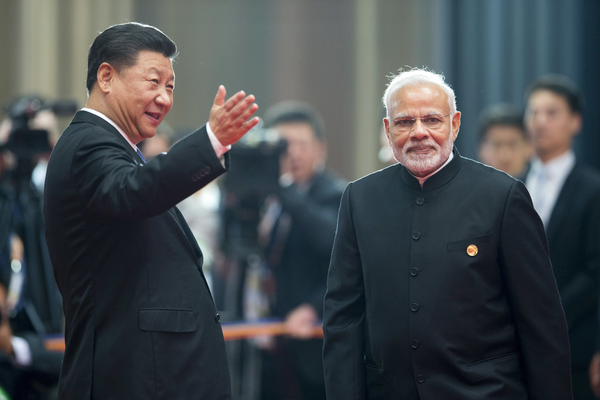
Strategic Council Online – Interview: A senior international relations analyst stated that the recent visit of Wang Yi, China’s Foreign Minister, to New Delhi is not merely a routine diplomatic meeting; rather, it represents a decisive point in the geopolitical equations of South Asia and even the new global order. After four years of tension and distrust stemming from deadly border clashes in Ladakh and Beijing’s full-throated support for Islamabad during the four-day India-Pakistan war, Beijing and New Delhi are now moving towards economic and political reconciliation under circumstances where external variables, including Trump’s tariff pressures and India’s closeness to Russia, have complicated the equation.

2025/08/26
Strategic Council Online – Interview: A senior international affairs analyst stated that the recent meeting of the foreign minister of Syria’s interim government with a delegation from the Zionist regime in Paris marks a turning point in the regional equations; an event that, beyond a simple diplomatic meeting, signifies a redefinition of strategies regarding Syria’s future. These talks, which were mediated by the United States and focused on reducing tensions in southern Syria, monitoring the ceasefire, and reactivating the 1974 agreement, clearly indicate that the Syria file can no longer be analyzed solely within the framework of an internal crisis or field conflicts. Instead, Damascus today is caught in a complex duality: on one hand, it faces the occupation of part of its territory by the Israeli regime and increasing pressures on its strategic geography, and on the other hand, it feels the necessity of utilizing diplomacy to break out of political isolation. Meanwhile, the Israeli regime seeks to consolidate its position in the region, an issue that links to the long-standing project of “Greater Israel” and efforts to dismantle the traditional structures of the Middle East.

2025/08/23
Strategic Council Online – Interview: A senior analyst on West Asian affairs stated that under the current circumstances, discussing the disarmament of the Resistance is not only unfeasible but could also lead to an escalation of tensions. Following the 12-day aggression by the United States and the Israeli regime against Iran, efforts in another layer to disarm Resistance groups, including Hezbollah, the Popular Mobilization Forces (PMF or Hashd al-Shaabi), and Hamas, have intensified as part of a coordinated project pursued to weaken the Axis of Resistance and impose American regional dominance. The U.S. proposal for Lebanon, which includes disarming Hezbollah by the end of 2025 and the withdrawal of the Israeli regime from border positions, is an attempt to transform an external conflict into an internal one. Hezbollah has firmly rejected this proposal, deeming it a violation of national sovereignty and a service to the interests of the Israeli regime, while emphasizing its defensive role. In Iraq, pressure on the Popular Mobilization Forces has been accompanied by accusations and economic sanctions, yet this group continues to stand as a popular force against external threats. Hamas, despite heavy attacks by the Israeli regime, has continued its resistance and rejected a recent ceasefire proposal in exchange for disarmament. These plans, supported by U.S. and allied diplomatic and economic backing, seek to alter the balance of power in the region. Still, the resistance of the groups and popular support have prevented the realization of these objectives.
