2025/09/11
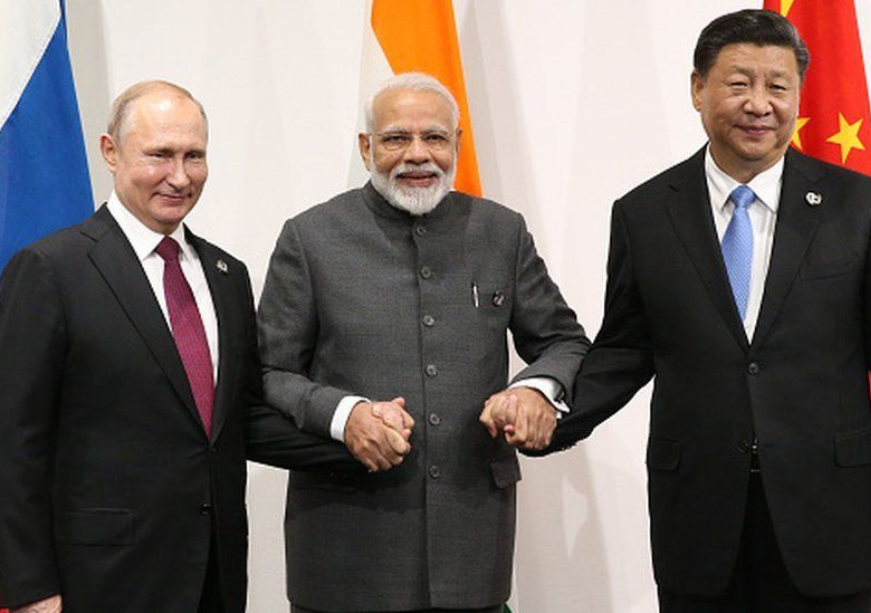
Strategic Council Online – Interview: An international affairs analyst stated that the United States’ imposition of 50% tariffs on Indian export goods has not only severely impacted the economic relations between the two countries but has also opened a new path in New Delhi’s foreign policy. While Washington has justified this move as “punishing” India for purchasing oil from Russia, the Narendra Modi government has called it unfair and emphasized the necessity of ensuring its country’s energy security. However, India’s reaction has not been limited to mere verbal statements; Modi’s visit to China and participation in the Shanghai Cooperation Organization summit can practically be assessed as a strategic pivot towards the East. Simultaneously, diplomatic exchanges among the three Asian powers have accelerated: China’s Foreign Minister visited New Delhi, his Indian counterpart went to Moscow, and Modi, in his meeting with Beijing’s leaders, sent a clear message of India’s desire for closer cooperation with Russia and China. In this context, the Indian Prime Minister’s lack of response to several phone calls from Trump suggests that New Delhi is redefining its foreign policy priorities in response to Washington’s pressure. Many analysts believe that India’s recent actions are not merely short-term reactions but rather a sign of a new balance of power forming in Asia’s equations.

2025/09/09
Strategic Council Online – Interview: A senior analyst in West Asia affairs stated that while a wave of readiness for the official recognition of the State of Palestine by some countries is forming, the upcoming UN General Assembly session has become a decisive stage for the future of the Palestinian issue. At first glance, these moves are considered an essential step towards the potential advancement of the two-state solution and pressuring the Israeli regime to halt illegal settlements and accept the political reality of Palestinian sovereignty. Belgium’s decision to impose 12 firm sanctions against the Israeli regime and recognize the State of Palestine reflects this same perspective, which seeks to open a new political path in the face of the Gaza humanitarian crisis. However, there is another view that considers this diplomatic wave merely a symbolic reaction to public opinion pressure after nearly two years of slaughter and siege in Gaza, believing that as long as the United States stands alongside the Israeli regime, these movements will not lead to the establishment of a real Palestinian state. This viewpoint holds that the expansionist policies of Tel Aviv, the idea of Greater Israel, and the support of Western powers remain the main obstacles to any real change on the ground. Therefore, the September session of the UN General Assembly is considered an important test to gauge the seriousness of the international community in moving beyond symbolism towards practical action.

2025/09/05
Strategic Council Online – Opinion: The plan recently approved by the Lebanese government regarding the disarmament of Hezbollah is, in fact, an American project and scheme, which should be analyzed and assessed within the context of the developments of the past year in Lebanon, specifically the war waged by the Israeli regime against this country. The overarching goal of presenting such a plan is to enable the Israeli regime to impose new security arrangements in Lebanon as part of its efforts to change the regional order.
2025/09/04
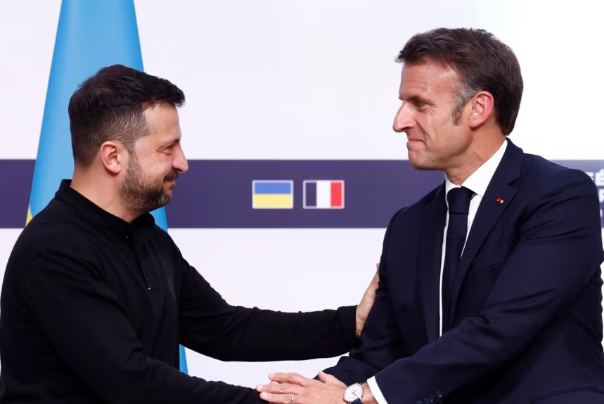
Strategic Council Online – Interview: A senior international affairs analyst stated that Europe today, more than ever, needs a unified strategy; without such a strategy, not only will peace be unachievable, but Europe itself will become the main stage for the consequences of this war.

2025/09/04
Strategic Council Online – Interview: A senior analyst on Chinese affairs stated that China’s major military drill on September 3, coinciding with the 80th anniversary of the end of World War II, is far more than a simple military event; it carries immense importance in today’s geopolitical equations. The presence of Vladimir Putin, Masoud Pezeshkian, and Kim Jong-un alongside Xi Jinping not only reflects the convergence of non-Western powers against pressure from the United States and NATO but also demonstrates Beijing’s efforts to consolidate its position as a decisive player in the global order. Among the 26 foreign leaders participating in this parade, none of the Western leaders are present except for Robert Fico, the Prime Minister of Slovakia. Also attending are Alexander Lukashenko, President of Belarus; Prabowo Subianto, President of Indonesia; Aleksandar Vučić, President of Serbia; and Woo Won-sik, Speaker of South Korea’s National Assembly. Li Junhua, Under-Secretary-General of the UN, will also be present on behalf of the organization.
This drill—considered one of the largest military maneuvers in China’s modern history—focuses on showcasing the latest defensive and offensive technologies, including hypersonic weapon systems and advanced communication networks whose capabilities could alter the balance of power in East Asia and even globally. This event is not merely a show of military force but also serves as a tool of deterrence and diplomacy. Under growing economic and diplomatic pressure, China is demonstrating through such drills that it possesses the ability to manage crises and reshape regional equations. In fact, Beijing is seizing this opportunity both to reassure its allies and to warn its rivals that East Asia is no longer under American dominance.
