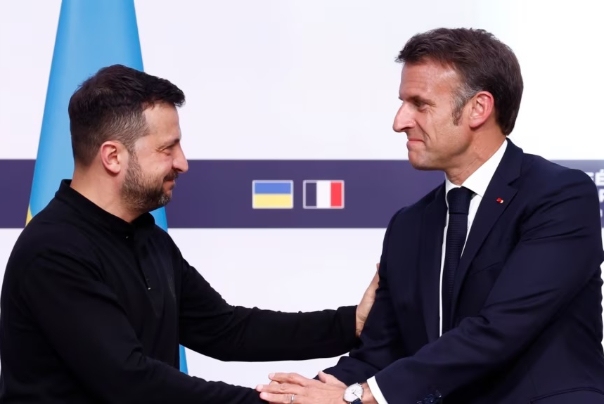
An Analysis of Macron’s Initiative to Send European Troops to Ukraine

Strategic Council Online - Interview: A senior international affairs analyst stated that Europe today, more than ever, needs a unified strategy; without such a strategy, not only will peace be unachievable, but Europe itself will become the main stage for the consequences of this war.

It has been about eight months since Donald Trump returned to the White House, a return that many believed would be a turning point in ending the Ukraine war. In his latest efforts for a “quick end to the war,” Trump attempted to pave the path to peace through two parallel channels: one, direct negotiations with Vladimir Putin in Alaska, and the other, extensive consultations with European leaders in Washington. However, it has now become clear that this equation is more complex than the U.S. president had imagined. The meeting with Putin not only failed to boost hopes for an agreement but also highlighted the difficulties of the task. The meeting with European leaders revealed that Europe is more divided and fragmented over Ukraine than ever before. Amidst this, French President Emmanuel Macron, with his initiative to send European troops to Ukraine, has fanned the flames of internal European disputes; an initiative that has been met with sharp reactions from both allies and opponents and has raised important questions for the international community regarding the fate of war or peace in Ukraine.

Macron’s Initiative: An Attempt to Lead Europe
Mohsen Jalilvand, in an interview with the website of the Strategic Council on Foreign Relations, stated: “French President Macron’s initiative to send European troops to Ukraine is not merely a military decision but is, in fact, an effort to solidify Paris’s position as the political and security leader of the Old Continent.” According to this senior international affairs analyst, “Macron has sought to play a mediating role since the very beginning of the Ukraine war in 2022, but consecutive failures in establishing a negotiation mechanism with Russia pushed him towards adopting tougher stances. Now that Trump, through his meeting with Putin and his humiliation of Europe at the Washington summit, has steered the equations in a direction where many European countries are worried about reduced Washington support for NATO and an end to the Ukraine war in Moscow’s favor, Macron sees an opportunity to become the standard-bearer of an independent European policy.”

However, Jalilvand, considering the harsh stance of Matteo Salvini, Italy’s Deputy Prime Minister and Minister of Transport, believes this initiative by Macron is not only futile but also sets the stage for intensified tension and internal European disputes, reducing the political and security weight of the Old Continent against Russia. From his perspective, “Such reactions indicate that Macron’s idea is still more divisive than consensus-building.” This analyst also notes that “Europe’s historical record shows that whenever France has tried to take over the continent’s security leadership, resistance from countries like Germany and Italy has intensified, because they fear this would disrupt Europe’s traditional balance of power.”

Europe’s Divide: From Paris-Rome Tensions to Berlin’s Concerns
According to Jalilvand, “Europe’s divisions over Ukraine are not limited to the tension between Paris and Rome or the personal rivalry between Macron and Salvini. This disagreement stems from countries’ different perceptions of the Russian threat and how to engage with the United States. Germany, although it appears to agree with the principle of strengthening European defense capabilities, is skeptical about directly deploying troops to Ukraine and prefers to act indirectly through diplomacy and providing financial and military aid to Ukraine. Of course, Eastern European countries like Poland and the Baltic states have welcomed Macron’s idea, as they see Russia as an existential threat. In contrast, Italy, Spain, and even a segment of French public opinion oppose this policy.”

The international affairs analyst explains that “the recent meeting of European leaders with Trump at the White House not only failed to reduce these divisions but made them more apparent. Trump had bluntly stated that ‘providing security guarantees for the Ukraine war is not America’s responsibility’ and would only be willing to provide extensive support if European countries pay more. Such a stance made Berlin and Rome more cautious, while Paris became more adventurous. As a result, rather than having a unified policy towards Ukraine, Europe is now facing several conflicting approaches.”

Continuation of the War of Attrition in Ukraine
In Jalilvand’s view, the most important consequence of these disagreements is the continuation of the war of attrition in Ukraine. He says: “On one hand, Macron is trying to change the war’s equation with his troop deployment initiative, but the lack of European consensus and American opposition to this move means this plan will practically not come to fruition. On the other hand, Trump, who initially promised a quick end to the war, has now, after meeting Putin in Alaska, realized that the Kremlin is not willing to make any serious concessions and that Moscow’s conditions are far apart from the demands of Kyiv and the West.”

Under such circumstances, this expert believes that “the war will not only not end but will continue as a war of attrition.” Jalilvand emphasizes that “a prolonged war will be most detrimental to Europe. Because Europe is facing an energy crisis, economic pressures, and a new wave of refugees, and internal divisions among governments and even the public are deepening.” He adds that “Russia, relying on its military capabilities and indirect support, has been able to manage the costs, and this has contributed to the continuation of the battle, while the Putin-Trump meeting in Alaska has increased the Kremlin’s diplomatic weight.”

The Unclear Prospect of Peace in Ukraine
Jalilvand, summing up his analysis, states that “the short-term outlook for the Ukraine war is not very clear. Although Macron’s initiative could exert psychological pressure on Russia, in practice, it lacks executive backing without the support of Germany, Italy, and other European powers. On the other hand, Trump, who had sought to end the war with a ‘big land-for-peace deal,’ now finds himself in a different diplomatic space following the Alaska meeting. He can neither force Putin to retreat nor bring the Europeans together around a unified policy.”

According to this analyst, “The future of the Ukraine war depends on several factors: the extent to which European divisions persist, Trump’s ability to exert economic and political pressure on Russia, and Ukraine’s domestic resilience. However, given current trends, the war will likely continue into 2025, and rather than witnessing peace, we should expect the crisis to drag on into subsequent years.” He says: “Europe today more than ever needs a unified strategy; without such a strategy, not only will peace not be achieved, but Europe itself will become the main stage affected by the consequences of this war.”

Mohsen Jalilvand believes that Macron’s initiative to send troops to Ukraine, although from Paris’s perspective is an action towards European leadership and independence, has in reality become a symbol of the continent’s internal divisions. The rift between Paris, Rome, and Berlin, coupled with Trump’s ambiguous approach, has practically dimmed any hope for a quick end to the Ukraine war. For this reason, the future outlook is not one of lasting peace but rather the continuation of a war of attrition that will ensnare Europe, more than anyone else, in its political, economic, and security consequences.


0 Comments

LATEST CONTENT

Europe’s Enduring Dependence on Persian Gulf Energy

SCFR Online – Opinion: The dominant discourse in the field of European energy security over the past two decades has revolved around diversification of supply sources and the gradual reduction of dependence on fossil fuels. This narrative, which gained particular momentum after the Ukraine gas crisis in 2006 and its intensification in 2014 and 2022, was based on the assumption that Europe could free itself from the geopolitical vulnerabilities arising from dependence on specific suppliers through investment in renewable energy, imports of liquefied natural gas from diversified sources, and the establishment of new infrastructure. However, a closer analysis of energy trade data and the structure of the global oil and gas supply chain presents a different picture. Europe has not only failed to meaningfully reduce its dependence on the Persian Gulf, but in some sectors — particularly in liquefied natural gas imports — this dependence has deepened. This reality, which is often overlooked in public discourse, raises fundamental questions about the sustainability of Europe’s energy security strategies and their impact on regional power equations.

The Challenge of Hezbollah’s Low-Cost “FPV” Drones for the Zionist Regime

SCFR Online – Opinion: In modern warfare, it has always been assumed that the more expensive, and advanced the weapon—particularly from well-known companies—the more certain the victory will be. However, developments on the northern front of occupied Palestine in recent months have challenged this long-held belief. Here, the Zionist regime’s military, despite possessing the most advanced defense systems such as Iron Dome, David’s Sling, and Arrow, as well as fifth-generation F-35 fighter jets, Merkava tanks, and other modern equipment found in few countries worldwide, has effectively been rendered helpless against Hezbollah Lebanon’s few-hundred-dollar drones. Benjamin Netanyahu’s bitter admission regarding the inability to counter this threat, and his order to allocate an unlimited budget to find a solution, underscores the reality that the era of pure superiority through expensive technologies has come to an end.

The Impact of West Asian Developments on the Ukraine War

SCFR Online – Note: Vladimir Putin, President of Russia, recently announced—more than four years after the commencement of military aggression against Ukraine—that he believes the conflict between Russia and Ukraine is drawing to a close.

Temporary China–U.S. Trade Truce in the Shadow of Fundamental Distrust

SCFR Online – Opinion: The recent visit of the President of the United States to China is significant from various aspects; because China is recognized as the world’s second-largest economic power and a growing economy. The Chinese are also advancing in various fields, including the space sector, artificial intelligence, and military industries; to the extent that in the military sector, whereas they previously lacked an aircraft carrier, they now possess their third aircraft carrier. On the other hand, the United States, as a superpower, has always regarded China as its rival and continues to view it as such today.

Loading

Últimas publicaciones

Europe’s Enduring Dependence on Persian Gulf Energy

SCFR Online – Opinion: The dominant discourse in the field of European energy security over the past two decades has revolved around diversification of supply sources and the gradual reduction of dependence on fossil fuels. This narrative, which gained particular momentum after the Ukraine gas crisis in 2006 and its intensification in 2014 and 2022, was based on the assumption that Europe could free itself from the geopolitical vulnerabilities arising from dependence on specific suppliers through investment in renewable energy, imports of liquefied natural gas from diversified sources, and the establishment of new infrastructure. However, a closer analysis of energy trade data and the structure of the global oil and gas supply chain presents a different picture. Europe has not only failed to meaningfully reduce its dependence on the Persian Gulf, but in some sectors — particularly in liquefied natural gas imports — this dependence has deepened. This reality, which is often overlooked in public discourse, raises fundamental questions about the sustainability of Europe’s energy security strategies and their impact on regional power equations.

The Challenge of Hezbollah’s Low-Cost “FPV” Drones for the Zionist Regime

SCFR Online – Opinion: In modern warfare, it has always been assumed that the more expensive, and advanced the weapon—particularly from well-known companies—the more certain the victory will be. However, developments on the northern front of occupied Palestine in recent months have challenged this long-held belief. Here, the Zionist regime’s military, despite possessing the most advanced defense systems such as Iron Dome, David’s Sling, and Arrow, as well as fifth-generation F-35 fighter jets, Merkava tanks, and other modern equipment found in few countries worldwide, has effectively been rendered helpless against Hezbollah Lebanon’s few-hundred-dollar drones. Benjamin Netanyahu’s bitter admission regarding the inability to counter this threat, and his order to allocate an unlimited budget to find a solution, underscores the reality that the era of pure superiority through expensive technologies has come to an end.

The Impact of West Asian Developments on the Ukraine War

SCFR Online – Note: Vladimir Putin, President of Russia, recently announced—more than four years after the commencement of military aggression against Ukraine—that he believes the conflict between Russia and Ukraine is drawing to a close.

Temporary China–U.S. Trade Truce in the Shadow of Fundamental Distrust

SCFR Online – Opinion: The recent visit of the President of the United States to China is significant from various aspects; because China is recognized as the world’s second-largest economic power and a growing economy. The Chinese are also advancing in various fields, including the space sector, artificial intelligence, and military industries; to the extent that in the military sector, whereas they previously lacked an aircraft carrier, they now possess their third aircraft carrier. On the other hand, the United States, as a superpower, has always regarded China as its rival and continues to view it as such today.

Loading

DERNIER CONTENU

Europe’s Enduring Dependence on Persian Gulf Energy

SCFR Online – Opinion: The dominant discourse in the field of European energy security over the past two decades has revolved around diversification of supply sources and the gradual reduction of dependence on fossil fuels. This narrative, which gained particular momentum after the Ukraine gas crisis in 2006 and its intensification in 2014 and 2022, was based on the assumption that Europe could free itself from the geopolitical vulnerabilities arising from dependence on specific suppliers through investment in renewable energy, imports of liquefied natural gas from diversified sources, and the establishment of new infrastructure. However, a closer analysis of energy trade data and the structure of the global oil and gas supply chain presents a different picture. Europe has not only failed to meaningfully reduce its dependence on the Persian Gulf, but in some sectors — particularly in liquefied natural gas imports — this dependence has deepened. This reality, which is often overlooked in public discourse, raises fundamental questions about the sustainability of Europe’s energy security strategies and their impact on regional power equations.

The Challenge of Hezbollah’s Low-Cost “FPV” Drones for the Zionist Regime

SCFR Online – Opinion: In modern warfare, it has always been assumed that the more expensive, and advanced the weapon—particularly from well-known companies—the more certain the victory will be. However, developments on the northern front of occupied Palestine in recent months have challenged this long-held belief. Here, the Zionist regime’s military, despite possessing the most advanced defense systems such as Iron Dome, David’s Sling, and Arrow, as well as fifth-generation F-35 fighter jets, Merkava tanks, and other modern equipment found in few countries worldwide, has effectively been rendered helpless against Hezbollah Lebanon’s few-hundred-dollar drones. Benjamin Netanyahu’s bitter admission regarding the inability to counter this threat, and his order to allocate an unlimited budget to find a solution, underscores the reality that the era of pure superiority through expensive technologies has come to an end.

The Impact of West Asian Developments on the Ukraine War

SCFR Online – Note: Vladimir Putin, President of Russia, recently announced—more than four years after the commencement of military aggression against Ukraine—that he believes the conflict between Russia and Ukraine is drawing to a close.

Temporary China–U.S. Trade Truce in the Shadow of Fundamental Distrust

SCFR Online – Opinion: The recent visit of the President of the United States to China is significant from various aspects; because China is recognized as the world’s second-largest economic power and a growing economy. The Chinese are also advancing in various fields, including the space sector, artificial intelligence, and military industries; to the extent that in the military sector, whereas they previously lacked an aircraft carrier, they now possess their third aircraft carrier. On the other hand, the United States, as a superpower, has always regarded China as its rival and continues to view it as such today.

Loading

DERNIER CONTENU

Europe’s Enduring Dependence on Persian Gulf Energy

SCFR Online – Opinion: The dominant discourse in the field of European energy security over the past two decades has revolved around diversification of supply sources and the gradual reduction of dependence on fossil fuels. This narrative, which gained particular momentum after the Ukraine gas crisis in 2006 and its intensification in 2014 and 2022, was based on the assumption that Europe could free itself from the geopolitical vulnerabilities arising from dependence on specific suppliers through investment in renewable energy, imports of liquefied natural gas from diversified sources, and the establishment of new infrastructure. However, a closer analysis of energy trade data and the structure of the global oil and gas supply chain presents a different picture. Europe has not only failed to meaningfully reduce its dependence on the Persian Gulf, but in some sectors — particularly in liquefied natural gas imports — this dependence has deepened. This reality, which is often overlooked in public discourse, raises fundamental questions about the sustainability of Europe’s energy security strategies and their impact on regional power equations.

The Challenge of Hezbollah’s Low-Cost “FPV” Drones for the Zionist Regime

SCFR Online – Opinion: In modern warfare, it has always been assumed that the more expensive, and advanced the weapon—particularly from well-known companies—the more certain the victory will be. However, developments on the northern front of occupied Palestine in recent months have challenged this long-held belief. Here, the Zionist regime’s military, despite possessing the most advanced defense systems such as Iron Dome, David’s Sling, and Arrow, as well as fifth-generation F-35 fighter jets, Merkava tanks, and other modern equipment found in few countries worldwide, has effectively been rendered helpless against Hezbollah Lebanon’s few-hundred-dollar drones. Benjamin Netanyahu’s bitter admission regarding the inability to counter this threat, and his order to allocate an unlimited budget to find a solution, underscores the reality that the era of pure superiority through expensive technologies has come to an end.

The Impact of West Asian Developments on the Ukraine War

SCFR Online – Note: Vladimir Putin, President of Russia, recently announced—more than four years after the commencement of military aggression against Ukraine—that he believes the conflict between Russia and Ukraine is drawing to a close.

Temporary China–U.S. Trade Truce in the Shadow of Fundamental Distrust

SCFR Online – Opinion: The recent visit of the President of the United States to China is significant from various aspects; because China is recognized as the world’s second-largest economic power and a growing economy. The Chinese are also advancing in various fields, including the space sector, artificial intelligence, and military industries; to the extent that in the military sector, whereas they previously lacked an aircraft carrier, they now possess their third aircraft carrier. On the other hand, the United States, as a superpower, has always regarded China as its rival and continues to view it as such today.

Loading

DERNIER CONTENU

Europe’s Enduring Dependence on Persian Gulf Energy

SCFR Online – Opinion: The dominant discourse in the field of European energy security over the past two decades has revolved around diversification of supply sources and the gradual reduction of dependence on fossil fuels. This narrative, which gained particular momentum after the Ukraine gas crisis in 2006 and its intensification in 2014 and 2022, was based on the assumption that Europe could free itself from the geopolitical vulnerabilities arising from dependence on specific suppliers through investment in renewable energy, imports of liquefied natural gas from diversified sources, and the establishment of new infrastructure. However, a closer analysis of energy trade data and the structure of the global oil and gas supply chain presents a different picture. Europe has not only failed to meaningfully reduce its dependence on the Persian Gulf, but in some sectors — particularly in liquefied natural gas imports — this dependence has deepened. This reality, which is often overlooked in public discourse, raises fundamental questions about the sustainability of Europe’s energy security strategies and their impact on regional power equations.

The Challenge of Hezbollah’s Low-Cost “FPV” Drones for the Zionist Regime

SCFR Online – Opinion: In modern warfare, it has always been assumed that the more expensive, and advanced the weapon—particularly from well-known companies—the more certain the victory will be. However, developments on the northern front of occupied Palestine in recent months have challenged this long-held belief. Here, the Zionist regime’s military, despite possessing the most advanced defense systems such as Iron Dome, David’s Sling, and Arrow, as well as fifth-generation F-35 fighter jets, Merkava tanks, and other modern equipment found in few countries worldwide, has effectively been rendered helpless against Hezbollah Lebanon’s few-hundred-dollar drones. Benjamin Netanyahu’s bitter admission regarding the inability to counter this threat, and his order to allocate an unlimited budget to find a solution, underscores the reality that the era of pure superiority through expensive technologies has come to an end.

The Impact of West Asian Developments on the Ukraine War

SCFR Online – Note: Vladimir Putin, President of Russia, recently announced—more than four years after the commencement of military aggression against Ukraine—that he believes the conflict between Russia and Ukraine is drawing to a close.

Temporary China–U.S. Trade Truce in the Shadow of Fundamental Distrust

SCFR Online – Opinion: The recent visit of the President of the United States to China is significant from various aspects; because China is recognized as the world’s second-largest economic power and a growing economy. The Chinese are also advancing in various fields, including the space sector, artificial intelligence, and military industries; to the extent that in the military sector, whereas they previously lacked an aircraft carrier, they now possess their third aircraft carrier. On the other hand, the United States, as a superpower, has always regarded China as its rival and continues to view it as such today.

Loading



