New China-India Engagement: Formation of a New Strategy in Asia

2025/08/30 | interview, Politics, Top News

Strategic Council Online – Interview: A senior international relations analyst stated that the recent visit of Wang Yi, China's Foreign Minister, to New Delhi is not merely a routine diplomatic meeting; rather, it represents a decisive point in the geopolitical equations of South Asia and even the new global order. After four years of tension and distrust stemming from deadly border clashes in Ladakh and Beijing's full-throated support for Islamabad during the four-day India-Pakistan war, Beijing and New Delhi are now moving towards economic and political reconciliation under circumstances where external variables, including Trump's tariff pressures and India's closeness to Russia, have complicated the equation.

From Ladakh to Delhi: Moving Beyond a Bloody Past
Ali Bigdeli, in an interview with the website of the Strategic Council on Foreign Relations, stated: “The 2020 border incident in the Galwan Valley was a negative turning point in the relations between the two countries. The death of soldiers in the Himalayan heights caused public sentiment in India to flare up against China, and relations hit their lowest point. Furthermore, China’s overt and full-scale diplomatic and military support for Pakistan in the recent conflict with India added to old wounds in Beijing-Delhi relations. However, geopolitical realities have now forced both sides to reconsider.”

According to him, “The visit of China’s Foreign Minister Wang Yi to India and his intensive meetings with Subrahmanyam Jaishankar, India’s Minister of External Affairs, and Ajit Doval, National Security Advisor of the Indian government, are signs of the two Asian powers’ desire to move beyond the past.” Bigdeli believes that “the revival of talks on border trade, the resumption of direct flights, and tourism agreements, although seemingly symbolic, are meaningful in diplomacy. These measures indicate that both sides intend to heal the wounds of Ladakh and pave the way for broader cooperation.”

Pressures from Washington and Delhi’s Pivot
According to Bigdeli, a significant part of this rapprochement stems from pressure from Washington. He explains: “The U.S. imposition of a 50% tariff on India under the pretext of buying oil from Russia was, in fact, the biggest economic shock for Delhi in recent years. Trump expected India to reduce its relations with Russia, but the result was quite the opposite.”

According to this international affairs expert, “Sanctions and tariffs have practically pushed India towards Moscow and Beijing. When India sees that the U.S. is willing to impose such heavy penalties for buying oil from Russia, it is natural for it to move towards diversifying its partners. In this regard, China, with its massive economic capacity and key role in BRICS, is the most attractive option for Delhi.” Bigdeli describes this shift as a “strategic pivot by India,” the consequences of which would transform the balance of power in Asia.

Economy: A Determining Factor in the New Strategy
Bigdeli then addresses the economic dimension of the bilateral relations and notes that “China is India’s second-largest trading partner, and the volume of raw material and industrial imports from Beijing is critical for the development of India’s infrastructure. In return, China also needs India’s vast market for exports and investment.”

Referring to potential joint projects, including the collaboration of the Adani Group with Chinese automaker BYD to produce batteries in India, this university professor emphasizes that “this type of cooperation shows that the reconciliation is not merely symbolic; rather, it is an economic necessity.”

Bigdeli believes that “after experiencing the trade war with the U.S., both countries realized that over-reliance on the West can create vulnerability. Consequently, they are moving towards building a new economic bloc that, within the framework of BRICS or the Shanghai Cooperation Organization, could become a serious challenge to the Western-led economic system.”

Geopolitical Consequences of the New Asian Order
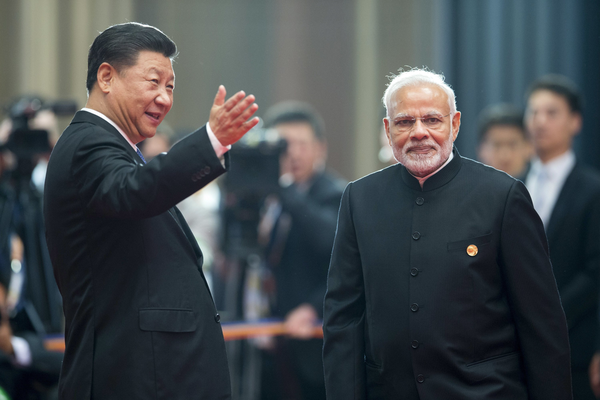
Bigdeli said: “If Narendra Modi’s visit to China materializes at the end of August, it will be a historic turning point, because for the first time in years, the leaders of India and China will meet in a different atmosphere and under conditions of crisis with the U.S.”

In his opinion, “This process could lead to the creation of a new China-India-Russia axis, which has the capacity to alter the balance of power in Asia, both in the realm of energy and trade and in the security sphere. India’s closeness to China, even if tactical, is a serious warning to Washington and its allies that relying solely on Delhi as a balancing weight against Beijing is no longer dependable.” This expert warns that “Asia is facing the gradual formation of a multipolar order. The closeness of China and India could weaken U.S. initiatives in the region and, at the same time, give Russia more room to maneuver in the Ukraine crisis and its interactions with the West. Therefore, these developments are not merely a bilateral reconciliation but are initiating a larger transformation in the global power structure.”

Ali Bigdeli concludes that “The visit of China’s Foreign Minister Wang Yi and the potential visit of Indian Prime Minister Modi to China should be seen as going beyond the level of bilateral relationship repair. These developments are a sign of geopolitical rearrangement in the Asian continent, where U.S. pressures, economic interests, and security necessities are driving two long-time rivals towards cooperation. The consequences of this process will be significant not only for South Asia but also for the future global order.”


0 Comments

LATEST CONTENT

China’s Rejection of US Sanctions; Strengthening Iran’s Geopolitical Leverage

SCFR Online – Opinion: Concurrent with the official commencement of the United States’ economic war against our country, focusing on sanctions instruments, isolation, and economic pressure, what has now become increasingly important is the lack of alignment of other major global powers, especially China, with this policy.

The Makkah Pact; Reasons for its Formation and Challenges Ahead

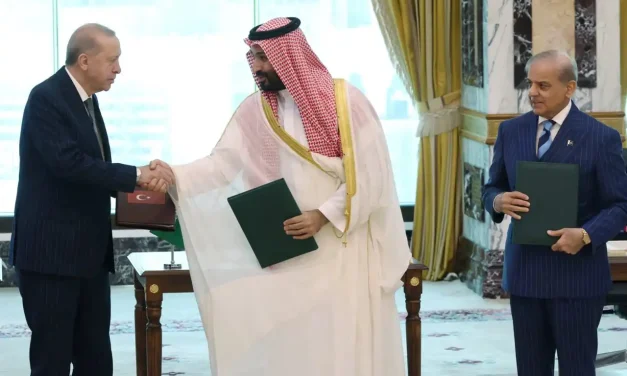
SCFR Online – Opinion: The Makkah Pact, signed between Saudi Arabia, Pakistan, and Turkey under the motto “an attack on one is an attack on all,” is viewed by some analysts less as a full-fledged military coalition and more as an attempt to reduce security dependence on an external power and to establish a regional security mechanism.

Implications of the US-Saudi Nuclear Agreement

SCFR Online – Opinion: The new US-Saudi nuclear agreement, despite legal and political ambiguities, could alter previous non-proliferation standards in West Asia and intensify nuclear competition, ushering it into a new phase.

An Analysis of Recent Turkey-Israeli Regime Tensions

SCFR Online – Opinion: Recent developments in Syria indicate an intensification of strategic rivalry between Turkey and the Israeli regime, but mutual considerations and the role of the United States have limited the likelihood of direct war.

Loading

Últimas publicaciones

China’s Rejection of US Sanctions; Strengthening Iran’s Geopolitical Leverage

SCFR Online – Opinion: Concurrent with the official commencement of the United States’ economic war against our country, focusing on sanctions instruments, isolation, and economic pressure, what has now become increasingly important is the lack of alignment of other major global powers, especially China, with this policy.

The Makkah Pact; Reasons for its Formation and Challenges Ahead

SCFR Online – Opinion: The Makkah Pact, signed between Saudi Arabia, Pakistan, and Turkey under the motto “an attack on one is an attack on all,” is viewed by some analysts less as a full-fledged military coalition and more as an attempt to reduce security dependence on an external power and to establish a regional security mechanism.

Implications of the US-Saudi Nuclear Agreement

SCFR Online – Opinion: The new US-Saudi nuclear agreement, despite legal and political ambiguities, could alter previous non-proliferation standards in West Asia and intensify nuclear competition, ushering it into a new phase.

An Analysis of Recent Turkey-Israeli Regime Tensions

SCFR Online – Opinion: Recent developments in Syria indicate an intensification of strategic rivalry between Turkey and the Israeli regime, but mutual considerations and the role of the United States have limited the likelihood of direct war.

Loading

DERNIER CONTENU

China’s Rejection of US Sanctions; Strengthening Iran’s Geopolitical Leverage

SCFR Online – Opinion: Concurrent with the official commencement of the United States’ economic war against our country, focusing on sanctions instruments, isolation, and economic pressure, what has now become increasingly important is the lack of alignment of other major global powers, especially China, with this policy.

The Makkah Pact; Reasons for its Formation and Challenges Ahead

SCFR Online – Opinion: The Makkah Pact, signed between Saudi Arabia, Pakistan, and Turkey under the motto “an attack on one is an attack on all,” is viewed by some analysts less as a full-fledged military coalition and more as an attempt to reduce security dependence on an external power and to establish a regional security mechanism.

Implications of the US-Saudi Nuclear Agreement

SCFR Online – Opinion: The new US-Saudi nuclear agreement, despite legal and political ambiguities, could alter previous non-proliferation standards in West Asia and intensify nuclear competition, ushering it into a new phase.

An Analysis of Recent Turkey-Israeli Regime Tensions

SCFR Online – Opinion: Recent developments in Syria indicate an intensification of strategic rivalry between Turkey and the Israeli regime, but mutual considerations and the role of the United States have limited the likelihood of direct war.

Loading

DERNIER CONTENU

China’s Rejection of US Sanctions; Strengthening Iran’s Geopolitical Leverage

SCFR Online – Opinion: Concurrent with the official commencement of the United States’ economic war against our country, focusing on sanctions instruments, isolation, and economic pressure, what has now become increasingly important is the lack of alignment of other major global powers, especially China, with this policy.

The Makkah Pact; Reasons for its Formation and Challenges Ahead

SCFR Online – Opinion: The Makkah Pact, signed between Saudi Arabia, Pakistan, and Turkey under the motto “an attack on one is an attack on all,” is viewed by some analysts less as a full-fledged military coalition and more as an attempt to reduce security dependence on an external power and to establish a regional security mechanism.

Implications of the US-Saudi Nuclear Agreement

SCFR Online – Opinion: The new US-Saudi nuclear agreement, despite legal and political ambiguities, could alter previous non-proliferation standards in West Asia and intensify nuclear competition, ushering it into a new phase.

An Analysis of Recent Turkey-Israeli Regime Tensions

SCFR Online – Opinion: Recent developments in Syria indicate an intensification of strategic rivalry between Turkey and the Israeli regime, but mutual considerations and the role of the United States have limited the likelihood of direct war.

Loading

DERNIER CONTENU

China’s Rejection of US Sanctions; Strengthening Iran’s Geopolitical Leverage

SCFR Online – Opinion: Concurrent with the official commencement of the United States’ economic war against our country, focusing on sanctions instruments, isolation, and economic pressure, what has now become increasingly important is the lack of alignment of other major global powers, especially China, with this policy.

The Makkah Pact; Reasons for its Formation and Challenges Ahead

SCFR Online – Opinion: The Makkah Pact, signed between Saudi Arabia, Pakistan, and Turkey under the motto “an attack on one is an attack on all,” is viewed by some analysts less as a full-fledged military coalition and more as an attempt to reduce security dependence on an external power and to establish a regional security mechanism.

Implications of the US-Saudi Nuclear Agreement

SCFR Online – Opinion: The new US-Saudi nuclear agreement, despite legal and political ambiguities, could alter previous non-proliferation standards in West Asia and intensify nuclear competition, ushering it into a new phase.

An Analysis of Recent Turkey-Israeli Regime Tensions

SCFR Online – Opinion: Recent developments in Syria indicate an intensification of strategic rivalry between Turkey and the Israeli regime, but mutual considerations and the role of the United States have limited the likelihood of direct war.

Loading