جدیدترین مطالب

The war of narratives; a tool for geopolitical competition

Strategic Council Online – Note: In today’s global politics, the creation of narratives has become as important as territorial control and economic management, and has turned into the main tool of great power competition.

Analysis of the Recognition of the Armenian Genocide by the Zionist Regime

SCFR Online – Opinion: At a time when the West Asia region, particularly in recent months, has been undergoing the most complex political and security developments of the past half-century, the sudden decision by the cabinet of the Zionist regime to recognize the Armenian genocide committed by Turkey, which has faced strong condemnation and opposition from Ankara and Baku, raises questions.

Loading

Belt and Road Initiative

The United States Strategy toward the Strait of Hormuz in Confrontation with China’s Interests

The United States Strategy toward the Strait of Hormuz in Confrontation with China’s Interests

Strategic Council Online – Opinion: In the strategic geography of the global economy, certain regions attain such significance that they effectively become determining factors of the international order. The Strait of Hormuz is among these points; a narrow yet vital passage through which a considerable portion of the world’s energy transits, and whose stability is directly intertwined with the interests and economic security of many countries. However, the importance of the Strait of Hormuz is not limited solely to the volume of energy passing through it. This strait is also a stage upon which the limitations and challenges of great power politics are revealed. From China’s perspective, the policy of the United States regarding the security of this strategic chokepoint, rather than reflecting a stable order, demonstrates a set of contradictions and strategic difficulties that Washington faces in managing the regional order.

China’s Port Cluster and the Silk Road

China’s Port Cluster and the Silk Road

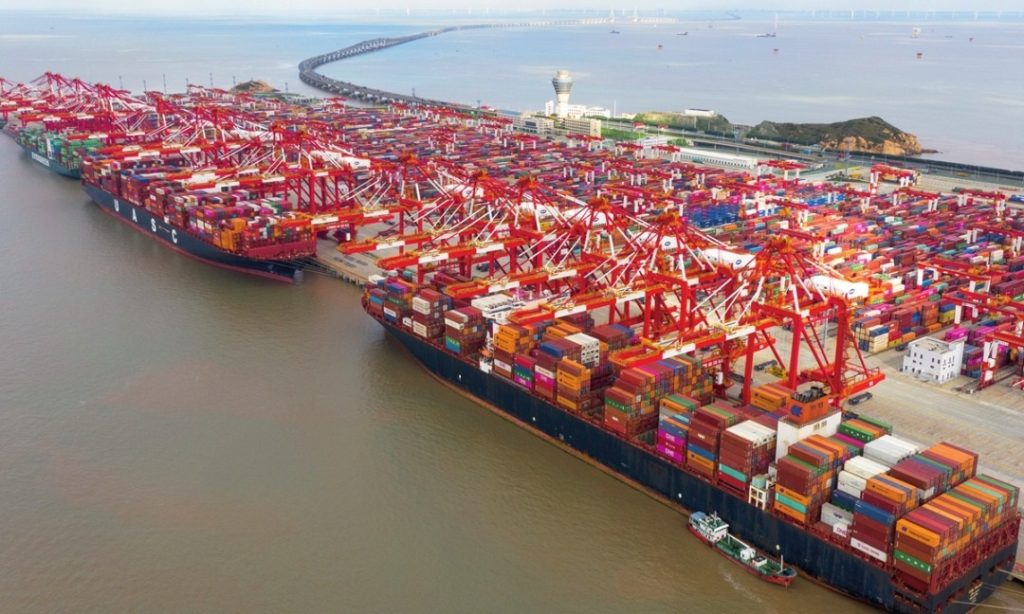
Strategic Council Online – Opinion: China’s New Silk Road Initiative is not just about land; some of it is also maritime. In fact, China is completing a cluster of ports across the globe, from Asia to Europe, Africa, and Latin America, enabling the export and import of vital goods and resources.

Saudi Oil Step in the Corridor of De-Dollarization

Saudi Oil Step in the Corridor of De-Dollarization

Strategic Council Online – Opinion: On June 9, Saudi Arabia’s oil agreement with the United States expired. Saudi Crown Prince Mohammed bin Salman announced that Riyadh would not renew the 75-year-old contract that helped maintain the hegemony of the US dollar in international trade. This action allows Riyadh to sell oil in different currencies, including yuan, euro, yen, etc., instead of the US dollar.

أحدث الوظائف

The war of narratives; a tool for geopolitical competition

Strategic Council Online – Note: In today’s global politics, the creation of narratives has become as important as territorial control and economic management, and has turned into the main tool of great power competition.

Analysis of the Recognition of the Armenian Genocide by the Zionist Regime

SCFR Online – Opinion: At a time when the West Asia region, particularly in recent months, has been undergoing the most complex political and security developments of the past half-century, the sudden decision by the cabinet of the Zionist regime to recognize the Armenian genocide committed by Turkey, which has faced strong condemnation and opposition from Ankara and Baku, raises questions.

Loading

Belt and Road Initiative

The United States Strategy toward the Strait of Hormuz in Confrontation with China’s Interests

The United States Strategy toward the Strait of Hormuz in Confrontation with China’s Interests

Strategic Council Online – Opinion: In the strategic geography of the global economy, certain regions attain such significance that they effectively become determining factors of the international order. The Strait of Hormuz is among these points; a narrow yet vital passage through which a considerable portion of the world’s energy transits, and whose stability is directly intertwined with the interests and economic security of many countries. However, the importance of the Strait of Hormuz is not limited solely to the volume of energy passing through it. This strait is also a stage upon which the limitations and challenges of great power politics are revealed. From China’s perspective, the policy of the United States regarding the security of this strategic chokepoint, rather than reflecting a stable order, demonstrates a set of contradictions and strategic difficulties that Washington faces in managing the regional order.

China’s Port Cluster and the Silk Road

China’s Port Cluster and the Silk Road

Strategic Council Online – Opinion: China’s New Silk Road Initiative is not just about land; some of it is also maritime. In fact, China is completing a cluster of ports across the globe, from Asia to Europe, Africa, and Latin America, enabling the export and import of vital goods and resources.

Saudi Oil Step in the Corridor of De-Dollarization

Saudi Oil Step in the Corridor of De-Dollarization

Strategic Council Online – Opinion: On June 9, Saudi Arabia’s oil agreement with the United States expired. Saudi Crown Prince Mohammed bin Salman announced that Riyadh would not renew the 75-year-old contract that helped maintain the hegemony of the US dollar in international trade. This action allows Riyadh to sell oil in different currencies, including yuan, euro, yen, etc., instead of the US dollar.

Belt and Road Initiative

The United States Strategy toward the Strait of Hormuz in Confrontation with China’s Interests

The United States Strategy toward the Strait of Hormuz in Confrontation with China’s Interests

Strategic Council Online – Opinion: In the strategic geography of the global economy, certain regions attain such significance that they effectively become determining factors of the international order. The Strait of Hormuz is among these points; a narrow yet vital passage through which a considerable portion of the world’s energy transits, and whose stability is directly intertwined with the interests and economic security of many countries. However, the importance of the Strait of Hormuz is not limited solely to the volume of energy passing through it. This strait is also a stage upon which the limitations and challenges of great power politics are revealed. From China’s perspective, the policy of the United States regarding the security of this strategic chokepoint, rather than reflecting a stable order, demonstrates a set of contradictions and strategic difficulties that Washington faces in managing the regional order.

China’s Port Cluster and the Silk Road

China’s Port Cluster and the Silk Road

Strategic Council Online – Opinion: China’s New Silk Road Initiative is not just about land; some of it is also maritime. In fact, China is completing a cluster of ports across the globe, from Asia to Europe, Africa, and Latin America, enabling the export and import of vital goods and resources.

Saudi Oil Step in the Corridor of De-Dollarization

Saudi Oil Step in the Corridor of De-Dollarization

Strategic Council Online – Opinion: On June 9, Saudi Arabia’s oil agreement with the United States expired. Saudi Crown Prince Mohammed bin Salman announced that Riyadh would not renew the 75-year-old contract that helped maintain the hegemony of the US dollar in international trade. This action allows Riyadh to sell oil in different currencies, including yuan, euro, yen, etc., instead of the US dollar.

LATEST CONTENT

The war of narratives; a tool for geopolitical competition

Strategic Council Online – Note: In today’s global politics, the creation of narratives has become as important as territorial control and economic management, and has turned into the main tool of great power competition.

Analysis of the Recognition of the Armenian Genocide by the Zionist Regime

SCFR Online – Opinion: At a time when the West Asia region, particularly in recent months, has been undergoing the most complex political and security developments of the past half-century, the sudden decision by the cabinet of the Zionist regime to recognize the Armenian genocide committed by Turkey, which has faced strong condemnation and opposition from Ankara and Baku, raises questions.

Loading

Belt and Road Initiative

The United States Strategy toward the Strait of Hormuz in Confrontation with China’s Interests

The United States Strategy toward the Strait of Hormuz in Confrontation with China’s Interests

Strategic Council Online – Opinion: In the strategic geography of the global economy, certain regions attain such significance that they effectively become determining factors of the international order. The Strait of Hormuz is among these points; a narrow yet vital passage through which a considerable portion of the world’s energy transits, and whose stability is directly intertwined with the interests and economic security of many countries. However, the importance of the Strait of Hormuz is not limited solely to the volume of energy passing through it. This strait is also a stage upon which the limitations and challenges of great power politics are revealed. From China’s perspective, the policy of the United States regarding the security of this strategic chokepoint, rather than reflecting a stable order, demonstrates a set of contradictions and strategic difficulties that Washington faces in managing the regional order.

China’s Port Cluster and the Silk Road

China’s Port Cluster and the Silk Road

Strategic Council Online – Opinion: China’s New Silk Road Initiative is not just about land; some of it is also maritime. In fact, China is completing a cluster of ports across the globe, from Asia to Europe, Africa, and Latin America, enabling the export and import of vital goods and resources.

Saudi Oil Step in the Corridor of De-Dollarization

Saudi Oil Step in the Corridor of De-Dollarization

Strategic Council Online – Opinion: On June 9, Saudi Arabia’s oil agreement with the United States expired. Saudi Crown Prince Mohammed bin Salman announced that Riyadh would not renew the 75-year-old contract that helped maintain the hegemony of the US dollar in international trade. This action allows Riyadh to sell oil in different currencies, including yuan, euro, yen, etc., instead of the US dollar.

ÚLTIMAS PUBLICACIONES

The war of narratives; a tool for geopolitical competition

Strategic Council Online – Note: In today’s global politics, the creation of narratives has become as important as territorial control and economic management, and has turned into the main tool of great power competition.

Analysis of the Recognition of the Armenian Genocide by the Zionist Regime

SCFR Online – Opinion: At a time when the West Asia region, particularly in recent months, has been undergoing the most complex political and security developments of the past half-century, the sudden decision by the cabinet of the Zionist regime to recognize the Armenian genocide committed by Turkey, which has faced strong condemnation and opposition from Ankara and Baku, raises questions.

Loading

Belt and Road Initiative

The United States Strategy toward the Strait of Hormuz in Confrontation with China’s Interests

The United States Strategy toward the Strait of Hormuz in Confrontation with China’s Interests

Strategic Council Online – Opinion: In the strategic geography of the global economy, certain regions attain such significance that they effectively become determining factors of the international order. The Strait of Hormuz is among these points; a narrow yet vital passage through which a considerable portion of the world’s energy transits, and whose stability is directly intertwined with the interests and economic security of many countries. However, the importance of the Strait of Hormuz is not limited solely to the volume of energy passing through it. This strait is also a stage upon which the limitations and challenges of great power politics are revealed. From China’s perspective, the policy of the United States regarding the security of this strategic chokepoint, rather than reflecting a stable order, demonstrates a set of contradictions and strategic difficulties that Washington faces in managing the regional order.

China’s Port Cluster and the Silk Road

China’s Port Cluster and the Silk Road

Strategic Council Online – Opinion: China’s New Silk Road Initiative is not just about land; some of it is also maritime. In fact, China is completing a cluster of ports across the globe, from Asia to Europe, Africa, and Latin America, enabling the export and import of vital goods and resources.

Saudi Oil Step in the Corridor of De-Dollarization

Saudi Oil Step in the Corridor of De-Dollarization

Strategic Council Online – Opinion: On June 9, Saudi Arabia’s oil agreement with the United States expired. Saudi Crown Prince Mohammed bin Salman announced that Riyadh would not renew the 75-year-old contract that helped maintain the hegemony of the US dollar in international trade. This action allows Riyadh to sell oil in different currencies, including yuan, euro, yen, etc., instead of the US dollar.

ÚLTIMAS PUBLICACIONES

The war of narratives; a tool for geopolitical competition

Strategic Council Online – Note: In today’s global politics, the creation of narratives has become as important as territorial control and economic management, and has turned into the main tool of great power competition.

Analysis of the Recognition of the Armenian Genocide by the Zionist Regime

SCFR Online – Opinion: At a time when the West Asia region, particularly in recent months, has been undergoing the most complex political and security developments of the past half-century, the sudden decision by the cabinet of the Zionist regime to recognize the Armenian genocide committed by Turkey, which has faced strong condemnation and opposition from Ankara and Baku, raises questions.

Loading

Belt and Road Initiative

The United States Strategy toward the Strait of Hormuz in Confrontation with China’s Interests

The United States Strategy toward the Strait of Hormuz in Confrontation with China’s Interests

Strategic Council Online – Opinion: In the strategic geography of the global economy, certain regions attain such significance that they effectively become determining factors of the international order. The Strait of Hormuz is among these points; a narrow yet vital passage through which a considerable portion of the world’s energy transits, and whose stability is directly intertwined with the interests and economic security of many countries. However, the importance of the Strait of Hormuz is not limited solely to the volume of energy passing through it. This strait is also a stage upon which the limitations and challenges of great power politics are revealed. From China’s perspective, the policy of the United States regarding the security of this strategic chokepoint, rather than reflecting a stable order, demonstrates a set of contradictions and strategic difficulties that Washington faces in managing the regional order.

China’s Port Cluster and the Silk Road

China’s Port Cluster and the Silk Road

Strategic Council Online – Opinion: China’s New Silk Road Initiative is not just about land; some of it is also maritime. In fact, China is completing a cluster of ports across the globe, from Asia to Europe, Africa, and Latin America, enabling the export and import of vital goods and resources.

Saudi Oil Step in the Corridor of De-Dollarization

Saudi Oil Step in the Corridor of De-Dollarization

Strategic Council Online – Opinion: On June 9, Saudi Arabia’s oil agreement with the United States expired. Saudi Crown Prince Mohammed bin Salman announced that Riyadh would not renew the 75-year-old contract that helped maintain the hegemony of the US dollar in international trade. This action allows Riyadh to sell oil in different currencies, including yuan, euro, yen, etc., instead of the US dollar.

ÚLTIMAS PUBLICACIONES

The war of narratives; a tool for geopolitical competition

Strategic Council Online – Note: In today’s global politics, the creation of narratives has become as important as territorial control and economic management, and has turned into the main tool of great power competition.

Analysis of the Recognition of the Armenian Genocide by the Zionist Regime

SCFR Online – Opinion: At a time when the West Asia region, particularly in recent months, has been undergoing the most complex political and security developments of the past half-century, the sudden decision by the cabinet of the Zionist regime to recognize the Armenian genocide committed by Turkey, which has faced strong condemnation and opposition from Ankara and Baku, raises questions.

Loading

Belt and Road Initiative

The United States Strategy toward the Strait of Hormuz in Confrontation with China’s Interests

The United States Strategy toward the Strait of Hormuz in Confrontation with China’s Interests

Strategic Council Online – Opinion: In the strategic geography of the global economy, certain regions attain such significance that they effectively become determining factors of the international order. The Strait of Hormuz is among these points; a narrow yet vital passage through which a considerable portion of the world’s energy transits, and whose stability is directly intertwined with the interests and economic security of many countries. However, the importance of the Strait of Hormuz is not limited solely to the volume of energy passing through it. This strait is also a stage upon which the limitations and challenges of great power politics are revealed. From China’s perspective, the policy of the United States regarding the security of this strategic chokepoint, rather than reflecting a stable order, demonstrates a set of contradictions and strategic difficulties that Washington faces in managing the regional order.

China’s Port Cluster and the Silk Road

China’s Port Cluster and the Silk Road

Strategic Council Online – Opinion: China’s New Silk Road Initiative is not just about land; some of it is also maritime. In fact, China is completing a cluster of ports across the globe, from Asia to Europe, Africa, and Latin America, enabling the export and import of vital goods and resources.

Saudi Oil Step in the Corridor of De-Dollarization

Saudi Oil Step in the Corridor of De-Dollarization

Strategic Council Online – Opinion: On June 9, Saudi Arabia’s oil agreement with the United States expired. Saudi Crown Prince Mohammed bin Salman announced that Riyadh would not renew the 75-year-old contract that helped maintain the hegemony of the US dollar in international trade. This action allows Riyadh to sell oil in different currencies, including yuan, euro, yen, etc., instead of the US dollar.

ÚLTIMAS PUBLICACIONES

The war of narratives; a tool for geopolitical competition

Strategic Council Online – Note: In today’s global politics, the creation of narratives has become as important as territorial control and economic management, and has turned into the main tool of great power competition.

Analysis of the Recognition of the Armenian Genocide by the Zionist Regime

SCFR Online – Opinion: At a time when the West Asia region, particularly in recent months, has been undergoing the most complex political and security developments of the past half-century, the sudden decision by the cabinet of the Zionist regime to recognize the Armenian genocide committed by Turkey, which has faced strong condemnation and opposition from Ankara and Baku, raises questions.

Loading