جدیدترین مطالب

Implications of the US-Saudi Nuclear Agreement

SCFR Online – Opinion: The new US-Saudi nuclear agreement, despite legal and political ambiguities, could alter previous non-proliferation standards in West Asia and intensify nuclear competition, ushering it into a new phase.

An Analysis of Recent Turkey-Israeli Regime Tensions

SCFR Online – Opinion: Recent developments in Syria indicate an intensification of strategic rivalry between Turkey and the Israeli regime, but mutual considerations and the role of the United States have limited the likelihood of direct war.

Increasing criticism of the extensive Zionist lobby network

SCFR Online – Opinion: An examination of the mechanisms of the Israeli regime’s influence in the United States depicts a complex picture of shared interests, strategic dependencies, and the limitations of this relationship.

Realities of the Tripartite Makkah Pact

SCFR Online – Interview: The signing of the Makkah agreement between Saudi Arabia, Pakistan, and Turkey has raised questions about the future of the region’s security structure and the position of these countries in West Asian equations. Can this agreement become a genuine collective defense mechanism, or does it have more of a political and deterrent function than creating new military capacity?

Strategic Implications of the Reduction of US Weapons Stockpiles

SCFR Online – Opinion: The continuation of the US war against Iran, in addition to increasing operational costs, has called into question the actual capacity of the American arsenal to simultaneously fulfill security commitments on multiple fronts; an issue that affects deterrence, defense production capacity, and Washington’s resource prioritization.

The Formation of a New Order in Relations Between Powers

SCFR Online – Opinion: The Russia-Ukraine war and the war of the United States and the Israeli regime against Iran have been formed with different objectives and actors, but field and political developments indicate that they are not entirely separate from one another.

An Analysis of the Makkah Defense Pact

SCFR Online – Opinion: On Friday, August 7, the heads of state of three countries – Saudi Arabia, Turkey, and Pakistan – signed a text under the title “Makkah Joint Defense Agreement.”

Loading

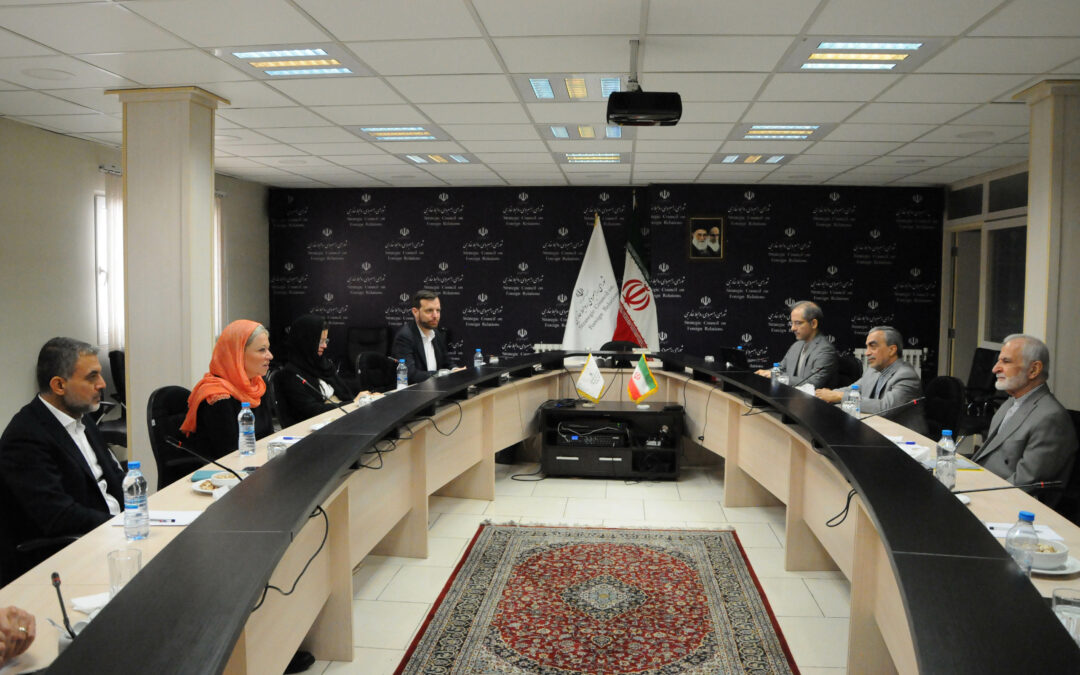
Dr. Kharrazi meeting

Dr. Kharrazi, in a meeting with the leader of Iraq’s National Wisdom Movement: The wickedness of the Zionist regime, backed by the US, threatens all countries in the region

Dr. Kharrazi, in a meeting with the leader of Iraq’s National Wisdom Movement: The wickedness of the Zionist regime, backed by the US, threatens all countries in the region

Strategic Council Online: Seyed Ammar al-Hakim, the leader of Iraq’s National Wisdom Movement, met with Dr. Seyed Kamal Kharrazi, the President of the Strategic Council on Foreign Relations (SCFR), this afternoon. They discussed regional developments, bilateral relations, and the prospects of elections in Iraq.

Dr. Kharrazi in a Meeting with the Secretary of the National Security Council of Armenia: Details of the Agreement Concerning the Azerbaijan-Armenia Communication Route Must Be Clarified to Precisely Determine the Conditions Governing the Route

Dr. Kharrazi in a Meeting with the Secretary of the National Security Council of Armenia: Details of the Agreement Concerning the Azerbaijan-Armenia Communication Route Must Be Clarified to Precisely Determine the Conditions Governing the Route

Mr. Armen Grigoryan, Secretary of the National Security Council of Armenia, met today with Dr. Seyed Kamal Kharrazi, President of the Strategic Council on Foreign Relations (SCFR), and discussed bilateral, regional, and international relations.

Dr. Kharrazi Meets with the Foreign Policy Advisor to the President of Azerbaijan: The Establishment of a Powerful Region is Possible Through Regional Cooperation

Dr. Kharrazi Meets with the Foreign Policy Advisor to the President of Azerbaijan: The Establishment of a Powerful Region is Possible Through Regional Cooperation

Strategic Council Online: During a meeting with the Foreign Policy Advisor to the President of Azerbaijan, Dr. Seyed Kamal Kharrazi, the President of the Strategic Council on Foreign Relations, emphasized that the establishment of a powerful region is achievable through regional cooperation. He stated that the policy of the Islamic Republic of Iran is to pursue regional cooperation despite differences in governance systems.

The Need for Action by The International Community to Prevent Insulting Religious Sanctities

The Need for Action by The International Community to Prevent Insulting Religious Sanctities

Strategic Council Online: Referring to the recent desecration of the Qur’an in Sweden and Denmark, the President of the Strategic Council on Foreign Relations, while holding the governments of these two countries responsible, said: “Although we welcome the position of the UN Secretary-General in response to Ayatollah Sistani’s letter, it is important that the UN defines the criteria of freedom of expression by passing a resolution, so that no one can insult the religious beliefs of believers, including the 2 billion Muslims of the world, under the title of freedom of expression.”

أحدث الوظائف

Implications of the US-Saudi Nuclear Agreement

SCFR Online – Opinion: The new US-Saudi nuclear agreement, despite legal and political ambiguities, could alter previous non-proliferation standards in West Asia and intensify nuclear competition, ushering it into a new phase.

An Analysis of Recent Turkey-Israeli Regime Tensions

SCFR Online – Opinion: Recent developments in Syria indicate an intensification of strategic rivalry between Turkey and the Israeli regime, but mutual considerations and the role of the United States have limited the likelihood of direct war.

Increasing criticism of the extensive Zionist lobby network

SCFR Online – Opinion: An examination of the mechanisms of the Israeli regime’s influence in the United States depicts a complex picture of shared interests, strategic dependencies, and the limitations of this relationship.

Realities of the Tripartite Makkah Pact

SCFR Online – Interview: The signing of the Makkah agreement between Saudi Arabia, Pakistan, and Turkey has raised questions about the future of the region’s security structure and the position of these countries in West Asian equations. Can this agreement become a genuine collective defense mechanism, or does it have more of a political and deterrent function than creating new military capacity?

Strategic Implications of the Reduction of US Weapons Stockpiles

SCFR Online – Opinion: The continuation of the US war against Iran, in addition to increasing operational costs, has called into question the actual capacity of the American arsenal to simultaneously fulfill security commitments on multiple fronts; an issue that affects deterrence, defense production capacity, and Washington’s resource prioritization.

The Formation of a New Order in Relations Between Powers

SCFR Online – Opinion: The Russia-Ukraine war and the war of the United States and the Israeli regime against Iran have been formed with different objectives and actors, but field and political developments indicate that they are not entirely separate from one another.

An Analysis of the Makkah Defense Pact

SCFR Online – Opinion: On Friday, August 7, the heads of state of three countries – Saudi Arabia, Turkey, and Pakistan – signed a text under the title “Makkah Joint Defense Agreement.”

Loading

Dr. Kharrazi meeting

Dr. Kharrazi, in a meeting with the leader of Iraq’s National Wisdom Movement: The wickedness of the Zionist regime, backed by the US, threatens all countries in the region

Dr. Kharrazi, in a meeting with the leader of Iraq’s National Wisdom Movement: The wickedness of the Zionist regime, backed by the US, threatens all countries in the region

Strategic Council Online: Seyed Ammar al-Hakim, the leader of Iraq’s National Wisdom Movement, met with Dr. Seyed Kamal Kharrazi, the President of the Strategic Council on Foreign Relations (SCFR), this afternoon. They discussed regional developments, bilateral relations, and the prospects of elections in Iraq.

Dr. Kharrazi in a Meeting with the Secretary of the National Security Council of Armenia: Details of the Agreement Concerning the Azerbaijan-Armenia Communication Route Must Be Clarified to Precisely Determine the Conditions Governing the Route

Dr. Kharrazi in a Meeting with the Secretary of the National Security Council of Armenia: Details of the Agreement Concerning the Azerbaijan-Armenia Communication Route Must Be Clarified to Precisely Determine the Conditions Governing the Route

Mr. Armen Grigoryan, Secretary of the National Security Council of Armenia, met today with Dr. Seyed Kamal Kharrazi, President of the Strategic Council on Foreign Relations (SCFR), and discussed bilateral, regional, and international relations.

Dr. Kharrazi Meets with the Foreign Policy Advisor to the President of Azerbaijan: The Establishment of a Powerful Region is Possible Through Regional Cooperation

Dr. Kharrazi Meets with the Foreign Policy Advisor to the President of Azerbaijan: The Establishment of a Powerful Region is Possible Through Regional Cooperation

Strategic Council Online: During a meeting with the Foreign Policy Advisor to the President of Azerbaijan, Dr. Seyed Kamal Kharrazi, the President of the Strategic Council on Foreign Relations, emphasized that the establishment of a powerful region is achievable through regional cooperation. He stated that the policy of the Islamic Republic of Iran is to pursue regional cooperation despite differences in governance systems.

The Need for Action by The International Community to Prevent Insulting Religious Sanctities

The Need for Action by The International Community to Prevent Insulting Religious Sanctities

Strategic Council Online: Referring to the recent desecration of the Qur’an in Sweden and Denmark, the President of the Strategic Council on Foreign Relations, while holding the governments of these two countries responsible, said: “Although we welcome the position of the UN Secretary-General in response to Ayatollah Sistani’s letter, it is important that the UN defines the criteria of freedom of expression by passing a resolution, so that no one can insult the religious beliefs of believers, including the 2 billion Muslims of the world, under the title of freedom of expression.”

Dr. Kharrazi meeting

Dr. Kharrazi, in a meeting with the leader of Iraq’s National Wisdom Movement: The wickedness of the Zionist regime, backed by the US, threatens all countries in the region

Dr. Kharrazi, in a meeting with the leader of Iraq’s National Wisdom Movement: The wickedness of the Zionist regime, backed by the US, threatens all countries in the region

Strategic Council Online: Seyed Ammar al-Hakim, the leader of Iraq’s National Wisdom Movement, met with Dr. Seyed Kamal Kharrazi, the President of the Strategic Council on Foreign Relations (SCFR), this afternoon. They discussed regional developments, bilateral relations, and the prospects of elections in Iraq.

Dr. Kharrazi in a Meeting with the Secretary of the National Security Council of Armenia: Details of the Agreement Concerning the Azerbaijan-Armenia Communication Route Must Be Clarified to Precisely Determine the Conditions Governing the Route

Dr. Kharrazi in a Meeting with the Secretary of the National Security Council of Armenia: Details of the Agreement Concerning the Azerbaijan-Armenia Communication Route Must Be Clarified to Precisely Determine the Conditions Governing the Route

Mr. Armen Grigoryan, Secretary of the National Security Council of Armenia, met today with Dr. Seyed Kamal Kharrazi, President of the Strategic Council on Foreign Relations (SCFR), and discussed bilateral, regional, and international relations.

Dr. Kharrazi Meets with the Foreign Policy Advisor to the President of Azerbaijan: The Establishment of a Powerful Region is Possible Through Regional Cooperation

Dr. Kharrazi Meets with the Foreign Policy Advisor to the President of Azerbaijan: The Establishment of a Powerful Region is Possible Through Regional Cooperation

Strategic Council Online: During a meeting with the Foreign Policy Advisor to the President of Azerbaijan, Dr. Seyed Kamal Kharrazi, the President of the Strategic Council on Foreign Relations, emphasized that the establishment of a powerful region is achievable through regional cooperation. He stated that the policy of the Islamic Republic of Iran is to pursue regional cooperation despite differences in governance systems.

The Need for Action by The International Community to Prevent Insulting Religious Sanctities

The Need for Action by The International Community to Prevent Insulting Religious Sanctities

Strategic Council Online: Referring to the recent desecration of the Qur’an in Sweden and Denmark, the President of the Strategic Council on Foreign Relations, while holding the governments of these two countries responsible, said: “Although we welcome the position of the UN Secretary-General in response to Ayatollah Sistani’s letter, it is important that the UN defines the criteria of freedom of expression by passing a resolution, so that no one can insult the religious beliefs of believers, including the 2 billion Muslims of the world, under the title of freedom of expression.”

LATEST CONTENT

Implications of the US-Saudi Nuclear Agreement

SCFR Online – Opinion: The new US-Saudi nuclear agreement, despite legal and political ambiguities, could alter previous non-proliferation standards in West Asia and intensify nuclear competition, ushering it into a new phase.

An Analysis of Recent Turkey-Israeli Regime Tensions

SCFR Online – Opinion: Recent developments in Syria indicate an intensification of strategic rivalry between Turkey and the Israeli regime, but mutual considerations and the role of the United States have limited the likelihood of direct war.

Increasing criticism of the extensive Zionist lobby network

SCFR Online – Opinion: An examination of the mechanisms of the Israeli regime’s influence in the United States depicts a complex picture of shared interests, strategic dependencies, and the limitations of this relationship.

Realities of the Tripartite Makkah Pact

SCFR Online – Interview: The signing of the Makkah agreement between Saudi Arabia, Pakistan, and Turkey has raised questions about the future of the region’s security structure and the position of these countries in West Asian equations. Can this agreement become a genuine collective defense mechanism, or does it have more of a political and deterrent function than creating new military capacity?

Strategic Implications of the Reduction of US Weapons Stockpiles

SCFR Online – Opinion: The continuation of the US war against Iran, in addition to increasing operational costs, has called into question the actual capacity of the American arsenal to simultaneously fulfill security commitments on multiple fronts; an issue that affects deterrence, defense production capacity, and Washington’s resource prioritization.

The Formation of a New Order in Relations Between Powers

SCFR Online – Opinion: The Russia-Ukraine war and the war of the United States and the Israeli regime against Iran have been formed with different objectives and actors, but field and political developments indicate that they are not entirely separate from one another.

An Analysis of the Makkah Defense Pact

SCFR Online – Opinion: On Friday, August 7, the heads of state of three countries – Saudi Arabia, Turkey, and Pakistan – signed a text under the title “Makkah Joint Defense Agreement.”

Loading

Dr. Kharrazi meeting

Dr. Kharrazi, in a meeting with the leader of Iraq’s National Wisdom Movement: The wickedness of the Zionist regime, backed by the US, threatens all countries in the region

Dr. Kharrazi, in a meeting with the leader of Iraq’s National Wisdom Movement: The wickedness of the Zionist regime, backed by the US, threatens all countries in the region

Strategic Council Online: Seyed Ammar al-Hakim, the leader of Iraq’s National Wisdom Movement, met with Dr. Seyed Kamal Kharrazi, the President of the Strategic Council on Foreign Relations (SCFR), this afternoon. They discussed regional developments, bilateral relations, and the prospects of elections in Iraq.

Dr. Kharrazi in a Meeting with the Secretary of the National Security Council of Armenia: Details of the Agreement Concerning the Azerbaijan-Armenia Communication Route Must Be Clarified to Precisely Determine the Conditions Governing the Route

Dr. Kharrazi in a Meeting with the Secretary of the National Security Council of Armenia: Details of the Agreement Concerning the Azerbaijan-Armenia Communication Route Must Be Clarified to Precisely Determine the Conditions Governing the Route

Mr. Armen Grigoryan, Secretary of the National Security Council of Armenia, met today with Dr. Seyed Kamal Kharrazi, President of the Strategic Council on Foreign Relations (SCFR), and discussed bilateral, regional, and international relations.

Dr. Kharrazi Meets with the Foreign Policy Advisor to the President of Azerbaijan: The Establishment of a Powerful Region is Possible Through Regional Cooperation

Dr. Kharrazi Meets with the Foreign Policy Advisor to the President of Azerbaijan: The Establishment of a Powerful Region is Possible Through Regional Cooperation

Strategic Council Online: During a meeting with the Foreign Policy Advisor to the President of Azerbaijan, Dr. Seyed Kamal Kharrazi, the President of the Strategic Council on Foreign Relations, emphasized that the establishment of a powerful region is achievable through regional cooperation. He stated that the policy of the Islamic Republic of Iran is to pursue regional cooperation despite differences in governance systems.

The Need for Action by The International Community to Prevent Insulting Religious Sanctities

The Need for Action by The International Community to Prevent Insulting Religious Sanctities

Strategic Council Online: Referring to the recent desecration of the Qur’an in Sweden and Denmark, the President of the Strategic Council on Foreign Relations, while holding the governments of these two countries responsible, said: “Although we welcome the position of the UN Secretary-General in response to Ayatollah Sistani’s letter, it is important that the UN defines the criteria of freedom of expression by passing a resolution, so that no one can insult the religious beliefs of believers, including the 2 billion Muslims of the world, under the title of freedom of expression.”

ÚLTIMAS PUBLICACIONES

Implications of the US-Saudi Nuclear Agreement

SCFR Online – Opinion: The new US-Saudi nuclear agreement, despite legal and political ambiguities, could alter previous non-proliferation standards in West Asia and intensify nuclear competition, ushering it into a new phase.

An Analysis of Recent Turkey-Israeli Regime Tensions

SCFR Online – Opinion: Recent developments in Syria indicate an intensification of strategic rivalry between Turkey and the Israeli regime, but mutual considerations and the role of the United States have limited the likelihood of direct war.

Increasing criticism of the extensive Zionist lobby network

SCFR Online – Opinion: An examination of the mechanisms of the Israeli regime’s influence in the United States depicts a complex picture of shared interests, strategic dependencies, and the limitations of this relationship.

Realities of the Tripartite Makkah Pact

SCFR Online – Interview: The signing of the Makkah agreement between Saudi Arabia, Pakistan, and Turkey has raised questions about the future of the region’s security structure and the position of these countries in West Asian equations. Can this agreement become a genuine collective defense mechanism, or does it have more of a political and deterrent function than creating new military capacity?

Strategic Implications of the Reduction of US Weapons Stockpiles

SCFR Online – Opinion: The continuation of the US war against Iran, in addition to increasing operational costs, has called into question the actual capacity of the American arsenal to simultaneously fulfill security commitments on multiple fronts; an issue that affects deterrence, defense production capacity, and Washington’s resource prioritization.

The Formation of a New Order in Relations Between Powers

SCFR Online – Opinion: The Russia-Ukraine war and the war of the United States and the Israeli regime against Iran have been formed with different objectives and actors, but field and political developments indicate that they are not entirely separate from one another.

An Analysis of the Makkah Defense Pact

SCFR Online – Opinion: On Friday, August 7, the heads of state of three countries – Saudi Arabia, Turkey, and Pakistan – signed a text under the title “Makkah Joint Defense Agreement.”

Loading

Dr. Kharrazi meeting

Dr. Kharrazi, in a meeting with the leader of Iraq’s National Wisdom Movement: The wickedness of the Zionist regime, backed by the US, threatens all countries in the region

Dr. Kharrazi, in a meeting with the leader of Iraq’s National Wisdom Movement: The wickedness of the Zionist regime, backed by the US, threatens all countries in the region

Strategic Council Online: Seyed Ammar al-Hakim, the leader of Iraq’s National Wisdom Movement, met with Dr. Seyed Kamal Kharrazi, the President of the Strategic Council on Foreign Relations (SCFR), this afternoon. They discussed regional developments, bilateral relations, and the prospects of elections in Iraq.

Dr. Kharrazi in a Meeting with the Secretary of the National Security Council of Armenia: Details of the Agreement Concerning the Azerbaijan-Armenia Communication Route Must Be Clarified to Precisely Determine the Conditions Governing the Route

Dr. Kharrazi in a Meeting with the Secretary of the National Security Council of Armenia: Details of the Agreement Concerning the Azerbaijan-Armenia Communication Route Must Be Clarified to Precisely Determine the Conditions Governing the Route

Mr. Armen Grigoryan, Secretary of the National Security Council of Armenia, met today with Dr. Seyed Kamal Kharrazi, President of the Strategic Council on Foreign Relations (SCFR), and discussed bilateral, regional, and international relations.

Dr. Kharrazi Meets with the Foreign Policy Advisor to the President of Azerbaijan: The Establishment of a Powerful Region is Possible Through Regional Cooperation

Dr. Kharrazi Meets with the Foreign Policy Advisor to the President of Azerbaijan: The Establishment of a Powerful Region is Possible Through Regional Cooperation

Strategic Council Online: During a meeting with the Foreign Policy Advisor to the President of Azerbaijan, Dr. Seyed Kamal Kharrazi, the President of the Strategic Council on Foreign Relations, emphasized that the establishment of a powerful region is achievable through regional cooperation. He stated that the policy of the Islamic Republic of Iran is to pursue regional cooperation despite differences in governance systems.

The Need for Action by The International Community to Prevent Insulting Religious Sanctities

The Need for Action by The International Community to Prevent Insulting Religious Sanctities

Strategic Council Online: Referring to the recent desecration of the Qur’an in Sweden and Denmark, the President of the Strategic Council on Foreign Relations, while holding the governments of these two countries responsible, said: “Although we welcome the position of the UN Secretary-General in response to Ayatollah Sistani’s letter, it is important that the UN defines the criteria of freedom of expression by passing a resolution, so that no one can insult the religious beliefs of believers, including the 2 billion Muslims of the world, under the title of freedom of expression.”

ÚLTIMAS PUBLICACIONES

Implications of the US-Saudi Nuclear Agreement

SCFR Online – Opinion: The new US-Saudi nuclear agreement, despite legal and political ambiguities, could alter previous non-proliferation standards in West Asia and intensify nuclear competition, ushering it into a new phase.

An Analysis of Recent Turkey-Israeli Regime Tensions

SCFR Online – Opinion: Recent developments in Syria indicate an intensification of strategic rivalry between Turkey and the Israeli regime, but mutual considerations and the role of the United States have limited the likelihood of direct war.

Increasing criticism of the extensive Zionist lobby network

SCFR Online – Opinion: An examination of the mechanisms of the Israeli regime’s influence in the United States depicts a complex picture of shared interests, strategic dependencies, and the limitations of this relationship.

Realities of the Tripartite Makkah Pact

SCFR Online – Interview: The signing of the Makkah agreement between Saudi Arabia, Pakistan, and Turkey has raised questions about the future of the region’s security structure and the position of these countries in West Asian equations. Can this agreement become a genuine collective defense mechanism, or does it have more of a political and deterrent function than creating new military capacity?

Strategic Implications of the Reduction of US Weapons Stockpiles

SCFR Online – Opinion: The continuation of the US war against Iran, in addition to increasing operational costs, has called into question the actual capacity of the American arsenal to simultaneously fulfill security commitments on multiple fronts; an issue that affects deterrence, defense production capacity, and Washington’s resource prioritization.

The Formation of a New Order in Relations Between Powers

SCFR Online – Opinion: The Russia-Ukraine war and the war of the United States and the Israeli regime against Iran have been formed with different objectives and actors, but field and political developments indicate that they are not entirely separate from one another.

An Analysis of the Makkah Defense Pact

SCFR Online – Opinion: On Friday, August 7, the heads of state of three countries – Saudi Arabia, Turkey, and Pakistan – signed a text under the title “Makkah Joint Defense Agreement.”

Loading

Dr. Kharrazi meeting

Dr. Kharrazi, in a meeting with the leader of Iraq’s National Wisdom Movement: The wickedness of the Zionist regime, backed by the US, threatens all countries in the region

Dr. Kharrazi, in a meeting with the leader of Iraq’s National Wisdom Movement: The wickedness of the Zionist regime, backed by the US, threatens all countries in the region

Strategic Council Online: Seyed Ammar al-Hakim, the leader of Iraq’s National Wisdom Movement, met with Dr. Seyed Kamal Kharrazi, the President of the Strategic Council on Foreign Relations (SCFR), this afternoon. They discussed regional developments, bilateral relations, and the prospects of elections in Iraq.

Dr. Kharrazi in a Meeting with the Secretary of the National Security Council of Armenia: Details of the Agreement Concerning the Azerbaijan-Armenia Communication Route Must Be Clarified to Precisely Determine the Conditions Governing the Route

Dr. Kharrazi in a Meeting with the Secretary of the National Security Council of Armenia: Details of the Agreement Concerning the Azerbaijan-Armenia Communication Route Must Be Clarified to Precisely Determine the Conditions Governing the Route

Mr. Armen Grigoryan, Secretary of the National Security Council of Armenia, met today with Dr. Seyed Kamal Kharrazi, President of the Strategic Council on Foreign Relations (SCFR), and discussed bilateral, regional, and international relations.

Dr. Kharrazi Meets with the Foreign Policy Advisor to the President of Azerbaijan: The Establishment of a Powerful Region is Possible Through Regional Cooperation

Dr. Kharrazi Meets with the Foreign Policy Advisor to the President of Azerbaijan: The Establishment of a Powerful Region is Possible Through Regional Cooperation

Strategic Council Online: During a meeting with the Foreign Policy Advisor to the President of Azerbaijan, Dr. Seyed Kamal Kharrazi, the President of the Strategic Council on Foreign Relations, emphasized that the establishment of a powerful region is achievable through regional cooperation. He stated that the policy of the Islamic Republic of Iran is to pursue regional cooperation despite differences in governance systems.

The Need for Action by The International Community to Prevent Insulting Religious Sanctities

The Need for Action by The International Community to Prevent Insulting Religious Sanctities

Strategic Council Online: Referring to the recent desecration of the Qur’an in Sweden and Denmark, the President of the Strategic Council on Foreign Relations, while holding the governments of these two countries responsible, said: “Although we welcome the position of the UN Secretary-General in response to Ayatollah Sistani’s letter, it is important that the UN defines the criteria of freedom of expression by passing a resolution, so that no one can insult the religious beliefs of believers, including the 2 billion Muslims of the world, under the title of freedom of expression.”

ÚLTIMAS PUBLICACIONES

Implications of the US-Saudi Nuclear Agreement

SCFR Online – Opinion: The new US-Saudi nuclear agreement, despite legal and political ambiguities, could alter previous non-proliferation standards in West Asia and intensify nuclear competition, ushering it into a new phase.

An Analysis of Recent Turkey-Israeli Regime Tensions

SCFR Online – Opinion: Recent developments in Syria indicate an intensification of strategic rivalry between Turkey and the Israeli regime, but mutual considerations and the role of the United States have limited the likelihood of direct war.

Increasing criticism of the extensive Zionist lobby network

SCFR Online – Opinion: An examination of the mechanisms of the Israeli regime’s influence in the United States depicts a complex picture of shared interests, strategic dependencies, and the limitations of this relationship.

Realities of the Tripartite Makkah Pact

SCFR Online – Interview: The signing of the Makkah agreement between Saudi Arabia, Pakistan, and Turkey has raised questions about the future of the region’s security structure and the position of these countries in West Asian equations. Can this agreement become a genuine collective defense mechanism, or does it have more of a political and deterrent function than creating new military capacity?

Strategic Implications of the Reduction of US Weapons Stockpiles

SCFR Online – Opinion: The continuation of the US war against Iran, in addition to increasing operational costs, has called into question the actual capacity of the American arsenal to simultaneously fulfill security commitments on multiple fronts; an issue that affects deterrence, defense production capacity, and Washington’s resource prioritization.

The Formation of a New Order in Relations Between Powers

SCFR Online – Opinion: The Russia-Ukraine war and the war of the United States and the Israeli regime against Iran have been formed with different objectives and actors, but field and political developments indicate that they are not entirely separate from one another.

An Analysis of the Makkah Defense Pact

SCFR Online – Opinion: On Friday, August 7, the heads of state of three countries – Saudi Arabia, Turkey, and Pakistan – signed a text under the title “Makkah Joint Defense Agreement.”

Loading

Dr. Kharrazi meeting

Dr. Kharrazi, in a meeting with the leader of Iraq’s National Wisdom Movement: The wickedness of the Zionist regime, backed by the US, threatens all countries in the region

Dr. Kharrazi, in a meeting with the leader of Iraq’s National Wisdom Movement: The wickedness of the Zionist regime, backed by the US, threatens all countries in the region

Strategic Council Online: Seyed Ammar al-Hakim, the leader of Iraq’s National Wisdom Movement, met with Dr. Seyed Kamal Kharrazi, the President of the Strategic Council on Foreign Relations (SCFR), this afternoon. They discussed regional developments, bilateral relations, and the prospects of elections in Iraq.

Dr. Kharrazi in a Meeting with the Secretary of the National Security Council of Armenia: Details of the Agreement Concerning the Azerbaijan-Armenia Communication Route Must Be Clarified to Precisely Determine the Conditions Governing the Route

Dr. Kharrazi in a Meeting with the Secretary of the National Security Council of Armenia: Details of the Agreement Concerning the Azerbaijan-Armenia Communication Route Must Be Clarified to Precisely Determine the Conditions Governing the Route

Mr. Armen Grigoryan, Secretary of the National Security Council of Armenia, met today with Dr. Seyed Kamal Kharrazi, President of the Strategic Council on Foreign Relations (SCFR), and discussed bilateral, regional, and international relations.

Dr. Kharrazi Meets with the Foreign Policy Advisor to the President of Azerbaijan: The Establishment of a Powerful Region is Possible Through Regional Cooperation

Dr. Kharrazi Meets with the Foreign Policy Advisor to the President of Azerbaijan: The Establishment of a Powerful Region is Possible Through Regional Cooperation

Strategic Council Online: During a meeting with the Foreign Policy Advisor to the President of Azerbaijan, Dr. Seyed Kamal Kharrazi, the President of the Strategic Council on Foreign Relations, emphasized that the establishment of a powerful region is achievable through regional cooperation. He stated that the policy of the Islamic Republic of Iran is to pursue regional cooperation despite differences in governance systems.

The Need for Action by The International Community to Prevent Insulting Religious Sanctities

The Need for Action by The International Community to Prevent Insulting Religious Sanctities

Strategic Council Online: Referring to the recent desecration of the Qur’an in Sweden and Denmark, the President of the Strategic Council on Foreign Relations, while holding the governments of these two countries responsible, said: “Although we welcome the position of the UN Secretary-General in response to Ayatollah Sistani’s letter, it is important that the UN defines the criteria of freedom of expression by passing a resolution, so that no one can insult the religious beliefs of believers, including the 2 billion Muslims of the world, under the title of freedom of expression.”

ÚLTIMAS PUBLICACIONES

Implications of the US-Saudi Nuclear Agreement

SCFR Online – Opinion: The new US-Saudi nuclear agreement, despite legal and political ambiguities, could alter previous non-proliferation standards in West Asia and intensify nuclear competition, ushering it into a new phase.

An Analysis of Recent Turkey-Israeli Regime Tensions

SCFR Online – Opinion: Recent developments in Syria indicate an intensification of strategic rivalry between Turkey and the Israeli regime, but mutual considerations and the role of the United States have limited the likelihood of direct war.

Increasing criticism of the extensive Zionist lobby network

SCFR Online – Opinion: An examination of the mechanisms of the Israeli regime’s influence in the United States depicts a complex picture of shared interests, strategic dependencies, and the limitations of this relationship.

Realities of the Tripartite Makkah Pact

SCFR Online – Interview: The signing of the Makkah agreement between Saudi Arabia, Pakistan, and Turkey has raised questions about the future of the region’s security structure and the position of these countries in West Asian equations. Can this agreement become a genuine collective defense mechanism, or does it have more of a political and deterrent function than creating new military capacity?

Strategic Implications of the Reduction of US Weapons Stockpiles

SCFR Online – Opinion: The continuation of the US war against Iran, in addition to increasing operational costs, has called into question the actual capacity of the American arsenal to simultaneously fulfill security commitments on multiple fronts; an issue that affects deterrence, defense production capacity, and Washington’s resource prioritization.

The Formation of a New Order in Relations Between Powers

SCFR Online – Opinion: The Russia-Ukraine war and the war of the United States and the Israeli regime against Iran have been formed with different objectives and actors, but field and political developments indicate that they are not entirely separate from one another.

An Analysis of the Makkah Defense Pact

SCFR Online – Opinion: On Friday, August 7, the heads of state of three countries – Saudi Arabia, Turkey, and Pakistan – signed a text under the title “Makkah Joint Defense Agreement.”

Loading