An Analysis of the Makkah Defense Pact
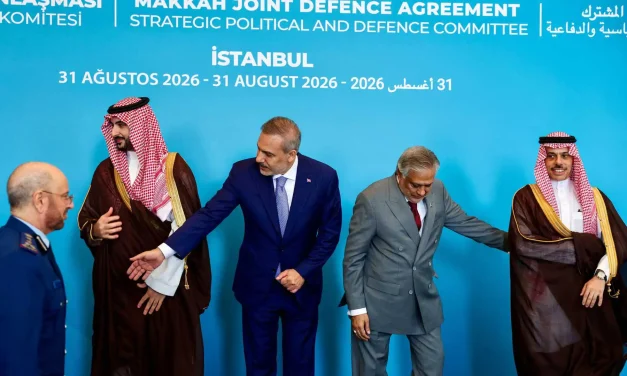
SCFR Online – Opinion: On Friday, August 7, the heads of state of three countries – Saudi Arabia, Turkey, and Pakistan – signed a text under the title “Makkah Joint Defense Agreement.”
Strategic Council Online – Note: The initiative to revive the Hejaz Railway, beyond being a transportation project, constitutes an attempt to redefine geopolitics, the economy, and Turkey’s regional position; however, its realization appears to face significant financial, security, and institutional challenges.
SCFR Online – Opinion: The Strait of Hormuz crisis is no longer merely the consequence of a military confrontation, but rather a sign of the transition from the US-centered maritime order to a new energy security structure involving the participation of emerging and influential powers.
SCFR Online – Opinion: Iran’s active deterrence strategy, while increasing the costs of US intervention, has increasingly exposed the hidden rifts between Washington’s interests and those of the Israeli regime.
SCFR Online – Opinion: The escalation of verbal and strategic tensions between Turkey and the Israeli regime, although not increasing the likelihood of direct war, indicates the formation of a new order in West Asian geopolitical rivalries.
Strategic Council Online – Note: Recent developments in the political geography of West Asia, from rising tensions in the Persian Gulf to missile and drone activities in the Red Sea and the recent warning by Kaja Kallas, the European Union’s foreign policy chief, regarding the threat to freedom of navigation, indicate a key pattern shift; the US-Iran war has moved beyond the scope of a regional and local confrontation and has linked two vital passageways for the global economy: the Strait of Hormuz and the Bab el-Mandeb Strait.
SCFR Online – Opinion: The Ukraine war was not merely a European crisis, but rather the starting point for the rearrangement of the global balance of power and a shift in the strategic behavior of great powers.
SCFR Online – Opinion: Great power competition is now pursued more in trade, currency, technology, and global supply chains than on the battlefields of military confrontation.
Strategic Council Online – A professor of international relations described White House officials’ claims that China, Iran, Russia and North Korea were interfering in the US presidential election as “blame game” and “run forward.”
Strategic Council Online – An analyst of Asian affairs referring to the type of acting by China and the United States in the Korean Peninsula said: “Given the reluctance of the two powers to face a serious confrontation in the current situation, it is predicted that the decision taken by North Korea to suspend military action against South Korea is in line with the interests of the major actors and therefore has no significant impact on the countries concerned.
Strategic Council Online: In case of establishment of the ‘Club of Sanctioned’ the effectiveness of the sanctions tools, including synergies between the economies of the sanctioned countries, by using techniques such as expanding multilateral pacts, creating alternative financial messengers for SWIFT and initiating new financial platforms make these countries immune from US trade sanctions.
– Seyyed Mohammad Reza Mousavi / Political Economy Researcher, Office of Economic Diplomacy Studies, Imam Sadegh University
– Amir Hossein Arabpour / International Political Marketing Researcher, Office of Economic Diplomacy Studies, Imam Sadegh University
Strategic Council Online: While the Americans want North Korea to stop all its activities at once, the Russians have proposed a step-by-step approach to solve the problem. According to the plan, in exchange for partial halting of North Korea’s activities, part of the sanctions would be lifted by the United States and the parties could gradually achieve a comprehensive solution.
Shoaib Bahman – International Affairs Expert
Strategic Council Online: The second US-North Korean summit ended in Vietnam without a clear conclusion and agreement. The main question occupying the minds of analysts is whether this summit meeting is the end of the first step of the two countries in trying diplomacy. Or is the end of diplomacy between the United States and North Korea due to the continuation of negotiations because of differences in approaches?
Assadollah Kaveh – East Asia Affairs Expert
Strategic Council online – Less than three months have passed since the historic summit of the US President Donald Trump and the North Korean leader Kim Jong Un took place on Sentosa Island in Singapore and yet the talks have more or less stopped as the two sides have a series of expectations from each other that have not been met.
SCFR Online – Opinion: On Friday, August 7, the heads of state of three countries – Saudi Arabia, Turkey, and Pakistan – signed a text under the title “Makkah Joint Defense Agreement.”
Strategic Council Online – Note: The initiative to revive the Hejaz Railway, beyond being a transportation project, constitutes an attempt to redefine geopolitics, the economy, and Turkey’s regional position; however, its realization appears to face significant financial, security, and institutional challenges.
SCFR Online – Opinion: The Strait of Hormuz crisis is no longer merely the consequence of a military confrontation, but rather a sign of the transition from the US-centered maritime order to a new energy security structure involving the participation of emerging and influential powers.
SCFR Online – Opinion: Iran’s active deterrence strategy, while increasing the costs of US intervention, has increasingly exposed the hidden rifts between Washington’s interests and those of the Israeli regime.
SCFR Online – Opinion: The escalation of verbal and strategic tensions between Turkey and the Israeli regime, although not increasing the likelihood of direct war, indicates the formation of a new order in West Asian geopolitical rivalries.
Strategic Council Online – Note: Recent developments in the political geography of West Asia, from rising tensions in the Persian Gulf to missile and drone activities in the Red Sea and the recent warning by Kaja Kallas, the European Union’s foreign policy chief, regarding the threat to freedom of navigation, indicate a key pattern shift; the US-Iran war has moved beyond the scope of a regional and local confrontation and has linked two vital passageways for the global economy: the Strait of Hormuz and the Bab el-Mandeb Strait.
SCFR Online – Opinion: The Ukraine war was not merely a European crisis, but rather the starting point for the rearrangement of the global balance of power and a shift in the strategic behavior of great powers.
SCFR Online – Opinion: Great power competition is now pursued more in trade, currency, technology, and global supply chains than on the battlefields of military confrontation.
Strategic Council Online – A professor of international relations described White House officials’ claims that China, Iran, Russia and North Korea were interfering in the US presidential election as “blame game” and “run forward.”
Strategic Council Online – An analyst of Asian affairs referring to the type of acting by China and the United States in the Korean Peninsula said: “Given the reluctance of the two powers to face a serious confrontation in the current situation, it is predicted that the decision taken by North Korea to suspend military action against South Korea is in line with the interests of the major actors and therefore has no significant impact on the countries concerned.
Strategic Council Online: In case of establishment of the ‘Club of Sanctioned’ the effectiveness of the sanctions tools, including synergies between the economies of the sanctioned countries, by using techniques such as expanding multilateral pacts, creating alternative financial messengers for SWIFT and initiating new financial platforms make these countries immune from US trade sanctions.
– Seyyed Mohammad Reza Mousavi / Political Economy Researcher, Office of Economic Diplomacy Studies, Imam Sadegh University
– Amir Hossein Arabpour / International Political Marketing Researcher, Office of Economic Diplomacy Studies, Imam Sadegh University
Strategic Council Online: While the Americans want North Korea to stop all its activities at once, the Russians have proposed a step-by-step approach to solve the problem. According to the plan, in exchange for partial halting of North Korea’s activities, part of the sanctions would be lifted by the United States and the parties could gradually achieve a comprehensive solution.
Shoaib Bahman – International Affairs Expert
Strategic Council Online: The second US-North Korean summit ended in Vietnam without a clear conclusion and agreement. The main question occupying the minds of analysts is whether this summit meeting is the end of the first step of the two countries in trying diplomacy. Or is the end of diplomacy between the United States and North Korea due to the continuation of negotiations because of differences in approaches?
Assadollah Kaveh – East Asia Affairs Expert
Strategic Council online – Less than three months have passed since the historic summit of the US President Donald Trump and the North Korean leader Kim Jong Un took place on Sentosa Island in Singapore and yet the talks have more or less stopped as the two sides have a series of expectations from each other that have not been met.
Strategic Council Online – A professor of international relations described White House officials’ claims that China, Iran, Russia and North Korea were interfering in the US presidential election as “blame game” and “run forward.”
Strategic Council Online – An analyst of Asian affairs referring to the type of acting by China and the United States in the Korean Peninsula said: “Given the reluctance of the two powers to face a serious confrontation in the current situation, it is predicted that the decision taken by North Korea to suspend military action against South Korea is in line with the interests of the major actors and therefore has no significant impact on the countries concerned.
Strategic Council Online: In case of establishment of the ‘Club of Sanctioned’ the effectiveness of the sanctions tools, including synergies between the economies of the sanctioned countries, by using techniques such as expanding multilateral pacts, creating alternative financial messengers for SWIFT and initiating new financial platforms make these countries immune from US trade sanctions.
– Seyyed Mohammad Reza Mousavi / Political Economy Researcher, Office of Economic Diplomacy Studies, Imam Sadegh University
– Amir Hossein Arabpour / International Political Marketing Researcher, Office of Economic Diplomacy Studies, Imam Sadegh University
Strategic Council Online: While the Americans want North Korea to stop all its activities at once, the Russians have proposed a step-by-step approach to solve the problem. According to the plan, in exchange for partial halting of North Korea’s activities, part of the sanctions would be lifted by the United States and the parties could gradually achieve a comprehensive solution.
Shoaib Bahman – International Affairs Expert
Strategic Council Online: The second US-North Korean summit ended in Vietnam without a clear conclusion and agreement. The main question occupying the minds of analysts is whether this summit meeting is the end of the first step of the two countries in trying diplomacy. Or is the end of diplomacy between the United States and North Korea due to the continuation of negotiations because of differences in approaches?
Assadollah Kaveh – East Asia Affairs Expert
Strategic Council online – Less than three months have passed since the historic summit of the US President Donald Trump and the North Korean leader Kim Jong Un took place on Sentosa Island in Singapore and yet the talks have more or less stopped as the two sides have a series of expectations from each other that have not been met.
SCFR Online – Opinion: On Friday, August 7, the heads of state of three countries – Saudi Arabia, Turkey, and Pakistan – signed a text under the title “Makkah Joint Defense Agreement.”
Strategic Council Online – Note: The initiative to revive the Hejaz Railway, beyond being a transportation project, constitutes an attempt to redefine geopolitics, the economy, and Turkey’s regional position; however, its realization appears to face significant financial, security, and institutional challenges.
SCFR Online – Opinion: The Strait of Hormuz crisis is no longer merely the consequence of a military confrontation, but rather a sign of the transition from the US-centered maritime order to a new energy security structure involving the participation of emerging and influential powers.
SCFR Online – Opinion: Iran’s active deterrence strategy, while increasing the costs of US intervention, has increasingly exposed the hidden rifts between Washington’s interests and those of the Israeli regime.
SCFR Online – Opinion: The escalation of verbal and strategic tensions between Turkey and the Israeli regime, although not increasing the likelihood of direct war, indicates the formation of a new order in West Asian geopolitical rivalries.
Strategic Council Online – Note: Recent developments in the political geography of West Asia, from rising tensions in the Persian Gulf to missile and drone activities in the Red Sea and the recent warning by Kaja Kallas, the European Union’s foreign policy chief, regarding the threat to freedom of navigation, indicate a key pattern shift; the US-Iran war has moved beyond the scope of a regional and local confrontation and has linked two vital passageways for the global economy: the Strait of Hormuz and the Bab el-Mandeb Strait.
SCFR Online – Opinion: The Ukraine war was not merely a European crisis, but rather the starting point for the rearrangement of the global balance of power and a shift in the strategic behavior of great powers.
SCFR Online – Opinion: Great power competition is now pursued more in trade, currency, technology, and global supply chains than on the battlefields of military confrontation.
Strategic Council Online – A professor of international relations described White House officials’ claims that China, Iran, Russia and North Korea were interfering in the US presidential election as “blame game” and “run forward.”
Strategic Council Online – An analyst of Asian affairs referring to the type of acting by China and the United States in the Korean Peninsula said: “Given the reluctance of the two powers to face a serious confrontation in the current situation, it is predicted that the decision taken by North Korea to suspend military action against South Korea is in line with the interests of the major actors and therefore has no significant impact on the countries concerned.
Strategic Council Online: In case of establishment of the ‘Club of Sanctioned’ the effectiveness of the sanctions tools, including synergies between the economies of the sanctioned countries, by using techniques such as expanding multilateral pacts, creating alternative financial messengers for SWIFT and initiating new financial platforms make these countries immune from US trade sanctions.
– Seyyed Mohammad Reza Mousavi / Political Economy Researcher, Office of Economic Diplomacy Studies, Imam Sadegh University
– Amir Hossein Arabpour / International Political Marketing Researcher, Office of Economic Diplomacy Studies, Imam Sadegh University
Strategic Council Online: While the Americans want North Korea to stop all its activities at once, the Russians have proposed a step-by-step approach to solve the problem. According to the plan, in exchange for partial halting of North Korea’s activities, part of the sanctions would be lifted by the United States and the parties could gradually achieve a comprehensive solution.
Shoaib Bahman – International Affairs Expert
Strategic Council Online: The second US-North Korean summit ended in Vietnam without a clear conclusion and agreement. The main question occupying the minds of analysts is whether this summit meeting is the end of the first step of the two countries in trying diplomacy. Or is the end of diplomacy between the United States and North Korea due to the continuation of negotiations because of differences in approaches?
Assadollah Kaveh – East Asia Affairs Expert
Strategic Council online – Less than three months have passed since the historic summit of the US President Donald Trump and the North Korean leader Kim Jong Un took place on Sentosa Island in Singapore and yet the talks have more or less stopped as the two sides have a series of expectations from each other that have not been met.
SCFR Online – Opinion: On Friday, August 7, the heads of state of three countries – Saudi Arabia, Turkey, and Pakistan – signed a text under the title “Makkah Joint Defense Agreement.”
Strategic Council Online – Note: The initiative to revive the Hejaz Railway, beyond being a transportation project, constitutes an attempt to redefine geopolitics, the economy, and Turkey’s regional position; however, its realization appears to face significant financial, security, and institutional challenges.
SCFR Online – Opinion: The Strait of Hormuz crisis is no longer merely the consequence of a military confrontation, but rather a sign of the transition from the US-centered maritime order to a new energy security structure involving the participation of emerging and influential powers.
SCFR Online – Opinion: Iran’s active deterrence strategy, while increasing the costs of US intervention, has increasingly exposed the hidden rifts between Washington’s interests and those of the Israeli regime.
SCFR Online – Opinion: The escalation of verbal and strategic tensions between Turkey and the Israeli regime, although not increasing the likelihood of direct war, indicates the formation of a new order in West Asian geopolitical rivalries.
Strategic Council Online – Note: Recent developments in the political geography of West Asia, from rising tensions in the Persian Gulf to missile and drone activities in the Red Sea and the recent warning by Kaja Kallas, the European Union’s foreign policy chief, regarding the threat to freedom of navigation, indicate a key pattern shift; the US-Iran war has moved beyond the scope of a regional and local confrontation and has linked two vital passageways for the global economy: the Strait of Hormuz and the Bab el-Mandeb Strait.
SCFR Online – Opinion: The Ukraine war was not merely a European crisis, but rather the starting point for the rearrangement of the global balance of power and a shift in the strategic behavior of great powers.
SCFR Online – Opinion: Great power competition is now pursued more in trade, currency, technology, and global supply chains than on the battlefields of military confrontation.
Strategic Council Online – A professor of international relations described White House officials’ claims that China, Iran, Russia and North Korea were interfering in the US presidential election as “blame game” and “run forward.”
Strategic Council Online – An analyst of Asian affairs referring to the type of acting by China and the United States in the Korean Peninsula said: “Given the reluctance of the two powers to face a serious confrontation in the current situation, it is predicted that the decision taken by North Korea to suspend military action against South Korea is in line with the interests of the major actors and therefore has no significant impact on the countries concerned.
Strategic Council Online: In case of establishment of the ‘Club of Sanctioned’ the effectiveness of the sanctions tools, including synergies between the economies of the sanctioned countries, by using techniques such as expanding multilateral pacts, creating alternative financial messengers for SWIFT and initiating new financial platforms make these countries immune from US trade sanctions.
– Seyyed Mohammad Reza Mousavi / Political Economy Researcher, Office of Economic Diplomacy Studies, Imam Sadegh University
– Amir Hossein Arabpour / International Political Marketing Researcher, Office of Economic Diplomacy Studies, Imam Sadegh University
Strategic Council Online: While the Americans want North Korea to stop all its activities at once, the Russians have proposed a step-by-step approach to solve the problem. According to the plan, in exchange for partial halting of North Korea’s activities, part of the sanctions would be lifted by the United States and the parties could gradually achieve a comprehensive solution.
Shoaib Bahman – International Affairs Expert
Strategic Council Online: The second US-North Korean summit ended in Vietnam without a clear conclusion and agreement. The main question occupying the minds of analysts is whether this summit meeting is the end of the first step of the two countries in trying diplomacy. Or is the end of diplomacy between the United States and North Korea due to the continuation of negotiations because of differences in approaches?
Assadollah Kaveh – East Asia Affairs Expert
Strategic Council online – Less than three months have passed since the historic summit of the US President Donald Trump and the North Korean leader Kim Jong Un took place on Sentosa Island in Singapore and yet the talks have more or less stopped as the two sides have a series of expectations from each other that have not been met.
SCFR Online – Opinion: On Friday, August 7, the heads of state of three countries – Saudi Arabia, Turkey, and Pakistan – signed a text under the title “Makkah Joint Defense Agreement.”
Strategic Council Online – Note: The initiative to revive the Hejaz Railway, beyond being a transportation project, constitutes an attempt to redefine geopolitics, the economy, and Turkey’s regional position; however, its realization appears to face significant financial, security, and institutional challenges.
SCFR Online – Opinion: The Strait of Hormuz crisis is no longer merely the consequence of a military confrontation, but rather a sign of the transition from the US-centered maritime order to a new energy security structure involving the participation of emerging and influential powers.
SCFR Online – Opinion: Iran’s active deterrence strategy, while increasing the costs of US intervention, has increasingly exposed the hidden rifts between Washington’s interests and those of the Israeli regime.
SCFR Online – Opinion: The escalation of verbal and strategic tensions between Turkey and the Israeli regime, although not increasing the likelihood of direct war, indicates the formation of a new order in West Asian geopolitical rivalries.
Strategic Council Online – Note: Recent developments in the political geography of West Asia, from rising tensions in the Persian Gulf to missile and drone activities in the Red Sea and the recent warning by Kaja Kallas, the European Union’s foreign policy chief, regarding the threat to freedom of navigation, indicate a key pattern shift; the US-Iran war has moved beyond the scope of a regional and local confrontation and has linked two vital passageways for the global economy: the Strait of Hormuz and the Bab el-Mandeb Strait.
SCFR Online – Opinion: The Ukraine war was not merely a European crisis, but rather the starting point for the rearrangement of the global balance of power and a shift in the strategic behavior of great powers.
SCFR Online – Opinion: Great power competition is now pursued more in trade, currency, technology, and global supply chains than on the battlefields of military confrontation.
Strategic Council Online – A professor of international relations described White House officials’ claims that China, Iran, Russia and North Korea were interfering in the US presidential election as “blame game” and “run forward.”
Strategic Council Online – An analyst of Asian affairs referring to the type of acting by China and the United States in the Korean Peninsula said: “Given the reluctance of the two powers to face a serious confrontation in the current situation, it is predicted that the decision taken by North Korea to suspend military action against South Korea is in line with the interests of the major actors and therefore has no significant impact on the countries concerned.
Strategic Council Online: In case of establishment of the ‘Club of Sanctioned’ the effectiveness of the sanctions tools, including synergies between the economies of the sanctioned countries, by using techniques such as expanding multilateral pacts, creating alternative financial messengers for SWIFT and initiating new financial platforms make these countries immune from US trade sanctions.
– Seyyed Mohammad Reza Mousavi / Political Economy Researcher, Office of Economic Diplomacy Studies, Imam Sadegh University
– Amir Hossein Arabpour / International Political Marketing Researcher, Office of Economic Diplomacy Studies, Imam Sadegh University
Strategic Council Online: While the Americans want North Korea to stop all its activities at once, the Russians have proposed a step-by-step approach to solve the problem. According to the plan, in exchange for partial halting of North Korea’s activities, part of the sanctions would be lifted by the United States and the parties could gradually achieve a comprehensive solution.
Shoaib Bahman – International Affairs Expert
Strategic Council Online: The second US-North Korean summit ended in Vietnam without a clear conclusion and agreement. The main question occupying the minds of analysts is whether this summit meeting is the end of the first step of the two countries in trying diplomacy. Or is the end of diplomacy between the United States and North Korea due to the continuation of negotiations because of differences in approaches?
Assadollah Kaveh – East Asia Affairs Expert
Strategic Council online – Less than three months have passed since the historic summit of the US President Donald Trump and the North Korean leader Kim Jong Un took place on Sentosa Island in Singapore and yet the talks have more or less stopped as the two sides have a series of expectations from each other that have not been met.
SCFR Online – Opinion: On Friday, August 7, the heads of state of three countries – Saudi Arabia, Turkey, and Pakistan – signed a text under the title “Makkah Joint Defense Agreement.”
Strategic Council Online – Note: The initiative to revive the Hejaz Railway, beyond being a transportation project, constitutes an attempt to redefine geopolitics, the economy, and Turkey’s regional position; however, its realization appears to face significant financial, security, and institutional challenges.
SCFR Online – Opinion: The Strait of Hormuz crisis is no longer merely the consequence of a military confrontation, but rather a sign of the transition from the US-centered maritime order to a new energy security structure involving the participation of emerging and influential powers.
SCFR Online – Opinion: Iran’s active deterrence strategy, while increasing the costs of US intervention, has increasingly exposed the hidden rifts between Washington’s interests and those of the Israeli regime.
SCFR Online – Opinion: The escalation of verbal and strategic tensions between Turkey and the Israeli regime, although not increasing the likelihood of direct war, indicates the formation of a new order in West Asian geopolitical rivalries.
Strategic Council Online – Note: Recent developments in the political geography of West Asia, from rising tensions in the Persian Gulf to missile and drone activities in the Red Sea and the recent warning by Kaja Kallas, the European Union’s foreign policy chief, regarding the threat to freedom of navigation, indicate a key pattern shift; the US-Iran war has moved beyond the scope of a regional and local confrontation and has linked two vital passageways for the global economy: the Strait of Hormuz and the Bab el-Mandeb Strait.
SCFR Online – Opinion: The Ukraine war was not merely a European crisis, but rather the starting point for the rearrangement of the global balance of power and a shift in the strategic behavior of great powers.
SCFR Online – Opinion: Great power competition is now pursued more in trade, currency, technology, and global supply chains than on the battlefields of military confrontation.
Strategic Council Online – A professor of international relations described White House officials’ claims that China, Iran, Russia and North Korea were interfering in the US presidential election as “blame game” and “run forward.”
Strategic Council Online – An analyst of Asian affairs referring to the type of acting by China and the United States in the Korean Peninsula said: “Given the reluctance of the two powers to face a serious confrontation in the current situation, it is predicted that the decision taken by North Korea to suspend military action against South Korea is in line with the interests of the major actors and therefore has no significant impact on the countries concerned.
Strategic Council Online: In case of establishment of the ‘Club of Sanctioned’ the effectiveness of the sanctions tools, including synergies between the economies of the sanctioned countries, by using techniques such as expanding multilateral pacts, creating alternative financial messengers for SWIFT and initiating new financial platforms make these countries immune from US trade sanctions.
– Seyyed Mohammad Reza Mousavi / Political Economy Researcher, Office of Economic Diplomacy Studies, Imam Sadegh University
– Amir Hossein Arabpour / International Political Marketing Researcher, Office of Economic Diplomacy Studies, Imam Sadegh University
Strategic Council Online: While the Americans want North Korea to stop all its activities at once, the Russians have proposed a step-by-step approach to solve the problem. According to the plan, in exchange for partial halting of North Korea’s activities, part of the sanctions would be lifted by the United States and the parties could gradually achieve a comprehensive solution.
Shoaib Bahman – International Affairs Expert
Strategic Council Online: The second US-North Korean summit ended in Vietnam without a clear conclusion and agreement. The main question occupying the minds of analysts is whether this summit meeting is the end of the first step of the two countries in trying diplomacy. Or is the end of diplomacy between the United States and North Korea due to the continuation of negotiations because of differences in approaches?
Assadollah Kaveh – East Asia Affairs Expert
Strategic Council online – Less than three months have passed since the historic summit of the US President Donald Trump and the North Korean leader Kim Jong Un took place on Sentosa Island in Singapore and yet the talks have more or less stopped as the two sides have a series of expectations from each other that have not been met.
SCFR Online – Opinion: On Friday, August 7, the heads of state of three countries – Saudi Arabia, Turkey, and Pakistan – signed a text under the title “Makkah Joint Defense Agreement.”
Strategic Council Online – Note: The initiative to revive the Hejaz Railway, beyond being a transportation project, constitutes an attempt to redefine geopolitics, the economy, and Turkey’s regional position; however, its realization appears to face significant financial, security, and institutional challenges.
SCFR Online – Opinion: The Strait of Hormuz crisis is no longer merely the consequence of a military confrontation, but rather a sign of the transition from the US-centered maritime order to a new energy security structure involving the participation of emerging and influential powers.
SCFR Online – Opinion: Iran’s active deterrence strategy, while increasing the costs of US intervention, has increasingly exposed the hidden rifts between Washington’s interests and those of the Israeli regime.
SCFR Online – Opinion: The escalation of verbal and strategic tensions between Turkey and the Israeli regime, although not increasing the likelihood of direct war, indicates the formation of a new order in West Asian geopolitical rivalries.
Strategic Council Online – Note: Recent developments in the political geography of West Asia, from rising tensions in the Persian Gulf to missile and drone activities in the Red Sea and the recent warning by Kaja Kallas, the European Union’s foreign policy chief, regarding the threat to freedom of navigation, indicate a key pattern shift; the US-Iran war has moved beyond the scope of a regional and local confrontation and has linked two vital passageways for the global economy: the Strait of Hormuz and the Bab el-Mandeb Strait.
SCFR Online – Opinion: The Ukraine war was not merely a European crisis, but rather the starting point for the rearrangement of the global balance of power and a shift in the strategic behavior of great powers.
SCFR Online – Opinion: Great power competition is now pursued more in trade, currency, technology, and global supply chains than on the battlefields of military confrontation.