جدیدترین مطالب

Europe’s Enduring Dependence on Persian Gulf Energy

SCFR Online – Opinion: The dominant discourse in the field of European energy security over the past two decades has revolved around diversification of supply sources and the gradual reduction of dependence on fossil fuels. This narrative, which gained particular momentum after the Ukraine gas crisis in 2006 and its intensification in 2014 and 2022, was based on the assumption that Europe could free itself from the geopolitical vulnerabilities arising from dependence on specific suppliers through investment in renewable energy, imports of liquefied natural gas from diversified sources, and the establishment of new infrastructure. However, a closer analysis of energy trade data and the structure of the global oil and gas supply chain presents a different picture. Europe has not only failed to meaningfully reduce its dependence on the Persian Gulf, but in some sectors — particularly in liquefied natural gas imports — this dependence has deepened. This reality, which is often overlooked in public discourse, raises fundamental questions about the sustainability of Europe’s energy security strategies and their impact on regional power equations.

The Challenge of Hezbollah’s Low-Cost “FPV” Drones for the Zionist Regime

SCFR Online – Opinion: In modern warfare, it has always been assumed that the more expensive, and advanced the weapon—particularly from well-known companies—the more certain the victory will be. However, developments on the northern front of occupied Palestine in recent months have challenged this long-held belief. Here, the Zionist regime’s military, despite possessing the most advanced defense systems such as Iron Dome, David’s Sling, and Arrow, as well as fifth-generation F-35 fighter jets, Merkava tanks, and other modern equipment found in few countries worldwide, has effectively been rendered helpless against Hezbollah Lebanon’s few-hundred-dollar drones. Benjamin Netanyahu’s bitter admission regarding the inability to counter this threat, and his order to allocate an unlimited budget to find a solution, underscores the reality that the era of pure superiority through expensive technologies has come to an end.

The Impact of West Asian Developments on the Ukraine War

SCFR Online – Note: Vladimir Putin, President of Russia, recently announced—more than four years after the commencement of military aggression against Ukraine—that he believes the conflict between Russia and Ukraine is drawing to a close.

Temporary China–U.S. Trade Truce in the Shadow of Fundamental Distrust

SCFR Online – Opinion: The recent visit of the President of the United States to China is significant from various aspects; because China is recognized as the world’s second-largest economic power and a growing economy. The Chinese are also advancing in various fields, including the space sector, artificial intelligence, and military industries; to the extent that in the military sector, whereas they previously lacked an aircraft carrier, they now possess their third aircraft carrier. On the other hand, the United States, as a superpower, has always regarded China as its rival and continues to view it as such today.

Loading

Nuclear agreement

Analysis of China’s Initiative to Advance Nuclear Talks

Analysis of China’s Initiative to Advance Nuclear Talks

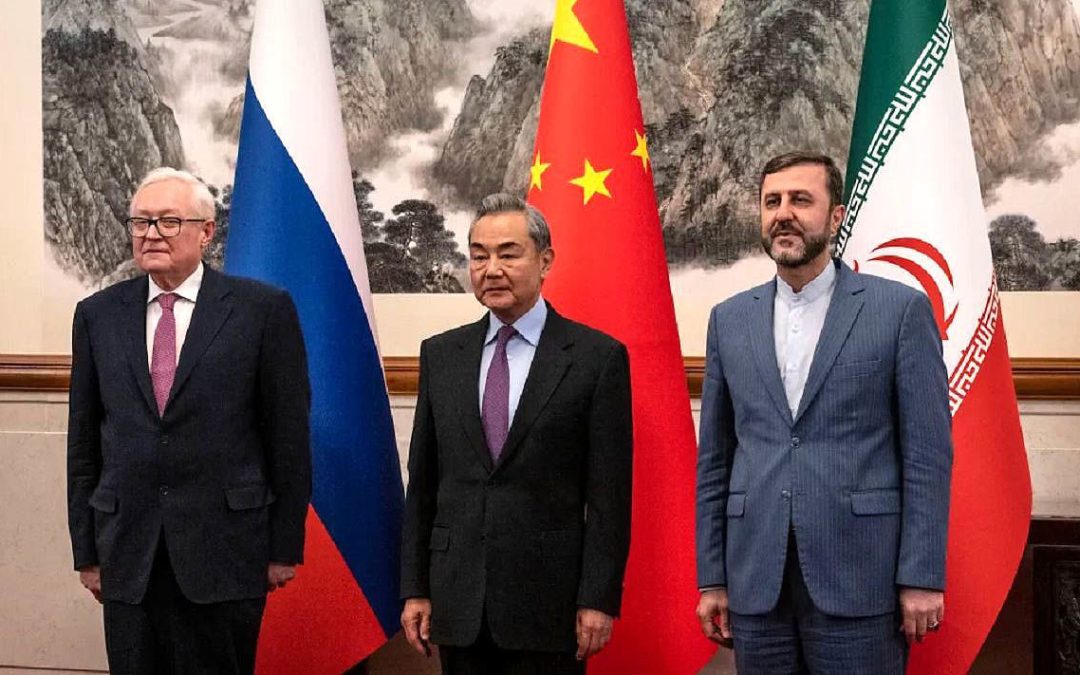
Strategic Council Online – Dialogue: An expert on China said that if Iran gains a clear understanding of China’s global initiatives in the area of security, it can enter into good interactions with Beijing to resolve the nuclear issue. This is because China is interested in creating a new initiative in the Iranian nuclear issue that, although based on the JCPOA, creates a new framework for cooperation and interaction between the parties to the Joint Comprehensive Plan of Action.

The IAEA’s difficult test in the technical and legal follow-up of Iran’s case

The IAEA’s difficult test in the technical and legal follow-up of Iran’s case

Strategic Council Online-Interview: An international affairs expert stated that the International Atomic Energy Agency is facing a difficult test, adding that Iran’s general agreement to step up cooperation with the agency confirms the claim that Iran is not seeking to increase tension with the agency; But the agency’s non-technical behavior and external pressures on this international body have affected its performance, and in the current situation, the continuation of legal disputes over the interpretation of the scope of the agency’s authority can disrupt the process of cooperation.

New British Approach to JCPOA

New British Approach to JCPOA

Strategic Council Online – Opinion: In recent weeks, Britain has backed the nuclear deal with Iran by changing its previous positions. According to the spokesman for the British Prime Minister Boris Johnson, the main reason for that is the desire to establish economic relations with Iran as soon as possible.
Abed Akbari – Expert on Europe affairs

Prospects of Talks to Revive JCPOA

Prospects of Talks to Revive JCPOA

Strategic Council Online – Interview: An expert on international affairs, commenting on the Western team’s approach to the Vienna talks, including Europe and the United States, said: During Donald Trump’s presidency, the United States and Europe had fundamental differences on a variety of issues, including the Joint Comprehensive Plan of Action (JCPOA); because the Europeans did not really agree with the US withdrawal from the JCPOA; but since Joe Biden took office, differences between Washington and Brussels have narrowed down in many areas, including the case of the JCPOA; therefore, now that the talks have reached a critical stage, all sides are bargaining for giving less concessions and gaining more points.

Last Ditch Effort of Zionist Regime against JCPOA Revival

Last Ditch Effort of Zionist Regime against JCPOA Revival

Strategic Council Online- Once again and coincided with the Vienna talks in which parties are approaching an agreement on Joint Comprehensive Plan Of Action widely known as JCPOA revival, authorities of the Zionist regime have started to raise impediments on its way and make JCPOA revival difficult or impossible.
Hassan Haani-Zadeh, Middle-East Analyst

Destructive Consequences of IAEA Political Approach to Iran

Destructive Consequences of IAEA Political Approach to Iran

Strategic Council Online – A faculty member of the Institute for Strategic Studies, stating that this political-security view of Iran’s nuclear activities and program has always been destructive and has hindered resolution of the problem, said: The recent issues raised by the IAEA are not new and in the past, when the parties have willed, they have managed and resolved the issues.

Increasing destructive approaches of the Zionist regime in the Middle East

Increasing destructive approaches of the Zionist regime in the Middle East

Strategic Council Online—Opinion: With the arrival of the World Quds Day, the Zionist regime has increased its destructive movements and measures in the Middle East especially against the resistance movement and the Islamic Republic of Iran.
Hassan Hanizadeh—expert of Middle East issues

The uneven path of Biden presidency

The uneven path of Biden presidency

Strategic Council Online—Interview: An expert of US affairs says the Biden administration has not yet made an achievement in many domestic areas such as consolidating social cohesion, restrictions concerning the use of weapons and racial discrimination especially in the police structure.

Variables Affecting Revival of JCPOA

Variables Affecting Revival of JCPOA

Strategic Council Online – An expert on international affairs commenting on the results of holding the two rounds of the Joint Comprehensive Plan of Action (JCPOA) Joint Commission meeting in Vienna said: Considering the desire of all parties to continue the negotiations, it can be said that the scenario of reviving the JCPOA is not far-fetched.

أحدث الوظائف

Europe’s Enduring Dependence on Persian Gulf Energy

SCFR Online – Opinion: The dominant discourse in the field of European energy security over the past two decades has revolved around diversification of supply sources and the gradual reduction of dependence on fossil fuels. This narrative, which gained particular momentum after the Ukraine gas crisis in 2006 and its intensification in 2014 and 2022, was based on the assumption that Europe could free itself from the geopolitical vulnerabilities arising from dependence on specific suppliers through investment in renewable energy, imports of liquefied natural gas from diversified sources, and the establishment of new infrastructure. However, a closer analysis of energy trade data and the structure of the global oil and gas supply chain presents a different picture. Europe has not only failed to meaningfully reduce its dependence on the Persian Gulf, but in some sectors — particularly in liquefied natural gas imports — this dependence has deepened. This reality, which is often overlooked in public discourse, raises fundamental questions about the sustainability of Europe’s energy security strategies and their impact on regional power equations.

The Challenge of Hezbollah’s Low-Cost “FPV” Drones for the Zionist Regime

SCFR Online – Opinion: In modern warfare, it has always been assumed that the more expensive, and advanced the weapon—particularly from well-known companies—the more certain the victory will be. However, developments on the northern front of occupied Palestine in recent months have challenged this long-held belief. Here, the Zionist regime’s military, despite possessing the most advanced defense systems such as Iron Dome, David’s Sling, and Arrow, as well as fifth-generation F-35 fighter jets, Merkava tanks, and other modern equipment found in few countries worldwide, has effectively been rendered helpless against Hezbollah Lebanon’s few-hundred-dollar drones. Benjamin Netanyahu’s bitter admission regarding the inability to counter this threat, and his order to allocate an unlimited budget to find a solution, underscores the reality that the era of pure superiority through expensive technologies has come to an end.

The Impact of West Asian Developments on the Ukraine War

SCFR Online – Note: Vladimir Putin, President of Russia, recently announced—more than four years after the commencement of military aggression against Ukraine—that he believes the conflict between Russia and Ukraine is drawing to a close.

Temporary China–U.S. Trade Truce in the Shadow of Fundamental Distrust

SCFR Online – Opinion: The recent visit of the President of the United States to China is significant from various aspects; because China is recognized as the world’s second-largest economic power and a growing economy. The Chinese are also advancing in various fields, including the space sector, artificial intelligence, and military industries; to the extent that in the military sector, whereas they previously lacked an aircraft carrier, they now possess their third aircraft carrier. On the other hand, the United States, as a superpower, has always regarded China as its rival and continues to view it as such today.

Loading

Nuclear agreement

Analysis of China’s Initiative to Advance Nuclear Talks

Analysis of China’s Initiative to Advance Nuclear Talks

Strategic Council Online – Dialogue: An expert on China said that if Iran gains a clear understanding of China’s global initiatives in the area of security, it can enter into good interactions with Beijing to resolve the nuclear issue. This is because China is interested in creating a new initiative in the Iranian nuclear issue that, although based on the JCPOA, creates a new framework for cooperation and interaction between the parties to the Joint Comprehensive Plan of Action.

The IAEA’s difficult test in the technical and legal follow-up of Iran’s case

The IAEA’s difficult test in the technical and legal follow-up of Iran’s case

Strategic Council Online-Interview: An international affairs expert stated that the International Atomic Energy Agency is facing a difficult test, adding that Iran’s general agreement to step up cooperation with the agency confirms the claim that Iran is not seeking to increase tension with the agency; But the agency’s non-technical behavior and external pressures on this international body have affected its performance, and in the current situation, the continuation of legal disputes over the interpretation of the scope of the agency’s authority can disrupt the process of cooperation.

New British Approach to JCPOA

New British Approach to JCPOA

Strategic Council Online – Opinion: In recent weeks, Britain has backed the nuclear deal with Iran by changing its previous positions. According to the spokesman for the British Prime Minister Boris Johnson, the main reason for that is the desire to establish economic relations with Iran as soon as possible.
Abed Akbari – Expert on Europe affairs

Prospects of Talks to Revive JCPOA

Prospects of Talks to Revive JCPOA

Strategic Council Online – Interview: An expert on international affairs, commenting on the Western team’s approach to the Vienna talks, including Europe and the United States, said: During Donald Trump’s presidency, the United States and Europe had fundamental differences on a variety of issues, including the Joint Comprehensive Plan of Action (JCPOA); because the Europeans did not really agree with the US withdrawal from the JCPOA; but since Joe Biden took office, differences between Washington and Brussels have narrowed down in many areas, including the case of the JCPOA; therefore, now that the talks have reached a critical stage, all sides are bargaining for giving less concessions and gaining more points.

Last Ditch Effort of Zionist Regime against JCPOA Revival

Last Ditch Effort of Zionist Regime against JCPOA Revival

Strategic Council Online- Once again and coincided with the Vienna talks in which parties are approaching an agreement on Joint Comprehensive Plan Of Action widely known as JCPOA revival, authorities of the Zionist regime have started to raise impediments on its way and make JCPOA revival difficult or impossible.
Hassan Haani-Zadeh, Middle-East Analyst

Destructive Consequences of IAEA Political Approach to Iran

Destructive Consequences of IAEA Political Approach to Iran

Strategic Council Online – A faculty member of the Institute for Strategic Studies, stating that this political-security view of Iran’s nuclear activities and program has always been destructive and has hindered resolution of the problem, said: The recent issues raised by the IAEA are not new and in the past, when the parties have willed, they have managed and resolved the issues.

Increasing destructive approaches of the Zionist regime in the Middle East

Increasing destructive approaches of the Zionist regime in the Middle East

Strategic Council Online—Opinion: With the arrival of the World Quds Day, the Zionist regime has increased its destructive movements and measures in the Middle East especially against the resistance movement and the Islamic Republic of Iran.
Hassan Hanizadeh—expert of Middle East issues

The uneven path of Biden presidency

The uneven path of Biden presidency

Strategic Council Online—Interview: An expert of US affairs says the Biden administration has not yet made an achievement in many domestic areas such as consolidating social cohesion, restrictions concerning the use of weapons and racial discrimination especially in the police structure.

Variables Affecting Revival of JCPOA

Variables Affecting Revival of JCPOA

Strategic Council Online – An expert on international affairs commenting on the results of holding the two rounds of the Joint Comprehensive Plan of Action (JCPOA) Joint Commission meeting in Vienna said: Considering the desire of all parties to continue the negotiations, it can be said that the scenario of reviving the JCPOA is not far-fetched.

Nuclear agreement

Analysis of China’s Initiative to Advance Nuclear Talks

Analysis of China’s Initiative to Advance Nuclear Talks

Strategic Council Online – Dialogue: An expert on China said that if Iran gains a clear understanding of China’s global initiatives in the area of security, it can enter into good interactions with Beijing to resolve the nuclear issue. This is because China is interested in creating a new initiative in the Iranian nuclear issue that, although based on the JCPOA, creates a new framework for cooperation and interaction between the parties to the Joint Comprehensive Plan of Action.

The IAEA’s difficult test in the technical and legal follow-up of Iran’s case

The IAEA’s difficult test in the technical and legal follow-up of Iran’s case

Strategic Council Online-Interview: An international affairs expert stated that the International Atomic Energy Agency is facing a difficult test, adding that Iran’s general agreement to step up cooperation with the agency confirms the claim that Iran is not seeking to increase tension with the agency; But the agency’s non-technical behavior and external pressures on this international body have affected its performance, and in the current situation, the continuation of legal disputes over the interpretation of the scope of the agency’s authority can disrupt the process of cooperation.

New British Approach to JCPOA

New British Approach to JCPOA

Strategic Council Online – Opinion: In recent weeks, Britain has backed the nuclear deal with Iran by changing its previous positions. According to the spokesman for the British Prime Minister Boris Johnson, the main reason for that is the desire to establish economic relations with Iran as soon as possible.
Abed Akbari – Expert on Europe affairs

Prospects of Talks to Revive JCPOA

Prospects of Talks to Revive JCPOA

Strategic Council Online – Interview: An expert on international affairs, commenting on the Western team’s approach to the Vienna talks, including Europe and the United States, said: During Donald Trump’s presidency, the United States and Europe had fundamental differences on a variety of issues, including the Joint Comprehensive Plan of Action (JCPOA); because the Europeans did not really agree with the US withdrawal from the JCPOA; but since Joe Biden took office, differences between Washington and Brussels have narrowed down in many areas, including the case of the JCPOA; therefore, now that the talks have reached a critical stage, all sides are bargaining for giving less concessions and gaining more points.

Last Ditch Effort of Zionist Regime against JCPOA Revival

Last Ditch Effort of Zionist Regime against JCPOA Revival

Strategic Council Online- Once again and coincided with the Vienna talks in which parties are approaching an agreement on Joint Comprehensive Plan Of Action widely known as JCPOA revival, authorities of the Zionist regime have started to raise impediments on its way and make JCPOA revival difficult or impossible.
Hassan Haani-Zadeh, Middle-East Analyst

Destructive Consequences of IAEA Political Approach to Iran

Destructive Consequences of IAEA Political Approach to Iran

Strategic Council Online – A faculty member of the Institute for Strategic Studies, stating that this political-security view of Iran’s nuclear activities and program has always been destructive and has hindered resolution of the problem, said: The recent issues raised by the IAEA are not new and in the past, when the parties have willed, they have managed and resolved the issues.

Increasing destructive approaches of the Zionist regime in the Middle East

Increasing destructive approaches of the Zionist regime in the Middle East

Strategic Council Online—Opinion: With the arrival of the World Quds Day, the Zionist regime has increased its destructive movements and measures in the Middle East especially against the resistance movement and the Islamic Republic of Iran.
Hassan Hanizadeh—expert of Middle East issues

The uneven path of Biden presidency

The uneven path of Biden presidency

Strategic Council Online—Interview: An expert of US affairs says the Biden administration has not yet made an achievement in many domestic areas such as consolidating social cohesion, restrictions concerning the use of weapons and racial discrimination especially in the police structure.

Variables Affecting Revival of JCPOA

Variables Affecting Revival of JCPOA

Strategic Council Online – An expert on international affairs commenting on the results of holding the two rounds of the Joint Comprehensive Plan of Action (JCPOA) Joint Commission meeting in Vienna said: Considering the desire of all parties to continue the negotiations, it can be said that the scenario of reviving the JCPOA is not far-fetched.

LATEST CONTENT

Europe’s Enduring Dependence on Persian Gulf Energy

SCFR Online – Opinion: The dominant discourse in the field of European energy security over the past two decades has revolved around diversification of supply sources and the gradual reduction of dependence on fossil fuels. This narrative, which gained particular momentum after the Ukraine gas crisis in 2006 and its intensification in 2014 and 2022, was based on the assumption that Europe could free itself from the geopolitical vulnerabilities arising from dependence on specific suppliers through investment in renewable energy, imports of liquefied natural gas from diversified sources, and the establishment of new infrastructure. However, a closer analysis of energy trade data and the structure of the global oil and gas supply chain presents a different picture. Europe has not only failed to meaningfully reduce its dependence on the Persian Gulf, but in some sectors — particularly in liquefied natural gas imports — this dependence has deepened. This reality, which is often overlooked in public discourse, raises fundamental questions about the sustainability of Europe’s energy security strategies and their impact on regional power equations.

The Challenge of Hezbollah’s Low-Cost “FPV” Drones for the Zionist Regime

SCFR Online – Opinion: In modern warfare, it has always been assumed that the more expensive, and advanced the weapon—particularly from well-known companies—the more certain the victory will be. However, developments on the northern front of occupied Palestine in recent months have challenged this long-held belief. Here, the Zionist regime’s military, despite possessing the most advanced defense systems such as Iron Dome, David’s Sling, and Arrow, as well as fifth-generation F-35 fighter jets, Merkava tanks, and other modern equipment found in few countries worldwide, has effectively been rendered helpless against Hezbollah Lebanon’s few-hundred-dollar drones. Benjamin Netanyahu’s bitter admission regarding the inability to counter this threat, and his order to allocate an unlimited budget to find a solution, underscores the reality that the era of pure superiority through expensive technologies has come to an end.

The Impact of West Asian Developments on the Ukraine War

SCFR Online – Note: Vladimir Putin, President of Russia, recently announced—more than four years after the commencement of military aggression against Ukraine—that he believes the conflict between Russia and Ukraine is drawing to a close.

Temporary China–U.S. Trade Truce in the Shadow of Fundamental Distrust

SCFR Online – Opinion: The recent visit of the President of the United States to China is significant from various aspects; because China is recognized as the world’s second-largest economic power and a growing economy. The Chinese are also advancing in various fields, including the space sector, artificial intelligence, and military industries; to the extent that in the military sector, whereas they previously lacked an aircraft carrier, they now possess their third aircraft carrier. On the other hand, the United States, as a superpower, has always regarded China as its rival and continues to view it as such today.

Loading

Nuclear agreement

Analysis of China’s Initiative to Advance Nuclear Talks

Analysis of China’s Initiative to Advance Nuclear Talks

Strategic Council Online – Dialogue: An expert on China said that if Iran gains a clear understanding of China’s global initiatives in the area of security, it can enter into good interactions with Beijing to resolve the nuclear issue. This is because China is interested in creating a new initiative in the Iranian nuclear issue that, although based on the JCPOA, creates a new framework for cooperation and interaction between the parties to the Joint Comprehensive Plan of Action.

The IAEA’s difficult test in the technical and legal follow-up of Iran’s case

The IAEA’s difficult test in the technical and legal follow-up of Iran’s case

Strategic Council Online-Interview: An international affairs expert stated that the International Atomic Energy Agency is facing a difficult test, adding that Iran’s general agreement to step up cooperation with the agency confirms the claim that Iran is not seeking to increase tension with the agency; But the agency’s non-technical behavior and external pressures on this international body have affected its performance, and in the current situation, the continuation of legal disputes over the interpretation of the scope of the agency’s authority can disrupt the process of cooperation.

New British Approach to JCPOA

New British Approach to JCPOA

Strategic Council Online – Opinion: In recent weeks, Britain has backed the nuclear deal with Iran by changing its previous positions. According to the spokesman for the British Prime Minister Boris Johnson, the main reason for that is the desire to establish economic relations with Iran as soon as possible.
Abed Akbari – Expert on Europe affairs

Prospects of Talks to Revive JCPOA

Prospects of Talks to Revive JCPOA

Strategic Council Online – Interview: An expert on international affairs, commenting on the Western team’s approach to the Vienna talks, including Europe and the United States, said: During Donald Trump’s presidency, the United States and Europe had fundamental differences on a variety of issues, including the Joint Comprehensive Plan of Action (JCPOA); because the Europeans did not really agree with the US withdrawal from the JCPOA; but since Joe Biden took office, differences between Washington and Brussels have narrowed down in many areas, including the case of the JCPOA; therefore, now that the talks have reached a critical stage, all sides are bargaining for giving less concessions and gaining more points.

Last Ditch Effort of Zionist Regime against JCPOA Revival

Last Ditch Effort of Zionist Regime against JCPOA Revival

Strategic Council Online- Once again and coincided with the Vienna talks in which parties are approaching an agreement on Joint Comprehensive Plan Of Action widely known as JCPOA revival, authorities of the Zionist regime have started to raise impediments on its way and make JCPOA revival difficult or impossible.
Hassan Haani-Zadeh, Middle-East Analyst

Destructive Consequences of IAEA Political Approach to Iran

Destructive Consequences of IAEA Political Approach to Iran

Strategic Council Online – A faculty member of the Institute for Strategic Studies, stating that this political-security view of Iran’s nuclear activities and program has always been destructive and has hindered resolution of the problem, said: The recent issues raised by the IAEA are not new and in the past, when the parties have willed, they have managed and resolved the issues.

Increasing destructive approaches of the Zionist regime in the Middle East

Increasing destructive approaches of the Zionist regime in the Middle East

Strategic Council Online—Opinion: With the arrival of the World Quds Day, the Zionist regime has increased its destructive movements and measures in the Middle East especially against the resistance movement and the Islamic Republic of Iran.
Hassan Hanizadeh—expert of Middle East issues

The uneven path of Biden presidency

The uneven path of Biden presidency

Strategic Council Online—Interview: An expert of US affairs says the Biden administration has not yet made an achievement in many domestic areas such as consolidating social cohesion, restrictions concerning the use of weapons and racial discrimination especially in the police structure.

Variables Affecting Revival of JCPOA

Variables Affecting Revival of JCPOA

Strategic Council Online – An expert on international affairs commenting on the results of holding the two rounds of the Joint Comprehensive Plan of Action (JCPOA) Joint Commission meeting in Vienna said: Considering the desire of all parties to continue the negotiations, it can be said that the scenario of reviving the JCPOA is not far-fetched.

ÚLTIMAS PUBLICACIONES

Europe’s Enduring Dependence on Persian Gulf Energy

SCFR Online – Opinion: The dominant discourse in the field of European energy security over the past two decades has revolved around diversification of supply sources and the gradual reduction of dependence on fossil fuels. This narrative, which gained particular momentum after the Ukraine gas crisis in 2006 and its intensification in 2014 and 2022, was based on the assumption that Europe could free itself from the geopolitical vulnerabilities arising from dependence on specific suppliers through investment in renewable energy, imports of liquefied natural gas from diversified sources, and the establishment of new infrastructure. However, a closer analysis of energy trade data and the structure of the global oil and gas supply chain presents a different picture. Europe has not only failed to meaningfully reduce its dependence on the Persian Gulf, but in some sectors — particularly in liquefied natural gas imports — this dependence has deepened. This reality, which is often overlooked in public discourse, raises fundamental questions about the sustainability of Europe’s energy security strategies and their impact on regional power equations.

The Challenge of Hezbollah’s Low-Cost “FPV” Drones for the Zionist Regime

SCFR Online – Opinion: In modern warfare, it has always been assumed that the more expensive, and advanced the weapon—particularly from well-known companies—the more certain the victory will be. However, developments on the northern front of occupied Palestine in recent months have challenged this long-held belief. Here, the Zionist regime’s military, despite possessing the most advanced defense systems such as Iron Dome, David’s Sling, and Arrow, as well as fifth-generation F-35 fighter jets, Merkava tanks, and other modern equipment found in few countries worldwide, has effectively been rendered helpless against Hezbollah Lebanon’s few-hundred-dollar drones. Benjamin Netanyahu’s bitter admission regarding the inability to counter this threat, and his order to allocate an unlimited budget to find a solution, underscores the reality that the era of pure superiority through expensive technologies has come to an end.

The Impact of West Asian Developments on the Ukraine War

SCFR Online – Note: Vladimir Putin, President of Russia, recently announced—more than four years after the commencement of military aggression against Ukraine—that he believes the conflict between Russia and Ukraine is drawing to a close.

Temporary China–U.S. Trade Truce in the Shadow of Fundamental Distrust

SCFR Online – Opinion: The recent visit of the President of the United States to China is significant from various aspects; because China is recognized as the world’s second-largest economic power and a growing economy. The Chinese are also advancing in various fields, including the space sector, artificial intelligence, and military industries; to the extent that in the military sector, whereas they previously lacked an aircraft carrier, they now possess their third aircraft carrier. On the other hand, the United States, as a superpower, has always regarded China as its rival and continues to view it as such today.

Loading

Nuclear agreement

Analysis of China’s Initiative to Advance Nuclear Talks

Analysis of China’s Initiative to Advance Nuclear Talks

Strategic Council Online – Dialogue: An expert on China said that if Iran gains a clear understanding of China’s global initiatives in the area of security, it can enter into good interactions with Beijing to resolve the nuclear issue. This is because China is interested in creating a new initiative in the Iranian nuclear issue that, although based on the JCPOA, creates a new framework for cooperation and interaction between the parties to the Joint Comprehensive Plan of Action.

The IAEA’s difficult test in the technical and legal follow-up of Iran’s case

The IAEA’s difficult test in the technical and legal follow-up of Iran’s case

Strategic Council Online-Interview: An international affairs expert stated that the International Atomic Energy Agency is facing a difficult test, adding that Iran’s general agreement to step up cooperation with the agency confirms the claim that Iran is not seeking to increase tension with the agency; But the agency’s non-technical behavior and external pressures on this international body have affected its performance, and in the current situation, the continuation of legal disputes over the interpretation of the scope of the agency’s authority can disrupt the process of cooperation.

New British Approach to JCPOA

New British Approach to JCPOA

Strategic Council Online – Opinion: In recent weeks, Britain has backed the nuclear deal with Iran by changing its previous positions. According to the spokesman for the British Prime Minister Boris Johnson, the main reason for that is the desire to establish economic relations with Iran as soon as possible.
Abed Akbari – Expert on Europe affairs

Prospects of Talks to Revive JCPOA

Prospects of Talks to Revive JCPOA

Strategic Council Online – Interview: An expert on international affairs, commenting on the Western team’s approach to the Vienna talks, including Europe and the United States, said: During Donald Trump’s presidency, the United States and Europe had fundamental differences on a variety of issues, including the Joint Comprehensive Plan of Action (JCPOA); because the Europeans did not really agree with the US withdrawal from the JCPOA; but since Joe Biden took office, differences between Washington and Brussels have narrowed down in many areas, including the case of the JCPOA; therefore, now that the talks have reached a critical stage, all sides are bargaining for giving less concessions and gaining more points.

Last Ditch Effort of Zionist Regime against JCPOA Revival

Last Ditch Effort of Zionist Regime against JCPOA Revival

Strategic Council Online- Once again and coincided with the Vienna talks in which parties are approaching an agreement on Joint Comprehensive Plan Of Action widely known as JCPOA revival, authorities of the Zionist regime have started to raise impediments on its way and make JCPOA revival difficult or impossible.
Hassan Haani-Zadeh, Middle-East Analyst

Destructive Consequences of IAEA Political Approach to Iran

Destructive Consequences of IAEA Political Approach to Iran

Strategic Council Online – A faculty member of the Institute for Strategic Studies, stating that this political-security view of Iran’s nuclear activities and program has always been destructive and has hindered resolution of the problem, said: The recent issues raised by the IAEA are not new and in the past, when the parties have willed, they have managed and resolved the issues.

Increasing destructive approaches of the Zionist regime in the Middle East

Increasing destructive approaches of the Zionist regime in the Middle East

Strategic Council Online—Opinion: With the arrival of the World Quds Day, the Zionist regime has increased its destructive movements and measures in the Middle East especially against the resistance movement and the Islamic Republic of Iran.
Hassan Hanizadeh—expert of Middle East issues

The uneven path of Biden presidency

The uneven path of Biden presidency

Strategic Council Online—Interview: An expert of US affairs says the Biden administration has not yet made an achievement in many domestic areas such as consolidating social cohesion, restrictions concerning the use of weapons and racial discrimination especially in the police structure.

Variables Affecting Revival of JCPOA

Variables Affecting Revival of JCPOA

Strategic Council Online – An expert on international affairs commenting on the results of holding the two rounds of the Joint Comprehensive Plan of Action (JCPOA) Joint Commission meeting in Vienna said: Considering the desire of all parties to continue the negotiations, it can be said that the scenario of reviving the JCPOA is not far-fetched.

ÚLTIMAS PUBLICACIONES

Europe’s Enduring Dependence on Persian Gulf Energy

SCFR Online – Opinion: The dominant discourse in the field of European energy security over the past two decades has revolved around diversification of supply sources and the gradual reduction of dependence on fossil fuels. This narrative, which gained particular momentum after the Ukraine gas crisis in 2006 and its intensification in 2014 and 2022, was based on the assumption that Europe could free itself from the geopolitical vulnerabilities arising from dependence on specific suppliers through investment in renewable energy, imports of liquefied natural gas from diversified sources, and the establishment of new infrastructure. However, a closer analysis of energy trade data and the structure of the global oil and gas supply chain presents a different picture. Europe has not only failed to meaningfully reduce its dependence on the Persian Gulf, but in some sectors — particularly in liquefied natural gas imports — this dependence has deepened. This reality, which is often overlooked in public discourse, raises fundamental questions about the sustainability of Europe’s energy security strategies and their impact on regional power equations.

The Challenge of Hezbollah’s Low-Cost “FPV” Drones for the Zionist Regime

SCFR Online – Opinion: In modern warfare, it has always been assumed that the more expensive, and advanced the weapon—particularly from well-known companies—the more certain the victory will be. However, developments on the northern front of occupied Palestine in recent months have challenged this long-held belief. Here, the Zionist regime’s military, despite possessing the most advanced defense systems such as Iron Dome, David’s Sling, and Arrow, as well as fifth-generation F-35 fighter jets, Merkava tanks, and other modern equipment found in few countries worldwide, has effectively been rendered helpless against Hezbollah Lebanon’s few-hundred-dollar drones. Benjamin Netanyahu’s bitter admission regarding the inability to counter this threat, and his order to allocate an unlimited budget to find a solution, underscores the reality that the era of pure superiority through expensive technologies has come to an end.

The Impact of West Asian Developments on the Ukraine War

SCFR Online – Note: Vladimir Putin, President of Russia, recently announced—more than four years after the commencement of military aggression against Ukraine—that he believes the conflict between Russia and Ukraine is drawing to a close.

Temporary China–U.S. Trade Truce in the Shadow of Fundamental Distrust

SCFR Online – Opinion: The recent visit of the President of the United States to China is significant from various aspects; because China is recognized as the world’s second-largest economic power and a growing economy. The Chinese are also advancing in various fields, including the space sector, artificial intelligence, and military industries; to the extent that in the military sector, whereas they previously lacked an aircraft carrier, they now possess their third aircraft carrier. On the other hand, the United States, as a superpower, has always regarded China as its rival and continues to view it as such today.

Loading

Nuclear agreement

Analysis of China’s Initiative to Advance Nuclear Talks

Analysis of China’s Initiative to Advance Nuclear Talks

Strategic Council Online – Dialogue: An expert on China said that if Iran gains a clear understanding of China’s global initiatives in the area of security, it can enter into good interactions with Beijing to resolve the nuclear issue. This is because China is interested in creating a new initiative in the Iranian nuclear issue that, although based on the JCPOA, creates a new framework for cooperation and interaction between the parties to the Joint Comprehensive Plan of Action.

The IAEA’s difficult test in the technical and legal follow-up of Iran’s case

The IAEA’s difficult test in the technical and legal follow-up of Iran’s case

Strategic Council Online-Interview: An international affairs expert stated that the International Atomic Energy Agency is facing a difficult test, adding that Iran’s general agreement to step up cooperation with the agency confirms the claim that Iran is not seeking to increase tension with the agency; But the agency’s non-technical behavior and external pressures on this international body have affected its performance, and in the current situation, the continuation of legal disputes over the interpretation of the scope of the agency’s authority can disrupt the process of cooperation.

New British Approach to JCPOA

New British Approach to JCPOA

Strategic Council Online – Opinion: In recent weeks, Britain has backed the nuclear deal with Iran by changing its previous positions. According to the spokesman for the British Prime Minister Boris Johnson, the main reason for that is the desire to establish economic relations with Iran as soon as possible.
Abed Akbari – Expert on Europe affairs

Prospects of Talks to Revive JCPOA

Prospects of Talks to Revive JCPOA

Strategic Council Online – Interview: An expert on international affairs, commenting on the Western team’s approach to the Vienna talks, including Europe and the United States, said: During Donald Trump’s presidency, the United States and Europe had fundamental differences on a variety of issues, including the Joint Comprehensive Plan of Action (JCPOA); because the Europeans did not really agree with the US withdrawal from the JCPOA; but since Joe Biden took office, differences between Washington and Brussels have narrowed down in many areas, including the case of the JCPOA; therefore, now that the talks have reached a critical stage, all sides are bargaining for giving less concessions and gaining more points.

Last Ditch Effort of Zionist Regime against JCPOA Revival

Last Ditch Effort of Zionist Regime against JCPOA Revival

Strategic Council Online- Once again and coincided with the Vienna talks in which parties are approaching an agreement on Joint Comprehensive Plan Of Action widely known as JCPOA revival, authorities of the Zionist regime have started to raise impediments on its way and make JCPOA revival difficult or impossible.
Hassan Haani-Zadeh, Middle-East Analyst

Destructive Consequences of IAEA Political Approach to Iran

Destructive Consequences of IAEA Political Approach to Iran

Strategic Council Online – A faculty member of the Institute for Strategic Studies, stating that this political-security view of Iran’s nuclear activities and program has always been destructive and has hindered resolution of the problem, said: The recent issues raised by the IAEA are not new and in the past, when the parties have willed, they have managed and resolved the issues.

Increasing destructive approaches of the Zionist regime in the Middle East

Increasing destructive approaches of the Zionist regime in the Middle East

Strategic Council Online—Opinion: With the arrival of the World Quds Day, the Zionist regime has increased its destructive movements and measures in the Middle East especially against the resistance movement and the Islamic Republic of Iran.
Hassan Hanizadeh—expert of Middle East issues

The uneven path of Biden presidency

The uneven path of Biden presidency

Strategic Council Online—Interview: An expert of US affairs says the Biden administration has not yet made an achievement in many domestic areas such as consolidating social cohesion, restrictions concerning the use of weapons and racial discrimination especially in the police structure.

Variables Affecting Revival of JCPOA

Variables Affecting Revival of JCPOA

Strategic Council Online – An expert on international affairs commenting on the results of holding the two rounds of the Joint Comprehensive Plan of Action (JCPOA) Joint Commission meeting in Vienna said: Considering the desire of all parties to continue the negotiations, it can be said that the scenario of reviving the JCPOA is not far-fetched.

ÚLTIMAS PUBLICACIONES

Europe’s Enduring Dependence on Persian Gulf Energy

SCFR Online – Opinion: The dominant discourse in the field of European energy security over the past two decades has revolved around diversification of supply sources and the gradual reduction of dependence on fossil fuels. This narrative, which gained particular momentum after the Ukraine gas crisis in 2006 and its intensification in 2014 and 2022, was based on the assumption that Europe could free itself from the geopolitical vulnerabilities arising from dependence on specific suppliers through investment in renewable energy, imports of liquefied natural gas from diversified sources, and the establishment of new infrastructure. However, a closer analysis of energy trade data and the structure of the global oil and gas supply chain presents a different picture. Europe has not only failed to meaningfully reduce its dependence on the Persian Gulf, but in some sectors — particularly in liquefied natural gas imports — this dependence has deepened. This reality, which is often overlooked in public discourse, raises fundamental questions about the sustainability of Europe’s energy security strategies and their impact on regional power equations.

The Challenge of Hezbollah’s Low-Cost “FPV” Drones for the Zionist Regime

SCFR Online – Opinion: In modern warfare, it has always been assumed that the more expensive, and advanced the weapon—particularly from well-known companies—the more certain the victory will be. However, developments on the northern front of occupied Palestine in recent months have challenged this long-held belief. Here, the Zionist regime’s military, despite possessing the most advanced defense systems such as Iron Dome, David’s Sling, and Arrow, as well as fifth-generation F-35 fighter jets, Merkava tanks, and other modern equipment found in few countries worldwide, has effectively been rendered helpless against Hezbollah Lebanon’s few-hundred-dollar drones. Benjamin Netanyahu’s bitter admission regarding the inability to counter this threat, and his order to allocate an unlimited budget to find a solution, underscores the reality that the era of pure superiority through expensive technologies has come to an end.

The Impact of West Asian Developments on the Ukraine War

SCFR Online – Note: Vladimir Putin, President of Russia, recently announced—more than four years after the commencement of military aggression against Ukraine—that he believes the conflict between Russia and Ukraine is drawing to a close.

Temporary China–U.S. Trade Truce in the Shadow of Fundamental Distrust

SCFR Online – Opinion: The recent visit of the President of the United States to China is significant from various aspects; because China is recognized as the world’s second-largest economic power and a growing economy. The Chinese are also advancing in various fields, including the space sector, artificial intelligence, and military industries; to the extent that in the military sector, whereas they previously lacked an aircraft carrier, they now possess their third aircraft carrier. On the other hand, the United States, as a superpower, has always regarded China as its rival and continues to view it as such today.

Loading

Nuclear agreement

Analysis of China’s Initiative to Advance Nuclear Talks

Analysis of China’s Initiative to Advance Nuclear Talks

Strategic Council Online – Dialogue: An expert on China said that if Iran gains a clear understanding of China’s global initiatives in the area of security, it can enter into good interactions with Beijing to resolve the nuclear issue. This is because China is interested in creating a new initiative in the Iranian nuclear issue that, although based on the JCPOA, creates a new framework for cooperation and interaction between the parties to the Joint Comprehensive Plan of Action.

The IAEA’s difficult test in the technical and legal follow-up of Iran’s case

The IAEA’s difficult test in the technical and legal follow-up of Iran’s case

Strategic Council Online-Interview: An international affairs expert stated that the International Atomic Energy Agency is facing a difficult test, adding that Iran’s general agreement to step up cooperation with the agency confirms the claim that Iran is not seeking to increase tension with the agency; But the agency’s non-technical behavior and external pressures on this international body have affected its performance, and in the current situation, the continuation of legal disputes over the interpretation of the scope of the agency’s authority can disrupt the process of cooperation.

New British Approach to JCPOA

New British Approach to JCPOA

Strategic Council Online – Opinion: In recent weeks, Britain has backed the nuclear deal with Iran by changing its previous positions. According to the spokesman for the British Prime Minister Boris Johnson, the main reason for that is the desire to establish economic relations with Iran as soon as possible.
Abed Akbari – Expert on Europe affairs

Prospects of Talks to Revive JCPOA

Prospects of Talks to Revive JCPOA

Strategic Council Online – Interview: An expert on international affairs, commenting on the Western team’s approach to the Vienna talks, including Europe and the United States, said: During Donald Trump’s presidency, the United States and Europe had fundamental differences on a variety of issues, including the Joint Comprehensive Plan of Action (JCPOA); because the Europeans did not really agree with the US withdrawal from the JCPOA; but since Joe Biden took office, differences between Washington and Brussels have narrowed down in many areas, including the case of the JCPOA; therefore, now that the talks have reached a critical stage, all sides are bargaining for giving less concessions and gaining more points.

Last Ditch Effort of Zionist Regime against JCPOA Revival

Last Ditch Effort of Zionist Regime against JCPOA Revival

Strategic Council Online- Once again and coincided with the Vienna talks in which parties are approaching an agreement on Joint Comprehensive Plan Of Action widely known as JCPOA revival, authorities of the Zionist regime have started to raise impediments on its way and make JCPOA revival difficult or impossible.
Hassan Haani-Zadeh, Middle-East Analyst

Destructive Consequences of IAEA Political Approach to Iran

Destructive Consequences of IAEA Political Approach to Iran

Strategic Council Online – A faculty member of the Institute for Strategic Studies, stating that this political-security view of Iran’s nuclear activities and program has always been destructive and has hindered resolution of the problem, said: The recent issues raised by the IAEA are not new and in the past, when the parties have willed, they have managed and resolved the issues.

Increasing destructive approaches of the Zionist regime in the Middle East

Increasing destructive approaches of the Zionist regime in the Middle East

Strategic Council Online—Opinion: With the arrival of the World Quds Day, the Zionist regime has increased its destructive movements and measures in the Middle East especially against the resistance movement and the Islamic Republic of Iran.
Hassan Hanizadeh—expert of Middle East issues

The uneven path of Biden presidency

The uneven path of Biden presidency

Strategic Council Online—Interview: An expert of US affairs says the Biden administration has not yet made an achievement in many domestic areas such as consolidating social cohesion, restrictions concerning the use of weapons and racial discrimination especially in the police structure.

Variables Affecting Revival of JCPOA

Variables Affecting Revival of JCPOA

Strategic Council Online – An expert on international affairs commenting on the results of holding the two rounds of the Joint Comprehensive Plan of Action (JCPOA) Joint Commission meeting in Vienna said: Considering the desire of all parties to continue the negotiations, it can be said that the scenario of reviving the JCPOA is not far-fetched.

ÚLTIMAS PUBLICACIONES

Europe’s Enduring Dependence on Persian Gulf Energy

SCFR Online – Opinion: The dominant discourse in the field of European energy security over the past two decades has revolved around diversification of supply sources and the gradual reduction of dependence on fossil fuels. This narrative, which gained particular momentum after the Ukraine gas crisis in 2006 and its intensification in 2014 and 2022, was based on the assumption that Europe could free itself from the geopolitical vulnerabilities arising from dependence on specific suppliers through investment in renewable energy, imports of liquefied natural gas from diversified sources, and the establishment of new infrastructure. However, a closer analysis of energy trade data and the structure of the global oil and gas supply chain presents a different picture. Europe has not only failed to meaningfully reduce its dependence on the Persian Gulf, but in some sectors — particularly in liquefied natural gas imports — this dependence has deepened. This reality, which is often overlooked in public discourse, raises fundamental questions about the sustainability of Europe’s energy security strategies and their impact on regional power equations.

The Challenge of Hezbollah’s Low-Cost “FPV” Drones for the Zionist Regime

SCFR Online – Opinion: In modern warfare, it has always been assumed that the more expensive, and advanced the weapon—particularly from well-known companies—the more certain the victory will be. However, developments on the northern front of occupied Palestine in recent months have challenged this long-held belief. Here, the Zionist regime’s military, despite possessing the most advanced defense systems such as Iron Dome, David’s Sling, and Arrow, as well as fifth-generation F-35 fighter jets, Merkava tanks, and other modern equipment found in few countries worldwide, has effectively been rendered helpless against Hezbollah Lebanon’s few-hundred-dollar drones. Benjamin Netanyahu’s bitter admission regarding the inability to counter this threat, and his order to allocate an unlimited budget to find a solution, underscores the reality that the era of pure superiority through expensive technologies has come to an end.

The Impact of West Asian Developments on the Ukraine War

SCFR Online – Note: Vladimir Putin, President of Russia, recently announced—more than four years after the commencement of military aggression against Ukraine—that he believes the conflict between Russia and Ukraine is drawing to a close.

Temporary China–U.S. Trade Truce in the Shadow of Fundamental Distrust

SCFR Online – Opinion: The recent visit of the President of the United States to China is significant from various aspects; because China is recognized as the world’s second-largest economic power and a growing economy. The Chinese are also advancing in various fields, including the space sector, artificial intelligence, and military industries; to the extent that in the military sector, whereas they previously lacked an aircraft carrier, they now possess their third aircraft carrier. On the other hand, the United States, as a superpower, has always regarded China as its rival and continues to view it as such today.

Loading