The Makkah Pact; Reasons for its Formation and Challenges Ahead

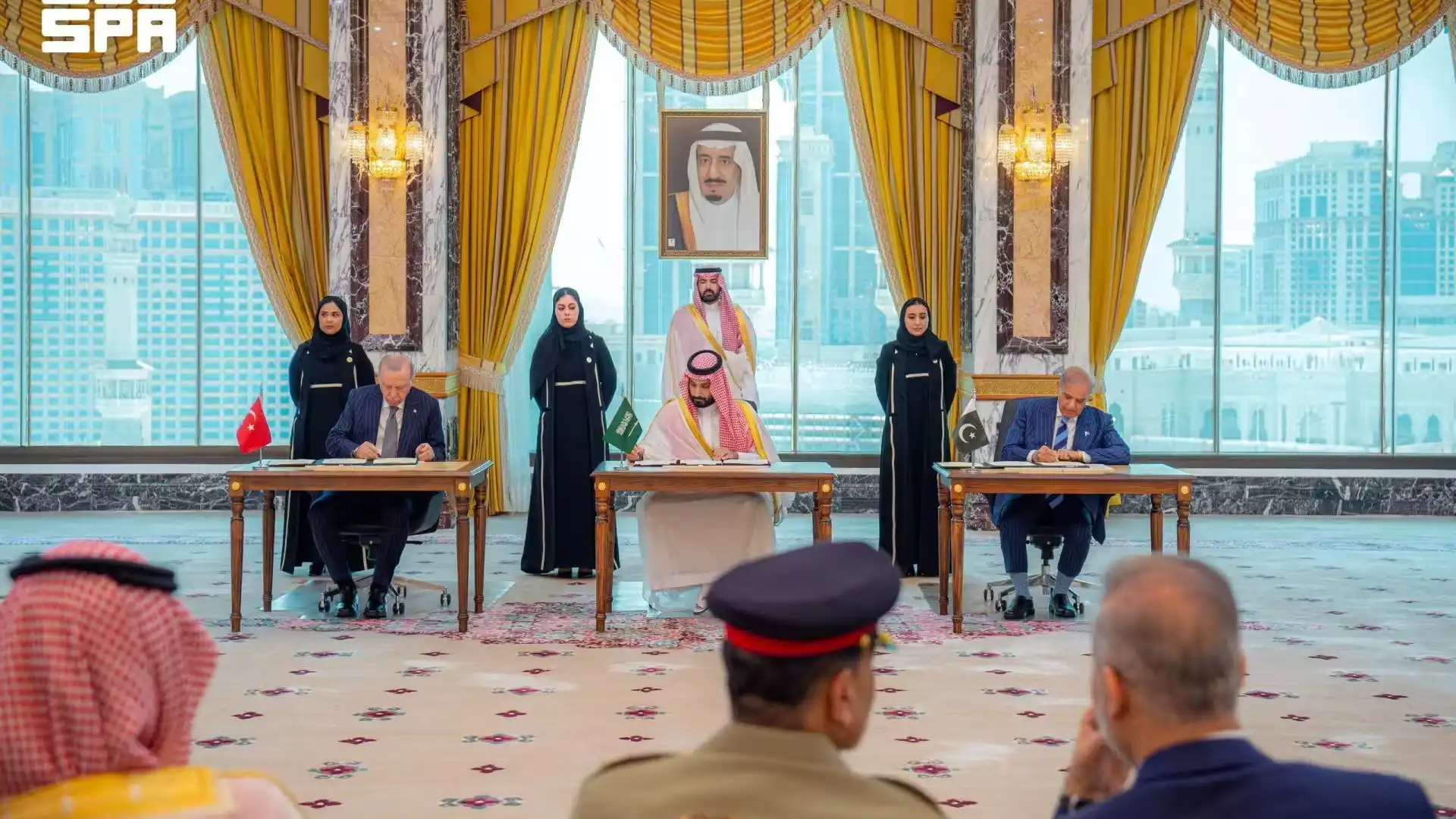
SCFR Online - Opinion: The Makkah Pact, signed between Saudi Arabia, Pakistan, and Turkey under the motto "an attack on one is an attack on all," is viewed by some analysts less as a full-fledged military coalition and more as an attempt to reduce security dependence on an external power and to establish a regional security mechanism.

Akbar Ahmadi – Expert on West Asian affairs

Reasons for Formation; From the Crisis of Confidence to the Search for Deterrence

The Makkah Joint Defense Pact was signed on August 7, 2026, between Saudi Arabia, Pakistan, and Turkey, stipulating that a military attack on any of the three countries shall be considered an attack on all. Pakistani and Turkish officials have emphasized that this agreement is defensive in nature, is not directed against any specific country, and could in the future accommodate other countries in the region.

The most important context for the formation of this pact should be sought in the erosion of confidence among some regional countries in the effectiveness of the US security umbrella. The US and Israeli regime war against Iran, as well as the Ukraine-Russia war, have exposed the vulnerability of Washington’s traditional allies to missile and drone attacks, and have reinforced the question of what limitations sole reliance on an external security guarantor entails for meeting their security needs; therefore, regional countries are more than ever seeking to diversify their security partners.

Accordingly, this pact can be viewed as a form of “supplementary security guarantee.” From Saudi Arabia’s perspective, the kingdom still needs its relationship with the United States to acquire advanced weapons and maintain deterrence capabilities, but simultaneously it seeks to utilize Pakistan’s military capacity and Turkey’s defense and technological capabilities. Consequently, the aim of this pact is not necessarily a break with the United States, but rather the creation of alternative capacities to reduce vulnerability to shifts in Washington’s calculations.

Differing Objectives and Shared Concern

Each of the three signatories pursues its own specific calculations. Saudi Arabia, as the host and one of the main drivers of the agreement, seeks to strengthen deterrence and enhance its role in regional security arrangements. However, Saudi and Pakistani officials have emphasized that the agreement does not mean the formation of a bloc against any specific country.

Turkey, with its extensive military capability and growing defense industry, can use this agreement to expand its strategic influence in the Islamic world and develop the market for its defense products, especially drones and advanced systems. Pakistan, as the sole nuclear-armed country in the Islamic world, offers its military capacities and defense experience. Defense relations between Islamabad and Riyadh also have a long history predating this agreement, with the two countries having signed a bilateral defense agreement in 2025 as well.

Despite differing interests, a shared concern has brought the three countries together: the increasing regional instability stemming from the Israeli regime’s expansionism and doubts about the adequacy of existing security arrangements under the US umbrella. From this perspective, the Makkah Pact should be seen as part of the broader regional trend toward enhancing security self-reliance.

Operational Limitations in Implementing the Pact

Understanding the pact’s real capacity requires distinguishing between political commitment and operational mechanisms. Information regarding the type of response, the extent of military commitment, and decision-making mechanisms in times of crisis remains unclear. Turkey’s Foreign Minister has described this clause as technically comparable to NATO Article 5, but has emphasized that after an attack, members will consult on the nature and scope of assistance; therefore, an automatic military response cannot be inferred from the existing text.

This very issue reveals the pact’s most important limitation. The first challenge is the practical test of the collective defense commitment. Any security incident following the signing of the agreement that necessitates a joint response from the members could determine its operational credibility. The mere existence of the phrase “an attack on one is an attack on all” without a precisely defined response mechanism does not necessarily lead to a joint military reaction.

The second challenge is the divergence in security priorities. Saudi Arabia still maintains a high degree of dependence on US defense and intelligence systems, Turkey, as a NATO member, has independent commitments and calculations, and Pakistan still regards India as its most important security rival; therefore, not every regional crisis necessarily receives the same priority from the perspective of all three countries.

The third issue is external dependencies. Saudi Arabia depends on US weapons and intelligence support, Turkey on the NATO framework, and Pakistan on its financial and economic relations with Saudi Arabia and China. These dependencies can limit the scope of decision-making independence for the three countries in times of crisis.

The fourth challenge pertains to financial costs and domestic constraints. The deployment of Pakistani forces in Saudi Arabia and the expansion of defense cooperation entail significant costs, and the expansion of military commitments will require financial resources and domestic legitimacy. Additionally, Turkey must coordinate its new commitments with its responsibilities in NATO, and Pakistan must balance its West Asian commitments with its security requirements in South Asia.

A New Security Network or an Operational Coalition?

Based on available evidence, the Makkah Pact cannot be regarded as a full-fledged military coalition. Its main capacity at the current stage lies more in political and security coordination, information exchange, defense cooperation, and increasing the calculative cost for adversarial parties.

The pact’s significance for the region is seen less in the creation of an integrated military structure and more in the establishment of a network of parallel security relationships. The declared readiness to accept other countries, including the mention of Egypt as a potential future partner, indicates that members are seeking to expand this network.

Although Turkish and Pakistani officials have explicitly stated that the pact is not directed against any specific country, some analysts believe that Turkey’s concerns regarding the Israeli regime could be one of the reasons for the conclusion of this pact. On the other hand, the reduction of regional countries’ reliance on the United States and the increased role of regional actors, if moving toward more inclusive mechanisms, could also strengthen the ground for dialogue and indigenous security arrangements.

The Makkah Pact, more than being an operational military coalition, is a sign of regional actors’ efforts to create more diverse security networks amid declining confidence in existing arrangements. Nevertheless, its real credibility will depend on how members react in the first serious crisis, the degree of military coordination, the compatibility of the three countries’ commitments, and the possibility of its expansion to other actors. Therefore, under current circumstances, this pact should be assessed not as the starting point of a military coalition in the Islamic world, but as a step toward the gradual redefinition of regional security arrangements.


0 Comments

LATEST CONTENT

The Makkah Pact; Reasons for its Formation and Challenges Ahead

SCFR Online – Opinion: The Makkah Pact, signed between Saudi Arabia, Pakistan, and Turkey under the motto “an attack on one is an attack on all,” is viewed by some analysts less as a full-fledged military coalition and more as an attempt to reduce security dependence on an external power and to establish a regional security mechanism.

Implications of the US-Saudi Nuclear Agreement

SCFR Online – Opinion: The new US-Saudi nuclear agreement, despite legal and political ambiguities, could alter previous non-proliferation standards in West Asia and intensify nuclear competition, ushering it into a new phase.

An Analysis of Recent Turkey-Israeli Regime Tensions

SCFR Online – Opinion: Recent developments in Syria indicate an intensification of strategic rivalry between Turkey and the Israeli regime, but mutual considerations and the role of the United States have limited the likelihood of direct war.

Increasing criticism of the extensive Zionist lobby network

SCFR Online – Opinion: An examination of the mechanisms of the Israeli regime’s influence in the United States depicts a complex picture of shared interests, strategic dependencies, and the limitations of this relationship.

Realities of the Tripartite Makkah Pact

SCFR Online – Interview: The signing of the Makkah agreement between Saudi Arabia, Pakistan, and Turkey has raised questions about the future of the region’s security structure and the position of these countries in West Asian equations. Can this agreement become a genuine collective defense mechanism, or does it have more of a political and deterrent function than creating new military capacity?

Strategic Implications of the Reduction of US Weapons Stockpiles

SCFR Online – Opinion: The continuation of the US war against Iran, in addition to increasing operational costs, has called into question the actual capacity of the American arsenal to simultaneously fulfill security commitments on multiple fronts; an issue that affects deterrence, defense production capacity, and Washington’s resource prioritization.

The Formation of a New Order in Relations Between Powers

SCFR Online – Opinion: The Russia-Ukraine war and the war of the United States and the Israeli regime against Iran have been formed with different objectives and actors, but field and political developments indicate that they are not entirely separate from one another.

Loading

Últimas publicaciones

The Makkah Pact; Reasons for its Formation and Challenges Ahead

SCFR Online – Opinion: The Makkah Pact, signed between Saudi Arabia, Pakistan, and Turkey under the motto “an attack on one is an attack on all,” is viewed by some analysts less as a full-fledged military coalition and more as an attempt to reduce security dependence on an external power and to establish a regional security mechanism.

Implications of the US-Saudi Nuclear Agreement

SCFR Online – Opinion: The new US-Saudi nuclear agreement, despite legal and political ambiguities, could alter previous non-proliferation standards in West Asia and intensify nuclear competition, ushering it into a new phase.

An Analysis of Recent Turkey-Israeli Regime Tensions

SCFR Online – Opinion: Recent developments in Syria indicate an intensification of strategic rivalry between Turkey and the Israeli regime, but mutual considerations and the role of the United States have limited the likelihood of direct war.

Increasing criticism of the extensive Zionist lobby network

SCFR Online – Opinion: An examination of the mechanisms of the Israeli regime’s influence in the United States depicts a complex picture of shared interests, strategic dependencies, and the limitations of this relationship.

Realities of the Tripartite Makkah Pact

SCFR Online – Interview: The signing of the Makkah agreement between Saudi Arabia, Pakistan, and Turkey has raised questions about the future of the region’s security structure and the position of these countries in West Asian equations. Can this agreement become a genuine collective defense mechanism, or does it have more of a political and deterrent function than creating new military capacity?

Strategic Implications of the Reduction of US Weapons Stockpiles

SCFR Online – Opinion: The continuation of the US war against Iran, in addition to increasing operational costs, has called into question the actual capacity of the American arsenal to simultaneously fulfill security commitments on multiple fronts; an issue that affects deterrence, defense production capacity, and Washington’s resource prioritization.

The Formation of a New Order in Relations Between Powers

SCFR Online – Opinion: The Russia-Ukraine war and the war of the United States and the Israeli regime against Iran have been formed with different objectives and actors, but field and political developments indicate that they are not entirely separate from one another.

Loading

DERNIER CONTENU

The Makkah Pact; Reasons for its Formation and Challenges Ahead

SCFR Online – Opinion: The Makkah Pact, signed between Saudi Arabia, Pakistan, and Turkey under the motto “an attack on one is an attack on all,” is viewed by some analysts less as a full-fledged military coalition and more as an attempt to reduce security dependence on an external power and to establish a regional security mechanism.

Implications of the US-Saudi Nuclear Agreement

SCFR Online – Opinion: The new US-Saudi nuclear agreement, despite legal and political ambiguities, could alter previous non-proliferation standards in West Asia and intensify nuclear competition, ushering it into a new phase.

An Analysis of Recent Turkey-Israeli Regime Tensions

SCFR Online – Opinion: Recent developments in Syria indicate an intensification of strategic rivalry between Turkey and the Israeli regime, but mutual considerations and the role of the United States have limited the likelihood of direct war.

Increasing criticism of the extensive Zionist lobby network

SCFR Online – Opinion: An examination of the mechanisms of the Israeli regime’s influence in the United States depicts a complex picture of shared interests, strategic dependencies, and the limitations of this relationship.

Realities of the Tripartite Makkah Pact

SCFR Online – Interview: The signing of the Makkah agreement between Saudi Arabia, Pakistan, and Turkey has raised questions about the future of the region’s security structure and the position of these countries in West Asian equations. Can this agreement become a genuine collective defense mechanism, or does it have more of a political and deterrent function than creating new military capacity?

Strategic Implications of the Reduction of US Weapons Stockpiles

SCFR Online – Opinion: The continuation of the US war against Iran, in addition to increasing operational costs, has called into question the actual capacity of the American arsenal to simultaneously fulfill security commitments on multiple fronts; an issue that affects deterrence, defense production capacity, and Washington’s resource prioritization.

The Formation of a New Order in Relations Between Powers

SCFR Online – Opinion: The Russia-Ukraine war and the war of the United States and the Israeli regime against Iran have been formed with different objectives and actors, but field and political developments indicate that they are not entirely separate from one another.

Loading

DERNIER CONTENU

The Makkah Pact; Reasons for its Formation and Challenges Ahead

SCFR Online – Opinion: The Makkah Pact, signed between Saudi Arabia, Pakistan, and Turkey under the motto “an attack on one is an attack on all,” is viewed by some analysts less as a full-fledged military coalition and more as an attempt to reduce security dependence on an external power and to establish a regional security mechanism.

Implications of the US-Saudi Nuclear Agreement

SCFR Online – Opinion: The new US-Saudi nuclear agreement, despite legal and political ambiguities, could alter previous non-proliferation standards in West Asia and intensify nuclear competition, ushering it into a new phase.

An Analysis of Recent Turkey-Israeli Regime Tensions

SCFR Online – Opinion: Recent developments in Syria indicate an intensification of strategic rivalry between Turkey and the Israeli regime, but mutual considerations and the role of the United States have limited the likelihood of direct war.

Increasing criticism of the extensive Zionist lobby network

SCFR Online – Opinion: An examination of the mechanisms of the Israeli regime’s influence in the United States depicts a complex picture of shared interests, strategic dependencies, and the limitations of this relationship.

Realities of the Tripartite Makkah Pact

SCFR Online – Interview: The signing of the Makkah agreement between Saudi Arabia, Pakistan, and Turkey has raised questions about the future of the region’s security structure and the position of these countries in West Asian equations. Can this agreement become a genuine collective defense mechanism, or does it have more of a political and deterrent function than creating new military capacity?

Strategic Implications of the Reduction of US Weapons Stockpiles

SCFR Online – Opinion: The continuation of the US war against Iran, in addition to increasing operational costs, has called into question the actual capacity of the American arsenal to simultaneously fulfill security commitments on multiple fronts; an issue that affects deterrence, defense production capacity, and Washington’s resource prioritization.

The Formation of a New Order in Relations Between Powers

SCFR Online – Opinion: The Russia-Ukraine war and the war of the United States and the Israeli regime against Iran have been formed with different objectives and actors, but field and political developments indicate that they are not entirely separate from one another.

Loading

DERNIER CONTENU

The Makkah Pact; Reasons for its Formation and Challenges Ahead

SCFR Online – Opinion: The Makkah Pact, signed between Saudi Arabia, Pakistan, and Turkey under the motto “an attack on one is an attack on all,” is viewed by some analysts less as a full-fledged military coalition and more as an attempt to reduce security dependence on an external power and to establish a regional security mechanism.

Implications of the US-Saudi Nuclear Agreement

SCFR Online – Opinion: The new US-Saudi nuclear agreement, despite legal and political ambiguities, could alter previous non-proliferation standards in West Asia and intensify nuclear competition, ushering it into a new phase.

An Analysis of Recent Turkey-Israeli Regime Tensions

SCFR Online – Opinion: Recent developments in Syria indicate an intensification of strategic rivalry between Turkey and the Israeli regime, but mutual considerations and the role of the United States have limited the likelihood of direct war.

Increasing criticism of the extensive Zionist lobby network

SCFR Online – Opinion: An examination of the mechanisms of the Israeli regime’s influence in the United States depicts a complex picture of shared interests, strategic dependencies, and the limitations of this relationship.

Realities of the Tripartite Makkah Pact

SCFR Online – Interview: The signing of the Makkah agreement between Saudi Arabia, Pakistan, and Turkey has raised questions about the future of the region’s security structure and the position of these countries in West Asian equations. Can this agreement become a genuine collective defense mechanism, or does it have more of a political and deterrent function than creating new military capacity?

Strategic Implications of the Reduction of US Weapons Stockpiles

SCFR Online – Opinion: The continuation of the US war against Iran, in addition to increasing operational costs, has called into question the actual capacity of the American arsenal to simultaneously fulfill security commitments on multiple fronts; an issue that affects deterrence, defense production capacity, and Washington’s resource prioritization.

The Formation of a New Order in Relations Between Powers

SCFR Online – Opinion: The Russia-Ukraine war and the war of the United States and the Israeli regime against Iran have been formed with different objectives and actors, but field and political developments indicate that they are not entirely separate from one another.

Loading



