جدیدترین مطالب

China’s Rejection of US Sanctions; Strengthening Iran’s Geopolitical Leverage

SCFR Online – Opinion: Concurrent with the official commencement of the United States’ economic war against our country, focusing on sanctions instruments, isolation, and economic pressure, what has now become increasingly important is the lack of alignment of other major global powers, especially China, with this policy.

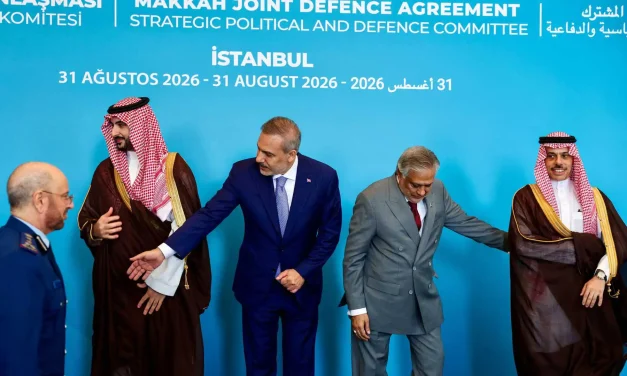
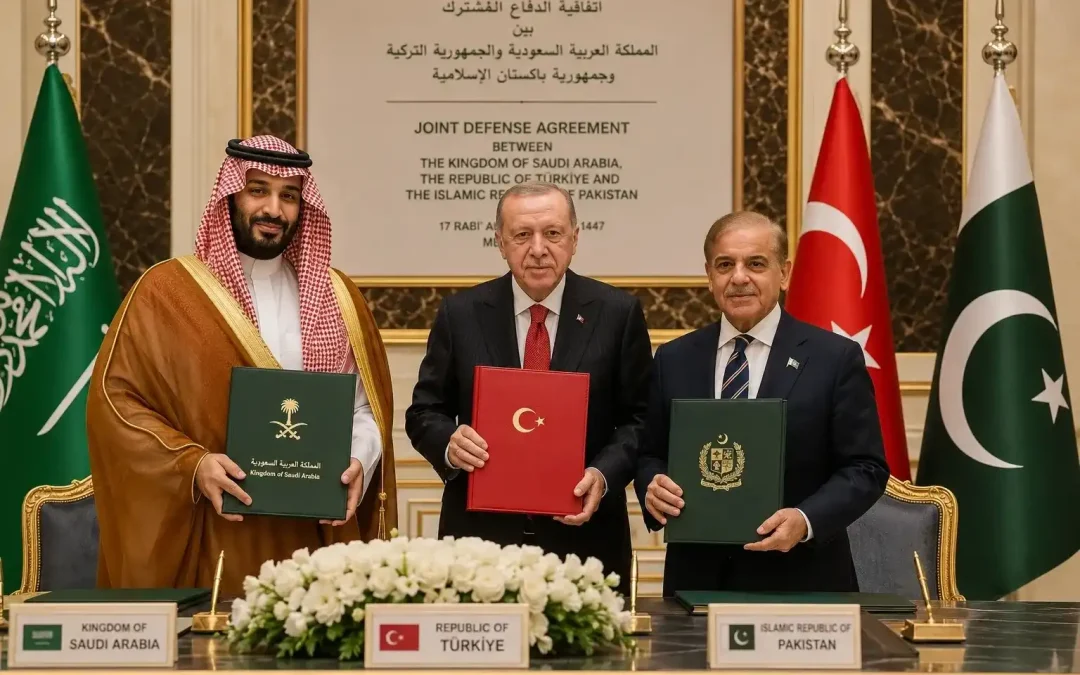
The Makkah Pact; Reasons for its Formation and Challenges Ahead

SCFR Online – Opinion: The Makkah Pact, signed between Saudi Arabia, Pakistan, and Turkey under the motto “an attack on one is an attack on all,” is viewed by some analysts less as a full-fledged military coalition and more as an attempt to reduce security dependence on an external power and to establish a regional security mechanism.

Implications of the US-Saudi Nuclear Agreement

SCFR Online – Opinion: The new US-Saudi nuclear agreement, despite legal and political ambiguities, could alter previous non-proliferation standards in West Asia and intensify nuclear competition, ushering it into a new phase.

An Analysis of Recent Turkey-Israeli Regime Tensions

SCFR Online – Opinion: Recent developments in Syria indicate an intensification of strategic rivalry between Turkey and the Israeli regime, but mutual considerations and the role of the United States have limited the likelihood of direct war.

Loading

Strategic Council on Foreign Relations

Dr. Kharrazi Meets Delegation from Chinese Think Tanks: Emphasizes the Need for an Action Plan to Implement the Comprehensive Iran–China Cooperation Document

Dr. Kharrazi Meets Delegation from Chinese Think Tanks: Emphasizes the Need for an Action Plan to Implement the Comprehensive Iran–China Cooperation Document

Strategic Council Online: The President of the Strategic Council on Foreign Relations stated, “Despite the signing of the 25-year Comprehensive Cooperation Agreement between Iran and China, a long path remains toward its full implementation. One key point both countries must observe is to move away from a project-based approach and instead adopt a program-oriented relationship by formulating a concrete action plan. This plan should be grounded in Iran’s national spatial planning framework and aligned with the mutual priorities of both nations as outlined in the 25-year Comprehensive Cooperation Document.”

Dr. Bagheri Introduced as a New Member and SCFR Secretary

Dr. Bagheri Introduced as a New Member and SCFR Secretary

Strategic Council Online: This morning, during the farewell ceremony for Dr. Seyed Abbas Araghchi, the former Secretary of the Strategic Council on Foreign Relations (SCFR), Dr. Ali Bagheri Kani was introduced as a new member and the Secretary of SCFR.

Chehrazad Suggested in a meeting on AI applications in foreign relations: Necessity of Considering the AI Department in the Foreign Ministry Structure

Chehrazad Suggested in a meeting on AI applications in foreign relations: Necessity of Considering the AI Department in the Foreign Ministry Structure

Strategic Council Online – Meeting: An expert in the field of cyber governance, referring to the requirements and targets of establishing artificial intelligence, added: The role of the link between the national innovation system and the international innovation system is the responsibility of the Ministry of Foreign Affairs. Meanwhile, the optimum transfer of technology can happen with the help of diplomacy. This is not possible without considering mechanisms for the transfer of technology.

Dr. Maleki, at a meeting on AI application in foreign relations, explains Necessity of Using AI in Energy Diplomacy

Dr. Maleki, at a meeting on AI application in foreign relations, explains Necessity of Using AI in Energy Diplomacy

Strategic Council Online – Meeting: A faculty member of the Department of Energy Engineering of the Sharif University of Technology, stating that artificial intelligence has created a revolution in the debate on energy, added: Nothing can replace human decision-making, and I hope it will be like this, but in any case, algorithms of artificial intelligence can help to make decisions.

Dr. Sattari Explains at Meeting on AI Application in Foreign Relations: Need to Rely on Internal Power in Sensitive AI Applications

Dr. Sattari Explains at Meeting on AI Application in Foreign Relations: Need to Rely on Internal Power in Sensitive AI Applications

Strategic Council Online – Meeting: The head of the Science-Technology Commission of the Strategic Council on Foreign Relations, emphasizing the need for relying on domestic power in sensitive applications of artificial intelligence, including the use of this technology in the Ministry of Foreign Affairs, said: This issue is one of the subject matters that cannot be handed over to foreign companies because in any case, decisions should be made through these data. At present, domestic private companies have serious use of artificial intelligence.

SCFR hosts Second Specialized Meeting on “AI Application in Foreign Relations”

SCFR hosts Second Specialized Meeting on “AI Application in Foreign Relations”

Strategic Council Online: The second specialized meeting on “Application of Artificial Intelligence in Foreign Relations” was hosted by the Strategic Council on Foreign Relations. Experts in artificial intelligence explained the necessity of using this technology in various fields of foreign relations, opportunities, requirements, and risks.

أحدث الوظائف

China’s Rejection of US Sanctions; Strengthening Iran’s Geopolitical Leverage

SCFR Online – Opinion: Concurrent with the official commencement of the United States’ economic war against our country, focusing on sanctions instruments, isolation, and economic pressure, what has now become increasingly important is the lack of alignment of other major global powers, especially China, with this policy.

The Makkah Pact; Reasons for its Formation and Challenges Ahead

SCFR Online – Opinion: The Makkah Pact, signed between Saudi Arabia, Pakistan, and Turkey under the motto “an attack on one is an attack on all,” is viewed by some analysts less as a full-fledged military coalition and more as an attempt to reduce security dependence on an external power and to establish a regional security mechanism.

Implications of the US-Saudi Nuclear Agreement

SCFR Online – Opinion: The new US-Saudi nuclear agreement, despite legal and political ambiguities, could alter previous non-proliferation standards in West Asia and intensify nuclear competition, ushering it into a new phase.

An Analysis of Recent Turkey-Israeli Regime Tensions

SCFR Online – Opinion: Recent developments in Syria indicate an intensification of strategic rivalry between Turkey and the Israeli regime, but mutual considerations and the role of the United States have limited the likelihood of direct war.

Loading

Strategic Council on Foreign Relations

Dr. Kharrazi Meets Delegation from Chinese Think Tanks: Emphasizes the Need for an Action Plan to Implement the Comprehensive Iran–China Cooperation Document

Dr. Kharrazi Meets Delegation from Chinese Think Tanks: Emphasizes the Need for an Action Plan to Implement the Comprehensive Iran–China Cooperation Document

Strategic Council Online: The President of the Strategic Council on Foreign Relations stated, “Despite the signing of the 25-year Comprehensive Cooperation Agreement between Iran and China, a long path remains toward its full implementation. One key point both countries must observe is to move away from a project-based approach and instead adopt a program-oriented relationship by formulating a concrete action plan. This plan should be grounded in Iran’s national spatial planning framework and aligned with the mutual priorities of both nations as outlined in the 25-year Comprehensive Cooperation Document.”

Dr. Bagheri Introduced as a New Member and SCFR Secretary

Dr. Bagheri Introduced as a New Member and SCFR Secretary

Strategic Council Online: This morning, during the farewell ceremony for Dr. Seyed Abbas Araghchi, the former Secretary of the Strategic Council on Foreign Relations (SCFR), Dr. Ali Bagheri Kani was introduced as a new member and the Secretary of SCFR.

Chehrazad Suggested in a meeting on AI applications in foreign relations: Necessity of Considering the AI Department in the Foreign Ministry Structure

Chehrazad Suggested in a meeting on AI applications in foreign relations: Necessity of Considering the AI Department in the Foreign Ministry Structure

Strategic Council Online – Meeting: An expert in the field of cyber governance, referring to the requirements and targets of establishing artificial intelligence, added: The role of the link between the national innovation system and the international innovation system is the responsibility of the Ministry of Foreign Affairs. Meanwhile, the optimum transfer of technology can happen with the help of diplomacy. This is not possible without considering mechanisms for the transfer of technology.

Dr. Maleki, at a meeting on AI application in foreign relations, explains Necessity of Using AI in Energy Diplomacy

Dr. Maleki, at a meeting on AI application in foreign relations, explains Necessity of Using AI in Energy Diplomacy

Strategic Council Online – Meeting: A faculty member of the Department of Energy Engineering of the Sharif University of Technology, stating that artificial intelligence has created a revolution in the debate on energy, added: Nothing can replace human decision-making, and I hope it will be like this, but in any case, algorithms of artificial intelligence can help to make decisions.

Dr. Sattari Explains at Meeting on AI Application in Foreign Relations: Need to Rely on Internal Power in Sensitive AI Applications

Dr. Sattari Explains at Meeting on AI Application in Foreign Relations: Need to Rely on Internal Power in Sensitive AI Applications

Strategic Council Online – Meeting: The head of the Science-Technology Commission of the Strategic Council on Foreign Relations, emphasizing the need for relying on domestic power in sensitive applications of artificial intelligence, including the use of this technology in the Ministry of Foreign Affairs, said: This issue is one of the subject matters that cannot be handed over to foreign companies because in any case, decisions should be made through these data. At present, domestic private companies have serious use of artificial intelligence.

SCFR hosts Second Specialized Meeting on “AI Application in Foreign Relations”

SCFR hosts Second Specialized Meeting on “AI Application in Foreign Relations”

Strategic Council Online: The second specialized meeting on “Application of Artificial Intelligence in Foreign Relations” was hosted by the Strategic Council on Foreign Relations. Experts in artificial intelligence explained the necessity of using this technology in various fields of foreign relations, opportunities, requirements, and risks.

Strategic Council on Foreign Relations

Dr. Kharrazi Meets Delegation from Chinese Think Tanks: Emphasizes the Need for an Action Plan to Implement the Comprehensive Iran–China Cooperation Document

Dr. Kharrazi Meets Delegation from Chinese Think Tanks: Emphasizes the Need for an Action Plan to Implement the Comprehensive Iran–China Cooperation Document

Strategic Council Online: The President of the Strategic Council on Foreign Relations stated, “Despite the signing of the 25-year Comprehensive Cooperation Agreement between Iran and China, a long path remains toward its full implementation. One key point both countries must observe is to move away from a project-based approach and instead adopt a program-oriented relationship by formulating a concrete action plan. This plan should be grounded in Iran’s national spatial planning framework and aligned with the mutual priorities of both nations as outlined in the 25-year Comprehensive Cooperation Document.”

Dr. Bagheri Introduced as a New Member and SCFR Secretary

Dr. Bagheri Introduced as a New Member and SCFR Secretary

Strategic Council Online: This morning, during the farewell ceremony for Dr. Seyed Abbas Araghchi, the former Secretary of the Strategic Council on Foreign Relations (SCFR), Dr. Ali Bagheri Kani was introduced as a new member and the Secretary of SCFR.

Chehrazad Suggested in a meeting on AI applications in foreign relations: Necessity of Considering the AI Department in the Foreign Ministry Structure

Chehrazad Suggested in a meeting on AI applications in foreign relations: Necessity of Considering the AI Department in the Foreign Ministry Structure

Strategic Council Online – Meeting: An expert in the field of cyber governance, referring to the requirements and targets of establishing artificial intelligence, added: The role of the link between the national innovation system and the international innovation system is the responsibility of the Ministry of Foreign Affairs. Meanwhile, the optimum transfer of technology can happen with the help of diplomacy. This is not possible without considering mechanisms for the transfer of technology.

Dr. Maleki, at a meeting on AI application in foreign relations, explains Necessity of Using AI in Energy Diplomacy

Dr. Maleki, at a meeting on AI application in foreign relations, explains Necessity of Using AI in Energy Diplomacy

Strategic Council Online – Meeting: A faculty member of the Department of Energy Engineering of the Sharif University of Technology, stating that artificial intelligence has created a revolution in the debate on energy, added: Nothing can replace human decision-making, and I hope it will be like this, but in any case, algorithms of artificial intelligence can help to make decisions.

Dr. Sattari Explains at Meeting on AI Application in Foreign Relations: Need to Rely on Internal Power in Sensitive AI Applications

Dr. Sattari Explains at Meeting on AI Application in Foreign Relations: Need to Rely on Internal Power in Sensitive AI Applications

Strategic Council Online – Meeting: The head of the Science-Technology Commission of the Strategic Council on Foreign Relations, emphasizing the need for relying on domestic power in sensitive applications of artificial intelligence, including the use of this technology in the Ministry of Foreign Affairs, said: This issue is one of the subject matters that cannot be handed over to foreign companies because in any case, decisions should be made through these data. At present, domestic private companies have serious use of artificial intelligence.

SCFR hosts Second Specialized Meeting on “AI Application in Foreign Relations”

SCFR hosts Second Specialized Meeting on “AI Application in Foreign Relations”

Strategic Council Online: The second specialized meeting on “Application of Artificial Intelligence in Foreign Relations” was hosted by the Strategic Council on Foreign Relations. Experts in artificial intelligence explained the necessity of using this technology in various fields of foreign relations, opportunities, requirements, and risks.

LATEST CONTENT

China’s Rejection of US Sanctions; Strengthening Iran’s Geopolitical Leverage

SCFR Online – Opinion: Concurrent with the official commencement of the United States’ economic war against our country, focusing on sanctions instruments, isolation, and economic pressure, what has now become increasingly important is the lack of alignment of other major global powers, especially China, with this policy.

The Makkah Pact; Reasons for its Formation and Challenges Ahead

SCFR Online – Opinion: The Makkah Pact, signed between Saudi Arabia, Pakistan, and Turkey under the motto “an attack on one is an attack on all,” is viewed by some analysts less as a full-fledged military coalition and more as an attempt to reduce security dependence on an external power and to establish a regional security mechanism.

Implications of the US-Saudi Nuclear Agreement

SCFR Online – Opinion: The new US-Saudi nuclear agreement, despite legal and political ambiguities, could alter previous non-proliferation standards in West Asia and intensify nuclear competition, ushering it into a new phase.

An Analysis of Recent Turkey-Israeli Regime Tensions

SCFR Online – Opinion: Recent developments in Syria indicate an intensification of strategic rivalry between Turkey and the Israeli regime, but mutual considerations and the role of the United States have limited the likelihood of direct war.

Loading

Strategic Council on Foreign Relations

Dr. Kharrazi Meets Delegation from Chinese Think Tanks: Emphasizes the Need for an Action Plan to Implement the Comprehensive Iran–China Cooperation Document

Dr. Kharrazi Meets Delegation from Chinese Think Tanks: Emphasizes the Need for an Action Plan to Implement the Comprehensive Iran–China Cooperation Document

Strategic Council Online: The President of the Strategic Council on Foreign Relations stated, “Despite the signing of the 25-year Comprehensive Cooperation Agreement between Iran and China, a long path remains toward its full implementation. One key point both countries must observe is to move away from a project-based approach and instead adopt a program-oriented relationship by formulating a concrete action plan. This plan should be grounded in Iran’s national spatial planning framework and aligned with the mutual priorities of both nations as outlined in the 25-year Comprehensive Cooperation Document.”

Dr. Bagheri Introduced as a New Member and SCFR Secretary

Dr. Bagheri Introduced as a New Member and SCFR Secretary

Strategic Council Online: This morning, during the farewell ceremony for Dr. Seyed Abbas Araghchi, the former Secretary of the Strategic Council on Foreign Relations (SCFR), Dr. Ali Bagheri Kani was introduced as a new member and the Secretary of SCFR.

Chehrazad Suggested in a meeting on AI applications in foreign relations: Necessity of Considering the AI Department in the Foreign Ministry Structure

Chehrazad Suggested in a meeting on AI applications in foreign relations: Necessity of Considering the AI Department in the Foreign Ministry Structure

Strategic Council Online – Meeting: An expert in the field of cyber governance, referring to the requirements and targets of establishing artificial intelligence, added: The role of the link between the national innovation system and the international innovation system is the responsibility of the Ministry of Foreign Affairs. Meanwhile, the optimum transfer of technology can happen with the help of diplomacy. This is not possible without considering mechanisms for the transfer of technology.

Dr. Maleki, at a meeting on AI application in foreign relations, explains Necessity of Using AI in Energy Diplomacy

Dr. Maleki, at a meeting on AI application in foreign relations, explains Necessity of Using AI in Energy Diplomacy

Strategic Council Online – Meeting: A faculty member of the Department of Energy Engineering of the Sharif University of Technology, stating that artificial intelligence has created a revolution in the debate on energy, added: Nothing can replace human decision-making, and I hope it will be like this, but in any case, algorithms of artificial intelligence can help to make decisions.

Dr. Sattari Explains at Meeting on AI Application in Foreign Relations: Need to Rely on Internal Power in Sensitive AI Applications

Dr. Sattari Explains at Meeting on AI Application in Foreign Relations: Need to Rely on Internal Power in Sensitive AI Applications

Strategic Council Online – Meeting: The head of the Science-Technology Commission of the Strategic Council on Foreign Relations, emphasizing the need for relying on domestic power in sensitive applications of artificial intelligence, including the use of this technology in the Ministry of Foreign Affairs, said: This issue is one of the subject matters that cannot be handed over to foreign companies because in any case, decisions should be made through these data. At present, domestic private companies have serious use of artificial intelligence.

SCFR hosts Second Specialized Meeting on “AI Application in Foreign Relations”

SCFR hosts Second Specialized Meeting on “AI Application in Foreign Relations”

Strategic Council Online: The second specialized meeting on “Application of Artificial Intelligence in Foreign Relations” was hosted by the Strategic Council on Foreign Relations. Experts in artificial intelligence explained the necessity of using this technology in various fields of foreign relations, opportunities, requirements, and risks.

ÚLTIMAS PUBLICACIONES

China’s Rejection of US Sanctions; Strengthening Iran’s Geopolitical Leverage

SCFR Online – Opinion: Concurrent with the official commencement of the United States’ economic war against our country, focusing on sanctions instruments, isolation, and economic pressure, what has now become increasingly important is the lack of alignment of other major global powers, especially China, with this policy.

The Makkah Pact; Reasons for its Formation and Challenges Ahead

SCFR Online – Opinion: The Makkah Pact, signed between Saudi Arabia, Pakistan, and Turkey under the motto “an attack on one is an attack on all,” is viewed by some analysts less as a full-fledged military coalition and more as an attempt to reduce security dependence on an external power and to establish a regional security mechanism.

Implications of the US-Saudi Nuclear Agreement

SCFR Online – Opinion: The new US-Saudi nuclear agreement, despite legal and political ambiguities, could alter previous non-proliferation standards in West Asia and intensify nuclear competition, ushering it into a new phase.

An Analysis of Recent Turkey-Israeli Regime Tensions

SCFR Online – Opinion: Recent developments in Syria indicate an intensification of strategic rivalry between Turkey and the Israeli regime, but mutual considerations and the role of the United States have limited the likelihood of direct war.

Loading

Strategic Council on Foreign Relations

Dr. Kharrazi Meets Delegation from Chinese Think Tanks: Emphasizes the Need for an Action Plan to Implement the Comprehensive Iran–China Cooperation Document

Dr. Kharrazi Meets Delegation from Chinese Think Tanks: Emphasizes the Need for an Action Plan to Implement the Comprehensive Iran–China Cooperation Document

Strategic Council Online: The President of the Strategic Council on Foreign Relations stated, “Despite the signing of the 25-year Comprehensive Cooperation Agreement between Iran and China, a long path remains toward its full implementation. One key point both countries must observe is to move away from a project-based approach and instead adopt a program-oriented relationship by formulating a concrete action plan. This plan should be grounded in Iran’s national spatial planning framework and aligned with the mutual priorities of both nations as outlined in the 25-year Comprehensive Cooperation Document.”

Dr. Bagheri Introduced as a New Member and SCFR Secretary

Dr. Bagheri Introduced as a New Member and SCFR Secretary

Strategic Council Online: This morning, during the farewell ceremony for Dr. Seyed Abbas Araghchi, the former Secretary of the Strategic Council on Foreign Relations (SCFR), Dr. Ali Bagheri Kani was introduced as a new member and the Secretary of SCFR.

Chehrazad Suggested in a meeting on AI applications in foreign relations: Necessity of Considering the AI Department in the Foreign Ministry Structure

Chehrazad Suggested in a meeting on AI applications in foreign relations: Necessity of Considering the AI Department in the Foreign Ministry Structure

Strategic Council Online – Meeting: An expert in the field of cyber governance, referring to the requirements and targets of establishing artificial intelligence, added: The role of the link between the national innovation system and the international innovation system is the responsibility of the Ministry of Foreign Affairs. Meanwhile, the optimum transfer of technology can happen with the help of diplomacy. This is not possible without considering mechanisms for the transfer of technology.

Dr. Maleki, at a meeting on AI application in foreign relations, explains Necessity of Using AI in Energy Diplomacy

Dr. Maleki, at a meeting on AI application in foreign relations, explains Necessity of Using AI in Energy Diplomacy

Strategic Council Online – Meeting: A faculty member of the Department of Energy Engineering of the Sharif University of Technology, stating that artificial intelligence has created a revolution in the debate on energy, added: Nothing can replace human decision-making, and I hope it will be like this, but in any case, algorithms of artificial intelligence can help to make decisions.

Dr. Sattari Explains at Meeting on AI Application in Foreign Relations: Need to Rely on Internal Power in Sensitive AI Applications

Dr. Sattari Explains at Meeting on AI Application in Foreign Relations: Need to Rely on Internal Power in Sensitive AI Applications

Strategic Council Online – Meeting: The head of the Science-Technology Commission of the Strategic Council on Foreign Relations, emphasizing the need for relying on domestic power in sensitive applications of artificial intelligence, including the use of this technology in the Ministry of Foreign Affairs, said: This issue is one of the subject matters that cannot be handed over to foreign companies because in any case, decisions should be made through these data. At present, domestic private companies have serious use of artificial intelligence.

SCFR hosts Second Specialized Meeting on “AI Application in Foreign Relations”

SCFR hosts Second Specialized Meeting on “AI Application in Foreign Relations”

Strategic Council Online: The second specialized meeting on “Application of Artificial Intelligence in Foreign Relations” was hosted by the Strategic Council on Foreign Relations. Experts in artificial intelligence explained the necessity of using this technology in various fields of foreign relations, opportunities, requirements, and risks.

ÚLTIMAS PUBLICACIONES

China’s Rejection of US Sanctions; Strengthening Iran’s Geopolitical Leverage

SCFR Online – Opinion: Concurrent with the official commencement of the United States’ economic war against our country, focusing on sanctions instruments, isolation, and economic pressure, what has now become increasingly important is the lack of alignment of other major global powers, especially China, with this policy.

The Makkah Pact; Reasons for its Formation and Challenges Ahead

SCFR Online – Opinion: The Makkah Pact, signed between Saudi Arabia, Pakistan, and Turkey under the motto “an attack on one is an attack on all,” is viewed by some analysts less as a full-fledged military coalition and more as an attempt to reduce security dependence on an external power and to establish a regional security mechanism.

Implications of the US-Saudi Nuclear Agreement

SCFR Online – Opinion: The new US-Saudi nuclear agreement, despite legal and political ambiguities, could alter previous non-proliferation standards in West Asia and intensify nuclear competition, ushering it into a new phase.

An Analysis of Recent Turkey-Israeli Regime Tensions

SCFR Online – Opinion: Recent developments in Syria indicate an intensification of strategic rivalry between Turkey and the Israeli regime, but mutual considerations and the role of the United States have limited the likelihood of direct war.

Loading

Strategic Council on Foreign Relations

Dr. Kharrazi Meets Delegation from Chinese Think Tanks: Emphasizes the Need for an Action Plan to Implement the Comprehensive Iran–China Cooperation Document

Dr. Kharrazi Meets Delegation from Chinese Think Tanks: Emphasizes the Need for an Action Plan to Implement the Comprehensive Iran–China Cooperation Document

Strategic Council Online: The President of the Strategic Council on Foreign Relations stated, “Despite the signing of the 25-year Comprehensive Cooperation Agreement between Iran and China, a long path remains toward its full implementation. One key point both countries must observe is to move away from a project-based approach and instead adopt a program-oriented relationship by formulating a concrete action plan. This plan should be grounded in Iran’s national spatial planning framework and aligned with the mutual priorities of both nations as outlined in the 25-year Comprehensive Cooperation Document.”

Dr. Bagheri Introduced as a New Member and SCFR Secretary

Dr. Bagheri Introduced as a New Member and SCFR Secretary

Strategic Council Online: This morning, during the farewell ceremony for Dr. Seyed Abbas Araghchi, the former Secretary of the Strategic Council on Foreign Relations (SCFR), Dr. Ali Bagheri Kani was introduced as a new member and the Secretary of SCFR.

Chehrazad Suggested in a meeting on AI applications in foreign relations: Necessity of Considering the AI Department in the Foreign Ministry Structure

Chehrazad Suggested in a meeting on AI applications in foreign relations: Necessity of Considering the AI Department in the Foreign Ministry Structure

Strategic Council Online – Meeting: An expert in the field of cyber governance, referring to the requirements and targets of establishing artificial intelligence, added: The role of the link between the national innovation system and the international innovation system is the responsibility of the Ministry of Foreign Affairs. Meanwhile, the optimum transfer of technology can happen with the help of diplomacy. This is not possible without considering mechanisms for the transfer of technology.

Dr. Maleki, at a meeting on AI application in foreign relations, explains Necessity of Using AI in Energy Diplomacy

Dr. Maleki, at a meeting on AI application in foreign relations, explains Necessity of Using AI in Energy Diplomacy

Strategic Council Online – Meeting: A faculty member of the Department of Energy Engineering of the Sharif University of Technology, stating that artificial intelligence has created a revolution in the debate on energy, added: Nothing can replace human decision-making, and I hope it will be like this, but in any case, algorithms of artificial intelligence can help to make decisions.

Dr. Sattari Explains at Meeting on AI Application in Foreign Relations: Need to Rely on Internal Power in Sensitive AI Applications

Dr. Sattari Explains at Meeting on AI Application in Foreign Relations: Need to Rely on Internal Power in Sensitive AI Applications

Strategic Council Online – Meeting: The head of the Science-Technology Commission of the Strategic Council on Foreign Relations, emphasizing the need for relying on domestic power in sensitive applications of artificial intelligence, including the use of this technology in the Ministry of Foreign Affairs, said: This issue is one of the subject matters that cannot be handed over to foreign companies because in any case, decisions should be made through these data. At present, domestic private companies have serious use of artificial intelligence.

SCFR hosts Second Specialized Meeting on “AI Application in Foreign Relations”

SCFR hosts Second Specialized Meeting on “AI Application in Foreign Relations”

Strategic Council Online: The second specialized meeting on “Application of Artificial Intelligence in Foreign Relations” was hosted by the Strategic Council on Foreign Relations. Experts in artificial intelligence explained the necessity of using this technology in various fields of foreign relations, opportunities, requirements, and risks.

ÚLTIMAS PUBLICACIONES

China’s Rejection of US Sanctions; Strengthening Iran’s Geopolitical Leverage

SCFR Online – Opinion: Concurrent with the official commencement of the United States’ economic war against our country, focusing on sanctions instruments, isolation, and economic pressure, what has now become increasingly important is the lack of alignment of other major global powers, especially China, with this policy.

The Makkah Pact; Reasons for its Formation and Challenges Ahead

SCFR Online – Opinion: The Makkah Pact, signed between Saudi Arabia, Pakistan, and Turkey under the motto “an attack on one is an attack on all,” is viewed by some analysts less as a full-fledged military coalition and more as an attempt to reduce security dependence on an external power and to establish a regional security mechanism.

Implications of the US-Saudi Nuclear Agreement

SCFR Online – Opinion: The new US-Saudi nuclear agreement, despite legal and political ambiguities, could alter previous non-proliferation standards in West Asia and intensify nuclear competition, ushering it into a new phase.

An Analysis of Recent Turkey-Israeli Regime Tensions

SCFR Online – Opinion: Recent developments in Syria indicate an intensification of strategic rivalry between Turkey and the Israeli regime, but mutual considerations and the role of the United States have limited the likelihood of direct war.

Loading

Strategic Council on Foreign Relations

Dr. Kharrazi Meets Delegation from Chinese Think Tanks: Emphasizes the Need for an Action Plan to Implement the Comprehensive Iran–China Cooperation Document

Dr. Kharrazi Meets Delegation from Chinese Think Tanks: Emphasizes the Need for an Action Plan to Implement the Comprehensive Iran–China Cooperation Document

Strategic Council Online: The President of the Strategic Council on Foreign Relations stated, “Despite the signing of the 25-year Comprehensive Cooperation Agreement between Iran and China, a long path remains toward its full implementation. One key point both countries must observe is to move away from a project-based approach and instead adopt a program-oriented relationship by formulating a concrete action plan. This plan should be grounded in Iran’s national spatial planning framework and aligned with the mutual priorities of both nations as outlined in the 25-year Comprehensive Cooperation Document.”

Dr. Bagheri Introduced as a New Member and SCFR Secretary

Dr. Bagheri Introduced as a New Member and SCFR Secretary

Strategic Council Online: This morning, during the farewell ceremony for Dr. Seyed Abbas Araghchi, the former Secretary of the Strategic Council on Foreign Relations (SCFR), Dr. Ali Bagheri Kani was introduced as a new member and the Secretary of SCFR.

Chehrazad Suggested in a meeting on AI applications in foreign relations: Necessity of Considering the AI Department in the Foreign Ministry Structure

Chehrazad Suggested in a meeting on AI applications in foreign relations: Necessity of Considering the AI Department in the Foreign Ministry Structure

Strategic Council Online – Meeting: An expert in the field of cyber governance, referring to the requirements and targets of establishing artificial intelligence, added: The role of the link between the national innovation system and the international innovation system is the responsibility of the Ministry of Foreign Affairs. Meanwhile, the optimum transfer of technology can happen with the help of diplomacy. This is not possible without considering mechanisms for the transfer of technology.

Dr. Maleki, at a meeting on AI application in foreign relations, explains Necessity of Using AI in Energy Diplomacy

Dr. Maleki, at a meeting on AI application in foreign relations, explains Necessity of Using AI in Energy Diplomacy

Strategic Council Online – Meeting: A faculty member of the Department of Energy Engineering of the Sharif University of Technology, stating that artificial intelligence has created a revolution in the debate on energy, added: Nothing can replace human decision-making, and I hope it will be like this, but in any case, algorithms of artificial intelligence can help to make decisions.

Dr. Sattari Explains at Meeting on AI Application in Foreign Relations: Need to Rely on Internal Power in Sensitive AI Applications

Dr. Sattari Explains at Meeting on AI Application in Foreign Relations: Need to Rely on Internal Power in Sensitive AI Applications

Strategic Council Online – Meeting: The head of the Science-Technology Commission of the Strategic Council on Foreign Relations, emphasizing the need for relying on domestic power in sensitive applications of artificial intelligence, including the use of this technology in the Ministry of Foreign Affairs, said: This issue is one of the subject matters that cannot be handed over to foreign companies because in any case, decisions should be made through these data. At present, domestic private companies have serious use of artificial intelligence.

SCFR hosts Second Specialized Meeting on “AI Application in Foreign Relations”

SCFR hosts Second Specialized Meeting on “AI Application in Foreign Relations”

Strategic Council Online: The second specialized meeting on “Application of Artificial Intelligence in Foreign Relations” was hosted by the Strategic Council on Foreign Relations. Experts in artificial intelligence explained the necessity of using this technology in various fields of foreign relations, opportunities, requirements, and risks.

ÚLTIMAS PUBLICACIONES

China’s Rejection of US Sanctions; Strengthening Iran’s Geopolitical Leverage

SCFR Online – Opinion: Concurrent with the official commencement of the United States’ economic war against our country, focusing on sanctions instruments, isolation, and economic pressure, what has now become increasingly important is the lack of alignment of other major global powers, especially China, with this policy.

The Makkah Pact; Reasons for its Formation and Challenges Ahead

SCFR Online – Opinion: The Makkah Pact, signed between Saudi Arabia, Pakistan, and Turkey under the motto “an attack on one is an attack on all,” is viewed by some analysts less as a full-fledged military coalition and more as an attempt to reduce security dependence on an external power and to establish a regional security mechanism.

Implications of the US-Saudi Nuclear Agreement

SCFR Online – Opinion: The new US-Saudi nuclear agreement, despite legal and political ambiguities, could alter previous non-proliferation standards in West Asia and intensify nuclear competition, ushering it into a new phase.

An Analysis of Recent Turkey-Israeli Regime Tensions

SCFR Online – Opinion: Recent developments in Syria indicate an intensification of strategic rivalry between Turkey and the Israeli regime, but mutual considerations and the role of the United States have limited the likelihood of direct war.

Loading