Purchase of Chinese Fighters; Pakistan’s New Strategy

Strategic Council Online - Opinion: Pakistan recently announced its decision to purchase Chinese J-10C fighter jets. The decision appears to be a strategic security response to India’s purchase of French Rafale fighter jets. Hossein Sayyahi - Researcher on international affairs

According to Pakistani officials, the fighter jets will take off soon on Pakistan National Day. Although the number of fighters purchased has been announced at 25, given that each standard squadron in the Air Force includes 18 fighters, it seems possible to increase the number of such weapons orders or the Pakistan Air Force is trying, in a less conventional form, use twelve-member squadrons of this type of aircraft. What is more important, however, is Pakistan’s intention to buy those fighters, especially from China. The question thus arises as to how Pakistan, as a member of the former CENTO Pact and an ally of the United States during the Cold War and even the beginning of the 21st century, and also, according to Pakistani officials, as a non-NATO ally has put buying weapons from China, as a US hegemonic rival, in the agenda? The answer to the question seems to be in geopolitical force as well as in the rivalry of the big powers.

Pakistan-India arms race in the path of balance of threat

Pakistan and India have experienced many tensions in their relations. Several influential and tense wars in the history of the two countries, effectively affecting public opinion and international relations between the two countries. Increasingly, Islamabad and New Delhi see each other as a very important threat. But what complicates this issue in relation of the two countries is the imbalance between the two countries in some components of power; in a way that India has a significant advantage over Pakistan in terms of population, followed by manpower that can be used in the military sector, and this leads Islamabad to change the rules of the game by investing in its existing strengths. As Pakistan has tried to compensate for the shortcomings in manpower level and create a kind of balance through the relative superiority of its air force over India. The two countries have also put nuclear deterrence at the top of their strategic security agenda.

Pakistan’s Reaction for using Rafale in India

The issue that once again led Pakistan to arms purchases was the purchase of advanced French Rafale fighter jets by India. Ordering 36 of those fighters once again demanded a balanced response from Pakistan. A response that, although will increase the volume of the arms race and the risk of tensions leading to the war, if left unchecked, could also tempt India to dictate its intended power and interests to Pakistan due to a power imbalance between the two countries.

Pakistan’s response in this regard was the purchase of J-10C fighters from China; an order that Interior Minister Sheikh Rasheed Ahmad considers Islamabad’s response to New Delhi. On the other hand, Pakistani Prime Minister Imran Khan has stated that the purchase of those fighters is important in correcting the security imbalance. The fighter jets, which will be used to upgrade Pakistan’s nearly old Air Force fleet, will be provided to the country through long-standing, close ties between China and Pakistan. Although those single-engine fighters do not appear to be as effective as the Indian Air Force twin-engine Rafale, they can still maintain the strength of the Indian Air Force as part of the balancing element.

The J-10Cs are multi-purpose aircraft that, in addition to active electronic radar, use PL15 air-to-air missiles with a range of 140 to 150 kilometers, according to Chinese military officials. Those fighters could be a replacement for the old Delta Wing Mirage fighters in the Pakistan Air Force. On the other hand, a higher number of orders for this fighter in the future could be a replacement for the old F-16 fleet of that country’s Air Force, despite its current superiority over the Indian Air Force (such as the downing of an Indian MiG-21 by F-16 of Pakistani Air Force in 2019), due to lack of technical support from the United States, have lost part of their operational capacity and will probably no longer meet the security needs of the country.

Pakistan-India arms race in the shadow of rivalry of big powers

The Pakistani military for buying its fighter jets has resorted to China because due to some differences with the United States is unable to buy weapons from the United States. On the other hand, due to economic issues, the country does not have the necessary ability to buy expensive European weapons, so it should focus only on the two options of developing domestic fighters or buying from China. On the other hand, India will be a more reliable component of US regional policy because of its important role as well as its influential role in US containment policy against China. Of course, despite close cooperation with the United States, it has also participated in joint military projects with Russia and has also been able to purchase S400 defense systems from that country. The issue has also received a strong US response to Pakistan and Turkey.

As a result, some of Pakistan’s restrictions, its long-standing proximity to China, and the United States greater willingness to strengthen India have pushed Islamabad to buy weapons from Beijing.

Apart from ordering 25 Chinese fighter jets, the purchase of French Rafale aircraft with Meotor missiles tested by India, along with the country’s S400 defense systems, is a wake-up call for the Pakistani Armed Forces, especially its Air Force, which has always used this military unit as its strength against the rival.


0 Comments

Submit a Comment

Your email address will not be published. Required fields are marked *

LATEST CONTENT

Realities of the Tripartite Makkah Pact

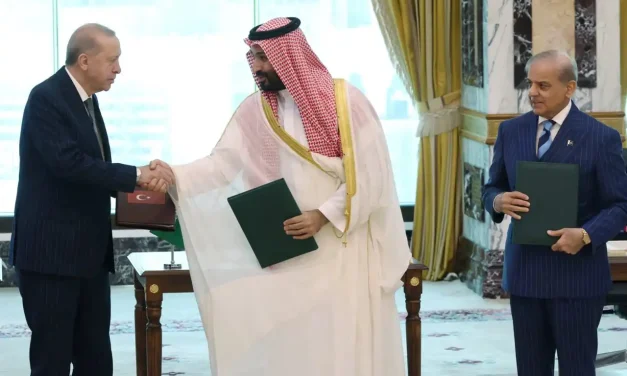
SCFR Online – Interview: The signing of the Makkah agreement between Saudi Arabia, Pakistan, and Turkey has raised questions about the future of the region’s security structure and the position of these countries in West Asian equations. Can this agreement become a genuine collective defense mechanism, or does it have more of a political and deterrent function than creating new military capacity?

Strategic Implications of the Reduction of US Weapons Stockpiles

SCFR Online – Opinion: The continuation of the US war against Iran, in addition to increasing operational costs, has called into question the actual capacity of the American arsenal to simultaneously fulfill security commitments on multiple fronts; an issue that affects deterrence, defense production capacity, and Washington’s resource prioritization.

The Formation of a New Order in Relations Between Powers

SCFR Online – Opinion: The Russia-Ukraine war and the war of the United States and the Israeli regime against Iran have been formed with different objectives and actors, but field and political developments indicate that they are not entirely separate from one another.

An Analysis of the Makkah Defense Pact

SCFR Online – Opinion: On Friday, August 7, the heads of state of three countries – Saudi Arabia, Turkey, and Pakistan – signed a text under the title “Makkah Joint Defense Agreement.”

Dimensions and challenges of the initiative to revive the Hejaz Railway

Strategic Council Online – Note: The initiative to revive the Hejaz Railway, beyond being a transportation project, constitutes an attempt to redefine geopolitics, the economy, and Turkey’s regional position; however, its realization appears to face significant financial, security, and institutional challenges.

Loading

Últimas publicaciones

Realities of the Tripartite Makkah Pact

SCFR Online – Interview: The signing of the Makkah agreement between Saudi Arabia, Pakistan, and Turkey has raised questions about the future of the region’s security structure and the position of these countries in West Asian equations. Can this agreement become a genuine collective defense mechanism, or does it have more of a political and deterrent function than creating new military capacity?

Strategic Implications of the Reduction of US Weapons Stockpiles

SCFR Online – Opinion: The continuation of the US war against Iran, in addition to increasing operational costs, has called into question the actual capacity of the American arsenal to simultaneously fulfill security commitments on multiple fronts; an issue that affects deterrence, defense production capacity, and Washington’s resource prioritization.

The Formation of a New Order in Relations Between Powers

SCFR Online – Opinion: The Russia-Ukraine war and the war of the United States and the Israeli regime against Iran have been formed with different objectives and actors, but field and political developments indicate that they are not entirely separate from one another.

An Analysis of the Makkah Defense Pact

SCFR Online – Opinion: On Friday, August 7, the heads of state of three countries – Saudi Arabia, Turkey, and Pakistan – signed a text under the title “Makkah Joint Defense Agreement.”

Dimensions and challenges of the initiative to revive the Hejaz Railway

Strategic Council Online – Note: The initiative to revive the Hejaz Railway, beyond being a transportation project, constitutes an attempt to redefine geopolitics, the economy, and Turkey’s regional position; however, its realization appears to face significant financial, security, and institutional challenges.

Loading

DERNIER CONTENU

Realities of the Tripartite Makkah Pact

SCFR Online – Interview: The signing of the Makkah agreement between Saudi Arabia, Pakistan, and Turkey has raised questions about the future of the region’s security structure and the position of these countries in West Asian equations. Can this agreement become a genuine collective defense mechanism, or does it have more of a political and deterrent function than creating new military capacity?

Strategic Implications of the Reduction of US Weapons Stockpiles

SCFR Online – Opinion: The continuation of the US war against Iran, in addition to increasing operational costs, has called into question the actual capacity of the American arsenal to simultaneously fulfill security commitments on multiple fronts; an issue that affects deterrence, defense production capacity, and Washington’s resource prioritization.

The Formation of a New Order in Relations Between Powers

SCFR Online – Opinion: The Russia-Ukraine war and the war of the United States and the Israeli regime against Iran have been formed with different objectives and actors, but field and political developments indicate that they are not entirely separate from one another.

An Analysis of the Makkah Defense Pact

SCFR Online – Opinion: On Friday, August 7, the heads of state of three countries – Saudi Arabia, Turkey, and Pakistan – signed a text under the title “Makkah Joint Defense Agreement.”

Dimensions and challenges of the initiative to revive the Hejaz Railway

Strategic Council Online – Note: The initiative to revive the Hejaz Railway, beyond being a transportation project, constitutes an attempt to redefine geopolitics, the economy, and Turkey’s regional position; however, its realization appears to face significant financial, security, and institutional challenges.

Loading

DERNIER CONTENU

Realities of the Tripartite Makkah Pact

SCFR Online – Interview: The signing of the Makkah agreement between Saudi Arabia, Pakistan, and Turkey has raised questions about the future of the region’s security structure and the position of these countries in West Asian equations. Can this agreement become a genuine collective defense mechanism, or does it have more of a political and deterrent function than creating new military capacity?

Strategic Implications of the Reduction of US Weapons Stockpiles

SCFR Online – Opinion: The continuation of the US war against Iran, in addition to increasing operational costs, has called into question the actual capacity of the American arsenal to simultaneously fulfill security commitments on multiple fronts; an issue that affects deterrence, defense production capacity, and Washington’s resource prioritization.

The Formation of a New Order in Relations Between Powers

SCFR Online – Opinion: The Russia-Ukraine war and the war of the United States and the Israeli regime against Iran have been formed with different objectives and actors, but field and political developments indicate that they are not entirely separate from one another.

An Analysis of the Makkah Defense Pact

SCFR Online – Opinion: On Friday, August 7, the heads of state of three countries – Saudi Arabia, Turkey, and Pakistan – signed a text under the title “Makkah Joint Defense Agreement.”

Dimensions and challenges of the initiative to revive the Hejaz Railway

Strategic Council Online – Note: The initiative to revive the Hejaz Railway, beyond being a transportation project, constitutes an attempt to redefine geopolitics, the economy, and Turkey’s regional position; however, its realization appears to face significant financial, security, and institutional challenges.

Loading

DERNIER CONTENU

Realities of the Tripartite Makkah Pact

SCFR Online – Interview: The signing of the Makkah agreement between Saudi Arabia, Pakistan, and Turkey has raised questions about the future of the region’s security structure and the position of these countries in West Asian equations. Can this agreement become a genuine collective defense mechanism, or does it have more of a political and deterrent function than creating new military capacity?

Strategic Implications of the Reduction of US Weapons Stockpiles

SCFR Online – Opinion: The continuation of the US war against Iran, in addition to increasing operational costs, has called into question the actual capacity of the American arsenal to simultaneously fulfill security commitments on multiple fronts; an issue that affects deterrence, defense production capacity, and Washington’s resource prioritization.

The Formation of a New Order in Relations Between Powers

SCFR Online – Opinion: The Russia-Ukraine war and the war of the United States and the Israeli regime against Iran have been formed with different objectives and actors, but field and political developments indicate that they are not entirely separate from one another.

An Analysis of the Makkah Defense Pact

SCFR Online – Opinion: On Friday, August 7, the heads of state of three countries – Saudi Arabia, Turkey, and Pakistan – signed a text under the title “Makkah Joint Defense Agreement.”

Dimensions and challenges of the initiative to revive the Hejaz Railway

Strategic Council Online – Note: The initiative to revive the Hejaz Railway, beyond being a transportation project, constitutes an attempt to redefine geopolitics, the economy, and Turkey’s regional position; however, its realization appears to face significant financial, security, and institutional challenges.

Loading