US-Japan Joint Effort to Counter China

Strategic Council Online - Interview: A university professor saying that the most basic export commodities of China based on their value in the year 2020 were mainly goods rooted in technology, adding: Japan and the US are trying to initiate changes in those conditions by regulating the chip market and building a new generation of semiconductors in order to shape a complete cycle of production and consumption while presenting new technologies, and counter the growth strategy of China’s exports.

Dr. Nozar Shafiei, speaking in an interview with the website of the Strategic Council on Foreign Relations, pointed to a meeting of foreign and trade ministers of Japan and the United States, held in Washington, with an aim of pushing back China and countering the consequences of Russia’s invasion of Ukraine and noted: After the end of the Cold War for a short period that some believe was an exceptional period in history, the United States seized power in an unipolar form. The US-Japan cooperation is now aimed at maintaining the status quo in international politics. While trying to counter the rise of Chinese and Russian power, they insist that China seeks to reform the existing international order and uses its economic influence to secure its strategic interests.
The analyst of Asia affairs, pointing to the U.S.-Japan agreement to create a “new R&D organization” with the presence and participation of like-minded countries, said: East Asia has become the center of gravity for everything that happens at the international policy level, and China, the U.S., Russia and Japan are competing there. America’s main strategy in East Asia is the Indo-Pacific strategy, which, although has a background in the United States, was put forward by Trump in this way, and Biden is continuing it.
Recalling that the main objective of indo-Pacific strategy is to contain China, which has different dimensions and angles, Shafiei continued: Multiple, complex and nested alliances and coalitions form the main essence of this strategy. If in the past the U.S. pursued a “gear” strategy as the nature of alliances and coalitions in the East Asian region, such alliances are now complicated, nested and networked. In this direction, the United States has formed strategic pivots, including with Tokyo, Seoul and Taipei, along with alliances such as the Taiwan-Japan-U.S. Alliance, AUKUS and Quad.
Saying that in all security equations in East Asia, Japan is one of the main pillars of the U.S. strategies, he added: Earlier, the prime minister of Japan had announced in his meeting with Biden that the United States would increase its presence in the Indo-Pacific region regardless of its consequences.
The professor of international relations described the interconnection of polarizations in East Asia as one of the consequences of U.S.-Japan cooperation against China and Russia, and said: Although different perspectives are drawn about the developments in the East Asian region, such as behavior based on “Thucydides Trap” or some kind of Cold War between them, China and the U.S. may conclude that even the Cold War is harmful to them. In that case, we will see a system of “coordination of the great powers.”
Shafiei pointed to the initiatives that China and the U.S. have put on the agenda in the international system to contain each other, adding: Since 1978, U.S.-China relations, especially in the economic dimension, have deepened and they trade about 700 billion dollars annually. Out of this figure, about 200 billion dollars has benefited the U.S. and 500 billion dollars in favor of China, and China’s trade balance is positive 300 billion dollars compared to the U.S., in fact, the U.S. with its own hands increases China’s economic capability and, consequently, military and political power. That’s why Trump tried to impose unilateral sanctions against China regardless of international economic regimes, such as the World Trade Organization, which met China’s reciprocal response.
Stating that the U.S. is trying to offset the vacuum caused by China’s elimination by increasing cooperation with Japan, he noted: At the macro international level, Japan has seen a very strong foundation for filling the U.S. trade vacuum with China and is a strong foundation for filling the strategic gaps that are happening globally, such as the challenges that have occurred as a result of the Ukraine war for food security.
Shafiei pointed to Japan’s trade minister’s remarks that Tokyo will act quickly on next-generation semiconductor research and said: China’s main export goods based on their value in 2020 are mainly related to goods rooted in technology, such as mobile phones, computers, electrical circuits, solar power diodes, semiconductors and automotive parts and accessories. In addition, the United States is the main customer of Chinese goods.
The analyst of Asia affairs added: After the US, Hong Kong, Japan, Vietnam, South Korea, Germany, the Netherlands, Britain, India, Taiwan, Singapore and Malaysia have been the main buyers of Chinese goods. Therefore, it seems that Japan and the United States are trying to initiate changes in those conditions to form a complete cycle of production and consumption while presenting new technologies and counter China’s export growth strategy.
Referring to the escalation of tensions between China and the U.S. over Taiwan, he said: The U.S. is now trying to regulate the chip manufacturing market with the cooperation of Japan. Taiwan is one of the leading manufacturers of computer chips. Given the importance of the chips in the digital economy, the chips are intended as part of Indo-Pacific Treaty negotiations. The U.S. seeks direct negotiations with Taiwan and is pursuing policies under negotiations to achieve advanced technology and supply semiconductors. The issue that has kept China’s criticism.
Recalling that the U.S. is trying to make reforms at the WTO that would harm China and Japan could help advance such reforms, the professor added: China has been the first trading partner of many countries in the Indian and Pacific region in the past year, including some U.S. allies such as Australia and South Korea. In this regard, the U.S. international policy in Asia is based on further integration of the Indo-Pacific economies, setting frameworks and rules, especially in new areas such as the digital economy, and working to ensure safe and flexible supply chains.
0 Comments

Submit a Comment

Your email address will not be published. Required fields are marked *

LATEST CONTENT

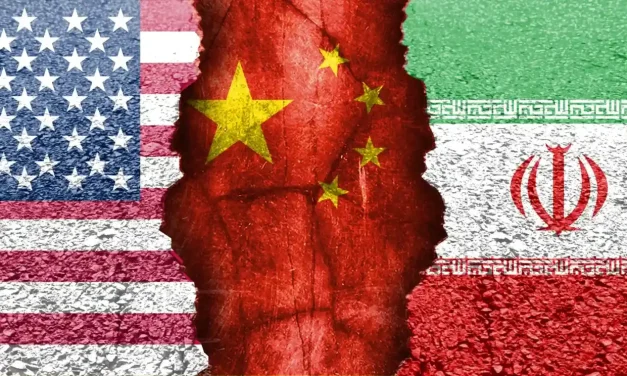
China’s Rejection of US Sanctions; Strengthening Iran’s Geopolitical Leverage

SCFR Online – Opinion: Concurrent with the official commencement of the United States’ economic war against our country, focusing on sanctions instruments, isolation, and economic pressure, what has now become increasingly important is the lack of alignment of other major global powers, especially China, with this policy.
The Makkah Pact; Reasons for its Formation and Challenges Ahead

SCFR Online – Opinion: The Makkah Pact, signed between Saudi Arabia, Pakistan, and Turkey under the motto “an attack on one is an attack on all,” is viewed by some analysts less as a full-fledged military coalition and more as an attempt to reduce security dependence on an external power and to establish a regional security mechanism.

Implications of the US-Saudi Nuclear Agreement

SCFR Online – Opinion: The new US-Saudi nuclear agreement, despite legal and political ambiguities, could alter previous non-proliferation standards in West Asia and intensify nuclear competition, ushering it into a new phase.

An Analysis of Recent Turkey-Israeli Regime Tensions

SCFR Online – Opinion: Recent developments in Syria indicate an intensification of strategic rivalry between Turkey and the Israeli regime, but mutual considerations and the role of the United States have limited the likelihood of direct war.

Loading

Últimas publicaciones

China’s Rejection of US Sanctions; Strengthening Iran’s Geopolitical Leverage

SCFR Online – Opinion: Concurrent with the official commencement of the United States’ economic war against our country, focusing on sanctions instruments, isolation, and economic pressure, what has now become increasingly important is the lack of alignment of other major global powers, especially China, with this policy.
The Makkah Pact; Reasons for its Formation and Challenges Ahead

SCFR Online – Opinion: The Makkah Pact, signed between Saudi Arabia, Pakistan, and Turkey under the motto “an attack on one is an attack on all,” is viewed by some analysts less as a full-fledged military coalition and more as an attempt to reduce security dependence on an external power and to establish a regional security mechanism.

Implications of the US-Saudi Nuclear Agreement

SCFR Online – Opinion: The new US-Saudi nuclear agreement, despite legal and political ambiguities, could alter previous non-proliferation standards in West Asia and intensify nuclear competition, ushering it into a new phase.

An Analysis of Recent Turkey-Israeli Regime Tensions

SCFR Online – Opinion: Recent developments in Syria indicate an intensification of strategic rivalry between Turkey and the Israeli regime, but mutual considerations and the role of the United States have limited the likelihood of direct war.

Loading

DERNIER CONTENU

China’s Rejection of US Sanctions; Strengthening Iran’s Geopolitical Leverage

SCFR Online – Opinion: Concurrent with the official commencement of the United States’ economic war against our country, focusing on sanctions instruments, isolation, and economic pressure, what has now become increasingly important is the lack of alignment of other major global powers, especially China, with this policy.
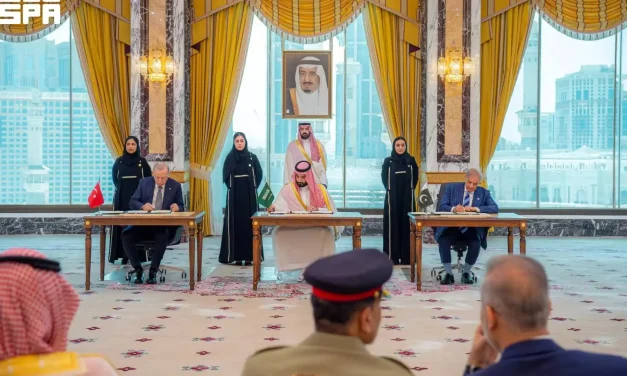
The Makkah Pact; Reasons for its Formation and Challenges Ahead

SCFR Online – Opinion: The Makkah Pact, signed between Saudi Arabia, Pakistan, and Turkey under the motto “an attack on one is an attack on all,” is viewed by some analysts less as a full-fledged military coalition and more as an attempt to reduce security dependence on an external power and to establish a regional security mechanism.

Implications of the US-Saudi Nuclear Agreement

SCFR Online – Opinion: The new US-Saudi nuclear agreement, despite legal and political ambiguities, could alter previous non-proliferation standards in West Asia and intensify nuclear competition, ushering it into a new phase.

An Analysis of Recent Turkey-Israeli Regime Tensions

SCFR Online – Opinion: Recent developments in Syria indicate an intensification of strategic rivalry between Turkey and the Israeli regime, but mutual considerations and the role of the United States have limited the likelihood of direct war.

Loading

DERNIER CONTENU

China’s Rejection of US Sanctions; Strengthening Iran’s Geopolitical Leverage

SCFR Online – Opinion: Concurrent with the official commencement of the United States’ economic war against our country, focusing on sanctions instruments, isolation, and economic pressure, what has now become increasingly important is the lack of alignment of other major global powers, especially China, with this policy.
The Makkah Pact; Reasons for its Formation and Challenges Ahead

SCFR Online – Opinion: The Makkah Pact, signed between Saudi Arabia, Pakistan, and Turkey under the motto “an attack on one is an attack on all,” is viewed by some analysts less as a full-fledged military coalition and more as an attempt to reduce security dependence on an external power and to establish a regional security mechanism.

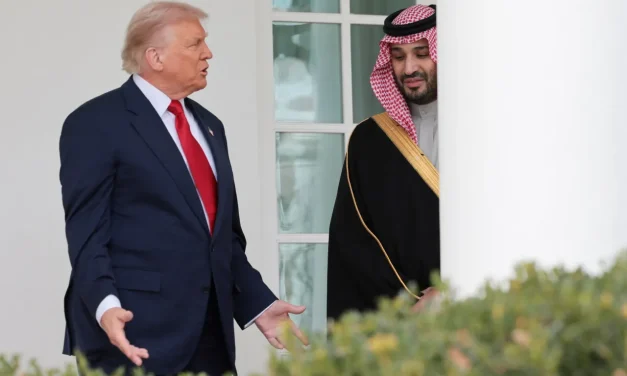
Implications of the US-Saudi Nuclear Agreement

SCFR Online – Opinion: The new US-Saudi nuclear agreement, despite legal and political ambiguities, could alter previous non-proliferation standards in West Asia and intensify nuclear competition, ushering it into a new phase.

An Analysis of Recent Turkey-Israeli Regime Tensions

SCFR Online – Opinion: Recent developments in Syria indicate an intensification of strategic rivalry between Turkey and the Israeli regime, but mutual considerations and the role of the United States have limited the likelihood of direct war.

Loading

DERNIER CONTENU

China’s Rejection of US Sanctions; Strengthening Iran’s Geopolitical Leverage

SCFR Online – Opinion: Concurrent with the official commencement of the United States’ economic war against our country, focusing on sanctions instruments, isolation, and economic pressure, what has now become increasingly important is the lack of alignment of other major global powers, especially China, with this policy.
The Makkah Pact; Reasons for its Formation and Challenges Ahead

SCFR Online – Opinion: The Makkah Pact, signed between Saudi Arabia, Pakistan, and Turkey under the motto “an attack on one is an attack on all,” is viewed by some analysts less as a full-fledged military coalition and more as an attempt to reduce security dependence on an external power and to establish a regional security mechanism.

Implications of the US-Saudi Nuclear Agreement

SCFR Online – Opinion: The new US-Saudi nuclear agreement, despite legal and political ambiguities, could alter previous non-proliferation standards in West Asia and intensify nuclear competition, ushering it into a new phase.

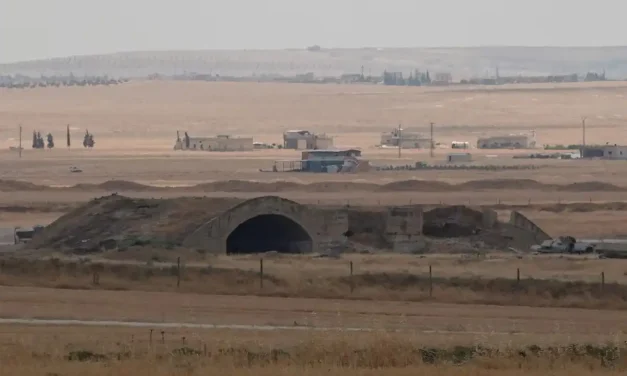
An Analysis of Recent Turkey-Israeli Regime Tensions

SCFR Online – Opinion: Recent developments in Syria indicate an intensification of strategic rivalry between Turkey and the Israeli regime, but mutual considerations and the role of the United States have limited the likelihood of direct war.

Loading