Root Finding of West’s Discriminatory Approach to Wars in Yemen and Ukraine

2022/03/14 | Note, Politics, Top News

Strategic Council Online - Opinion: War has always been a reprehensible phenomenon because of its destructive material and immaterial effects and consequences, except in cases where it is a factor in defending human life and survival, community, public order and security, confronting the aggressor and preventing oppression and injustice. Barsam Mohammadi – Expert on regional affairs

The purpose of the present article is to examine the West’s “selective view” of the phenomenon of war. If the main criterion for dealing with war in decision-making centers, foreign policy and even the political and philosophical schools of Western countries is “national interests” and not “human interests” and “human rights”, it is a far more reprehensible phenomenon than the war itself.

The history of wars of contemporary international relations, especially the developments of recent decades, has clearly shown that the priority of Western countries in the face of intra-regional and international wars has been mainly to pursue national interests and focus on defending a specific “color and race”. If it were not so, the senior CBS news reporter would not have repeated in one of his recent reports on the Ukraine crisis that ‘the war in Ukraine cannot be compared to Iraq and Afghanistan, because Ukraine is a European and civilized country!’

In the face of social, political, and human issues and phenomena, the media typically reflects the overt and covert views of its politicians and statesmen. The host of the French BMF TV network of France said in a live broadcast of the Ukraine war, ‘We are not talking about the Syrians who escaped the bombing of the Putin-backed Syrian government. We are talking about Europeans who are fleeing, they look like us, flee in cars, flee so that we can save their lives!’

In Yemen, tens or even hundreds of civilians and ordinary citizens die every day as a result of war and conflict, are injured or suffer from poverty and famine, but so far there is no record of government institutions, political circles, media centers and think tanks of the West in Europe and the United States, as they appear today in the face of the Ukraine war, act and take a stand against the war in Yemen and the incessant attacks of the Saudis on that country.

Nearly 7 years have passed since the Yemeni war. During that period, more than 600 billion dollars in material damage has been inflicted on Yemen by the aggressive Saudi coalition. Fifty thousand civilians have been killed and injured in Yemen as a result of coalition strikes. In addition, about 600,000 housing units and more than 590,000 service and civilian centers have been destroyed or severely damaged by the Saudi coalition!

Despite all the human and inhumane damage, Western countries, the United Nations, and especially the Security Council, have not only taken any effective action to stop the Saudi war machine, but have turned a blind eye to the shocking events resulting from the siege and all-out attacks in Yemen and against oppressed Yemeni people, and they have become a kind of accomplice to the crimes of Saudi Arabia and the countries and forces under its command. In many other regional wars, too, the truth about many false claims and policies of the United States, Europe, and international human rights organizations has been exposed.

The reaction of the United States and European countries towards the war in Ukraine is in stark contrast to their stance on Yemen, where all areas and civilians, even children, women, schools and medical centers, are among Saudi Arabia’s operational targets.

While all Western countries talk about Russia’s atrocities in Ukraine, they have imposed countless sanctions on Russia and issued a resolution against it at the United Nations, but, those same countries have only remained silent and passive and sometimes biased in their support of Saudi Arabia in response to the massacre of the Yemeni people by the Saudis!

There is no doubt that the war and military operations in Ukraine should be stopped and the resolution of the existing tensions should be pursued through political and legal mechanisms, but the important point here is why such a voice of protest is not raised for the Yemen war?!

Why no Western country has banned the member states of the coalition forces from participating in sports activities due to the crimes that are constantly being committed in Yemen?! Why do not athletes from any country appear in sports fields and competitions with uniforms in the color of the Yemeni flag?! It is as such that the sports sanctions include even Russian individuals with disabilities who have been trying for months to participate in the World Paralympic Games!

The juxtaposition of Western positions on Ukraine and Yemen shows that maintaining “political hegemony” and national interests is the most important red line for Western countries. Where this red line interferes with human lives and human rights, priority is given to national interests. Inductions such as Ukraine is not Syria, Iraq and Yemen, they are “civilized”, “European” and “white in color”, are nothing but racism and selective and discriminatory behavior.

Finally, it should be noted that the United States, Europe, and the United Nations have never been successful in playing their role as “deterrents” to war and conflict. For years, European countries and the United States have used the tools of power at their disposal in the international system as a cover for their illegal and inhumane actions. The international system has suffered more from the discriminatory structures and racist behaviors and the belligerent and crisis-prone approaches that are the prelude to regional warfare, than suffering from war, which is a terrible phenomenon.
0 Comments

Submit a Comment

Your email address will not be published. Required fields are marked *

LATEST CONTENT

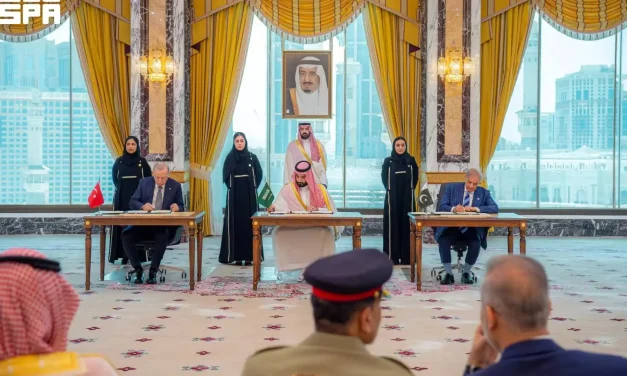
The Makkah Pact; Reasons for its Formation and Challenges Ahead

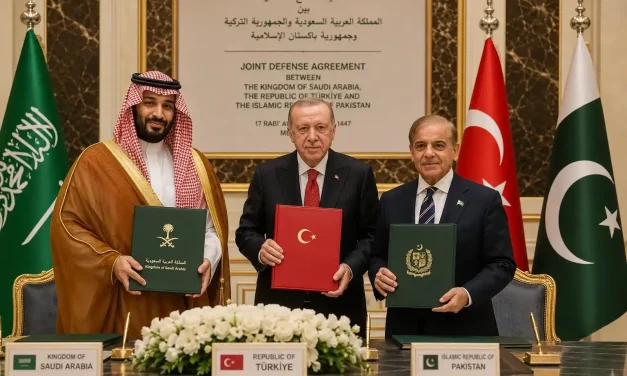
SCFR Online – Opinion: The Makkah Pact, signed between Saudi Arabia, Pakistan, and Turkey under the motto “an attack on one is an attack on all,” is viewed by some analysts less as a full-fledged military coalition and more as an attempt to reduce security dependence on an external power and to establish a regional security mechanism.

Implications of the US-Saudi Nuclear Agreement

SCFR Online – Opinion: The new US-Saudi nuclear agreement, despite legal and political ambiguities, could alter previous non-proliferation standards in West Asia and intensify nuclear competition, ushering it into a new phase.

An Analysis of Recent Turkey-Israeli Regime Tensions

SCFR Online – Opinion: Recent developments in Syria indicate an intensification of strategic rivalry between Turkey and the Israeli regime, but mutual considerations and the role of the United States have limited the likelihood of direct war.

Increasing criticism of the extensive Zionist lobby network

SCFR Online – Opinion: An examination of the mechanisms of the Israeli regime’s influence in the United States depicts a complex picture of shared interests, strategic dependencies, and the limitations of this relationship.

Realities of the Tripartite Makkah Pact

SCFR Online – Interview: The signing of the Makkah agreement between Saudi Arabia, Pakistan, and Turkey has raised questions about the future of the region’s security structure and the position of these countries in West Asian equations. Can this agreement become a genuine collective defense mechanism, or does it have more of a political and deterrent function than creating new military capacity?

Strategic Implications of the Reduction of US Weapons Stockpiles

SCFR Online – Opinion: The continuation of the US war against Iran, in addition to increasing operational costs, has called into question the actual capacity of the American arsenal to simultaneously fulfill security commitments on multiple fronts; an issue that affects deterrence, defense production capacity, and Washington’s resource prioritization.

Loading

Últimas publicaciones

The Makkah Pact; Reasons for its Formation and Challenges Ahead

SCFR Online – Opinion: The Makkah Pact, signed between Saudi Arabia, Pakistan, and Turkey under the motto “an attack on one is an attack on all,” is viewed by some analysts less as a full-fledged military coalition and more as an attempt to reduce security dependence on an external power and to establish a regional security mechanism.

Implications of the US-Saudi Nuclear Agreement

SCFR Online – Opinion: The new US-Saudi nuclear agreement, despite legal and political ambiguities, could alter previous non-proliferation standards in West Asia and intensify nuclear competition, ushering it into a new phase.

An Analysis of Recent Turkey-Israeli Regime Tensions

SCFR Online – Opinion: Recent developments in Syria indicate an intensification of strategic rivalry between Turkey and the Israeli regime, but mutual considerations and the role of the United States have limited the likelihood of direct war.

Increasing criticism of the extensive Zionist lobby network

SCFR Online – Opinion: An examination of the mechanisms of the Israeli regime’s influence in the United States depicts a complex picture of shared interests, strategic dependencies, and the limitations of this relationship.

Realities of the Tripartite Makkah Pact

SCFR Online – Interview: The signing of the Makkah agreement between Saudi Arabia, Pakistan, and Turkey has raised questions about the future of the region’s security structure and the position of these countries in West Asian equations. Can this agreement become a genuine collective defense mechanism, or does it have more of a political and deterrent function than creating new military capacity?

Strategic Implications of the Reduction of US Weapons Stockpiles

SCFR Online – Opinion: The continuation of the US war against Iran, in addition to increasing operational costs, has called into question the actual capacity of the American arsenal to simultaneously fulfill security commitments on multiple fronts; an issue that affects deterrence, defense production capacity, and Washington’s resource prioritization.

Loading

DERNIER CONTENU

The Makkah Pact; Reasons for its Formation and Challenges Ahead

SCFR Online – Opinion: The Makkah Pact, signed between Saudi Arabia, Pakistan, and Turkey under the motto “an attack on one is an attack on all,” is viewed by some analysts less as a full-fledged military coalition and more as an attempt to reduce security dependence on an external power and to establish a regional security mechanism.

Implications of the US-Saudi Nuclear Agreement

SCFR Online – Opinion: The new US-Saudi nuclear agreement, despite legal and political ambiguities, could alter previous non-proliferation standards in West Asia and intensify nuclear competition, ushering it into a new phase.

An Analysis of Recent Turkey-Israeli Regime Tensions

SCFR Online – Opinion: Recent developments in Syria indicate an intensification of strategic rivalry between Turkey and the Israeli regime, but mutual considerations and the role of the United States have limited the likelihood of direct war.

Increasing criticism of the extensive Zionist lobby network

SCFR Online – Opinion: An examination of the mechanisms of the Israeli regime’s influence in the United States depicts a complex picture of shared interests, strategic dependencies, and the limitations of this relationship.

Realities of the Tripartite Makkah Pact

SCFR Online – Interview: The signing of the Makkah agreement between Saudi Arabia, Pakistan, and Turkey has raised questions about the future of the region’s security structure and the position of these countries in West Asian equations. Can this agreement become a genuine collective defense mechanism, or does it have more of a political and deterrent function than creating new military capacity?

Strategic Implications of the Reduction of US Weapons Stockpiles

SCFR Online – Opinion: The continuation of the US war against Iran, in addition to increasing operational costs, has called into question the actual capacity of the American arsenal to simultaneously fulfill security commitments on multiple fronts; an issue that affects deterrence, defense production capacity, and Washington’s resource prioritization.

Loading

DERNIER CONTENU

The Makkah Pact; Reasons for its Formation and Challenges Ahead

SCFR Online – Opinion: The Makkah Pact, signed between Saudi Arabia, Pakistan, and Turkey under the motto “an attack on one is an attack on all,” is viewed by some analysts less as a full-fledged military coalition and more as an attempt to reduce security dependence on an external power and to establish a regional security mechanism.

Implications of the US-Saudi Nuclear Agreement

SCFR Online – Opinion: The new US-Saudi nuclear agreement, despite legal and political ambiguities, could alter previous non-proliferation standards in West Asia and intensify nuclear competition, ushering it into a new phase.

An Analysis of Recent Turkey-Israeli Regime Tensions

SCFR Online – Opinion: Recent developments in Syria indicate an intensification of strategic rivalry between Turkey and the Israeli regime, but mutual considerations and the role of the United States have limited the likelihood of direct war.

Increasing criticism of the extensive Zionist lobby network

SCFR Online – Opinion: An examination of the mechanisms of the Israeli regime’s influence in the United States depicts a complex picture of shared interests, strategic dependencies, and the limitations of this relationship.

Realities of the Tripartite Makkah Pact

SCFR Online – Interview: The signing of the Makkah agreement between Saudi Arabia, Pakistan, and Turkey has raised questions about the future of the region’s security structure and the position of these countries in West Asian equations. Can this agreement become a genuine collective defense mechanism, or does it have more of a political and deterrent function than creating new military capacity?

Strategic Implications of the Reduction of US Weapons Stockpiles

SCFR Online – Opinion: The continuation of the US war against Iran, in addition to increasing operational costs, has called into question the actual capacity of the American arsenal to simultaneously fulfill security commitments on multiple fronts; an issue that affects deterrence, defense production capacity, and Washington’s resource prioritization.

Loading

DERNIER CONTENU

The Makkah Pact; Reasons for its Formation and Challenges Ahead

SCFR Online – Opinion: The Makkah Pact, signed between Saudi Arabia, Pakistan, and Turkey under the motto “an attack on one is an attack on all,” is viewed by some analysts less as a full-fledged military coalition and more as an attempt to reduce security dependence on an external power and to establish a regional security mechanism.

Implications of the US-Saudi Nuclear Agreement

SCFR Online – Opinion: The new US-Saudi nuclear agreement, despite legal and political ambiguities, could alter previous non-proliferation standards in West Asia and intensify nuclear competition, ushering it into a new phase.

An Analysis of Recent Turkey-Israeli Regime Tensions

SCFR Online – Opinion: Recent developments in Syria indicate an intensification of strategic rivalry between Turkey and the Israeli regime, but mutual considerations and the role of the United States have limited the likelihood of direct war.

Increasing criticism of the extensive Zionist lobby network

SCFR Online – Opinion: An examination of the mechanisms of the Israeli regime’s influence in the United States depicts a complex picture of shared interests, strategic dependencies, and the limitations of this relationship.

Realities of the Tripartite Makkah Pact

SCFR Online – Interview: The signing of the Makkah agreement between Saudi Arabia, Pakistan, and Turkey has raised questions about the future of the region’s security structure and the position of these countries in West Asian equations. Can this agreement become a genuine collective defense mechanism, or does it have more of a political and deterrent function than creating new military capacity?

Strategic Implications of the Reduction of US Weapons Stockpiles

SCFR Online – Opinion: The continuation of the US war against Iran, in addition to increasing operational costs, has called into question the actual capacity of the American arsenal to simultaneously fulfill security commitments on multiple fronts; an issue that affects deterrence, defense production capacity, and Washington’s resource prioritization.

Loading