US Plan to Ensure Military Presence, Influence in Central Asia

Strategic Council Online - Opinion: Since the collapse of the Soviet Union, the United States has paid special attention to the newly established republics of Central Asia. This attention, especially in recent years, has become more important due to the intensification of US rivalry with China and Russia. Hamid Khoshayand - Expert on regional affairs

With the inevitable withdrawal of the US from Afghanistan, which was a “strategic failure” for that country, the said policy was largely sidelined, but it was never abandoned. It may be thought that the White House has come to terms with the loss of its military presence and influence in Afghanistan and Central Asia. But the reality shows something else; the United States is still eyeing this region and using various mechanisms to “revive influence” in Afghanistan and Central Asia with an aim of separating them from Russia and China.

Last year, on the eve of the emergency withdrawal of the US forces from Afghanistan, Secretary of the State Blinken traveled to the region and met with foreign ministers of Kazakhstan, Uzbekistan, Tajikistan, Kyrgyzstan and Turkmenistan within the framework of C 5+1, and conveyed the message that Central Asia is still on the foreign policy radar of the Biden administration.

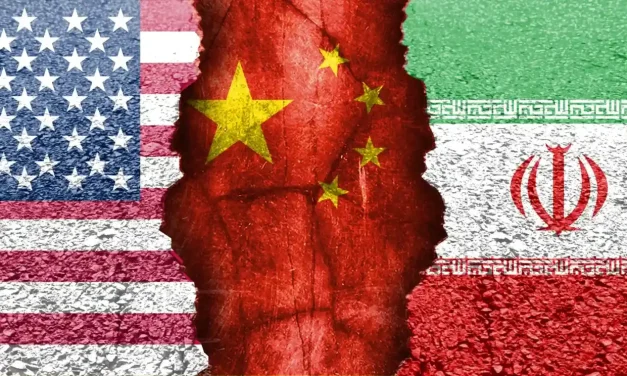
The United States has three specific strategies in Central Asia that it has not retreated from until today: countering China’s growing activities, countering Russia’s continued influence, and trying to isolate Iran regionally.

The United States cannot be indifferent to the presence of Russia, China and Iran in this region, so the most important policy it is currently pursuing in Central Asia is defining a “new military, security and intelligence position” in order to consolidate and stabilize its presence and influence in this area. In this framework, some actions are being carried out, which can be categorized into two parts:

First; due to the fact that the Taliban has dominated Afghanistan and will not allow the resumption of the US military activities in that country for an indefinite period, the White House is aiming to “organize informal intelligence and espionage networks and structures” in Afghanistan. “Making Afghanistan insecure” with an aim of political and security exploitation is on the agenda of the US intelligence agencies. In such a way that it even uses destructive and terrorist tools, including ISIS, to disturb the situation in that country. It should not be forgotten that the US, for 20 years, has been looking at Central Asia through the lens of its military and geopolitical interests in Afghanistan.

Second; “is defining the new sphere of influence in Central Asia”. For this purpose, the United States intends to transfer the ownership of 62 airplanes and helicopters that were transferred to Central Asia by the pilots of the Afghan Air Force after the expulsion of that country from Afghanistan to Uzbekistan and Tajikistan.

Airplanes and helicopters that the US no longer needs due to being worn out and requiring major repairs by American technicians, provide Washington with a “leverage” and, in other words, an “opportunity” in exchange for an informal agreement to “deepen security relations” and fight against terrorism, to provide them to Tashkent and Dushanbe.

Such an agreement could include the expansion of information exchange to the deployment of troops or aircraft in those countries in the long term, which could mean creating a “firm military foothold” in Central Asia. The US knows very well that transformation of Central Asia into an area of ​​influence for any power will bring the control of neighboring countries in the region, which is extremely important in terms of security and military; but the US is facing three serious obstacles in this field:

Firstly, Central Asian countries are not interested in hosting the US bases and military equipment in their countries because of their experience in Afghanistan and their interactions with Russia and China, and due to their avoidance of tension and conflict.

Secondly, Russia and China, as two effective players in the region, which have an outstanding military and economic presence in the countries of Central Asia, especially Tajikistan and Kazakhstan, do not welcome the return of the United States to the region and do not even accept establishment of a small military base in that area.

Thirdly, the United States lacks the tools and capabilities to prove to the countries of the region that have had deep relations with Moscow and Beijing for years that the economic and financial benefits of their military and security cooperation with the United States are greater than its losses.

The US effort and planning to establish a military foothold in Central Asia will definitely have negative consequences. The most important consequence is the “spread of insecurity and instability” in the region. The experiences of the past years show that, with regard to the fact that the US is a “crisis-creating and crisis-living regime” and “hegemony” exists in its essence, therefore, its military and security presence in every corner of the world gradually causes conflict, insecurity and instability in that area. Central Asian countries hosting the US bases and equipment means hosting insecure and crisis-creating trends in the medium and long term.
0 Comments

Submit a Comment

Your email address will not be published. Required fields are marked *

LATEST CONTENT

China’s Rejection of US Sanctions; Strengthening Iran’s Geopolitical Leverage

SCFR Online – Opinion: Concurrent with the official commencement of the United States’ economic war against our country, focusing on sanctions instruments, isolation, and economic pressure, what has now become increasingly important is the lack of alignment of other major global powers, especially China, with this policy.

The Makkah Pact; Reasons for its Formation and Challenges Ahead

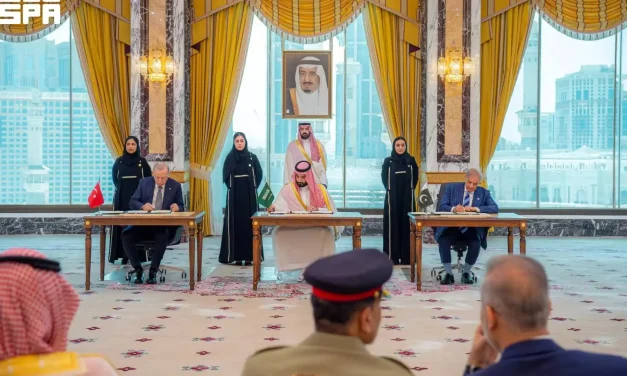
SCFR Online – Opinion: The Makkah Pact, signed between Saudi Arabia, Pakistan, and Turkey under the motto “an attack on one is an attack on all,” is viewed by some analysts less as a full-fledged military coalition and more as an attempt to reduce security dependence on an external power and to establish a regional security mechanism.

Implications of the US-Saudi Nuclear Agreement

SCFR Online – Opinion: The new US-Saudi nuclear agreement, despite legal and political ambiguities, could alter previous non-proliferation standards in West Asia and intensify nuclear competition, ushering it into a new phase.

An Analysis of Recent Turkey-Israeli Regime Tensions

SCFR Online – Opinion: Recent developments in Syria indicate an intensification of strategic rivalry between Turkey and the Israeli regime, but mutual considerations and the role of the United States have limited the likelihood of direct war.

Loading

Últimas publicaciones

China’s Rejection of US Sanctions; Strengthening Iran’s Geopolitical Leverage

SCFR Online – Opinion: Concurrent with the official commencement of the United States’ economic war against our country, focusing on sanctions instruments, isolation, and economic pressure, what has now become increasingly important is the lack of alignment of other major global powers, especially China, with this policy.

The Makkah Pact; Reasons for its Formation and Challenges Ahead

SCFR Online – Opinion: The Makkah Pact, signed between Saudi Arabia, Pakistan, and Turkey under the motto “an attack on one is an attack on all,” is viewed by some analysts less as a full-fledged military coalition and more as an attempt to reduce security dependence on an external power and to establish a regional security mechanism.

Implications of the US-Saudi Nuclear Agreement

SCFR Online – Opinion: The new US-Saudi nuclear agreement, despite legal and political ambiguities, could alter previous non-proliferation standards in West Asia and intensify nuclear competition, ushering it into a new phase.

An Analysis of Recent Turkey-Israeli Regime Tensions

SCFR Online – Opinion: Recent developments in Syria indicate an intensification of strategic rivalry between Turkey and the Israeli regime, but mutual considerations and the role of the United States have limited the likelihood of direct war.

Loading

DERNIER CONTENU

China’s Rejection of US Sanctions; Strengthening Iran’s Geopolitical Leverage

SCFR Online – Opinion: Concurrent with the official commencement of the United States’ economic war against our country, focusing on sanctions instruments, isolation, and economic pressure, what has now become increasingly important is the lack of alignment of other major global powers, especially China, with this policy.

The Makkah Pact; Reasons for its Formation and Challenges Ahead

SCFR Online – Opinion: The Makkah Pact, signed between Saudi Arabia, Pakistan, and Turkey under the motto “an attack on one is an attack on all,” is viewed by some analysts less as a full-fledged military coalition and more as an attempt to reduce security dependence on an external power and to establish a regional security mechanism.

Implications of the US-Saudi Nuclear Agreement

SCFR Online – Opinion: The new US-Saudi nuclear agreement, despite legal and political ambiguities, could alter previous non-proliferation standards in West Asia and intensify nuclear competition, ushering it into a new phase.

An Analysis of Recent Turkey-Israeli Regime Tensions

SCFR Online – Opinion: Recent developments in Syria indicate an intensification of strategic rivalry between Turkey and the Israeli regime, but mutual considerations and the role of the United States have limited the likelihood of direct war.

Loading

DERNIER CONTENU

China’s Rejection of US Sanctions; Strengthening Iran’s Geopolitical Leverage

SCFR Online – Opinion: Concurrent with the official commencement of the United States’ economic war against our country, focusing on sanctions instruments, isolation, and economic pressure, what has now become increasingly important is the lack of alignment of other major global powers, especially China, with this policy.

The Makkah Pact; Reasons for its Formation and Challenges Ahead

SCFR Online – Opinion: The Makkah Pact, signed between Saudi Arabia, Pakistan, and Turkey under the motto “an attack on one is an attack on all,” is viewed by some analysts less as a full-fledged military coalition and more as an attempt to reduce security dependence on an external power and to establish a regional security mechanism.

Implications of the US-Saudi Nuclear Agreement

SCFR Online – Opinion: The new US-Saudi nuclear agreement, despite legal and political ambiguities, could alter previous non-proliferation standards in West Asia and intensify nuclear competition, ushering it into a new phase.

An Analysis of Recent Turkey-Israeli Regime Tensions

SCFR Online – Opinion: Recent developments in Syria indicate an intensification of strategic rivalry between Turkey and the Israeli regime, but mutual considerations and the role of the United States have limited the likelihood of direct war.

Loading

DERNIER CONTENU

China’s Rejection of US Sanctions; Strengthening Iran’s Geopolitical Leverage

SCFR Online – Opinion: Concurrent with the official commencement of the United States’ economic war against our country, focusing on sanctions instruments, isolation, and economic pressure, what has now become increasingly important is the lack of alignment of other major global powers, especially China, with this policy.

The Makkah Pact; Reasons for its Formation and Challenges Ahead

SCFR Online – Opinion: The Makkah Pact, signed between Saudi Arabia, Pakistan, and Turkey under the motto “an attack on one is an attack on all,” is viewed by some analysts less as a full-fledged military coalition and more as an attempt to reduce security dependence on an external power and to establish a regional security mechanism.

Implications of the US-Saudi Nuclear Agreement

SCFR Online – Opinion: The new US-Saudi nuclear agreement, despite legal and political ambiguities, could alter previous non-proliferation standards in West Asia and intensify nuclear competition, ushering it into a new phase.

An Analysis of Recent Turkey-Israeli Regime Tensions

SCFR Online – Opinion: Recent developments in Syria indicate an intensification of strategic rivalry between Turkey and the Israeli regime, but mutual considerations and the role of the United States have limited the likelihood of direct war.

Loading