
Dr. Ali Karbalaei Hosseini – International Law Expert
In this regard, the violation of Lebanese airspace by the Zionist regime during a ceasefire is not only a provocative act but also a clear violation of international law. This action by the Zionist regime has legal dimensions that require the Lebanese government and other governments to take measures against it. Otherwise, the lack of an appropriate response to this aggression will have consequences for international law and regional stability.
Violation of Lebanese Airspace and Principles of International Law
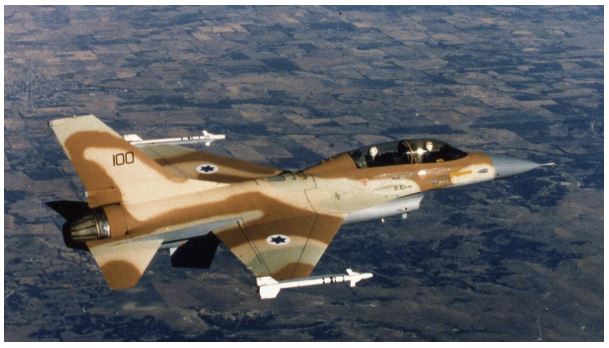
A country’s airspace is considered part of its territorial sovereignty, and any violation of it is tantamount to a violation of international law. In this particular case, the Zionist regime, by flying its fighter jets and drones in Lebanese airspace, has not only violated the country’s sovereignty but also violated its international obligations, given the conditions of the ceasefire between the two sides. This action was taken while the funeral ceremony for Sayyed Hassan Nasrallah, the late Secretary General of the Lebanese Hezbollah and his successor, was being held in the presence of the Lebanese people and high-ranking domestic and foreign officials, including the Iranian delegation. This airspace violation could have led to unfortunate incidents and an escalation of regional tensions.
Peremptory norms (Jus Cogens), as rules that the international community generally considers essential and inviolable, include principles such as the prohibition of the use of force, respect for the sovereignty of states, and human rights. The violation of Lebanese airspace by the Zionist regime is not only a violation of Lebanese sovereignty but also a violation of the peremptory rules of international law. In addition, international customs also emphasize the need to respect countries’ airspace, and any violation without authorization is subject to prosecution.
Violations of International Law
Some of the violations of international law that occurred in this case are as follows:
Threat to international peace and security: The flight of fighter jets and drones over Lebanese airspace during a ceasefire is considered a provocative act and threatens regional and international security.
Violation of Lebanese sovereignty: This act directly violates Lebanese sovereignty and must be condemned as an illegal act by the international community.
Risk of military conflicts: The presence of fighter jets and drones over Lebanese airspace during sensitive conditions increases the likelihood of military conflicts and escalation of tensions.
Violation of diplomatic rights: Given the presence of foreign delegations at the ceremony, this action can be considered a violation of diplomatic rights and the security of foreign delegates.
Duties of the Lebanese government and other governments
As the main victim of this violation, the Lebanese government is expected to file a complaint through international law mechanisms, including the United Nations and the Security Council. Lebanon can call for the condemnation of the Zionist regime and the imposition of international sanctions, citing the violation of its sovereignty and the terms of the ceasefire.
Other governments are also obliged to support Lebanon by condemning this action of the Zionist regime. In particular, countries that have diplomatic relations with Lebanon can put more pressure on the Zionist regime through international organizations and multilateral diplomacy. Also, the Security Council must address this issue as the body responsible for maintaining international peace and security.
Consequences of the lack of an appropriate response
The international community’s lack of an appropriate response to this violation could have serious consequences for the rule of law in the international system.
Weakening the sovereignty of states: If the violation of Lebanese airspace goes unanswered, it sends a message to other states that violating the sovereignty of others is possible without serious consequences.
Damaging the credibility of international organizations: The lack of action by the Security Council and other international institutions calls into question the credibility of these organizations as guardians of international peace and security.
Increasing regional instability: The lack of an appropriate response could lead to an escalation of tensions and instability in the West Asian region.
The violation of Lebanese airspace by the Zionist regime under a ceasefire is not only a clear violation of international law but also a threat to regional and international peace and security. The Lebanese government and other governments are expected to condemn this action and prevent its repetition by using legal and diplomatic mechanisms. Failure to respond appropriately to this violation not only undermines Lebanon’s sovereignty but also calls into question the credibility of the international system. The international community must take a firm stand to defend the rule of law and the principles of international law to prevent further escalation of instability and violations of states’ rights in the future.








0 Comments