Zangezur: A Test for Regional and International Players

2025/07/22 | Note, Politics, Top News

Strategic Council Online – Analysis: On the verge of finalizing the Baku-Yerevan peace agreement, the recent remarks by Mnatsakan Safaryan, Armenia’s Deputy Foreign Minister, regarding the potential handover of the "logistical management" of the Zangezur route to a foreign company have pushed the status of this 32-kilometer strip into a critical phase. The discussion of a foreign operator’s involvement coincides with the meeting between Nikol Pashinyan and Ilham Aliyev in Abu Dhabi—a meeting that, according to regional media, primarily focused on this blocked route.

Hamed Khosrowshahi – Researcher on South Caucasus Affairs

The Pashinyan government is trying to portray this assessment as purely technical, asserting that Yerevan’s red lines—national sovereignty, customs control, and the rejection of the term “corridor”—remain unchanged. However, the mere proposal of this idea has stirred domestic critics and foreign actors, once again demonstrating that Zangezur is no longer just a bilateral Baku-Yerevan issue but a test for redefining the roles and influence of the U.S., Turkey, Russia, Iran, and even China in the heart of the South Caucasus.

From an official standpoint, the Pashinyan cabinet still considers the Zangezur project part of the “Crossroads of Peace” initiative, which involves reopening roads and railways under Armenian jurisdiction with facilitated transit regulations—but not without passport controls. Authorities explicitly state that no part of Armenian territory will be handed over to a foreign government or contractor, and the use of the term “corridor,” which in Baku and Ankara’s discourse implies an extraterritorial route free from Armenian control, is unacceptable to them. This position has gained renewed confidence in recent weeks, as China, following a Communist Party delegation’s visit to the Caucasus, publicly endorsed Armenia’s territorial integrity, raising the political cost of establishing any uncontrolled passageway.

However, media reports tell a different story. These outlets—Azerbaijani, Armenian, and Western alike—claim that the plan to entrust the route’s management to an American company has been on the table since Trump’s first term and has gained fresh momentum under Biden’s White House. This scenario provides Baku with security guarantees, shortens the Nakhchivan-Baku route, and simultaneously sidelines Russia and Iran from the process entirely. Critics argue that although the project is labeled “logistical operation,” in practice, it would mean a passage where Armenian border forces have no effective oversight, and the state loses significant control over traffic and tariffs—a development framed in Yerevan’s political discourse as “quiet partition” or “proxy sovereignty.”

The complexity deepens when considering the unprecedented wave of tension between Russia and Azerbaijan alongside this development. Russia’s downing of an Azerbaijani passenger plane, the killing of two Azerbaijani citizens in Yekaterinburg by Russian security forces, the attack on Sputnik’s office in Baku, and the cancellation of all bilateral cultural events have created a new vacuum in the Kremlin’s traditional role as a border guarantor. Baku likely views this vacuum as an opportunity to push for a model supervised by a “neutral third party”—this time a Western rather than a Russian one. For Washington, placing an American logistics company on this East-West passage, right where China’s Belt and Road intersects with Iranian and Russian corridors, would be a geopolitical triumph.

Despite the uproar, three major obstacles remain. First, Armenia’s land laws prohibit long-term leases of non-agricultural land to foreigners; any concession agreement must pass parliamentary approval, and opposition factions are already up in arms. Second, Tehran’s red line is the 44-kilometer Iran-Armenia border. Iran not only rejects the term “Zangezur Corridor” but has also demonstrated its opposition over the past year through military drills near the Aras River and by accelerating the alternative “Aras Corridor” project. Third, Moscow itself is hesitant; the Kremlin knows that exclusion from the oversight process would mean losing its last traditional lever in the Caucasus and is unlikely to retreat without resistance—at least diplomatically and economically.

Thus, the Armenian Deputy Foreign Minister’s statement should be seen as a “trial balloon”: testing domestic public opinion, as well as the reactions of Tehran, Moscow, and Beijing, while signaling to Baku that Yerevan can break the deadlock with commercial ideas. However, until Armenia’s parliament lifts legal barriers, Iran stands firm on its border red line, and Russia maintains at least a nominal supervisory role. Foreign management—whether for a hundred or fifty years—remains more a bargaining chip than an imminent project.

Zangezur, with or without an American logistics company, will continue to be a test for defining the future of sovereignty in the era of transnational corridors. This outcome will affect Tehran, Moscow, Ankara, and Washington as much as Yerevan and Baku.
0 Comments

LATEST CONTENT

Realities of the Tripartite Makkah Pact

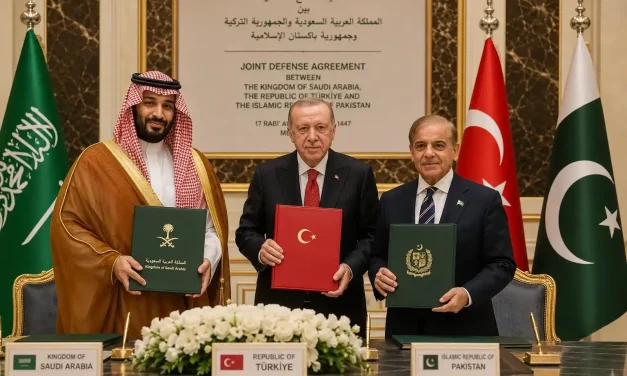
SCFR Online – Interview: The signing of the Makkah agreement between Saudi Arabia, Pakistan, and Turkey has raised questions about the future of the region’s security structure and the position of these countries in West Asian equations. Can this agreement become a genuine collective defense mechanism, or does it have more of a political and deterrent function than creating new military capacity?

Strategic Implications of the Reduction of US Weapons Stockpiles

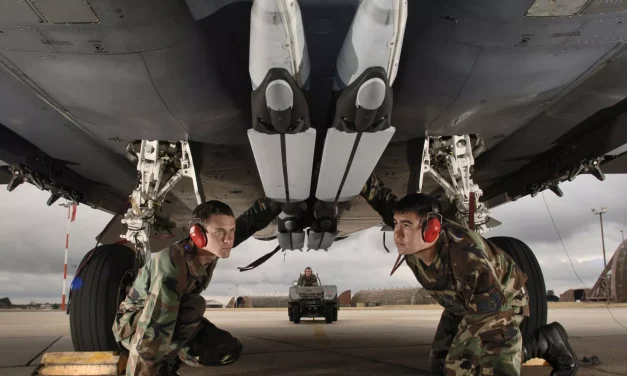
SCFR Online – Opinion: The continuation of the US war against Iran, in addition to increasing operational costs, has called into question the actual capacity of the American arsenal to simultaneously fulfill security commitments on multiple fronts; an issue that affects deterrence, defense production capacity, and Washington’s resource prioritization.

The Formation of a New Order in Relations Between Powers

SCFR Online – Opinion: The Russia-Ukraine war and the war of the United States and the Israeli regime against Iran have been formed with different objectives and actors, but field and political developments indicate that they are not entirely separate from one another.

An Analysis of the Makkah Defense Pact

SCFR Online – Opinion: On Friday, August 7, the heads of state of three countries – Saudi Arabia, Turkey, and Pakistan – signed a text under the title “Makkah Joint Defense Agreement.”

Dimensions and challenges of the initiative to revive the Hejaz Railway

Strategic Council Online – Note: The initiative to revive the Hejaz Railway, beyond being a transportation project, constitutes an attempt to redefine geopolitics, the economy, and Turkey’s regional position; however, its realization appears to face significant financial, security, and institutional challenges.

Loading

Últimas publicaciones

Realities of the Tripartite Makkah Pact

SCFR Online – Interview: The signing of the Makkah agreement between Saudi Arabia, Pakistan, and Turkey has raised questions about the future of the region’s security structure and the position of these countries in West Asian equations. Can this agreement become a genuine collective defense mechanism, or does it have more of a political and deterrent function than creating new military capacity?

Strategic Implications of the Reduction of US Weapons Stockpiles

SCFR Online – Opinion: The continuation of the US war against Iran, in addition to increasing operational costs, has called into question the actual capacity of the American arsenal to simultaneously fulfill security commitments on multiple fronts; an issue that affects deterrence, defense production capacity, and Washington’s resource prioritization.

The Formation of a New Order in Relations Between Powers

SCFR Online – Opinion: The Russia-Ukraine war and the war of the United States and the Israeli regime against Iran have been formed with different objectives and actors, but field and political developments indicate that they are not entirely separate from one another.

An Analysis of the Makkah Defense Pact

SCFR Online – Opinion: On Friday, August 7, the heads of state of three countries – Saudi Arabia, Turkey, and Pakistan – signed a text under the title “Makkah Joint Defense Agreement.”

Dimensions and challenges of the initiative to revive the Hejaz Railway

Strategic Council Online – Note: The initiative to revive the Hejaz Railway, beyond being a transportation project, constitutes an attempt to redefine geopolitics, the economy, and Turkey’s regional position; however, its realization appears to face significant financial, security, and institutional challenges.

Loading

DERNIER CONTENU

Realities of the Tripartite Makkah Pact

SCFR Online – Interview: The signing of the Makkah agreement between Saudi Arabia, Pakistan, and Turkey has raised questions about the future of the region’s security structure and the position of these countries in West Asian equations. Can this agreement become a genuine collective defense mechanism, or does it have more of a political and deterrent function than creating new military capacity?

Strategic Implications of the Reduction of US Weapons Stockpiles

SCFR Online – Opinion: The continuation of the US war against Iran, in addition to increasing operational costs, has called into question the actual capacity of the American arsenal to simultaneously fulfill security commitments on multiple fronts; an issue that affects deterrence, defense production capacity, and Washington’s resource prioritization.

The Formation of a New Order in Relations Between Powers

SCFR Online – Opinion: The Russia-Ukraine war and the war of the United States and the Israeli regime against Iran have been formed with different objectives and actors, but field and political developments indicate that they are not entirely separate from one another.

An Analysis of the Makkah Defense Pact

SCFR Online – Opinion: On Friday, August 7, the heads of state of three countries – Saudi Arabia, Turkey, and Pakistan – signed a text under the title “Makkah Joint Defense Agreement.”

Dimensions and challenges of the initiative to revive the Hejaz Railway

Strategic Council Online – Note: The initiative to revive the Hejaz Railway, beyond being a transportation project, constitutes an attempt to redefine geopolitics, the economy, and Turkey’s regional position; however, its realization appears to face significant financial, security, and institutional challenges.

Loading

DERNIER CONTENU

Realities of the Tripartite Makkah Pact

SCFR Online – Interview: The signing of the Makkah agreement between Saudi Arabia, Pakistan, and Turkey has raised questions about the future of the region’s security structure and the position of these countries in West Asian equations. Can this agreement become a genuine collective defense mechanism, or does it have more of a political and deterrent function than creating new military capacity?

Strategic Implications of the Reduction of US Weapons Stockpiles

SCFR Online – Opinion: The continuation of the US war against Iran, in addition to increasing operational costs, has called into question the actual capacity of the American arsenal to simultaneously fulfill security commitments on multiple fronts; an issue that affects deterrence, defense production capacity, and Washington’s resource prioritization.

The Formation of a New Order in Relations Between Powers

SCFR Online – Opinion: The Russia-Ukraine war and the war of the United States and the Israeli regime against Iran have been formed with different objectives and actors, but field and political developments indicate that they are not entirely separate from one another.

An Analysis of the Makkah Defense Pact

SCFR Online – Opinion: On Friday, August 7, the heads of state of three countries – Saudi Arabia, Turkey, and Pakistan – signed a text under the title “Makkah Joint Defense Agreement.”

Dimensions and challenges of the initiative to revive the Hejaz Railway

Strategic Council Online – Note: The initiative to revive the Hejaz Railway, beyond being a transportation project, constitutes an attempt to redefine geopolitics, the economy, and Turkey’s regional position; however, its realization appears to face significant financial, security, and institutional challenges.

Loading

DERNIER CONTENU

Realities of the Tripartite Makkah Pact

SCFR Online – Interview: The signing of the Makkah agreement between Saudi Arabia, Pakistan, and Turkey has raised questions about the future of the region’s security structure and the position of these countries in West Asian equations. Can this agreement become a genuine collective defense mechanism, or does it have more of a political and deterrent function than creating new military capacity?

Strategic Implications of the Reduction of US Weapons Stockpiles

SCFR Online – Opinion: The continuation of the US war against Iran, in addition to increasing operational costs, has called into question the actual capacity of the American arsenal to simultaneously fulfill security commitments on multiple fronts; an issue that affects deterrence, defense production capacity, and Washington’s resource prioritization.

The Formation of a New Order in Relations Between Powers

SCFR Online – Opinion: The Russia-Ukraine war and the war of the United States and the Israeli regime against Iran have been formed with different objectives and actors, but field and political developments indicate that they are not entirely separate from one another.

An Analysis of the Makkah Defense Pact

SCFR Online – Opinion: On Friday, August 7, the heads of state of three countries – Saudi Arabia, Turkey, and Pakistan – signed a text under the title “Makkah Joint Defense Agreement.”

Dimensions and challenges of the initiative to revive the Hejaz Railway

Strategic Council Online – Note: The initiative to revive the Hejaz Railway, beyond being a transportation project, constitutes an attempt to redefine geopolitics, the economy, and Turkey’s regional position; however, its realization appears to face significant financial, security, and institutional challenges.

Loading