

However, a concurrent analysis of public opinion data, macroeconomic indicators, and lessons from prior interventions indicates that any move toward ground operations would not only fail to yield sustainable strategic gains but could also serve as an act of “political suicide” for the Trump presidency and a catalyst for a profound economic recession in the United States.
Political Suicide; Creating a Rift Between Trump and His Electoral Base, and the Breach of Campaign Promises
The first and perhaps most critical obstacle to escalating the conflict into a ground phase is the reaction of domestic American public opinion. Contrary to the assumptions of hawkish factions in Washington, the American social fabric—including traditional Republican supporters—harbors no enthusiasm for entering another quagmire in West Asia. According to a new poll by the AP-NORC Center for Public Affairs Research, while 63 percent of Republicans support air strikes, only 20 percent favor the deployment of US ground forces to Iran. These figures delineate a clear red line: Trump’s voters draw a distinct boundary between demonstrations of air power and costly ground engagements.
This divide runs deeper than poll numbers alone can capture. A Fox News survey indicates that 64 percent of respondents disapprove of Trump’s handling of the war against Iran, while overall dissatisfaction with the US president has reached 62 percent. According to a report published by Foreign Policy, Danny Bessom, a 68-year-old voter from Colorado, articulating the concerns of many like-minded citizens, stated to Trump: “We are in a war costing one billion dollars per day… You have forgotten everything else, and those issues must be addressed first.” This statement encapsulates the peril facing Trump; his core promise was to avoid protracted wars and focus on the domestic economy. Engaging in a ground war would directly rupture this unwritten contract with his MAGA electoral base and could tie his fate in the midterm elections to that of George W. Bush—the president whose wars in Iraq and Afghanistan became a lasting stain on his legacy.
An Economic Catastrophe; Repeating Nixon’s Mistake and the Specter of Economic Recession
While political costs continue to accumulate, economic costs are rapidly evolving into a structural crisis. Niall Ferguson, the eminent historian, warns that the current US aggressive assault follows a pattern pursued by Richard Nixon during the 1973 Yom Kippur War: decisive military action in favor of the Zionist regime, disruption of oil supplies in retaliation for this US action, and economic damage incurred before diplomacy can bear fruit.
Economic data suggests that the US economy stands on the brink of a precipice. Brent crude oil prices recently surpassed $112 per barrel, and experts contend that should oil prices average approximately $125 in the second quarter, the US economy will be drawn into recession. The probability of recession by the end of 2026 has reached 35 percent on market forecasting platforms, representing a 10 percent increase compared to the pre-conflict period.
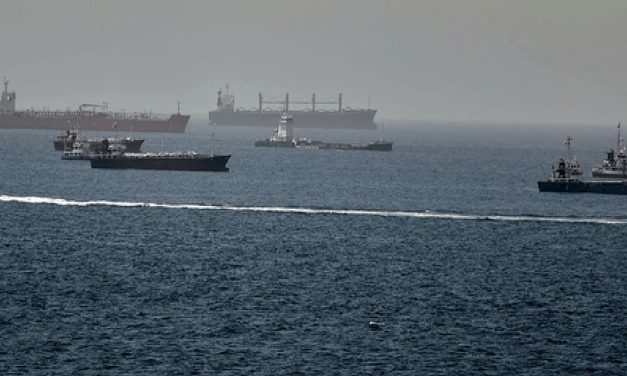
Beyond the oil shock, the US financial architecture is also under strain. Ferguson notes that US ammunition stockpiles and military budgets have now been depleted due to the war against Iran. The Pentagon’s $200 billion budget request underscores the depth of this fiscal void. Under such circumstances, even assuming a potentially “successful” military operation, such a scenario could still trigger recession, as its economic repercussions—such as an oil embargo or the closure of the Strait of Hormuz—would likely outlast the military campaign itself. The Arab oil embargo of 1973 took four months to resolve, whereas the current Persian Gulf crisis possesses the potential to obstruct European and American energy arteries for an indefinite duration.
The Venezuela Model Mirage for Iran; Trump’s Strategic Miscalculation
Trump has previously characterized the intervention in Venezuela—which resulted in the ouster of Nicolás Maduro and the installation of a Washington-approved government—as a “perfect scenario” for Iran. He had claimed: “What we did in Venezuela, I think, is a perfect scenario regarding my plans for Iran…” However, this analogy constitutes a glaring strategic error.
Field reports from the International Crisis Group on Venezuela indicate that even following this apparent “victory,” economic stability has not been achieved. Annual inflation remains above 600 percent, and over 80 percent of the population lives in poverty. Foreign investors have not returned, disregarding rapid reforms, while concerns regarding political risk and deteriorated infrastructure persist.
Should the Venezuela model face such formidable challenges, its application to Iran—which possesses greater strategic depth, missile capabilities, and a far more complex regional proxy network—could multiply the costs exponentially. Venezuela had neighbors that facilitated intervention, whereas Iran lies at the heart of a region wherein any instability could send global energy prices soaring.
Conclusion
The confluence of three factors—”domestic US opposition to ground war,” “oil shock and economic recession,” and “the regional and structural disparities between Iran and Venezuela”—forms a triangle of peril for the White House. Relying on the Venezuela model, Trump may have believed he could achieve regime change in Iran at minimal cost; however, economic data indicates that even a potentially successful military outcome could culminate in severe economic failure. Moreover, polling data loudly signals that his electoral base would interpret a ground war as a betrayal of campaign promises. Consequently, any decision to deploy ground forces would constitute not a strategic maneuver, but a step toward the political and economic collapse of the current US administration. Thus, it appears that Washington, before becoming ensnared in the trap of “military victory and strategic defeat,” will be compelled to acknowledge the limitations of its power.







0 Comments