
Hamid Khoshayand – Expert on Regional Affairs
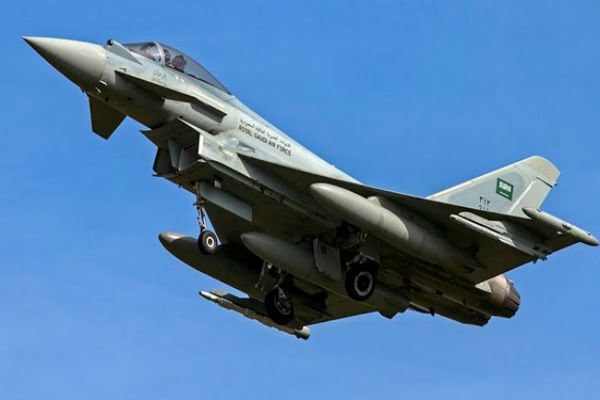
Although the British government has sought to downplay the issue of dispatching a Voyager refueling aircraft to the region as merely responding to Saudi Arabia’s request for “defensive and temporary support,” this action cannot be assessed merely within this limited framework. Such a decision will, in practice, increase the level of London’s involvement in one of the most complex and attritional regional wars. Let us not forget that Saudi Arabia has for years faced serious difficulties in managing the consequences of this war.
At the same time, the question arises whether London can, through limited missions, both maintain its position among the countries of the southern littoral of the Persian Gulf and remain distant from the consequences of deeper involvement in the Yemen file? Considering that Washington has also not given a direct commitment to extensive military entry into this file, an increased British role could broaden the scope of responsibility and risks of this decision for that country.
Historical and strategic dimensions of Britain’s presence in Yemen
Britain’s role in Yemen cannot be examined only from 2015. Aden and the southern coasts of Yemen were, from the nineteenth century, part of the communication and maritime structure of the British Empire between India, the Persian Gulf, the Red Sea, and the Suez Canal. Bab el-Mandeb is also not merely a regional strait; it is the chokepoint of communication between the Indian Ocean and the Red Sea and the Suez route, and its security is linked to the commercial and maritime interests of foreign powers, including Britain.
The record of Britain’s presence in Yemen over the past 15 years has also continued from managing the political transition after 2011 to direct military presence on Yemeni soil and now support for Saudi air capability. Official British parliamentary documents show that London, in addition to selling weapons to Saudi Arabia, accelerated the delivery of guided bombs after the war began in 2015, increased training in targeting and the use of weapons, and deployed its liaison officers at Saudi headquarters. In the first year of the war alone, an export license for approximately 3.3 billion pounds of weapons to Saudi Arabia was issued.
This record shows that Britain’s role has not remained limited to political support and has in parts approached operational cooperation; an issue that can increase London’s political and legal responsibility.
Legal and reputational consequences
From a legal perspective, British military support can have considerable consequences for that country. Published documents show that British Royal Air Force refueling aircraft supported US attacks on Yemen in 2025, and the Pentagon assessed that these attacks “very likely” led to 281 civilian casualties.
Human Rights Watch has also warned that British participation “may make this country complicit in war crimes.” Undoubtedly, the continuation of this path can provide the ground for international legal cases, diplomatic pressures, increased public criticism, and damage to Britain’s credibility in the field of human rights. From this perspective, the reputational blow of supporting military operations is one of the most important consequences London will face.
Economic and security consequences for Britain
British officials have declared the purpose of this action to be preserving maritime routes and preventing an increase in the cost of living in Britain. However, the continuation of military support for one side of the war can also work against this goal; because the intensification or prolongation of the conflict increases insecurity on maritime routes.
Any disruption in Bab el-Mandeb can increase energy prices, shipping insurance costs, and the price of goods, and intensify inflationary pressure in Europe and Britain. As a result, a policy pursued with the aim of protecting trade and containing domestic costs can, if maritime insecurity continues, increase part of those very costs and place greater pressure on households and the British economy.
The risk of expanding the conflict and eroding Britain’s capability
British support, even if limited and indirect, can be effective in the continuation of military operations against Yemen and increase the risk of further expansion or attrition of the war. Ansarullah officials have also considered this action a sign of London’s direct participation in military operations against Yemen. The formation of such a perception can expose Britain’s interests in the region, from ships and bases to companies and its nationals, to retaliatory actions.
On the other hand, Britain’s simultaneous entry into several military arenas, including Ukraine and East Asia, also raises the issue of strategic overreach and intervention beyond this country’s capacity. Increasing military commitments can put London’s financial, military, and political resources under pressure; especially in circumstances where Washington’s support for direct and extensive entry into the Yemen file is not certain.
Also, the continuation of this policy can intensify domestic debates about mission transparency, legal responsibility, and its costs in the British Parliament and public opinion; therefore, the consequences of supporting Saudi Arabia in Yemen are not limited to the battlefield and can also affect Britain’s regional position and foreign policy capacity.
Britain’s military support for Saudi Arabia in the war against Yemen can be analyzed within the framework of London’s long-term effort to maintain regional influence and secure trade and energy routes, but the expansion of this role can create new costs and responsibilities for Britain. Legal and reputational consequences, increased security risks, pressure on trade and energy routes, and the possibility of erosion of military and political capability are among the most important of these consequences.
From this perspective, continuing the current path can involve London further in a war from which exit will not be easily possible and whose costs may exceed the expected short-term benefits. Accordingly, the extent and continuation of British support for operations related to Yemen will become one of the important issues in assessing the future role of this country in West Asia.









0 Comments