
Hassan Emami – Expert on West Asian affairs
Chokepoints; From Transit Route to Bargaining Tool
In attrition wars, the importance of straits is not limited merely to the capacity for ships to pass through, but also relates to the ability to create “uncertainty” for markets and governments. In the current crisis, Hormuz and Bab el-Mandeb do not operate separately from one another. The more perilous passage through the Strait of Hormuz becomes, the more the value of alternative routes in the Red Sea increases, and any threat against Bab el-Mandeb turns the pressure exerted on the Strait of Hormuz into a double dilemma for energy exporters.
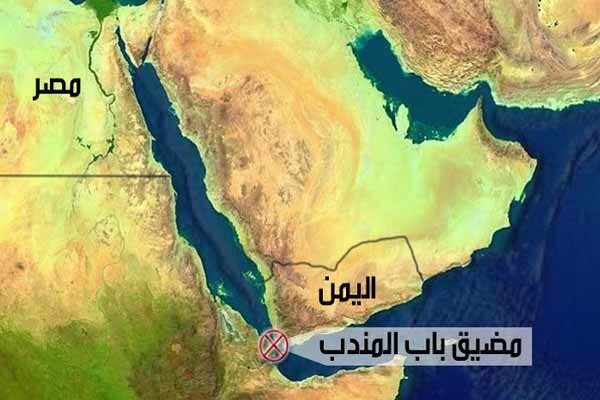
The “EIA Worldview” report announces Ansarullah’s advance on the Red Sea coast, the seizure of the Mokha port and Mayyun Island, and their approach to controlling Bab el-Mandeb. News agencies such as Reuters have also emphasized the importance of this development for Saudi Arabia’s oil export route and the role of the Axis of Resistance, such that some of these media outlets consider the relationship formed at the heart of the Axis of Resistance to be of the nature of a strategic partnership and warn against reducing it to a merely proxy relationship. This distinction becomes important because analysts acknowledge that the Axis of Resistance acts according to its own assessment and does not require direct command for operations.
Some Arab sources present the recent developments as a coordinated effort to pressure the two strategic straits. This interpretation has an interpretive aspect, and a distinction must be made between interests, coordination, and operational control.
The importance of Bab el-Mandeb is not limited to creating disruption in rival routes to the Strait of Hormuz. The more Riyadh becomes dependent on the Red Sea route for oil transfer, the more the strategic cost of threats against that route increases. According to media reports, Saudi Arabia’s crude oil exports via the Bab el-Mandeb route had increased several-fold between March and mid-July compared to the same period last year. This is while simultaneous pressure on the two chokepoints of Hormuz and Bab el-Mandeb can increase insurance costs, rerouting, and delays.
The Oil Market; Price Shock or Structural Change?
The immediate effect of this situation has appeared in the energy market. On September 9, with the intensification of attacks on ships in the Strait of Hormuz, the price of Brent crude exceeded 100 dollars per barrel for the first time since July. Subsequently, Ansarullah’s advance and the seizure of Bab el-Mandeb increased the risk to supply and transportation.
The crossing of prices above 100 dollars does not necessarily mean a sustained physical shortage. The energy market, simultaneously with a possible supply shortage, faces increased insurance costs, freight rates, travel time, and storage; therefore, even if part of the oil passes through alternative routes, the increase in geopolitical risk alone can keep the delivery price high. The analysis of the Russian International Affairs Council also emphasizes this same contradiction, in that the 2026 crisis has made Hormuz’s importance more apparent, but has also increased the incentive of countries and companies to reduce dependence on it.
The Reality of Alternative Routes; to What Extent is Bypassing Hormuz Possible?
Pipeline projects are considered the most important long-term response to the vulnerability of the Strait of Hormuz; however, the distance between “reducing dependence” and “the strait becoming insignificant” is great. The review by “Eurasia Review” and “Arab News” shows that Saudi Arabia, the UAE, and Iraq have capacities to transfer part of their oil through overland routes or ports outside the Strait of Hormuz; from Saudi Arabia’s east-west pipeline with a nominal capacity of up to 7 million barrels per day and the UAE’s Habshan-Fujairah pipeline with a capacity of about 1.5 million barrels per day, to the Basra-Aqaba project and the Iraq-Syria and Iraq-Turkey options, are routes that may be utilized. However, many of these plans are either still in the planning stage or require political agreements, investment, and multi-year infrastructure.
A more important limitation is that the Strait of Hormuz is not only a route for crude oil. In 2025, more than 20 million barrels of crude oil and petroleum products passed through this strait daily, and millions of containers also passed through it. Furthermore, a large portion of Qatar’s liquefied natural gas exports has no comparable overland alternative; therefore, pipelines can increase “resilience capacity,” but in the short and medium term, they will not completely replace the maritime network. The Russian International Affairs Council also believes that the Strait of Hormuz will remain the main artery of Persian Gulf energy exports in the coming years, although its leverage weight may decrease.
For Iran as well, route diversification is not merely a commercial tool. The Russian International Affairs Council’s report on South Caucasus transit routes shows that Tehran is simultaneously strengthening northern routes through the Republic of Azerbaijan and Armenia to reduce dependence on a single route. This process is part of the “geoeconomic resilience” strategy to reduce the impact of sanctions or maritime disruption.
Military Deployment; Shipping Security or Making the Straits More Insecure?
On the other side, the United States and its allies, instead of relying solely on infrastructure, are increasing naval military capacity to strengthen their presence in the region and exert pressure. However, these actions can further disrupt freedom of navigation and increase the likelihood of direct confrontation and miscalculation.
South Korea’s action in rejecting the possibility of military presence in the Strait of Hormuz also shows that America’s attempt to make Seoul endanger itself has not been effective. Seoul knows that by endangering itself, it must balance between protecting its own energy and transportation interests and maintaining security priorities on the Korean Peninsula. The straits crisis is a test for US allies’ alignment with Washington. On the other hand, Bahrain’s absence from the proposed meeting on the Strait of Hormuz also indicates the lack of alignment of US allies and its impact on regional diplomacy.
The linkage of the Strait of Hormuz and Bab el-Mandeb is not an integrated operational coalition; however, from a geopolitical perspective, it has connected two links of a vulnerability chain to one another. Controlling or threatening either of these two straits, more than meaning a complete halt to global trade, can increase the bargaining power of regional actors by imposing risks, costs, and delays.
A greater presence of warships, minesweeping operations, and armed protection can reduce part of the immediate risks, but without a political mechanism and diversification of energy and trade routes, the straits crisis can transform from a temporary shock into a chronic pattern of insecurity.








0 Comments