جدیدترین مطالب

The Makkah Pact; Reasons for its Formation and Challenges Ahead

SCFR Online – Opinion: The Makkah Pact, signed between Saudi Arabia, Pakistan, and Turkey under the motto “an attack on one is an attack on all,” is viewed by some analysts less as a full-fledged military coalition and more as an attempt to reduce security dependence on an external power and to establish a regional security mechanism.

Implications of the US-Saudi Nuclear Agreement

SCFR Online – Opinion: The new US-Saudi nuclear agreement, despite legal and political ambiguities, could alter previous non-proliferation standards in West Asia and intensify nuclear competition, ushering it into a new phase.

An Analysis of Recent Turkey-Israeli Regime Tensions

SCFR Online – Opinion: Recent developments in Syria indicate an intensification of strategic rivalry between Turkey and the Israeli regime, but mutual considerations and the role of the United States have limited the likelihood of direct war.

Increasing criticism of the extensive Zionist lobby network

SCFR Online – Opinion: An examination of the mechanisms of the Israeli regime’s influence in the United States depicts a complex picture of shared interests, strategic dependencies, and the limitations of this relationship.

Realities of the Tripartite Makkah Pact

SCFR Online – Interview: The signing of the Makkah agreement between Saudi Arabia, Pakistan, and Turkey has raised questions about the future of the region’s security structure and the position of these countries in West Asian equations. Can this agreement become a genuine collective defense mechanism, or does it have more of a political and deterrent function than creating new military capacity?

Strategic Implications of the Reduction of US Weapons Stockpiles

SCFR Online – Opinion: The continuation of the US war against Iran, in addition to increasing operational costs, has called into question the actual capacity of the American arsenal to simultaneously fulfill security commitments on multiple fronts; an issue that affects deterrence, defense production capacity, and Washington’s resource prioritization.

Loading

Politics

Objectives of the Emirati delegation visit to the Occupied Territories

Objectives of the Emirati delegation visit to the Occupied Territories

Strategic Council Online—Opinion: The normalization of relations between some Arab countries and Israel is being pursued under one major objective: creating legitimacy for the Zionist regime in the Middle East—an issue which is being highlighted and followed up seriously by the President of the United States.
Davood Ahmadzadeh—Expert of Middle East affairs

Normalization of Sudan’s Relations with Israel and Probability of Outbreak of Internal Conflicts

Normalization of Sudan’s Relations with Israel and Probability of Outbreak of Internal Conflicts

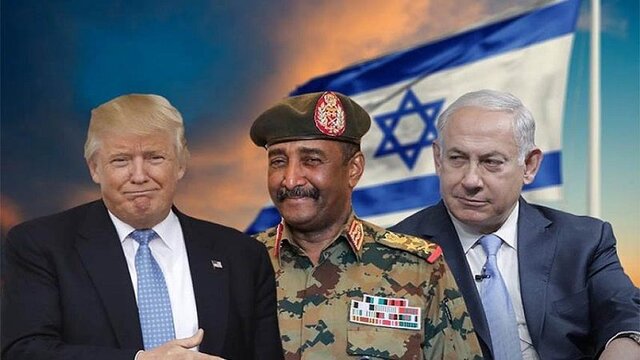
Strategic Council Online – A former Middle East Director at the Ministry of Foreign Affairs said that a large part of Sudanese society is not yet ready to accept the normalization of relations with Israel. He noted: Given that this measure is unlikely to help solve Sudan’s living and economic problems, it after a while, this decision may become the source of internal disputes and conflicts in Sudan.

Electoral Movements in the US and Its Consequences

Electoral Movements in the US and Its Consequences

Strategic Council Online – An analyst at the Center for Presidential Strategic Studies said that the only thing that matters for the Republicans today is the acquisition of the White House. It does not matter to them whether democracy is weakened, some civil liberties are diminished or a series of American values are violated at the cost of occupying the White House for the second time by a Republicans.

Egypt’s Targets in the Mediterranean

Egypt’s Targets in the Mediterranean

Strategic Council Online – Following the signing of the controversial agreement between Egypt and Greece on the demarcation of water borders in the Eastern Mediterranean, the two countries agreed to complete the demarcation process. The agreement allows the two countries to use natural resources available in the intended economic zone and explore oil and natural gas. In the agreement in question, the maritime rights of the two parties have been specified to some extent and details of the maritime borders will be determined in the outcome of the future negotiations.
Mahmoud Fazeli – Expert on European Affairs

Iran’s Prominent & Undeniable Role in the Afghan Peace Process

Iran’s Prominent & Undeniable Role in the Afghan Peace Process

Strategic Council Online – Despite the efforts of Trump’s foreign policy team in Afghanistan to ignore Iran’s role in the peace process, the presence of Dr Abdullah Abdullah in Tehran showed that advancing the peace process is not possible without the cooperation of the Islamic Republic of Iran.
Seyed Mustafa Hashemi – Expert on Afghanistan

Dimensions of Saudi Arabia’s war crimes and crimes against humanity in Yemen

Dimensions of Saudi Arabia’s war crimes and crimes against humanity in Yemen

Strategic Council Online—Interview: An expert of West Asia affairs says crimes of the United States and Saudi Arabia against the people of Yemen are unprecedented in the history of humanity and the massive sale of arms during the past five years to Saudi Arabia has emboldened the Al Saud regime to keep on its crimes and murder against the people of Yemen.

Pakistan’s Efforts to Establish Balance in Relations with Important Countries

Pakistan’s Efforts to Establish Balance in Relations with Important Countries

Strategic Council Online – A university professor, referring to the cold relations between Pakistan and Arab countries in the Persian Gulf, said: Imran Khan’s government is trying to develop its relations with countries in the region and play an active role in de-escalating some of the tensions, but politicians of that country should be capable of balancing their relations with important countries.

The ambiguous future of the Karabakh conflict and Iran’s preparedness to play a constructive role

The ambiguous future of the Karabakh conflict and Iran’s preparedness to play a constructive role

Strategic Council Online—Opinion: The Security Council of the United Nations has issued four resolutions so far on the Karabakh issue, asking Armenia to evacuate seven cities of the Republic of Azerbaijan; however, Yerevan has refused to withdraw. Therefore, the Security Council should convince Armenia, perhaps through the current mechanisms such as Chapter Seven of the Charter of the United Nations, to return these cities to the Republic of Azerbaijan.
Mohsen Pak-Aeen – Former ambassador of Iran to the Republic of Azerbaijan

Obstacles and Opportunities of Iran-China Economic Cooperation

Obstacles and Opportunities of Iran-China Economic Cooperation

The Chinese are awaiting the announcement of the outcome of the US elections; if Joe Biden is elected it will probably return to the Joint Comprehensive Plan of Action (JCPOA) and a final agreement will be reached among the 5+1 member states, under which it will become smoother and easier for the Chinese.
Abdolreza Farajirad – Expert on Geopolitical Affairs

Pakistan and Gradual Cooling of Relations with Saudi, UAE

Pakistan and Gradual Cooling of Relations with Saudi, UAE

Strategic Council Online – Pakistan’s relations with Arab countries, especially Saudi Arabia, have entered a new phase since the inauguration of Imran Khan, the Chairman of the ruling party Tehreek-e-Insaf (PTI) and the Prime Minister of the country, in 2018.
Mohammad Reza Asgari Moroudi – Senior Expert on Asia

أحدث الوظائف

The Makkah Pact; Reasons for its Formation and Challenges Ahead

SCFR Online – Opinion: The Makkah Pact, signed between Saudi Arabia, Pakistan, and Turkey under the motto “an attack on one is an attack on all,” is viewed by some analysts less as a full-fledged military coalition and more as an attempt to reduce security dependence on an external power and to establish a regional security mechanism.

Implications of the US-Saudi Nuclear Agreement

SCFR Online – Opinion: The new US-Saudi nuclear agreement, despite legal and political ambiguities, could alter previous non-proliferation standards in West Asia and intensify nuclear competition, ushering it into a new phase.

An Analysis of Recent Turkey-Israeli Regime Tensions

SCFR Online – Opinion: Recent developments in Syria indicate an intensification of strategic rivalry between Turkey and the Israeli regime, but mutual considerations and the role of the United States have limited the likelihood of direct war.

Increasing criticism of the extensive Zionist lobby network

SCFR Online – Opinion: An examination of the mechanisms of the Israeli regime’s influence in the United States depicts a complex picture of shared interests, strategic dependencies, and the limitations of this relationship.

Realities of the Tripartite Makkah Pact

SCFR Online – Interview: The signing of the Makkah agreement between Saudi Arabia, Pakistan, and Turkey has raised questions about the future of the region’s security structure and the position of these countries in West Asian equations. Can this agreement become a genuine collective defense mechanism, or does it have more of a political and deterrent function than creating new military capacity?

Strategic Implications of the Reduction of US Weapons Stockpiles

SCFR Online – Opinion: The continuation of the US war against Iran, in addition to increasing operational costs, has called into question the actual capacity of the American arsenal to simultaneously fulfill security commitments on multiple fronts; an issue that affects deterrence, defense production capacity, and Washington’s resource prioritization.

Loading

Politics

Objectives of the Emirati delegation visit to the Occupied Territories

Objectives of the Emirati delegation visit to the Occupied Territories

Strategic Council Online—Opinion: The normalization of relations between some Arab countries and Israel is being pursued under one major objective: creating legitimacy for the Zionist regime in the Middle East—an issue which is being highlighted and followed up seriously by the President of the United States.
Davood Ahmadzadeh—Expert of Middle East affairs

Normalization of Sudan’s Relations with Israel and Probability of Outbreak of Internal Conflicts

Normalization of Sudan’s Relations with Israel and Probability of Outbreak of Internal Conflicts

Strategic Council Online – A former Middle East Director at the Ministry of Foreign Affairs said that a large part of Sudanese society is not yet ready to accept the normalization of relations with Israel. He noted: Given that this measure is unlikely to help solve Sudan’s living and economic problems, it after a while, this decision may become the source of internal disputes and conflicts in Sudan.

Electoral Movements in the US and Its Consequences

Electoral Movements in the US and Its Consequences

Strategic Council Online – An analyst at the Center for Presidential Strategic Studies said that the only thing that matters for the Republicans today is the acquisition of the White House. It does not matter to them whether democracy is weakened, some civil liberties are diminished or a series of American values are violated at the cost of occupying the White House for the second time by a Republicans.

Egypt’s Targets in the Mediterranean

Egypt’s Targets in the Mediterranean

Strategic Council Online – Following the signing of the controversial agreement between Egypt and Greece on the demarcation of water borders in the Eastern Mediterranean, the two countries agreed to complete the demarcation process. The agreement allows the two countries to use natural resources available in the intended economic zone and explore oil and natural gas. In the agreement in question, the maritime rights of the two parties have been specified to some extent and details of the maritime borders will be determined in the outcome of the future negotiations.
Mahmoud Fazeli – Expert on European Affairs

Iran’s Prominent & Undeniable Role in the Afghan Peace Process

Iran’s Prominent & Undeniable Role in the Afghan Peace Process

Strategic Council Online – Despite the efforts of Trump’s foreign policy team in Afghanistan to ignore Iran’s role in the peace process, the presence of Dr Abdullah Abdullah in Tehran showed that advancing the peace process is not possible without the cooperation of the Islamic Republic of Iran.
Seyed Mustafa Hashemi – Expert on Afghanistan

Dimensions of Saudi Arabia’s war crimes and crimes against humanity in Yemen

Dimensions of Saudi Arabia’s war crimes and crimes against humanity in Yemen

Strategic Council Online—Interview: An expert of West Asia affairs says crimes of the United States and Saudi Arabia against the people of Yemen are unprecedented in the history of humanity and the massive sale of arms during the past five years to Saudi Arabia has emboldened the Al Saud regime to keep on its crimes and murder against the people of Yemen.

Pakistan’s Efforts to Establish Balance in Relations with Important Countries

Pakistan’s Efforts to Establish Balance in Relations with Important Countries

Strategic Council Online – A university professor, referring to the cold relations between Pakistan and Arab countries in the Persian Gulf, said: Imran Khan’s government is trying to develop its relations with countries in the region and play an active role in de-escalating some of the tensions, but politicians of that country should be capable of balancing their relations with important countries.

The ambiguous future of the Karabakh conflict and Iran’s preparedness to play a constructive role

The ambiguous future of the Karabakh conflict and Iran’s preparedness to play a constructive role

Strategic Council Online—Opinion: The Security Council of the United Nations has issued four resolutions so far on the Karabakh issue, asking Armenia to evacuate seven cities of the Republic of Azerbaijan; however, Yerevan has refused to withdraw. Therefore, the Security Council should convince Armenia, perhaps through the current mechanisms such as Chapter Seven of the Charter of the United Nations, to return these cities to the Republic of Azerbaijan.
Mohsen Pak-Aeen – Former ambassador of Iran to the Republic of Azerbaijan

Obstacles and Opportunities of Iran-China Economic Cooperation

Obstacles and Opportunities of Iran-China Economic Cooperation

The Chinese are awaiting the announcement of the outcome of the US elections; if Joe Biden is elected it will probably return to the Joint Comprehensive Plan of Action (JCPOA) and a final agreement will be reached among the 5+1 member states, under which it will become smoother and easier for the Chinese.
Abdolreza Farajirad – Expert on Geopolitical Affairs

Pakistan and Gradual Cooling of Relations with Saudi, UAE

Pakistan and Gradual Cooling of Relations with Saudi, UAE

Strategic Council Online – Pakistan’s relations with Arab countries, especially Saudi Arabia, have entered a new phase since the inauguration of Imran Khan, the Chairman of the ruling party Tehreek-e-Insaf (PTI) and the Prime Minister of the country, in 2018.
Mohammad Reza Asgari Moroudi – Senior Expert on Asia

Politics

Objectives of the Emirati delegation visit to the Occupied Territories

Objectives of the Emirati delegation visit to the Occupied Territories

Strategic Council Online—Opinion: The normalization of relations between some Arab countries and Israel is being pursued under one major objective: creating legitimacy for the Zionist regime in the Middle East—an issue which is being highlighted and followed up seriously by the President of the United States.
Davood Ahmadzadeh—Expert of Middle East affairs

Normalization of Sudan’s Relations with Israel and Probability of Outbreak of Internal Conflicts

Normalization of Sudan’s Relations with Israel and Probability of Outbreak of Internal Conflicts

Strategic Council Online – A former Middle East Director at the Ministry of Foreign Affairs said that a large part of Sudanese society is not yet ready to accept the normalization of relations with Israel. He noted: Given that this measure is unlikely to help solve Sudan’s living and economic problems, it after a while, this decision may become the source of internal disputes and conflicts in Sudan.

Electoral Movements in the US and Its Consequences

Electoral Movements in the US and Its Consequences

Strategic Council Online – An analyst at the Center for Presidential Strategic Studies said that the only thing that matters for the Republicans today is the acquisition of the White House. It does not matter to them whether democracy is weakened, some civil liberties are diminished or a series of American values are violated at the cost of occupying the White House for the second time by a Republicans.

Egypt’s Targets in the Mediterranean

Egypt’s Targets in the Mediterranean

Strategic Council Online – Following the signing of the controversial agreement between Egypt and Greece on the demarcation of water borders in the Eastern Mediterranean, the two countries agreed to complete the demarcation process. The agreement allows the two countries to use natural resources available in the intended economic zone and explore oil and natural gas. In the agreement in question, the maritime rights of the two parties have been specified to some extent and details of the maritime borders will be determined in the outcome of the future negotiations.
Mahmoud Fazeli – Expert on European Affairs

Iran’s Prominent & Undeniable Role in the Afghan Peace Process

Iran’s Prominent & Undeniable Role in the Afghan Peace Process

Strategic Council Online – Despite the efforts of Trump’s foreign policy team in Afghanistan to ignore Iran’s role in the peace process, the presence of Dr Abdullah Abdullah in Tehran showed that advancing the peace process is not possible without the cooperation of the Islamic Republic of Iran.
Seyed Mustafa Hashemi – Expert on Afghanistan

Dimensions of Saudi Arabia’s war crimes and crimes against humanity in Yemen

Dimensions of Saudi Arabia’s war crimes and crimes against humanity in Yemen

Strategic Council Online—Interview: An expert of West Asia affairs says crimes of the United States and Saudi Arabia against the people of Yemen are unprecedented in the history of humanity and the massive sale of arms during the past five years to Saudi Arabia has emboldened the Al Saud regime to keep on its crimes and murder against the people of Yemen.

Pakistan’s Efforts to Establish Balance in Relations with Important Countries

Pakistan’s Efforts to Establish Balance in Relations with Important Countries

Strategic Council Online – A university professor, referring to the cold relations between Pakistan and Arab countries in the Persian Gulf, said: Imran Khan’s government is trying to develop its relations with countries in the region and play an active role in de-escalating some of the tensions, but politicians of that country should be capable of balancing their relations with important countries.

The ambiguous future of the Karabakh conflict and Iran’s preparedness to play a constructive role

The ambiguous future of the Karabakh conflict and Iran’s preparedness to play a constructive role

Strategic Council Online—Opinion: The Security Council of the United Nations has issued four resolutions so far on the Karabakh issue, asking Armenia to evacuate seven cities of the Republic of Azerbaijan; however, Yerevan has refused to withdraw. Therefore, the Security Council should convince Armenia, perhaps through the current mechanisms such as Chapter Seven of the Charter of the United Nations, to return these cities to the Republic of Azerbaijan.
Mohsen Pak-Aeen – Former ambassador of Iran to the Republic of Azerbaijan

Obstacles and Opportunities of Iran-China Economic Cooperation

Obstacles and Opportunities of Iran-China Economic Cooperation

The Chinese are awaiting the announcement of the outcome of the US elections; if Joe Biden is elected it will probably return to the Joint Comprehensive Plan of Action (JCPOA) and a final agreement will be reached among the 5+1 member states, under which it will become smoother and easier for the Chinese.
Abdolreza Farajirad – Expert on Geopolitical Affairs

Pakistan and Gradual Cooling of Relations with Saudi, UAE

Pakistan and Gradual Cooling of Relations with Saudi, UAE

Strategic Council Online – Pakistan’s relations with Arab countries, especially Saudi Arabia, have entered a new phase since the inauguration of Imran Khan, the Chairman of the ruling party Tehreek-e-Insaf (PTI) and the Prime Minister of the country, in 2018.
Mohammad Reza Asgari Moroudi – Senior Expert on Asia

LATEST CONTENT

The Makkah Pact; Reasons for its Formation and Challenges Ahead

SCFR Online – Opinion: The Makkah Pact, signed between Saudi Arabia, Pakistan, and Turkey under the motto “an attack on one is an attack on all,” is viewed by some analysts less as a full-fledged military coalition and more as an attempt to reduce security dependence on an external power and to establish a regional security mechanism.

Implications of the US-Saudi Nuclear Agreement

SCFR Online – Opinion: The new US-Saudi nuclear agreement, despite legal and political ambiguities, could alter previous non-proliferation standards in West Asia and intensify nuclear competition, ushering it into a new phase.

An Analysis of Recent Turkey-Israeli Regime Tensions

SCFR Online – Opinion: Recent developments in Syria indicate an intensification of strategic rivalry between Turkey and the Israeli regime, but mutual considerations and the role of the United States have limited the likelihood of direct war.

Increasing criticism of the extensive Zionist lobby network

SCFR Online – Opinion: An examination of the mechanisms of the Israeli regime’s influence in the United States depicts a complex picture of shared interests, strategic dependencies, and the limitations of this relationship.

Realities of the Tripartite Makkah Pact

SCFR Online – Interview: The signing of the Makkah agreement between Saudi Arabia, Pakistan, and Turkey has raised questions about the future of the region’s security structure and the position of these countries in West Asian equations. Can this agreement become a genuine collective defense mechanism, or does it have more of a political and deterrent function than creating new military capacity?

Strategic Implications of the Reduction of US Weapons Stockpiles

SCFR Online – Opinion: The continuation of the US war against Iran, in addition to increasing operational costs, has called into question the actual capacity of the American arsenal to simultaneously fulfill security commitments on multiple fronts; an issue that affects deterrence, defense production capacity, and Washington’s resource prioritization.

Loading

Politics

Objectives of the Emirati delegation visit to the Occupied Territories

Objectives of the Emirati delegation visit to the Occupied Territories

Strategic Council Online—Opinion: The normalization of relations between some Arab countries and Israel is being pursued under one major objective: creating legitimacy for the Zionist regime in the Middle East—an issue which is being highlighted and followed up seriously by the President of the United States.
Davood Ahmadzadeh—Expert of Middle East affairs

Normalization of Sudan’s Relations with Israel and Probability of Outbreak of Internal Conflicts

Normalization of Sudan’s Relations with Israel and Probability of Outbreak of Internal Conflicts

Strategic Council Online – A former Middle East Director at the Ministry of Foreign Affairs said that a large part of Sudanese society is not yet ready to accept the normalization of relations with Israel. He noted: Given that this measure is unlikely to help solve Sudan’s living and economic problems, it after a while, this decision may become the source of internal disputes and conflicts in Sudan.

Electoral Movements in the US and Its Consequences

Electoral Movements in the US and Its Consequences

Strategic Council Online – An analyst at the Center for Presidential Strategic Studies said that the only thing that matters for the Republicans today is the acquisition of the White House. It does not matter to them whether democracy is weakened, some civil liberties are diminished or a series of American values are violated at the cost of occupying the White House for the second time by a Republicans.

Egypt’s Targets in the Mediterranean

Egypt’s Targets in the Mediterranean

Strategic Council Online – Following the signing of the controversial agreement between Egypt and Greece on the demarcation of water borders in the Eastern Mediterranean, the two countries agreed to complete the demarcation process. The agreement allows the two countries to use natural resources available in the intended economic zone and explore oil and natural gas. In the agreement in question, the maritime rights of the two parties have been specified to some extent and details of the maritime borders will be determined in the outcome of the future negotiations.
Mahmoud Fazeli – Expert on European Affairs

Iran’s Prominent & Undeniable Role in the Afghan Peace Process

Iran’s Prominent & Undeniable Role in the Afghan Peace Process

Strategic Council Online – Despite the efforts of Trump’s foreign policy team in Afghanistan to ignore Iran’s role in the peace process, the presence of Dr Abdullah Abdullah in Tehran showed that advancing the peace process is not possible without the cooperation of the Islamic Republic of Iran.
Seyed Mustafa Hashemi – Expert on Afghanistan

Dimensions of Saudi Arabia’s war crimes and crimes against humanity in Yemen

Dimensions of Saudi Arabia’s war crimes and crimes against humanity in Yemen

Strategic Council Online—Interview: An expert of West Asia affairs says crimes of the United States and Saudi Arabia against the people of Yemen are unprecedented in the history of humanity and the massive sale of arms during the past five years to Saudi Arabia has emboldened the Al Saud regime to keep on its crimes and murder against the people of Yemen.

Pakistan’s Efforts to Establish Balance in Relations with Important Countries

Pakistan’s Efforts to Establish Balance in Relations with Important Countries

Strategic Council Online – A university professor, referring to the cold relations between Pakistan and Arab countries in the Persian Gulf, said: Imran Khan’s government is trying to develop its relations with countries in the region and play an active role in de-escalating some of the tensions, but politicians of that country should be capable of balancing their relations with important countries.

The ambiguous future of the Karabakh conflict and Iran’s preparedness to play a constructive role

The ambiguous future of the Karabakh conflict and Iran’s preparedness to play a constructive role

Strategic Council Online—Opinion: The Security Council of the United Nations has issued four resolutions so far on the Karabakh issue, asking Armenia to evacuate seven cities of the Republic of Azerbaijan; however, Yerevan has refused to withdraw. Therefore, the Security Council should convince Armenia, perhaps through the current mechanisms such as Chapter Seven of the Charter of the United Nations, to return these cities to the Republic of Azerbaijan.
Mohsen Pak-Aeen – Former ambassador of Iran to the Republic of Azerbaijan

Obstacles and Opportunities of Iran-China Economic Cooperation

Obstacles and Opportunities of Iran-China Economic Cooperation

The Chinese are awaiting the announcement of the outcome of the US elections; if Joe Biden is elected it will probably return to the Joint Comprehensive Plan of Action (JCPOA) and a final agreement will be reached among the 5+1 member states, under which it will become smoother and easier for the Chinese.
Abdolreza Farajirad – Expert on Geopolitical Affairs

Pakistan and Gradual Cooling of Relations with Saudi, UAE

Pakistan and Gradual Cooling of Relations with Saudi, UAE

Strategic Council Online – Pakistan’s relations with Arab countries, especially Saudi Arabia, have entered a new phase since the inauguration of Imran Khan, the Chairman of the ruling party Tehreek-e-Insaf (PTI) and the Prime Minister of the country, in 2018.
Mohammad Reza Asgari Moroudi – Senior Expert on Asia

ÚLTIMAS PUBLICACIONES

The Makkah Pact; Reasons for its Formation and Challenges Ahead

SCFR Online – Opinion: The Makkah Pact, signed between Saudi Arabia, Pakistan, and Turkey under the motto “an attack on one is an attack on all,” is viewed by some analysts less as a full-fledged military coalition and more as an attempt to reduce security dependence on an external power and to establish a regional security mechanism.

Implications of the US-Saudi Nuclear Agreement

SCFR Online – Opinion: The new US-Saudi nuclear agreement, despite legal and political ambiguities, could alter previous non-proliferation standards in West Asia and intensify nuclear competition, ushering it into a new phase.

An Analysis of Recent Turkey-Israeli Regime Tensions

SCFR Online – Opinion: Recent developments in Syria indicate an intensification of strategic rivalry between Turkey and the Israeli regime, but mutual considerations and the role of the United States have limited the likelihood of direct war.

Increasing criticism of the extensive Zionist lobby network

SCFR Online – Opinion: An examination of the mechanisms of the Israeli regime’s influence in the United States depicts a complex picture of shared interests, strategic dependencies, and the limitations of this relationship.

Realities of the Tripartite Makkah Pact

SCFR Online – Interview: The signing of the Makkah agreement between Saudi Arabia, Pakistan, and Turkey has raised questions about the future of the region’s security structure and the position of these countries in West Asian equations. Can this agreement become a genuine collective defense mechanism, or does it have more of a political and deterrent function than creating new military capacity?

Strategic Implications of the Reduction of US Weapons Stockpiles

SCFR Online – Opinion: The continuation of the US war against Iran, in addition to increasing operational costs, has called into question the actual capacity of the American arsenal to simultaneously fulfill security commitments on multiple fronts; an issue that affects deterrence, defense production capacity, and Washington’s resource prioritization.

Loading

Politics

Objectives of the Emirati delegation visit to the Occupied Territories

Objectives of the Emirati delegation visit to the Occupied Territories

Strategic Council Online—Opinion: The normalization of relations between some Arab countries and Israel is being pursued under one major objective: creating legitimacy for the Zionist regime in the Middle East—an issue which is being highlighted and followed up seriously by the President of the United States.
Davood Ahmadzadeh—Expert of Middle East affairs

Normalization of Sudan’s Relations with Israel and Probability of Outbreak of Internal Conflicts

Normalization of Sudan’s Relations with Israel and Probability of Outbreak of Internal Conflicts

Strategic Council Online – A former Middle East Director at the Ministry of Foreign Affairs said that a large part of Sudanese society is not yet ready to accept the normalization of relations with Israel. He noted: Given that this measure is unlikely to help solve Sudan’s living and economic problems, it after a while, this decision may become the source of internal disputes and conflicts in Sudan.

Electoral Movements in the US and Its Consequences

Electoral Movements in the US and Its Consequences

Strategic Council Online – An analyst at the Center for Presidential Strategic Studies said that the only thing that matters for the Republicans today is the acquisition of the White House. It does not matter to them whether democracy is weakened, some civil liberties are diminished or a series of American values are violated at the cost of occupying the White House for the second time by a Republicans.

Egypt’s Targets in the Mediterranean

Egypt’s Targets in the Mediterranean

Strategic Council Online – Following the signing of the controversial agreement between Egypt and Greece on the demarcation of water borders in the Eastern Mediterranean, the two countries agreed to complete the demarcation process. The agreement allows the two countries to use natural resources available in the intended economic zone and explore oil and natural gas. In the agreement in question, the maritime rights of the two parties have been specified to some extent and details of the maritime borders will be determined in the outcome of the future negotiations.
Mahmoud Fazeli – Expert on European Affairs

Iran’s Prominent & Undeniable Role in the Afghan Peace Process

Iran’s Prominent & Undeniable Role in the Afghan Peace Process

Strategic Council Online – Despite the efforts of Trump’s foreign policy team in Afghanistan to ignore Iran’s role in the peace process, the presence of Dr Abdullah Abdullah in Tehran showed that advancing the peace process is not possible without the cooperation of the Islamic Republic of Iran.
Seyed Mustafa Hashemi – Expert on Afghanistan

Dimensions of Saudi Arabia’s war crimes and crimes against humanity in Yemen

Dimensions of Saudi Arabia’s war crimes and crimes against humanity in Yemen

Strategic Council Online—Interview: An expert of West Asia affairs says crimes of the United States and Saudi Arabia against the people of Yemen are unprecedented in the history of humanity and the massive sale of arms during the past five years to Saudi Arabia has emboldened the Al Saud regime to keep on its crimes and murder against the people of Yemen.

Pakistan’s Efforts to Establish Balance in Relations with Important Countries

Pakistan’s Efforts to Establish Balance in Relations with Important Countries

Strategic Council Online – A university professor, referring to the cold relations between Pakistan and Arab countries in the Persian Gulf, said: Imran Khan’s government is trying to develop its relations with countries in the region and play an active role in de-escalating some of the tensions, but politicians of that country should be capable of balancing their relations with important countries.

The ambiguous future of the Karabakh conflict and Iran’s preparedness to play a constructive role

The ambiguous future of the Karabakh conflict and Iran’s preparedness to play a constructive role

Strategic Council Online—Opinion: The Security Council of the United Nations has issued four resolutions so far on the Karabakh issue, asking Armenia to evacuate seven cities of the Republic of Azerbaijan; however, Yerevan has refused to withdraw. Therefore, the Security Council should convince Armenia, perhaps through the current mechanisms such as Chapter Seven of the Charter of the United Nations, to return these cities to the Republic of Azerbaijan.
Mohsen Pak-Aeen – Former ambassador of Iran to the Republic of Azerbaijan

Obstacles and Opportunities of Iran-China Economic Cooperation

Obstacles and Opportunities of Iran-China Economic Cooperation

The Chinese are awaiting the announcement of the outcome of the US elections; if Joe Biden is elected it will probably return to the Joint Comprehensive Plan of Action (JCPOA) and a final agreement will be reached among the 5+1 member states, under which it will become smoother and easier for the Chinese.
Abdolreza Farajirad – Expert on Geopolitical Affairs

Pakistan and Gradual Cooling of Relations with Saudi, UAE

Pakistan and Gradual Cooling of Relations with Saudi, UAE

Strategic Council Online – Pakistan’s relations with Arab countries, especially Saudi Arabia, have entered a new phase since the inauguration of Imran Khan, the Chairman of the ruling party Tehreek-e-Insaf (PTI) and the Prime Minister of the country, in 2018.
Mohammad Reza Asgari Moroudi – Senior Expert on Asia

ÚLTIMAS PUBLICACIONES

The Makkah Pact; Reasons for its Formation and Challenges Ahead

SCFR Online – Opinion: The Makkah Pact, signed between Saudi Arabia, Pakistan, and Turkey under the motto “an attack on one is an attack on all,” is viewed by some analysts less as a full-fledged military coalition and more as an attempt to reduce security dependence on an external power and to establish a regional security mechanism.

Implications of the US-Saudi Nuclear Agreement

SCFR Online – Opinion: The new US-Saudi nuclear agreement, despite legal and political ambiguities, could alter previous non-proliferation standards in West Asia and intensify nuclear competition, ushering it into a new phase.

An Analysis of Recent Turkey-Israeli Regime Tensions

SCFR Online – Opinion: Recent developments in Syria indicate an intensification of strategic rivalry between Turkey and the Israeli regime, but mutual considerations and the role of the United States have limited the likelihood of direct war.

Increasing criticism of the extensive Zionist lobby network

SCFR Online – Opinion: An examination of the mechanisms of the Israeli regime’s influence in the United States depicts a complex picture of shared interests, strategic dependencies, and the limitations of this relationship.

Realities of the Tripartite Makkah Pact

SCFR Online – Interview: The signing of the Makkah agreement between Saudi Arabia, Pakistan, and Turkey has raised questions about the future of the region’s security structure and the position of these countries in West Asian equations. Can this agreement become a genuine collective defense mechanism, or does it have more of a political and deterrent function than creating new military capacity?

Strategic Implications of the Reduction of US Weapons Stockpiles

SCFR Online – Opinion: The continuation of the US war against Iran, in addition to increasing operational costs, has called into question the actual capacity of the American arsenal to simultaneously fulfill security commitments on multiple fronts; an issue that affects deterrence, defense production capacity, and Washington’s resource prioritization.

Loading

Politics

Objectives of the Emirati delegation visit to the Occupied Territories

Objectives of the Emirati delegation visit to the Occupied Territories

Strategic Council Online—Opinion: The normalization of relations between some Arab countries and Israel is being pursued under one major objective: creating legitimacy for the Zionist regime in the Middle East—an issue which is being highlighted and followed up seriously by the President of the United States.
Davood Ahmadzadeh—Expert of Middle East affairs

Normalization of Sudan’s Relations with Israel and Probability of Outbreak of Internal Conflicts

Normalization of Sudan’s Relations with Israel and Probability of Outbreak of Internal Conflicts

Strategic Council Online – A former Middle East Director at the Ministry of Foreign Affairs said that a large part of Sudanese society is not yet ready to accept the normalization of relations with Israel. He noted: Given that this measure is unlikely to help solve Sudan’s living and economic problems, it after a while, this decision may become the source of internal disputes and conflicts in Sudan.

Electoral Movements in the US and Its Consequences

Electoral Movements in the US and Its Consequences

Strategic Council Online – An analyst at the Center for Presidential Strategic Studies said that the only thing that matters for the Republicans today is the acquisition of the White House. It does not matter to them whether democracy is weakened, some civil liberties are diminished or a series of American values are violated at the cost of occupying the White House for the second time by a Republicans.

Egypt’s Targets in the Mediterranean

Egypt’s Targets in the Mediterranean

Strategic Council Online – Following the signing of the controversial agreement between Egypt and Greece on the demarcation of water borders in the Eastern Mediterranean, the two countries agreed to complete the demarcation process. The agreement allows the two countries to use natural resources available in the intended economic zone and explore oil and natural gas. In the agreement in question, the maritime rights of the two parties have been specified to some extent and details of the maritime borders will be determined in the outcome of the future negotiations.
Mahmoud Fazeli – Expert on European Affairs

Iran’s Prominent & Undeniable Role in the Afghan Peace Process

Iran’s Prominent & Undeniable Role in the Afghan Peace Process

Strategic Council Online – Despite the efforts of Trump’s foreign policy team in Afghanistan to ignore Iran’s role in the peace process, the presence of Dr Abdullah Abdullah in Tehran showed that advancing the peace process is not possible without the cooperation of the Islamic Republic of Iran.
Seyed Mustafa Hashemi – Expert on Afghanistan

Dimensions of Saudi Arabia’s war crimes and crimes against humanity in Yemen

Dimensions of Saudi Arabia’s war crimes and crimes against humanity in Yemen

Strategic Council Online—Interview: An expert of West Asia affairs says crimes of the United States and Saudi Arabia against the people of Yemen are unprecedented in the history of humanity and the massive sale of arms during the past five years to Saudi Arabia has emboldened the Al Saud regime to keep on its crimes and murder against the people of Yemen.

Pakistan’s Efforts to Establish Balance in Relations with Important Countries

Pakistan’s Efforts to Establish Balance in Relations with Important Countries

Strategic Council Online – A university professor, referring to the cold relations between Pakistan and Arab countries in the Persian Gulf, said: Imran Khan’s government is trying to develop its relations with countries in the region and play an active role in de-escalating some of the tensions, but politicians of that country should be capable of balancing their relations with important countries.

The ambiguous future of the Karabakh conflict and Iran’s preparedness to play a constructive role

The ambiguous future of the Karabakh conflict and Iran’s preparedness to play a constructive role

Strategic Council Online—Opinion: The Security Council of the United Nations has issued four resolutions so far on the Karabakh issue, asking Armenia to evacuate seven cities of the Republic of Azerbaijan; however, Yerevan has refused to withdraw. Therefore, the Security Council should convince Armenia, perhaps through the current mechanisms such as Chapter Seven of the Charter of the United Nations, to return these cities to the Republic of Azerbaijan.
Mohsen Pak-Aeen – Former ambassador of Iran to the Republic of Azerbaijan

Obstacles and Opportunities of Iran-China Economic Cooperation

Obstacles and Opportunities of Iran-China Economic Cooperation

The Chinese are awaiting the announcement of the outcome of the US elections; if Joe Biden is elected it will probably return to the Joint Comprehensive Plan of Action (JCPOA) and a final agreement will be reached among the 5+1 member states, under which it will become smoother and easier for the Chinese.
Abdolreza Farajirad – Expert on Geopolitical Affairs

Pakistan and Gradual Cooling of Relations with Saudi, UAE

Pakistan and Gradual Cooling of Relations with Saudi, UAE

Strategic Council Online – Pakistan’s relations with Arab countries, especially Saudi Arabia, have entered a new phase since the inauguration of Imran Khan, the Chairman of the ruling party Tehreek-e-Insaf (PTI) and the Prime Minister of the country, in 2018.
Mohammad Reza Asgari Moroudi – Senior Expert on Asia

ÚLTIMAS PUBLICACIONES

The Makkah Pact; Reasons for its Formation and Challenges Ahead

SCFR Online – Opinion: The Makkah Pact, signed between Saudi Arabia, Pakistan, and Turkey under the motto “an attack on one is an attack on all,” is viewed by some analysts less as a full-fledged military coalition and more as an attempt to reduce security dependence on an external power and to establish a regional security mechanism.

Implications of the US-Saudi Nuclear Agreement

SCFR Online – Opinion: The new US-Saudi nuclear agreement, despite legal and political ambiguities, could alter previous non-proliferation standards in West Asia and intensify nuclear competition, ushering it into a new phase.

An Analysis of Recent Turkey-Israeli Regime Tensions

SCFR Online – Opinion: Recent developments in Syria indicate an intensification of strategic rivalry between Turkey and the Israeli regime, but mutual considerations and the role of the United States have limited the likelihood of direct war.

Increasing criticism of the extensive Zionist lobby network

SCFR Online – Opinion: An examination of the mechanisms of the Israeli regime’s influence in the United States depicts a complex picture of shared interests, strategic dependencies, and the limitations of this relationship.

Realities of the Tripartite Makkah Pact

SCFR Online – Interview: The signing of the Makkah agreement between Saudi Arabia, Pakistan, and Turkey has raised questions about the future of the region’s security structure and the position of these countries in West Asian equations. Can this agreement become a genuine collective defense mechanism, or does it have more of a political and deterrent function than creating new military capacity?

Strategic Implications of the Reduction of US Weapons Stockpiles

SCFR Online – Opinion: The continuation of the US war against Iran, in addition to increasing operational costs, has called into question the actual capacity of the American arsenal to simultaneously fulfill security commitments on multiple fronts; an issue that affects deterrence, defense production capacity, and Washington’s resource prioritization.

Loading

Politics

Objectives of the Emirati delegation visit to the Occupied Territories

Objectives of the Emirati delegation visit to the Occupied Territories

Strategic Council Online—Opinion: The normalization of relations between some Arab countries and Israel is being pursued under one major objective: creating legitimacy for the Zionist regime in the Middle East—an issue which is being highlighted and followed up seriously by the President of the United States.
Davood Ahmadzadeh—Expert of Middle East affairs

Normalization of Sudan’s Relations with Israel and Probability of Outbreak of Internal Conflicts

Normalization of Sudan’s Relations with Israel and Probability of Outbreak of Internal Conflicts

Strategic Council Online – A former Middle East Director at the Ministry of Foreign Affairs said that a large part of Sudanese society is not yet ready to accept the normalization of relations with Israel. He noted: Given that this measure is unlikely to help solve Sudan’s living and economic problems, it after a while, this decision may become the source of internal disputes and conflicts in Sudan.

Electoral Movements in the US and Its Consequences

Electoral Movements in the US and Its Consequences

Strategic Council Online – An analyst at the Center for Presidential Strategic Studies said that the only thing that matters for the Republicans today is the acquisition of the White House. It does not matter to them whether democracy is weakened, some civil liberties are diminished or a series of American values are violated at the cost of occupying the White House for the second time by a Republicans.

Egypt’s Targets in the Mediterranean

Egypt’s Targets in the Mediterranean

Strategic Council Online – Following the signing of the controversial agreement between Egypt and Greece on the demarcation of water borders in the Eastern Mediterranean, the two countries agreed to complete the demarcation process. The agreement allows the two countries to use natural resources available in the intended economic zone and explore oil and natural gas. In the agreement in question, the maritime rights of the two parties have been specified to some extent and details of the maritime borders will be determined in the outcome of the future negotiations.
Mahmoud Fazeli – Expert on European Affairs

Iran’s Prominent & Undeniable Role in the Afghan Peace Process

Iran’s Prominent & Undeniable Role in the Afghan Peace Process

Strategic Council Online – Despite the efforts of Trump’s foreign policy team in Afghanistan to ignore Iran’s role in the peace process, the presence of Dr Abdullah Abdullah in Tehran showed that advancing the peace process is not possible without the cooperation of the Islamic Republic of Iran.
Seyed Mustafa Hashemi – Expert on Afghanistan

Dimensions of Saudi Arabia’s war crimes and crimes against humanity in Yemen

Dimensions of Saudi Arabia’s war crimes and crimes against humanity in Yemen

Strategic Council Online—Interview: An expert of West Asia affairs says crimes of the United States and Saudi Arabia against the people of Yemen are unprecedented in the history of humanity and the massive sale of arms during the past five years to Saudi Arabia has emboldened the Al Saud regime to keep on its crimes and murder against the people of Yemen.

Pakistan’s Efforts to Establish Balance in Relations with Important Countries

Pakistan’s Efforts to Establish Balance in Relations with Important Countries

Strategic Council Online – A university professor, referring to the cold relations between Pakistan and Arab countries in the Persian Gulf, said: Imran Khan’s government is trying to develop its relations with countries in the region and play an active role in de-escalating some of the tensions, but politicians of that country should be capable of balancing their relations with important countries.

The ambiguous future of the Karabakh conflict and Iran’s preparedness to play a constructive role

The ambiguous future of the Karabakh conflict and Iran’s preparedness to play a constructive role

Strategic Council Online—Opinion: The Security Council of the United Nations has issued four resolutions so far on the Karabakh issue, asking Armenia to evacuate seven cities of the Republic of Azerbaijan; however, Yerevan has refused to withdraw. Therefore, the Security Council should convince Armenia, perhaps through the current mechanisms such as Chapter Seven of the Charter of the United Nations, to return these cities to the Republic of Azerbaijan.
Mohsen Pak-Aeen – Former ambassador of Iran to the Republic of Azerbaijan

Obstacles and Opportunities of Iran-China Economic Cooperation

Obstacles and Opportunities of Iran-China Economic Cooperation

The Chinese are awaiting the announcement of the outcome of the US elections; if Joe Biden is elected it will probably return to the Joint Comprehensive Plan of Action (JCPOA) and a final agreement will be reached among the 5+1 member states, under which it will become smoother and easier for the Chinese.
Abdolreza Farajirad – Expert on Geopolitical Affairs

Pakistan and Gradual Cooling of Relations with Saudi, UAE

Pakistan and Gradual Cooling of Relations with Saudi, UAE

Strategic Council Online – Pakistan’s relations with Arab countries, especially Saudi Arabia, have entered a new phase since the inauguration of Imran Khan, the Chairman of the ruling party Tehreek-e-Insaf (PTI) and the Prime Minister of the country, in 2018.
Mohammad Reza Asgari Moroudi – Senior Expert on Asia

ÚLTIMAS PUBLICACIONES

The Makkah Pact; Reasons for its Formation and Challenges Ahead

SCFR Online – Opinion: The Makkah Pact, signed between Saudi Arabia, Pakistan, and Turkey under the motto “an attack on one is an attack on all,” is viewed by some analysts less as a full-fledged military coalition and more as an attempt to reduce security dependence on an external power and to establish a regional security mechanism.

Implications of the US-Saudi Nuclear Agreement

SCFR Online – Opinion: The new US-Saudi nuclear agreement, despite legal and political ambiguities, could alter previous non-proliferation standards in West Asia and intensify nuclear competition, ushering it into a new phase.

An Analysis of Recent Turkey-Israeli Regime Tensions

SCFR Online – Opinion: Recent developments in Syria indicate an intensification of strategic rivalry between Turkey and the Israeli regime, but mutual considerations and the role of the United States have limited the likelihood of direct war.

Increasing criticism of the extensive Zionist lobby network

SCFR Online – Opinion: An examination of the mechanisms of the Israeli regime’s influence in the United States depicts a complex picture of shared interests, strategic dependencies, and the limitations of this relationship.

Realities of the Tripartite Makkah Pact

SCFR Online – Interview: The signing of the Makkah agreement between Saudi Arabia, Pakistan, and Turkey has raised questions about the future of the region’s security structure and the position of these countries in West Asian equations. Can this agreement become a genuine collective defense mechanism, or does it have more of a political and deterrent function than creating new military capacity?

Strategic Implications of the Reduction of US Weapons Stockpiles

SCFR Online – Opinion: The continuation of the US war against Iran, in addition to increasing operational costs, has called into question the actual capacity of the American arsenal to simultaneously fulfill security commitments on multiple fronts; an issue that affects deterrence, defense production capacity, and Washington’s resource prioritization.

Loading