جدیدترین مطالب

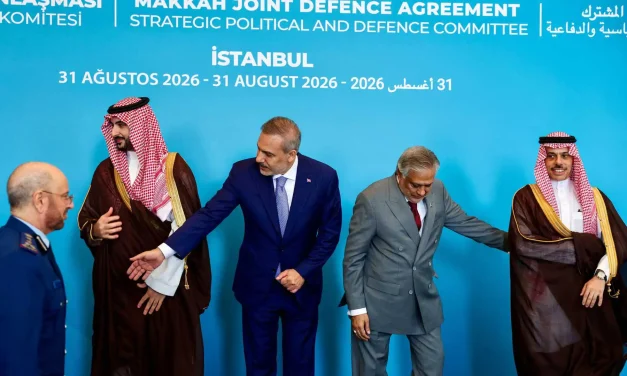
An Analysis of the Makkah Defense Pact

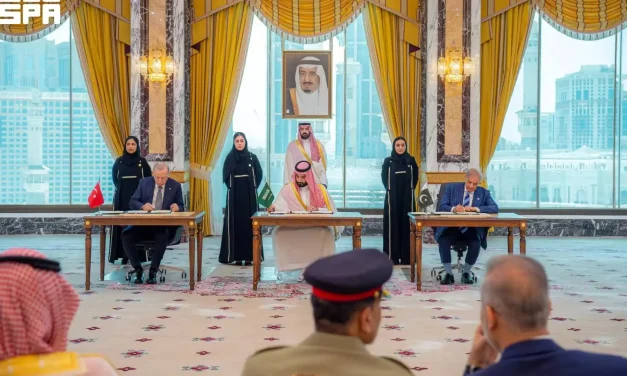
SCFR Online – Opinion: On Friday, August 7, the heads of state of three countries – Saudi Arabia, Turkey, and Pakistan – signed a text under the title “Makkah Joint Defense Agreement.”

Dimensions and challenges of the initiative to revive the Hejaz Railway

Strategic Council Online – Note: The initiative to revive the Hejaz Railway, beyond being a transportation project, constitutes an attempt to redefine geopolitics, the economy, and Turkey’s regional position; however, its realization appears to face significant financial, security, and institutional challenges.

Balancing in the chain of chokepoints; from sea-based deterrence to pluralistic diplomacy

Strategic Council Online – Note: Recent developments in the political geography of West Asia, from rising tensions in the Persian Gulf to missile and drone activities in the Red Sea and the recent warning by Kaja Kallas, the European Union’s foreign policy chief, regarding the threat to freedom of navigation, indicate a key pattern shift; the US-Iran war has moved beyond the scope of a regional and local confrontation and has linked two vital passageways for the global economy: the Strait of Hormuz and the Bab el-Mandeb Strait.

Loading

Note

France’s Mediterranean Policy in Geopolitical Competition with Turkey

France’s Mediterranean Policy in Geopolitical Competition with Turkey

Strategic Council Online – Opinion: France’s Mediterranean policy, which clarifies the country’s genuine political orientation in the Euro-Mediterranean region, can be summarized in three primary strategies: strengthening France’s position in the European Union, maintaining its strategic position in Africa, and enhancing France’s political and military role in the Eastern Mediterranean. However, Ukraine and Armenia are also now gaining increasing importance in France’s Mediterranean policies.

Disarming Lebanon’s Hezbollah and Probable Scenarios

Disarming Lebanon’s Hezbollah and Probable Scenarios

Strategic Council Online – Opinion: The plan recently approved by the Lebanese government regarding the disarmament of Hezbollah is, in fact, an American project and scheme, which should be analyzed and assessed within the context of the developments of the past year in Lebanon, specifically the war waged by the Israeli regime against this country. The overarching goal of presenting such a plan is to enable the Israeli regime to impose new security arrangements in Lebanon as part of its efforts to change the regional order.

The Landscape of the Battle Between the Zionist Regime and the Yemeni Resistance

The Landscape of the Battle Between the Zionist Regime and the Yemeni Resistance

Strategic Council Online – Opinion: The escalating conflict between the Yemeni Resistance and the Zionist regime is a clear example of asymmetric confrontation with strategic consequences in the region. The missile operations of the Yemeni Resistance serve as a demonstration of this country’s strategic and military power and send a clear message to the Zionist regime and America regarding the costs of continuing the status quo. This has increased the legitimacy and influence of the Yemeni Resistance, led by Ansarullah, in the Arab world and turned it into an undeniable strategic actor.

The Necessity of Utilizing the Security-Creating Capacity of the Persian Gulf Countries

The Necessity of Utilizing the Security-Creating Capacity of the Persian Gulf Countries

Strategic Council Online: Before the illegitimate attack by the Israeli and American regimes on our country’s nuclear and military centers, Iran’s diplomatic apparatus had adopted an active and multilateral regional policy. This policy aimed to gain and maintain the trust and cooperation of important and influential regional countries, including Saudi Arabia, by keeping them informed about the progress and process of nuclear negotiations with the United States. This policy has proven to be effective. Unlike in previous instances when it was highly likely that these countries would remain silent or even cooperate with attacks on our nuclear facilities, we recently observed a unanimous condemnation of the Israeli regime’s attack on our nation by the Persian Gulf Cooperation Council.

Dimensions and Negative Consequences of Netanyahu’s “Greater Israel” Idea

Dimensions and Negative Consequences of Netanyahu’s “Greater Israel” Idea

Strategic Council Online– Opinion: Netanyahu, the Prime Minister of the Zionist regime, in an interview with the i24 network, while receiving the “Promised Land” talisman from Sharon Gal, a former representative of the right-wing faction, said he is very attached to the ideal of “Greater Israel.” In this interview, he emphasized that he sees himself on a historical and spiritual mission that includes generations of Jews who dreamed of coming here and generations of Jews who will come after us.

Ambiguous Prospects of the Zionist Regime’s Strategy for the Occupation of Gaza

Ambiguous Prospects of the Zionist Regime’s Strategy for the Occupation of Gaza

Strategic Council Online – Opinion: Despite widespread disagreements between Netanyahu and the Chief of the General Staff of the Zionist regime’s army, Eyal Zamir, the main framework of the plan to occupy Gaza City was finally signed after the war cabinet agreed to seize Gaza City; a decision that could have extensive consequences in the Occupied Territories and the region.

Features of Cryptocurrencies and the Consequences of Their Use Under Sanction Conditions

Features of Cryptocurrencies and the Consequences of Their Use Under Sanction Conditions

Strategic Council Online – Opinion: In recent years, with the expansion of international sanctions and the intensification of economic pressures on specific countries, many have turned their attention to new financial technologies. Among these technologies, cryptocurrencies have garnered more attention than others. Media, economic actors, and even some politicians have referred to cryptocurrency as a potential tool for bypassing sanctions, as if these cryptocurrencies are the very keyword that unlocks the closed doors of the global banking system.

Brussels and Beijing: Cautious Cooperation Based on Dependency with a Flavor of Distrust

Brussels and Beijing: Cautious Cooperation Based on Dependency with a Flavor of Distrust

Strategy Council Online – Opinion: At the recent summit of European Union leaders and China, held in Beijing to mark the 50th anniversary of diplomatic relations, the parties once again sought to redefine their relationship in an atmosphere filled with mutual opportunities and threats. While the European Union emphasized the need to deepen cooperation with China, particularly in combating climate change and removing trade barriers, the heavy shadow of the Ukraine crisis and the escalating geopolitical tensions between Washington and Beijing pushed the talks to an unprecedented level of prudence and caution.

Prospects for Expanding Iran-Pakistan Relations

Prospects for Expanding Iran-Pakistan Relations

Strategic Council Online – Opinion: The recent visit of the President of Iran to Islamabad, which went beyond a conventional diplomatic meeting, is regarded as a fundamental step towards deepening and expanding bilateral strategic relations as well as influencing the regional balance of power. This visit took place at a time when the region and the world are witnessing rapid and complex developments, and Iran seeks to redefine and strengthen its axes of cooperation with its traditional and regional partners.

Legal Avenues for Seeking Justice for the Crimes and Damages of the 12-Day War in International Forums

Legal Avenues for Seeking Justice for the Crimes and Damages of the 12-Day War in International Forums

Strategic Council Online Opinion: The 12-day imposed war, which began on June 12 of this year with the Zionist regime’s invasion of Iranian soil, marked one of the darkest chapters in Iran’s contemporary history. This conflict started with Israel’s surprise attacks on Iran’s military and nuclear facilities, as well as civilian targets, including several hospitals. It was accompanied by the targeted assassinations of military commanders and prominent nuclear scientists, the destruction of Evin Prison (resulting in 71 deaths), and the bombing of the Islamic Republic of Iran Broadcasting (IRIB. The direct involvement of the U.S., through the bombing of Iran’s peaceful nuclear facilities in Fordow and Isfahan, completed this tragedy. These actions not only constituted a blatant violation of international obligations, including the UN Charter, the Geneva Conventions, and the Treaty on the Non-Proliferation of Nuclear Weapons (NPT), but also imposed heavy legal and criminal responsibility on the U.S. and the Israeli regime.

أحدث الوظائف

An Analysis of the Makkah Defense Pact

SCFR Online – Opinion: On Friday, August 7, the heads of state of three countries – Saudi Arabia, Turkey, and Pakistan – signed a text under the title “Makkah Joint Defense Agreement.”

Dimensions and challenges of the initiative to revive the Hejaz Railway

Strategic Council Online – Note: The initiative to revive the Hejaz Railway, beyond being a transportation project, constitutes an attempt to redefine geopolitics, the economy, and Turkey’s regional position; however, its realization appears to face significant financial, security, and institutional challenges.

Balancing in the chain of chokepoints; from sea-based deterrence to pluralistic diplomacy

Strategic Council Online – Note: Recent developments in the political geography of West Asia, from rising tensions in the Persian Gulf to missile and drone activities in the Red Sea and the recent warning by Kaja Kallas, the European Union’s foreign policy chief, regarding the threat to freedom of navigation, indicate a key pattern shift; the US-Iran war has moved beyond the scope of a regional and local confrontation and has linked two vital passageways for the global economy: the Strait of Hormuz and the Bab el-Mandeb Strait.

Loading

Note

France’s Mediterranean Policy in Geopolitical Competition with Turkey

France’s Mediterranean Policy in Geopolitical Competition with Turkey

Strategic Council Online – Opinion: France’s Mediterranean policy, which clarifies the country’s genuine political orientation in the Euro-Mediterranean region, can be summarized in three primary strategies: strengthening France’s position in the European Union, maintaining its strategic position in Africa, and enhancing France’s political and military role in the Eastern Mediterranean. However, Ukraine and Armenia are also now gaining increasing importance in France’s Mediterranean policies.

Disarming Lebanon’s Hezbollah and Probable Scenarios

Disarming Lebanon’s Hezbollah and Probable Scenarios

Strategic Council Online – Opinion: The plan recently approved by the Lebanese government regarding the disarmament of Hezbollah is, in fact, an American project and scheme, which should be analyzed and assessed within the context of the developments of the past year in Lebanon, specifically the war waged by the Israeli regime against this country. The overarching goal of presenting such a plan is to enable the Israeli regime to impose new security arrangements in Lebanon as part of its efforts to change the regional order.

The Landscape of the Battle Between the Zionist Regime and the Yemeni Resistance

The Landscape of the Battle Between the Zionist Regime and the Yemeni Resistance

Strategic Council Online – Opinion: The escalating conflict between the Yemeni Resistance and the Zionist regime is a clear example of asymmetric confrontation with strategic consequences in the region. The missile operations of the Yemeni Resistance serve as a demonstration of this country’s strategic and military power and send a clear message to the Zionist regime and America regarding the costs of continuing the status quo. This has increased the legitimacy and influence of the Yemeni Resistance, led by Ansarullah, in the Arab world and turned it into an undeniable strategic actor.

The Necessity of Utilizing the Security-Creating Capacity of the Persian Gulf Countries

The Necessity of Utilizing the Security-Creating Capacity of the Persian Gulf Countries

Strategic Council Online: Before the illegitimate attack by the Israeli and American regimes on our country’s nuclear and military centers, Iran’s diplomatic apparatus had adopted an active and multilateral regional policy. This policy aimed to gain and maintain the trust and cooperation of important and influential regional countries, including Saudi Arabia, by keeping them informed about the progress and process of nuclear negotiations with the United States. This policy has proven to be effective. Unlike in previous instances when it was highly likely that these countries would remain silent or even cooperate with attacks on our nuclear facilities, we recently observed a unanimous condemnation of the Israeli regime’s attack on our nation by the Persian Gulf Cooperation Council.

Dimensions and Negative Consequences of Netanyahu’s “Greater Israel” Idea

Dimensions and Negative Consequences of Netanyahu’s “Greater Israel” Idea

Strategic Council Online– Opinion: Netanyahu, the Prime Minister of the Zionist regime, in an interview with the i24 network, while receiving the “Promised Land” talisman from Sharon Gal, a former representative of the right-wing faction, said he is very attached to the ideal of “Greater Israel.” In this interview, he emphasized that he sees himself on a historical and spiritual mission that includes generations of Jews who dreamed of coming here and generations of Jews who will come after us.

Ambiguous Prospects of the Zionist Regime’s Strategy for the Occupation of Gaza

Ambiguous Prospects of the Zionist Regime’s Strategy for the Occupation of Gaza

Strategic Council Online – Opinion: Despite widespread disagreements between Netanyahu and the Chief of the General Staff of the Zionist regime’s army, Eyal Zamir, the main framework of the plan to occupy Gaza City was finally signed after the war cabinet agreed to seize Gaza City; a decision that could have extensive consequences in the Occupied Territories and the region.

Features of Cryptocurrencies and the Consequences of Their Use Under Sanction Conditions

Features of Cryptocurrencies and the Consequences of Their Use Under Sanction Conditions

Strategic Council Online – Opinion: In recent years, with the expansion of international sanctions and the intensification of economic pressures on specific countries, many have turned their attention to new financial technologies. Among these technologies, cryptocurrencies have garnered more attention than others. Media, economic actors, and even some politicians have referred to cryptocurrency as a potential tool for bypassing sanctions, as if these cryptocurrencies are the very keyword that unlocks the closed doors of the global banking system.

Brussels and Beijing: Cautious Cooperation Based on Dependency with a Flavor of Distrust

Brussels and Beijing: Cautious Cooperation Based on Dependency with a Flavor of Distrust

Strategy Council Online – Opinion: At the recent summit of European Union leaders and China, held in Beijing to mark the 50th anniversary of diplomatic relations, the parties once again sought to redefine their relationship in an atmosphere filled with mutual opportunities and threats. While the European Union emphasized the need to deepen cooperation with China, particularly in combating climate change and removing trade barriers, the heavy shadow of the Ukraine crisis and the escalating geopolitical tensions between Washington and Beijing pushed the talks to an unprecedented level of prudence and caution.

Prospects for Expanding Iran-Pakistan Relations

Prospects for Expanding Iran-Pakistan Relations

Strategic Council Online – Opinion: The recent visit of the President of Iran to Islamabad, which went beyond a conventional diplomatic meeting, is regarded as a fundamental step towards deepening and expanding bilateral strategic relations as well as influencing the regional balance of power. This visit took place at a time when the region and the world are witnessing rapid and complex developments, and Iran seeks to redefine and strengthen its axes of cooperation with its traditional and regional partners.

Legal Avenues for Seeking Justice for the Crimes and Damages of the 12-Day War in International Forums

Legal Avenues for Seeking Justice for the Crimes and Damages of the 12-Day War in International Forums

Strategic Council Online Opinion: The 12-day imposed war, which began on June 12 of this year with the Zionist regime’s invasion of Iranian soil, marked one of the darkest chapters in Iran’s contemporary history. This conflict started with Israel’s surprise attacks on Iran’s military and nuclear facilities, as well as civilian targets, including several hospitals. It was accompanied by the targeted assassinations of military commanders and prominent nuclear scientists, the destruction of Evin Prison (resulting in 71 deaths), and the bombing of the Islamic Republic of Iran Broadcasting (IRIB. The direct involvement of the U.S., through the bombing of Iran’s peaceful nuclear facilities in Fordow and Isfahan, completed this tragedy. These actions not only constituted a blatant violation of international obligations, including the UN Charter, the Geneva Conventions, and the Treaty on the Non-Proliferation of Nuclear Weapons (NPT), but also imposed heavy legal and criminal responsibility on the U.S. and the Israeli regime.

Note

France’s Mediterranean Policy in Geopolitical Competition with Turkey

France’s Mediterranean Policy in Geopolitical Competition with Turkey

Strategic Council Online – Opinion: France’s Mediterranean policy, which clarifies the country’s genuine political orientation in the Euro-Mediterranean region, can be summarized in three primary strategies: strengthening France’s position in the European Union, maintaining its strategic position in Africa, and enhancing France’s political and military role in the Eastern Mediterranean. However, Ukraine and Armenia are also now gaining increasing importance in France’s Mediterranean policies.

Disarming Lebanon’s Hezbollah and Probable Scenarios

Disarming Lebanon’s Hezbollah and Probable Scenarios

Strategic Council Online – Opinion: The plan recently approved by the Lebanese government regarding the disarmament of Hezbollah is, in fact, an American project and scheme, which should be analyzed and assessed within the context of the developments of the past year in Lebanon, specifically the war waged by the Israeli regime against this country. The overarching goal of presenting such a plan is to enable the Israeli regime to impose new security arrangements in Lebanon as part of its efforts to change the regional order.

The Landscape of the Battle Between the Zionist Regime and the Yemeni Resistance

The Landscape of the Battle Between the Zionist Regime and the Yemeni Resistance

Strategic Council Online – Opinion: The escalating conflict between the Yemeni Resistance and the Zionist regime is a clear example of asymmetric confrontation with strategic consequences in the region. The missile operations of the Yemeni Resistance serve as a demonstration of this country’s strategic and military power and send a clear message to the Zionist regime and America regarding the costs of continuing the status quo. This has increased the legitimacy and influence of the Yemeni Resistance, led by Ansarullah, in the Arab world and turned it into an undeniable strategic actor.

The Necessity of Utilizing the Security-Creating Capacity of the Persian Gulf Countries

The Necessity of Utilizing the Security-Creating Capacity of the Persian Gulf Countries

Strategic Council Online: Before the illegitimate attack by the Israeli and American regimes on our country’s nuclear and military centers, Iran’s diplomatic apparatus had adopted an active and multilateral regional policy. This policy aimed to gain and maintain the trust and cooperation of important and influential regional countries, including Saudi Arabia, by keeping them informed about the progress and process of nuclear negotiations with the United States. This policy has proven to be effective. Unlike in previous instances when it was highly likely that these countries would remain silent or even cooperate with attacks on our nuclear facilities, we recently observed a unanimous condemnation of the Israeli regime’s attack on our nation by the Persian Gulf Cooperation Council.

Dimensions and Negative Consequences of Netanyahu’s “Greater Israel” Idea

Dimensions and Negative Consequences of Netanyahu’s “Greater Israel” Idea

Strategic Council Online– Opinion: Netanyahu, the Prime Minister of the Zionist regime, in an interview with the i24 network, while receiving the “Promised Land” talisman from Sharon Gal, a former representative of the right-wing faction, said he is very attached to the ideal of “Greater Israel.” In this interview, he emphasized that he sees himself on a historical and spiritual mission that includes generations of Jews who dreamed of coming here and generations of Jews who will come after us.

Ambiguous Prospects of the Zionist Regime’s Strategy for the Occupation of Gaza

Ambiguous Prospects of the Zionist Regime’s Strategy for the Occupation of Gaza

Strategic Council Online – Opinion: Despite widespread disagreements between Netanyahu and the Chief of the General Staff of the Zionist regime’s army, Eyal Zamir, the main framework of the plan to occupy Gaza City was finally signed after the war cabinet agreed to seize Gaza City; a decision that could have extensive consequences in the Occupied Territories and the region.

Features of Cryptocurrencies and the Consequences of Their Use Under Sanction Conditions

Features of Cryptocurrencies and the Consequences of Their Use Under Sanction Conditions

Strategic Council Online – Opinion: In recent years, with the expansion of international sanctions and the intensification of economic pressures on specific countries, many have turned their attention to new financial technologies. Among these technologies, cryptocurrencies have garnered more attention than others. Media, economic actors, and even some politicians have referred to cryptocurrency as a potential tool for bypassing sanctions, as if these cryptocurrencies are the very keyword that unlocks the closed doors of the global banking system.

Brussels and Beijing: Cautious Cooperation Based on Dependency with a Flavor of Distrust

Brussels and Beijing: Cautious Cooperation Based on Dependency with a Flavor of Distrust

Strategy Council Online – Opinion: At the recent summit of European Union leaders and China, held in Beijing to mark the 50th anniversary of diplomatic relations, the parties once again sought to redefine their relationship in an atmosphere filled with mutual opportunities and threats. While the European Union emphasized the need to deepen cooperation with China, particularly in combating climate change and removing trade barriers, the heavy shadow of the Ukraine crisis and the escalating geopolitical tensions between Washington and Beijing pushed the talks to an unprecedented level of prudence and caution.

Prospects for Expanding Iran-Pakistan Relations

Prospects for Expanding Iran-Pakistan Relations

Strategic Council Online – Opinion: The recent visit of the President of Iran to Islamabad, which went beyond a conventional diplomatic meeting, is regarded as a fundamental step towards deepening and expanding bilateral strategic relations as well as influencing the regional balance of power. This visit took place at a time when the region and the world are witnessing rapid and complex developments, and Iran seeks to redefine and strengthen its axes of cooperation with its traditional and regional partners.

Legal Avenues for Seeking Justice for the Crimes and Damages of the 12-Day War in International Forums

Legal Avenues for Seeking Justice for the Crimes and Damages of the 12-Day War in International Forums

Strategic Council Online Opinion: The 12-day imposed war, which began on June 12 of this year with the Zionist regime’s invasion of Iranian soil, marked one of the darkest chapters in Iran’s contemporary history. This conflict started with Israel’s surprise attacks on Iran’s military and nuclear facilities, as well as civilian targets, including several hospitals. It was accompanied by the targeted assassinations of military commanders and prominent nuclear scientists, the destruction of Evin Prison (resulting in 71 deaths), and the bombing of the Islamic Republic of Iran Broadcasting (IRIB. The direct involvement of the U.S., through the bombing of Iran’s peaceful nuclear facilities in Fordow and Isfahan, completed this tragedy. These actions not only constituted a blatant violation of international obligations, including the UN Charter, the Geneva Conventions, and the Treaty on the Non-Proliferation of Nuclear Weapons (NPT), but also imposed heavy legal and criminal responsibility on the U.S. and the Israeli regime.

LATEST CONTENT

An Analysis of the Makkah Defense Pact

SCFR Online – Opinion: On Friday, August 7, the heads of state of three countries – Saudi Arabia, Turkey, and Pakistan – signed a text under the title “Makkah Joint Defense Agreement.”

Dimensions and challenges of the initiative to revive the Hejaz Railway

Strategic Council Online – Note: The initiative to revive the Hejaz Railway, beyond being a transportation project, constitutes an attempt to redefine geopolitics, the economy, and Turkey’s regional position; however, its realization appears to face significant financial, security, and institutional challenges.

Balancing in the chain of chokepoints; from sea-based deterrence to pluralistic diplomacy

Strategic Council Online – Note: Recent developments in the political geography of West Asia, from rising tensions in the Persian Gulf to missile and drone activities in the Red Sea and the recent warning by Kaja Kallas, the European Union’s foreign policy chief, regarding the threat to freedom of navigation, indicate a key pattern shift; the US-Iran war has moved beyond the scope of a regional and local confrontation and has linked two vital passageways for the global economy: the Strait of Hormuz and the Bab el-Mandeb Strait.

Loading

Note

France’s Mediterranean Policy in Geopolitical Competition with Turkey

France’s Mediterranean Policy in Geopolitical Competition with Turkey

Strategic Council Online – Opinion: France’s Mediterranean policy, which clarifies the country’s genuine political orientation in the Euro-Mediterranean region, can be summarized in three primary strategies: strengthening France’s position in the European Union, maintaining its strategic position in Africa, and enhancing France’s political and military role in the Eastern Mediterranean. However, Ukraine and Armenia are also now gaining increasing importance in France’s Mediterranean policies.

Disarming Lebanon’s Hezbollah and Probable Scenarios

Disarming Lebanon’s Hezbollah and Probable Scenarios

Strategic Council Online – Opinion: The plan recently approved by the Lebanese government regarding the disarmament of Hezbollah is, in fact, an American project and scheme, which should be analyzed and assessed within the context of the developments of the past year in Lebanon, specifically the war waged by the Israeli regime against this country. The overarching goal of presenting such a plan is to enable the Israeli regime to impose new security arrangements in Lebanon as part of its efforts to change the regional order.

The Landscape of the Battle Between the Zionist Regime and the Yemeni Resistance

The Landscape of the Battle Between the Zionist Regime and the Yemeni Resistance

Strategic Council Online – Opinion: The escalating conflict between the Yemeni Resistance and the Zionist regime is a clear example of asymmetric confrontation with strategic consequences in the region. The missile operations of the Yemeni Resistance serve as a demonstration of this country’s strategic and military power and send a clear message to the Zionist regime and America regarding the costs of continuing the status quo. This has increased the legitimacy and influence of the Yemeni Resistance, led by Ansarullah, in the Arab world and turned it into an undeniable strategic actor.

The Necessity of Utilizing the Security-Creating Capacity of the Persian Gulf Countries

The Necessity of Utilizing the Security-Creating Capacity of the Persian Gulf Countries

Strategic Council Online: Before the illegitimate attack by the Israeli and American regimes on our country’s nuclear and military centers, Iran’s diplomatic apparatus had adopted an active and multilateral regional policy. This policy aimed to gain and maintain the trust and cooperation of important and influential regional countries, including Saudi Arabia, by keeping them informed about the progress and process of nuclear negotiations with the United States. This policy has proven to be effective. Unlike in previous instances when it was highly likely that these countries would remain silent or even cooperate with attacks on our nuclear facilities, we recently observed a unanimous condemnation of the Israeli regime’s attack on our nation by the Persian Gulf Cooperation Council.

Dimensions and Negative Consequences of Netanyahu’s “Greater Israel” Idea

Dimensions and Negative Consequences of Netanyahu’s “Greater Israel” Idea

Strategic Council Online– Opinion: Netanyahu, the Prime Minister of the Zionist regime, in an interview with the i24 network, while receiving the “Promised Land” talisman from Sharon Gal, a former representative of the right-wing faction, said he is very attached to the ideal of “Greater Israel.” In this interview, he emphasized that he sees himself on a historical and spiritual mission that includes generations of Jews who dreamed of coming here and generations of Jews who will come after us.

Ambiguous Prospects of the Zionist Regime’s Strategy for the Occupation of Gaza

Ambiguous Prospects of the Zionist Regime’s Strategy for the Occupation of Gaza

Strategic Council Online – Opinion: Despite widespread disagreements between Netanyahu and the Chief of the General Staff of the Zionist regime’s army, Eyal Zamir, the main framework of the plan to occupy Gaza City was finally signed after the war cabinet agreed to seize Gaza City; a decision that could have extensive consequences in the Occupied Territories and the region.

Features of Cryptocurrencies and the Consequences of Their Use Under Sanction Conditions

Features of Cryptocurrencies and the Consequences of Their Use Under Sanction Conditions

Strategic Council Online – Opinion: In recent years, with the expansion of international sanctions and the intensification of economic pressures on specific countries, many have turned their attention to new financial technologies. Among these technologies, cryptocurrencies have garnered more attention than others. Media, economic actors, and even some politicians have referred to cryptocurrency as a potential tool for bypassing sanctions, as if these cryptocurrencies are the very keyword that unlocks the closed doors of the global banking system.

Brussels and Beijing: Cautious Cooperation Based on Dependency with a Flavor of Distrust

Brussels and Beijing: Cautious Cooperation Based on Dependency with a Flavor of Distrust

Strategy Council Online – Opinion: At the recent summit of European Union leaders and China, held in Beijing to mark the 50th anniversary of diplomatic relations, the parties once again sought to redefine their relationship in an atmosphere filled with mutual opportunities and threats. While the European Union emphasized the need to deepen cooperation with China, particularly in combating climate change and removing trade barriers, the heavy shadow of the Ukraine crisis and the escalating geopolitical tensions between Washington and Beijing pushed the talks to an unprecedented level of prudence and caution.

Prospects for Expanding Iran-Pakistan Relations

Prospects for Expanding Iran-Pakistan Relations

Strategic Council Online – Opinion: The recent visit of the President of Iran to Islamabad, which went beyond a conventional diplomatic meeting, is regarded as a fundamental step towards deepening and expanding bilateral strategic relations as well as influencing the regional balance of power. This visit took place at a time when the region and the world are witnessing rapid and complex developments, and Iran seeks to redefine and strengthen its axes of cooperation with its traditional and regional partners.

Legal Avenues for Seeking Justice for the Crimes and Damages of the 12-Day War in International Forums

Legal Avenues for Seeking Justice for the Crimes and Damages of the 12-Day War in International Forums

Strategic Council Online Opinion: The 12-day imposed war, which began on June 12 of this year with the Zionist regime’s invasion of Iranian soil, marked one of the darkest chapters in Iran’s contemporary history. This conflict started with Israel’s surprise attacks on Iran’s military and nuclear facilities, as well as civilian targets, including several hospitals. It was accompanied by the targeted assassinations of military commanders and prominent nuclear scientists, the destruction of Evin Prison (resulting in 71 deaths), and the bombing of the Islamic Republic of Iran Broadcasting (IRIB. The direct involvement of the U.S., through the bombing of Iran’s peaceful nuclear facilities in Fordow and Isfahan, completed this tragedy. These actions not only constituted a blatant violation of international obligations, including the UN Charter, the Geneva Conventions, and the Treaty on the Non-Proliferation of Nuclear Weapons (NPT), but also imposed heavy legal and criminal responsibility on the U.S. and the Israeli regime.

ÚLTIMAS PUBLICACIONES

An Analysis of the Makkah Defense Pact

SCFR Online – Opinion: On Friday, August 7, the heads of state of three countries – Saudi Arabia, Turkey, and Pakistan – signed a text under the title “Makkah Joint Defense Agreement.”

Dimensions and challenges of the initiative to revive the Hejaz Railway

Strategic Council Online – Note: The initiative to revive the Hejaz Railway, beyond being a transportation project, constitutes an attempt to redefine geopolitics, the economy, and Turkey’s regional position; however, its realization appears to face significant financial, security, and institutional challenges.

Balancing in the chain of chokepoints; from sea-based deterrence to pluralistic diplomacy

Strategic Council Online – Note: Recent developments in the political geography of West Asia, from rising tensions in the Persian Gulf to missile and drone activities in the Red Sea and the recent warning by Kaja Kallas, the European Union’s foreign policy chief, regarding the threat to freedom of navigation, indicate a key pattern shift; the US-Iran war has moved beyond the scope of a regional and local confrontation and has linked two vital passageways for the global economy: the Strait of Hormuz and the Bab el-Mandeb Strait.

Loading

Note

France’s Mediterranean Policy in Geopolitical Competition with Turkey

France’s Mediterranean Policy in Geopolitical Competition with Turkey

Strategic Council Online – Opinion: France’s Mediterranean policy, which clarifies the country’s genuine political orientation in the Euro-Mediterranean region, can be summarized in three primary strategies: strengthening France’s position in the European Union, maintaining its strategic position in Africa, and enhancing France’s political and military role in the Eastern Mediterranean. However, Ukraine and Armenia are also now gaining increasing importance in France’s Mediterranean policies.

Disarming Lebanon’s Hezbollah and Probable Scenarios

Disarming Lebanon’s Hezbollah and Probable Scenarios

Strategic Council Online – Opinion: The plan recently approved by the Lebanese government regarding the disarmament of Hezbollah is, in fact, an American project and scheme, which should be analyzed and assessed within the context of the developments of the past year in Lebanon, specifically the war waged by the Israeli regime against this country. The overarching goal of presenting such a plan is to enable the Israeli regime to impose new security arrangements in Lebanon as part of its efforts to change the regional order.

The Landscape of the Battle Between the Zionist Regime and the Yemeni Resistance

The Landscape of the Battle Between the Zionist Regime and the Yemeni Resistance

Strategic Council Online – Opinion: The escalating conflict between the Yemeni Resistance and the Zionist regime is a clear example of asymmetric confrontation with strategic consequences in the region. The missile operations of the Yemeni Resistance serve as a demonstration of this country’s strategic and military power and send a clear message to the Zionist regime and America regarding the costs of continuing the status quo. This has increased the legitimacy and influence of the Yemeni Resistance, led by Ansarullah, in the Arab world and turned it into an undeniable strategic actor.

The Necessity of Utilizing the Security-Creating Capacity of the Persian Gulf Countries

The Necessity of Utilizing the Security-Creating Capacity of the Persian Gulf Countries

Strategic Council Online: Before the illegitimate attack by the Israeli and American regimes on our country’s nuclear and military centers, Iran’s diplomatic apparatus had adopted an active and multilateral regional policy. This policy aimed to gain and maintain the trust and cooperation of important and influential regional countries, including Saudi Arabia, by keeping them informed about the progress and process of nuclear negotiations with the United States. This policy has proven to be effective. Unlike in previous instances when it was highly likely that these countries would remain silent or even cooperate with attacks on our nuclear facilities, we recently observed a unanimous condemnation of the Israeli regime’s attack on our nation by the Persian Gulf Cooperation Council.

Dimensions and Negative Consequences of Netanyahu’s “Greater Israel” Idea

Dimensions and Negative Consequences of Netanyahu’s “Greater Israel” Idea

Strategic Council Online– Opinion: Netanyahu, the Prime Minister of the Zionist regime, in an interview with the i24 network, while receiving the “Promised Land” talisman from Sharon Gal, a former representative of the right-wing faction, said he is very attached to the ideal of “Greater Israel.” In this interview, he emphasized that he sees himself on a historical and spiritual mission that includes generations of Jews who dreamed of coming here and generations of Jews who will come after us.

Ambiguous Prospects of the Zionist Regime’s Strategy for the Occupation of Gaza

Ambiguous Prospects of the Zionist Regime’s Strategy for the Occupation of Gaza

Strategic Council Online – Opinion: Despite widespread disagreements between Netanyahu and the Chief of the General Staff of the Zionist regime’s army, Eyal Zamir, the main framework of the plan to occupy Gaza City was finally signed after the war cabinet agreed to seize Gaza City; a decision that could have extensive consequences in the Occupied Territories and the region.

Features of Cryptocurrencies and the Consequences of Their Use Under Sanction Conditions

Features of Cryptocurrencies and the Consequences of Their Use Under Sanction Conditions

Strategic Council Online – Opinion: In recent years, with the expansion of international sanctions and the intensification of economic pressures on specific countries, many have turned their attention to new financial technologies. Among these technologies, cryptocurrencies have garnered more attention than others. Media, economic actors, and even some politicians have referred to cryptocurrency as a potential tool for bypassing sanctions, as if these cryptocurrencies are the very keyword that unlocks the closed doors of the global banking system.

Brussels and Beijing: Cautious Cooperation Based on Dependency with a Flavor of Distrust

Brussels and Beijing: Cautious Cooperation Based on Dependency with a Flavor of Distrust

Strategy Council Online – Opinion: At the recent summit of European Union leaders and China, held in Beijing to mark the 50th anniversary of diplomatic relations, the parties once again sought to redefine their relationship in an atmosphere filled with mutual opportunities and threats. While the European Union emphasized the need to deepen cooperation with China, particularly in combating climate change and removing trade barriers, the heavy shadow of the Ukraine crisis and the escalating geopolitical tensions between Washington and Beijing pushed the talks to an unprecedented level of prudence and caution.

Prospects for Expanding Iran-Pakistan Relations

Prospects for Expanding Iran-Pakistan Relations

Strategic Council Online – Opinion: The recent visit of the President of Iran to Islamabad, which went beyond a conventional diplomatic meeting, is regarded as a fundamental step towards deepening and expanding bilateral strategic relations as well as influencing the regional balance of power. This visit took place at a time when the region and the world are witnessing rapid and complex developments, and Iran seeks to redefine and strengthen its axes of cooperation with its traditional and regional partners.

Legal Avenues for Seeking Justice for the Crimes and Damages of the 12-Day War in International Forums

Legal Avenues for Seeking Justice for the Crimes and Damages of the 12-Day War in International Forums

Strategic Council Online Opinion: The 12-day imposed war, which began on June 12 of this year with the Zionist regime’s invasion of Iranian soil, marked one of the darkest chapters in Iran’s contemporary history. This conflict started with Israel’s surprise attacks on Iran’s military and nuclear facilities, as well as civilian targets, including several hospitals. It was accompanied by the targeted assassinations of military commanders and prominent nuclear scientists, the destruction of Evin Prison (resulting in 71 deaths), and the bombing of the Islamic Republic of Iran Broadcasting (IRIB. The direct involvement of the U.S., through the bombing of Iran’s peaceful nuclear facilities in Fordow and Isfahan, completed this tragedy. These actions not only constituted a blatant violation of international obligations, including the UN Charter, the Geneva Conventions, and the Treaty on the Non-Proliferation of Nuclear Weapons (NPT), but also imposed heavy legal and criminal responsibility on the U.S. and the Israeli regime.

ÚLTIMAS PUBLICACIONES

An Analysis of the Makkah Defense Pact

SCFR Online – Opinion: On Friday, August 7, the heads of state of three countries – Saudi Arabia, Turkey, and Pakistan – signed a text under the title “Makkah Joint Defense Agreement.”

Dimensions and challenges of the initiative to revive the Hejaz Railway

Strategic Council Online – Note: The initiative to revive the Hejaz Railway, beyond being a transportation project, constitutes an attempt to redefine geopolitics, the economy, and Turkey’s regional position; however, its realization appears to face significant financial, security, and institutional challenges.

Balancing in the chain of chokepoints; from sea-based deterrence to pluralistic diplomacy

Strategic Council Online – Note: Recent developments in the political geography of West Asia, from rising tensions in the Persian Gulf to missile and drone activities in the Red Sea and the recent warning by Kaja Kallas, the European Union’s foreign policy chief, regarding the threat to freedom of navigation, indicate a key pattern shift; the US-Iran war has moved beyond the scope of a regional and local confrontation and has linked two vital passageways for the global economy: the Strait of Hormuz and the Bab el-Mandeb Strait.

Loading

Note

France’s Mediterranean Policy in Geopolitical Competition with Turkey

France’s Mediterranean Policy in Geopolitical Competition with Turkey

Strategic Council Online – Opinion: France’s Mediterranean policy, which clarifies the country’s genuine political orientation in the Euro-Mediterranean region, can be summarized in three primary strategies: strengthening France’s position in the European Union, maintaining its strategic position in Africa, and enhancing France’s political and military role in the Eastern Mediterranean. However, Ukraine and Armenia are also now gaining increasing importance in France’s Mediterranean policies.

Disarming Lebanon’s Hezbollah and Probable Scenarios

Disarming Lebanon’s Hezbollah and Probable Scenarios

Strategic Council Online – Opinion: The plan recently approved by the Lebanese government regarding the disarmament of Hezbollah is, in fact, an American project and scheme, which should be analyzed and assessed within the context of the developments of the past year in Lebanon, specifically the war waged by the Israeli regime against this country. The overarching goal of presenting such a plan is to enable the Israeli regime to impose new security arrangements in Lebanon as part of its efforts to change the regional order.

The Landscape of the Battle Between the Zionist Regime and the Yemeni Resistance

The Landscape of the Battle Between the Zionist Regime and the Yemeni Resistance

Strategic Council Online – Opinion: The escalating conflict between the Yemeni Resistance and the Zionist regime is a clear example of asymmetric confrontation with strategic consequences in the region. The missile operations of the Yemeni Resistance serve as a demonstration of this country’s strategic and military power and send a clear message to the Zionist regime and America regarding the costs of continuing the status quo. This has increased the legitimacy and influence of the Yemeni Resistance, led by Ansarullah, in the Arab world and turned it into an undeniable strategic actor.

The Necessity of Utilizing the Security-Creating Capacity of the Persian Gulf Countries

The Necessity of Utilizing the Security-Creating Capacity of the Persian Gulf Countries

Strategic Council Online: Before the illegitimate attack by the Israeli and American regimes on our country’s nuclear and military centers, Iran’s diplomatic apparatus had adopted an active and multilateral regional policy. This policy aimed to gain and maintain the trust and cooperation of important and influential regional countries, including Saudi Arabia, by keeping them informed about the progress and process of nuclear negotiations with the United States. This policy has proven to be effective. Unlike in previous instances when it was highly likely that these countries would remain silent or even cooperate with attacks on our nuclear facilities, we recently observed a unanimous condemnation of the Israeli regime’s attack on our nation by the Persian Gulf Cooperation Council.

Dimensions and Negative Consequences of Netanyahu’s “Greater Israel” Idea

Dimensions and Negative Consequences of Netanyahu’s “Greater Israel” Idea

Strategic Council Online– Opinion: Netanyahu, the Prime Minister of the Zionist regime, in an interview with the i24 network, while receiving the “Promised Land” talisman from Sharon Gal, a former representative of the right-wing faction, said he is very attached to the ideal of “Greater Israel.” In this interview, he emphasized that he sees himself on a historical and spiritual mission that includes generations of Jews who dreamed of coming here and generations of Jews who will come after us.

Ambiguous Prospects of the Zionist Regime’s Strategy for the Occupation of Gaza

Ambiguous Prospects of the Zionist Regime’s Strategy for the Occupation of Gaza

Strategic Council Online – Opinion: Despite widespread disagreements between Netanyahu and the Chief of the General Staff of the Zionist regime’s army, Eyal Zamir, the main framework of the plan to occupy Gaza City was finally signed after the war cabinet agreed to seize Gaza City; a decision that could have extensive consequences in the Occupied Territories and the region.

Features of Cryptocurrencies and the Consequences of Their Use Under Sanction Conditions

Features of Cryptocurrencies and the Consequences of Their Use Under Sanction Conditions

Strategic Council Online – Opinion: In recent years, with the expansion of international sanctions and the intensification of economic pressures on specific countries, many have turned their attention to new financial technologies. Among these technologies, cryptocurrencies have garnered more attention than others. Media, economic actors, and even some politicians have referred to cryptocurrency as a potential tool for bypassing sanctions, as if these cryptocurrencies are the very keyword that unlocks the closed doors of the global banking system.

Brussels and Beijing: Cautious Cooperation Based on Dependency with a Flavor of Distrust

Brussels and Beijing: Cautious Cooperation Based on Dependency with a Flavor of Distrust

Strategy Council Online – Opinion: At the recent summit of European Union leaders and China, held in Beijing to mark the 50th anniversary of diplomatic relations, the parties once again sought to redefine their relationship in an atmosphere filled with mutual opportunities and threats. While the European Union emphasized the need to deepen cooperation with China, particularly in combating climate change and removing trade barriers, the heavy shadow of the Ukraine crisis and the escalating geopolitical tensions between Washington and Beijing pushed the talks to an unprecedented level of prudence and caution.

Prospects for Expanding Iran-Pakistan Relations

Prospects for Expanding Iran-Pakistan Relations

Strategic Council Online – Opinion: The recent visit of the President of Iran to Islamabad, which went beyond a conventional diplomatic meeting, is regarded as a fundamental step towards deepening and expanding bilateral strategic relations as well as influencing the regional balance of power. This visit took place at a time when the region and the world are witnessing rapid and complex developments, and Iran seeks to redefine and strengthen its axes of cooperation with its traditional and regional partners.

Legal Avenues for Seeking Justice for the Crimes and Damages of the 12-Day War in International Forums

Legal Avenues for Seeking Justice for the Crimes and Damages of the 12-Day War in International Forums

Strategic Council Online Opinion: The 12-day imposed war, which began on June 12 of this year with the Zionist regime’s invasion of Iranian soil, marked one of the darkest chapters in Iran’s contemporary history. This conflict started with Israel’s surprise attacks on Iran’s military and nuclear facilities, as well as civilian targets, including several hospitals. It was accompanied by the targeted assassinations of military commanders and prominent nuclear scientists, the destruction of Evin Prison (resulting in 71 deaths), and the bombing of the Islamic Republic of Iran Broadcasting (IRIB. The direct involvement of the U.S., through the bombing of Iran’s peaceful nuclear facilities in Fordow and Isfahan, completed this tragedy. These actions not only constituted a blatant violation of international obligations, including the UN Charter, the Geneva Conventions, and the Treaty on the Non-Proliferation of Nuclear Weapons (NPT), but also imposed heavy legal and criminal responsibility on the U.S. and the Israeli regime.

ÚLTIMAS PUBLICACIONES

An Analysis of the Makkah Defense Pact

SCFR Online – Opinion: On Friday, August 7, the heads of state of three countries – Saudi Arabia, Turkey, and Pakistan – signed a text under the title “Makkah Joint Defense Agreement.”

Dimensions and challenges of the initiative to revive the Hejaz Railway

Strategic Council Online – Note: The initiative to revive the Hejaz Railway, beyond being a transportation project, constitutes an attempt to redefine geopolitics, the economy, and Turkey’s regional position; however, its realization appears to face significant financial, security, and institutional challenges.

Balancing in the chain of chokepoints; from sea-based deterrence to pluralistic diplomacy

Strategic Council Online – Note: Recent developments in the political geography of West Asia, from rising tensions in the Persian Gulf to missile and drone activities in the Red Sea and the recent warning by Kaja Kallas, the European Union’s foreign policy chief, regarding the threat to freedom of navigation, indicate a key pattern shift; the US-Iran war has moved beyond the scope of a regional and local confrontation and has linked two vital passageways for the global economy: the Strait of Hormuz and the Bab el-Mandeb Strait.

Loading

Note

France’s Mediterranean Policy in Geopolitical Competition with Turkey

France’s Mediterranean Policy in Geopolitical Competition with Turkey

Strategic Council Online – Opinion: France’s Mediterranean policy, which clarifies the country’s genuine political orientation in the Euro-Mediterranean region, can be summarized in three primary strategies: strengthening France’s position in the European Union, maintaining its strategic position in Africa, and enhancing France’s political and military role in the Eastern Mediterranean. However, Ukraine and Armenia are also now gaining increasing importance in France’s Mediterranean policies.

Disarming Lebanon’s Hezbollah and Probable Scenarios

Disarming Lebanon’s Hezbollah and Probable Scenarios

Strategic Council Online – Opinion: The plan recently approved by the Lebanese government regarding the disarmament of Hezbollah is, in fact, an American project and scheme, which should be analyzed and assessed within the context of the developments of the past year in Lebanon, specifically the war waged by the Israeli regime against this country. The overarching goal of presenting such a plan is to enable the Israeli regime to impose new security arrangements in Lebanon as part of its efforts to change the regional order.

The Landscape of the Battle Between the Zionist Regime and the Yemeni Resistance

The Landscape of the Battle Between the Zionist Regime and the Yemeni Resistance

Strategic Council Online – Opinion: The escalating conflict between the Yemeni Resistance and the Zionist regime is a clear example of asymmetric confrontation with strategic consequences in the region. The missile operations of the Yemeni Resistance serve as a demonstration of this country’s strategic and military power and send a clear message to the Zionist regime and America regarding the costs of continuing the status quo. This has increased the legitimacy and influence of the Yemeni Resistance, led by Ansarullah, in the Arab world and turned it into an undeniable strategic actor.

The Necessity of Utilizing the Security-Creating Capacity of the Persian Gulf Countries

The Necessity of Utilizing the Security-Creating Capacity of the Persian Gulf Countries

Strategic Council Online: Before the illegitimate attack by the Israeli and American regimes on our country’s nuclear and military centers, Iran’s diplomatic apparatus had adopted an active and multilateral regional policy. This policy aimed to gain and maintain the trust and cooperation of important and influential regional countries, including Saudi Arabia, by keeping them informed about the progress and process of nuclear negotiations with the United States. This policy has proven to be effective. Unlike in previous instances when it was highly likely that these countries would remain silent or even cooperate with attacks on our nuclear facilities, we recently observed a unanimous condemnation of the Israeli regime’s attack on our nation by the Persian Gulf Cooperation Council.

Dimensions and Negative Consequences of Netanyahu’s “Greater Israel” Idea

Dimensions and Negative Consequences of Netanyahu’s “Greater Israel” Idea

Strategic Council Online– Opinion: Netanyahu, the Prime Minister of the Zionist regime, in an interview with the i24 network, while receiving the “Promised Land” talisman from Sharon Gal, a former representative of the right-wing faction, said he is very attached to the ideal of “Greater Israel.” In this interview, he emphasized that he sees himself on a historical and spiritual mission that includes generations of Jews who dreamed of coming here and generations of Jews who will come after us.

Ambiguous Prospects of the Zionist Regime’s Strategy for the Occupation of Gaza

Ambiguous Prospects of the Zionist Regime’s Strategy for the Occupation of Gaza

Strategic Council Online – Opinion: Despite widespread disagreements between Netanyahu and the Chief of the General Staff of the Zionist regime’s army, Eyal Zamir, the main framework of the plan to occupy Gaza City was finally signed after the war cabinet agreed to seize Gaza City; a decision that could have extensive consequences in the Occupied Territories and the region.

Features of Cryptocurrencies and the Consequences of Their Use Under Sanction Conditions

Features of Cryptocurrencies and the Consequences of Their Use Under Sanction Conditions

Strategic Council Online – Opinion: In recent years, with the expansion of international sanctions and the intensification of economic pressures on specific countries, many have turned their attention to new financial technologies. Among these technologies, cryptocurrencies have garnered more attention than others. Media, economic actors, and even some politicians have referred to cryptocurrency as a potential tool for bypassing sanctions, as if these cryptocurrencies are the very keyword that unlocks the closed doors of the global banking system.

Brussels and Beijing: Cautious Cooperation Based on Dependency with a Flavor of Distrust

Brussels and Beijing: Cautious Cooperation Based on Dependency with a Flavor of Distrust

Strategy Council Online – Opinion: At the recent summit of European Union leaders and China, held in Beijing to mark the 50th anniversary of diplomatic relations, the parties once again sought to redefine their relationship in an atmosphere filled with mutual opportunities and threats. While the European Union emphasized the need to deepen cooperation with China, particularly in combating climate change and removing trade barriers, the heavy shadow of the Ukraine crisis and the escalating geopolitical tensions between Washington and Beijing pushed the talks to an unprecedented level of prudence and caution.

Prospects for Expanding Iran-Pakistan Relations

Prospects for Expanding Iran-Pakistan Relations

Strategic Council Online – Opinion: The recent visit of the President of Iran to Islamabad, which went beyond a conventional diplomatic meeting, is regarded as a fundamental step towards deepening and expanding bilateral strategic relations as well as influencing the regional balance of power. This visit took place at a time when the region and the world are witnessing rapid and complex developments, and Iran seeks to redefine and strengthen its axes of cooperation with its traditional and regional partners.

Legal Avenues for Seeking Justice for the Crimes and Damages of the 12-Day War in International Forums

Legal Avenues for Seeking Justice for the Crimes and Damages of the 12-Day War in International Forums

Strategic Council Online Opinion: The 12-day imposed war, which began on June 12 of this year with the Zionist regime’s invasion of Iranian soil, marked one of the darkest chapters in Iran’s contemporary history. This conflict started with Israel’s surprise attacks on Iran’s military and nuclear facilities, as well as civilian targets, including several hospitals. It was accompanied by the targeted assassinations of military commanders and prominent nuclear scientists, the destruction of Evin Prison (resulting in 71 deaths), and the bombing of the Islamic Republic of Iran Broadcasting (IRIB. The direct involvement of the U.S., through the bombing of Iran’s peaceful nuclear facilities in Fordow and Isfahan, completed this tragedy. These actions not only constituted a blatant violation of international obligations, including the UN Charter, the Geneva Conventions, and the Treaty on the Non-Proliferation of Nuclear Weapons (NPT), but also imposed heavy legal and criminal responsibility on the U.S. and the Israeli regime.

ÚLTIMAS PUBLICACIONES

An Analysis of the Makkah Defense Pact

SCFR Online – Opinion: On Friday, August 7, the heads of state of three countries – Saudi Arabia, Turkey, and Pakistan – signed a text under the title “Makkah Joint Defense Agreement.”

Dimensions and challenges of the initiative to revive the Hejaz Railway

Strategic Council Online – Note: The initiative to revive the Hejaz Railway, beyond being a transportation project, constitutes an attempt to redefine geopolitics, the economy, and Turkey’s regional position; however, its realization appears to face significant financial, security, and institutional challenges.

Balancing in the chain of chokepoints; from sea-based deterrence to pluralistic diplomacy

Strategic Council Online – Note: Recent developments in the political geography of West Asia, from rising tensions in the Persian Gulf to missile and drone activities in the Red Sea and the recent warning by Kaja Kallas, the European Union’s foreign policy chief, regarding the threat to freedom of navigation, indicate a key pattern shift; the US-Iran war has moved beyond the scope of a regional and local confrontation and has linked two vital passageways for the global economy: the Strait of Hormuz and the Bab el-Mandeb Strait.

Loading